


Halloween is approaching, the costume tabs are multiplying, and the cutest options often look less practical once a baby needs a diaper change, a nap, or a properly fitted car-seat harness. A tiny character outfit may photograph well for a few minutes, then turn into a hot, restrictive bundle with a slipping hat and fabric under crawling knees.
A good baby boy Halloween costume should do two jobs at once. It should look recognizable in family photos, and it should let the child breathe, move, feed, crawl, sit, and remain easy for a caregiver to handle. A personalized caddie uniform offers a useful template because it creates a clear visual identity without relying on masks, bulky padding, or trailing fabric.
Planning a Safe and Stylish Halloween for Your Baby
The fastest way out of Halloween shopping panic is to stop choosing by appearance alone. Before buying, check the costume against four practical questions: Can the baby move normally? Can the caregiver reach the diaper area? Can the outfit work with the expected base layer? Will the child remain visible and comfortable outside?
That filter matters because infant costumes are worn by children who can't reliably explain that a seam scratches, a hat blocks vision, or a sleeve has twisted around an arm. A costume that looks charming on a product page may fail during feeding, stroller use, crawling, or a family photograph.
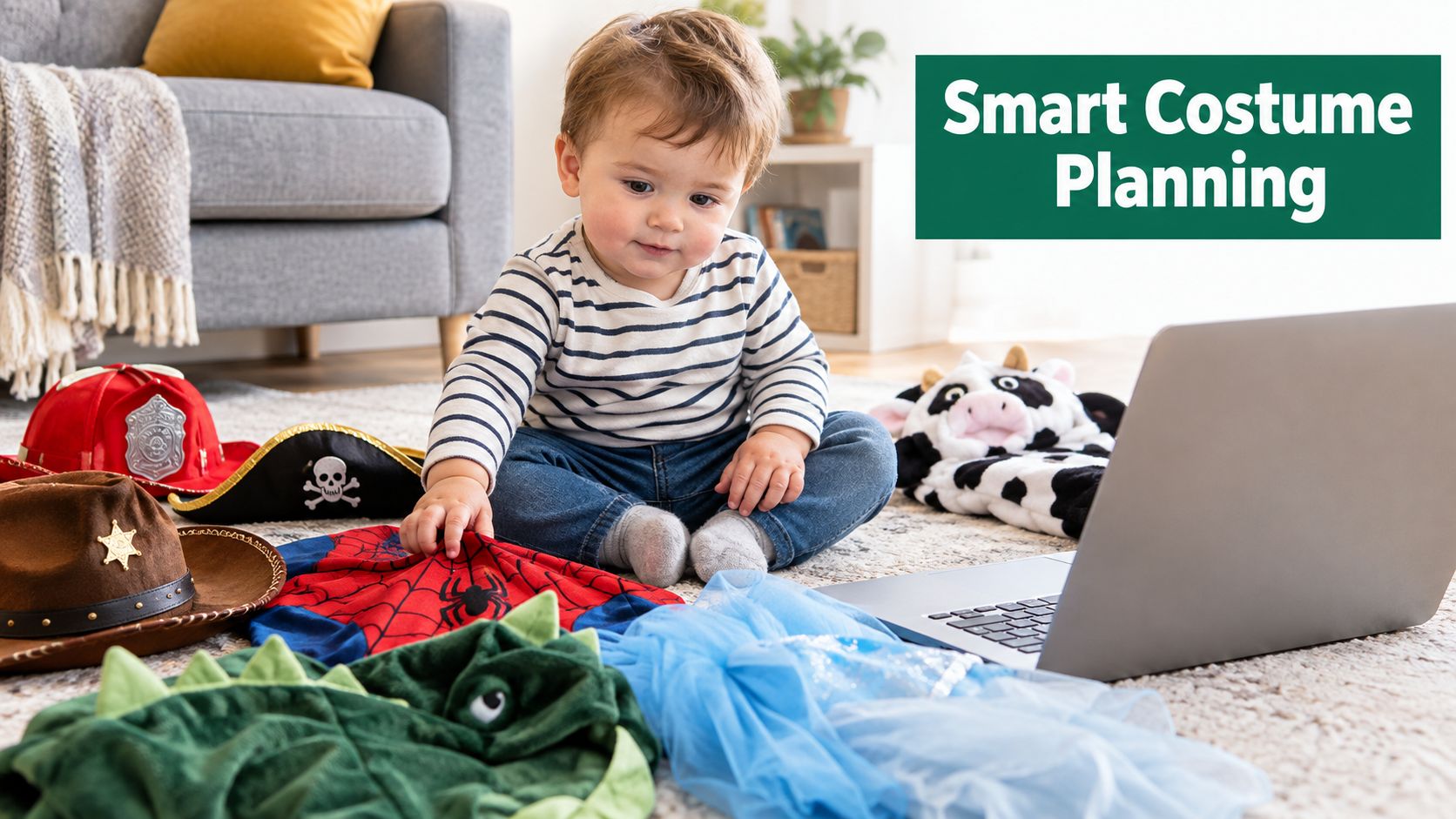
Start with the event, not the theme
A newborn who'll spend the evening being held needs a different outfit from a toddler who'll walk across uneven ground. For a very young infant, a soft, breathable bodysuit with a simple visual detail may be more sensible than an elaborate costume. A crawler needs clear knees and short hems, while a walker needs unrestricted movement, secure footwear, and good visibility.
The National Retail Federation's 2025 projection illustrates why recognizable themes remain popular. Its survey estimated $4.3 billion in Halloween costume spending, including approximately $1.4 billion for children's costumes, based on responses from 8,045 consumers collected from September 2 to 9, 2025, with a margin of error of plus or minus 1.1 percentage points. The same projection reported that 71% of celebrating respondents planned to buy a costume for themselves, a child, or a pet, while recognizable children's themes such as Spider-Man and princess costumes led the listed choices. These figures support a practical strategy, make the outfit easy to identify, but don't sacrifice movement for visual drama. (National Retail Federation Halloween survey)
A simple pre-purchase checklist helps narrow the options:
- Movement: Look for free arm movement, a clear diaper area, and no fabric beneath the knees.
- Visibility: Favor bright or high-contrast details that remain visible in photographs and low light.
- Maintenance: Choose materials that tolerate food, drool, and ordinary washing.
- Repeat use: Consider whether the pieces can become everyday clothing or dress-up accessories later.
Parents looking for a themed infant outfit can also review this infant Halloween costume guide before choosing a style.
Choosing Between Character Costumes and the Caddie Uniform
A traditional character costume communicates its idea immediately, but the same features that make it recognizable can create problems for a baby. Masks can interfere with vision or breathing. Foam muscles and padded bellies can restrict rolling and sitting. Capes, oversized bibs, and long sleeves can snag on furniture, stroller parts, or a caregiver's hands.
The caddie uniform takes the opposite approach. Its identity comes from a clean silhouette, coordinated colors, a bib or coverall, and a hat that can be removed when it isn't appropriate. The result still reads clearly in photographs, but the design can stay closer to ordinary clothing.
A practical comparison
| Consideration | Elaborate character outfit | Personalized caddie uniform |
|---|---|---|
| Visual recognition | Strong, especially with a familiar character | Strong through coordinated styling and patches |
| Face visibility | May be reduced by masks or hoods | Usually easier to preserve |
| Diaper access | Can be awkward under one-piece construction | Easier when the base garment is selected carefully |
| Movement | Padding and long parts may restrict crawling | A simpler bib or coverall can allow more natural movement |
| Reuse | Often tied to one theme | Patches, names, and numbers can support later wear |
| Photo styling | Dramatic but sometimes cluttered | Crisp, controlled, and easy to coordinate with family outfits |
A personalized caddie uniform can suggest a young golf professional, a tiny coach, or a family tournament theme without requiring a prop in the baby's hands. Removable patches also make the look adjustable. A nameplate or number can create personality, while the main garment remains relatively simple.
The important qualification is fit. A caddie-style outfit isn't automatically safe because it looks like clothing. Parents still need to inspect seams, fasteners, hems, hat security, and the way the garment sits over a diaper and base layer. Caddie Uniform lists children's sizing from 0–3 months through 11–12 years, but the child's measurements and the specific garment construction should guide the purchase rather than age alone.
For families considering a handmade accent, a carefully fitted cape can be sewn, but it shouldn't be added casually to an infant outfit. A guide on how to sew a cape can help an experienced maker understand construction, yet a baby's version should avoid trailing length, cords, and detachable fasteners.
The broader styling options are outlined in this guide to kids' golf caddie Halloween costumes, where hats, uniforms, and custom details can be coordinated without turning the baby into a walking bundle of loose accessories.
Essential Safety Standards for Infant Costumes
Safety decisions should happen before color matching and photography. The American Academy of Pediatrics advises costumes that let children see, breathe, walk, and move their arms easily, while cautioning against masks, bulky garments, overly long clothing, and props that may injure a child or become choking hazards. (American Academy of Pediatrics costume guidance)
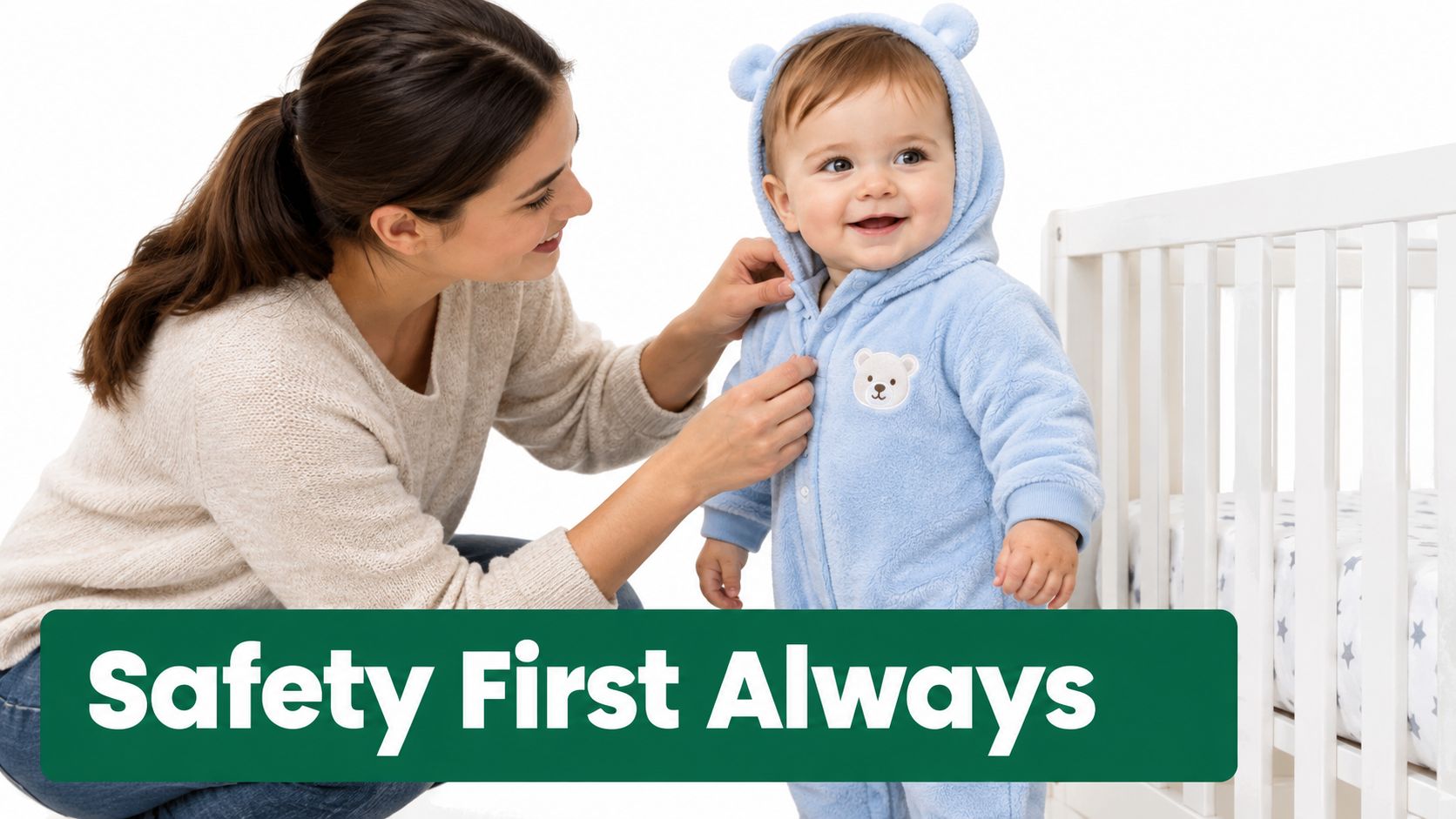
Remove the obvious hazards
Loose trim, long sleeves, cords, and trailing capes create snag points. Long pant legs can bunch beneath crawling knees or catch under shoes. A baby's costume should have secured cuffs and a hem that stays above the ankles, with nothing covering the hands or drifting toward the face.
Detachable decorations deserve their own inspection. A patch, button, badge, or decorative tab must remain firmly attached, and any removable piece should be taken off if the child pulls at it or mouths it. Velcro is convenient for customization, but convenience doesn't replace supervision. Check each patch before dressing and again after active movement.
The U.S. Consumer Product Safety Commission also emphasizes that any fabric can burn when it contacts an open flame, and it advises against loose, flowing costume materials near candles and other flames. The National Fire Protection Association reports an average of 835 home structure fires per year from decorations during 2020–2024. Of those fires, 47% occurred because decorations were too close to a heat source, and 33% were started by candles. (CPSC Halloween safety guidance)
Practical rule: Flame-resistant wording can be useful when selecting clothing, but it doesn't make fabric fireproof. Keep babies away from candles, jack-o’-lantern flames, fire pits, and sparklers.
Build visibility into the outfit
Dark clothing can disappear against an evening background. Bright colors, high-contrast panels, and reflective details placed on the torso, stroller, or treat bag can help others see the child. Reflective tape shouldn't be loose or positioned where an infant can peel it off and put it in the mouth.
Before leaving, check the costume from the front and side. The eyes and airway should remain clear, the caregiver's grip should be unobstructed, fasteners should be secure, and no small decoration should detach during handling. A close-fitting caddie-style bib with a bright hat may photograph more clearly than a dark, oversized character suit, but the hat should come off if it shifts toward the eyes or nose.
Customizing a Personalized Kids Caddie Uniform
The most effective personalization starts with one visual idea, not a pile of accessories. A small number, a name patch, and a coordinated hat can turn a simple uniform into a complete Halloween character while keeping the baby's face visible.
Consider a family choosing a “young pro” theme. The base outfit might be a light coverall or bib over a soft long-sleeved layer. A contrasting hat establishes the caddie identity in photographs, while a removable nameplate gives the outfit a personal detail. The parents can coordinate with matching colors rather than adding a club, golf ball, flag, or other prop that the baby could grab.
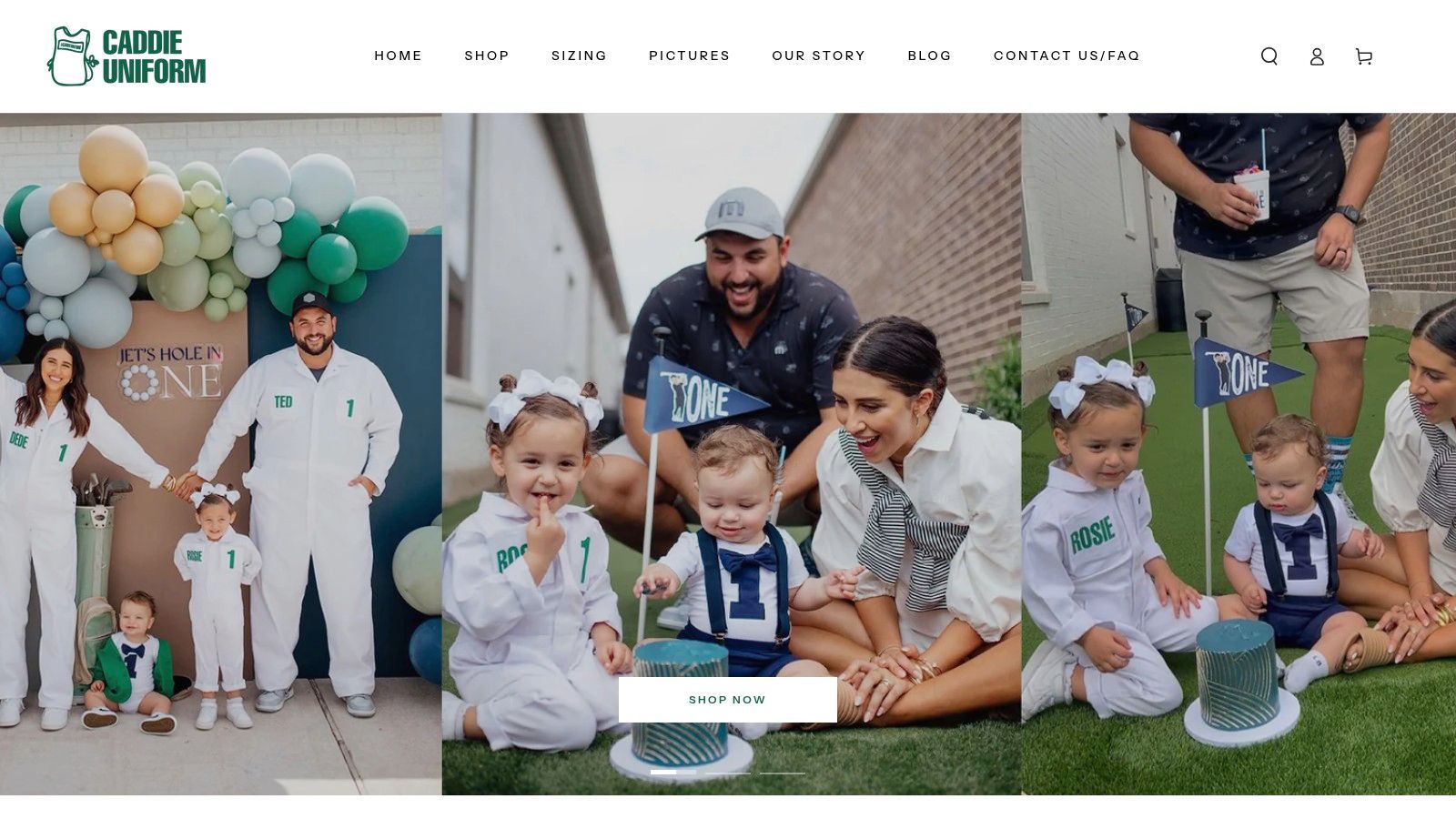
Choose details that earn their place
A good customization should improve recognition, photographs, or reuse. It shouldn't introduce a new hazard.
- Name patch: Place it where the caregiver can see it, but inspect the attachment before every wear.
- Number: Use a flat, secure design that doesn't curl into a loose edge.
- Theme: A seasonal color or simple logo can create a Halloween identity without a face covering.
- Hat: Treat it as an optional photo accessory, not a permanent requirement.
- Family styling: Coordinate adult and child colors for a group photograph without adding bulky layers to the baby.
Removable Velcro elements offer flexibility, and Caddie Uniform provides a custom Velcro name patch as an example of how a name detail can be changed without replacing the entire garment. The attachment still needs regular inspection, especially when the child is crawling, mouthing objects, or being carried close to a caregiver's clothing.
Keep the base layer soft and seasonally appropriate. If the uniform is worn over warm clothing, the fit should be tested with those exact layers rather than with a thin shirt used only for the photograph. A costume that works indoors may become restrictive once a jacket is added, and a hat that sits securely over bare hair may slide over a hood.
The strongest styling often looks almost ordinary at first glance. A clean bib, a bright accent, and one personalized detail give family photographs a recognizable story without hiding the child's expression. That balance is more useful than a costume that looks spectacular for one posed image but can't survive feeding, carrying, or a short period of crawling.
Performing the Final Fit and Safety Test
A costume isn't ready because it fits the age label or looks good while the baby is standing still. The final test should reproduce the conditions of Halloween, including the base layer, diaper, shoes, stroller, and car seat that the child will use.
Measure the chest, torso length, waist, and inseam while the baby wears the expected base layer. Choose a garment that allows normal diaper movement without leaving excess fabric around the legs or torso. Sizing by age alone is a common mistake because babies of the same age can have very different proportions.
Run the movement test
Use the following sequence before the event:
- Walk or crawl for 2–3 minutes. Watch the knees, ankles, hands, and sleeves. The child should move without stepping on fabric, dragging a hem, or catching a cuff.
- Sit and bend at the waist. Check whether the bib, neckline, or waist folds toward the face. The costume shouldn't press into the abdomen or restrict ordinary sitting.
- Check the eyes and airway. A hat must stay secure without covering the eyes, nose, or mouth. Remove rigid accessories, cords, and any detachable small parts.
- Test feeding and caregiver access. Confirm that the neckline, bib, and fasteners don't interfere with feeding, lifting, or a quick diaper change.
- Inspect the footwear. Shoes should fit properly and stay secure. Loose or poorly fitted footwear adds another tripping concern for a newly walking child.
Pediatric safety guidance identifies an above-ankle costume length and proper shoe fit as practical controls against tripping, entanglement, and contact with flames. The acceptance standard is simple: there should be zero interference with breathing, vision, feeding, crawling, or caregiver access during the test. (AboutKidsHealth Halloween safety guidance)
Repeat the inspection in the stroller and car seat
Babies are often carried or secured rather than independently monitored. Buckle the child into the stroller or car seat while wearing the intended costume, then inspect the harness position and fit. Bulky outer layers can create space beneath a harness, so remove the costume's thick outer layer before tightening the straps and use appropriate clothing underneath.
A costume must fit the child and the equipment. A safe standing fit doesn't prove that the same outfit works under a harness.
Check the outfit after the baby has been picked up, placed down, and carried against an adult. Look for twisted straps, shifted hats, lifted patches, and fabric that has migrated toward the face. If any part needs constant correction, simplify the outfit rather than relying on repeated adjustments.
Finish with a front-and-side visibility check in the lighting expected outside. Secure the fasteners, remove anything the baby can detach, and keep the child away from open flames. The most successful baby boy Halloween costume is the one that remains comfortable and recognizable after the photograph, the diaper change, the car ride, and the walk home.
Caddie Uniform offers personalized kids' caddie uniforms, bibs, hats, and removable name, number, and themed patches, with children's sizing that includes infant ranges. Parents can use those pieces to build a photogenic baby boy Halloween costume while keeping the design simple enough to inspect and adjust. Visit Caddie Uniform to explore the available uniform and customization options.


