


A family photo is booked, a tournament weekend is circled on the calendar, or a Halloween party needs a group look that does not fall apart in sizing. Then the cart fills with identical pieces in wildly different sizes, a toddler refuses a stiff collar, a tall adult gets a torso that is too short, and two whites do not match under daylight. That failure is predictable. Matching golf outfits work when a group shares colors, trim, hats, and identifiers, not when every body is forced into the same cut.
Why Matching Works When You Treat It as a System
A grandparent, two parents, a lanky teenager, and a baby in a carrier will never look good in identical garments. They can look unmistakably connected in white coveralls or bibs, one green accent, consistent trim placement, and coordinated hats. The baby wears a soft bib version. The teenager gets a longer cut. The grandparent chooses a looser silhouette with the same patch placement. In a photograph, the eye reads the repeated color and symbols first, not minor differences in fit.
That is the difference between clone matching and a shared visual system. Clone matching breaks at the first growth spurt, pregnancy, tall inseam, or weather change. A system survives those variables because the rules stay stable while the garments flex. One dominant color does the heavy lifting. One contrasting accent adds recognition. Shared trim, such as a belt line, patch border, or hat color, ties different silhouettes together without visual noise.
A Tradition, Not a Costume Gimmick
Coordinated golf clothing has a long record. By the 1930s, golfers commonly wore straight or pleated skirts with matching or complementary tops, often adding a hand-knitted cardigan or vest, a pattern described in the history of coordinated women's golf ensembles. Later decades kept returning to coordinated tops, trousers, belts, and practical hybrid pieces. Matching, in other words, has repeatedly balanced function, identity, and presentation.
That history matters for caddie-inspired groups. A white base with green accents reads instantly, even when one person wears a coverall and another wears only a bib over everyday clothes. Hats do more work than most planners expect, since they sit at eye level in every photo. Groups sorting out structure, color, and formality can use guidance on uniform-friendly hat styles to avoid pairing a crisp uniform with a floppy, off-theme cap.
Matching should mean the group is recognizably together at a glance. It should not mean everyone is uncomfortable in the same way.
The strongest rule is restraint. One dominant color, one accent, one shared identifier. Add a second accent only for a clear reason, such as distinguishing team captains or a birthday child. Extra colors multiplied across hats, bibs, and accessories make a set look assembled from leftovers. A disciplined palette photographs cleaner, reorders more easily, and gives every later decision, from fabric to patches, a fixed reference point.
Define the Occasion and Climate First
No outfit decision should start with a product page. It should start with four answers written down: use case, climate, exposure time, and laundering frequency. An 18-hole round, an outdoor photoshoot, a tournament party, and a Halloween costume impose different demands. A costume worn indoors for two hours can tolerate a heavier fabric. A coverall worn through a sunny afternoon cannot.

Groups should specify movement before style. Bending to lift a child, carrying a bag, swinging a club, and sitting for portraits all stress different seams. Women planning active wear rather than a posed look benefit from reviewing fit and layering considerations for a practical women's golf outfit before locking a group silhouette. That step prevents a common error, choosing a photogenic cut that restricts shoulders or rides up during real activity.
Use Objective Fabric Benchmarks
Appearance is a poor test for comfort. For active wear, AATCC 195 rates liquid-moisture transport on a 1–5 scale, where Classes 4–5 indicate strong performance and Class 3 is generally adequate for casual use, according to fabric benchmark guidance for golf apparel. For sun exposure, a tested UPF 50 or 50+ rating blocks approximately 98% of ultraviolet radiation, as noted in that same guidance. Those two numbers quickly separate a serious warm-weather outfit from a novelty costume.
Stretch needs separate scrutiny. Tight or highly elastic areas can lose effective sun protection when the fabric is pulled thin, so a headline rating should not be assumed to apply uniformly across knees, shoulders, and stretched bib straps. Hot-climate groups should prioritize breathable construction and room for air movement. Cool-climate groups should plan a base layer under the shared outer piece, preserving the visual system while changing insulation underneath.
Sample, Wash, Then Approve
- Request a physical sample or lab dip: Screens distort white and green more than almost any other pairing.
- Compare under daylight and indoor light: A set that matches at home can split into cream and optical white outdoors.
- Wash-test before a group order: Shade, trim, and patch edges can change after laundering.
A practical acceptance protocol is strict for a reason. Inspect color after at least 20 wash cycles, verify dimensional change, and confirm removable patches do not distort the base fabric before approving a coordinated set, following the testing approach in the fabric guidance cited above. Groups that skip that step often discover the mismatch in event photos, when replacement is impossible. One sample, washed hard and photographed, is cheaper than a full reorder.
Get the Sizing Right for Every Body in the Group
Age labels and usual sizes are the fastest route to a failed group order. Measurement-led sizing is more reliable, a point reinforced by measurement-based sizing guidance for coordinated golf apparel. Every wearer needs four recorded numbers before ordering: chest, waist, torso or inseam, and height. Those measurements get mapped to the manufacturer's chart, not to a size worn in another brand.
The correct size preserves movement without drowning the personalization. Excess fabric folds over names, twists bib openings, and makes shoulder seams slide in photographs. A size that is too tight creates the opposite problem, pulling patches out of alignment and restricting bending or carrying. Fit is therefore not a comfort detail. It determines whether the matching system remains visible.
Quick Sizing Reference
| Body Category | Key Measurements | Pitfall to Avoid |
|---|---|---|
| Infants | Height, chest, room for a base layer | Sizing so large that bib openings and patches sit crooked |
| Children | Chest, waist, height, torso length | Ordering by age alone and missing shoulder seam placement |
| Adults | Chest, waist, inseam, height | Assuming a correct chest size guarantees torso comfort |
| Tall adults | Torso and inseam flagged separately | Short rise that restricts bending, carrying, or a swing |
| Plus-size adults | Chest, waist, torso, movement allowance | Excess fabric that obscures names or logos |
Children need growth room, but not a costume two sizes ahead. Shoulder seams should land near the shoulder, and a bib should sit flat enough for a nameplate to read on camera. Tall adults need separate flagging even when chest measurements look standard, since torso and inseam mismatch is what makes a coverall unbearable by midday. Long variations exist for exactly that reason, and ignoring them is false economy.
Sample by Body Category, Not by Hope
One representative sample per body category should be ordered before a group purchase. That means one child sample, one standard adult sample, and one tall or plus-size sample if those bodies are in the group. Each sample gets photographed under the intended lighting, checking whether white coveralls, green accents, hats, and logos remain consistent.
A simple pass or fail scorecard keeps the decision honest. Record fit, color match, logo placement, patch adhesion, and wash durability. Reject the batch if a safety-critical fit issue appears or visible color variation shows across garments meant to match. Sentimental attachment to a deadline does not fix a bib strap that covers a child's name in every photo.
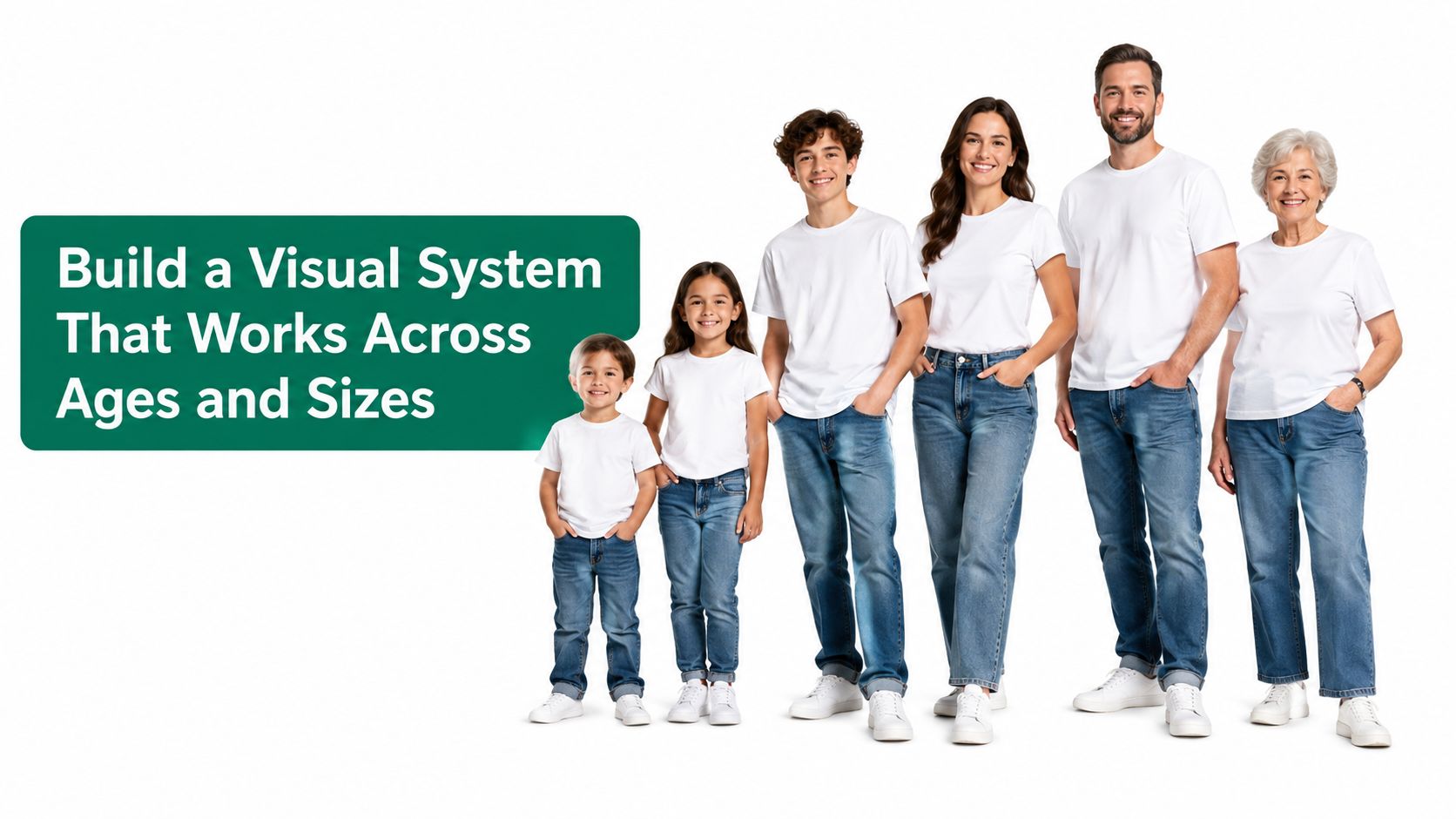
Build a Visual System That Works Across Ages and Sizes
The audience for coordinated golf looks is broader than the traditional image of the sport suggests. Nearly 4 million juniors played on course in the U.S. in 2025, while girls represented 35% of junior golfers versus 15% in 2000, and women made up 28% of on-course golfers, figures reported in National Golf Foundation participation research. A matching guide that assumes one adult male body, copied smaller, misses most real groups.
A couple can coordinate through contrast rather than sameness. One partner wears a full white coverall with a green hat. The other wears a white bib over a green top, reversing the ratio while keeping the palette identical. The pair reads as a set without looking like twins. That reversal also helps when one partner prefers a skirt, shorts, or a looser trouser under the shared top layer.
Families and Multi-Generational Groups
Families with infants should anchor the system on pieces that tolerate short attention spans. Adults carry the full caddie silhouette. Older children wear scaled coveralls. Infants wear a bib or soft one-piece in the dominant white with the same green trim, avoiding stiff closures and heavy layering. Grandparents can join through the hat and a bib over comfortable everyday clothing, which keeps mobility aids, seated portraits, and temperature needs from becoming obstacles.
Tournament teams need a stricter version of the same logic. Identical dominant color and trim placement matter more than identical bottoms, since players may need different cuts for an actual round. A foursome can share bibs, hats, and numbered patches while wearing individually fitted clothing underneath. Spectators and family members can echo the hat and accent color without wearing full uniforms, extending the group identity beyond the players.
Where the Match Usually Breaks
Two errors destroy coordination faster than any silhouette difference. The first is mixing optical white with cream, which looks dirty on one garment and harsh on another. The second is pairing slightly different greens across hats and trim, a mismatch cameras exaggerate. Both errors survive online ordering because product photos are taken under controlled light. Physical samples viewed together, as covered in the earlier section, catch them.
Trim placement is the quiet stabilizer. If every bib carries the accent at the same height and every hat uses the same green, different body shapes stop competing. Matching golf outfits then become modular. A child can move from bib to coverall next season, an adult can swap trousers for shorts, and the group still photographs as one unit.
Personalize with Names, Numbers, and Removable Patches
Personalization turns a coordinated outfit into a keepsake, but placement errors are common and unforgiving. Names belong where cameras look, across the upper back or the front bib panel, not low on a torso where arms, bags, and seated children hide them. Numbers work best when they are large enough to read at group-photo distance and consistent in font across every garment. A detailed overview of personalized golf apparel options helps groups compare name, number, and logo formats before committing.
Straps are the first trap. A nameplate centered without checking bib strap position can disappear under fabric the moment the outfit is worn. Jacket fronts and hat brims create similar blind spots. Every personalized sample should be photographed on a body, standing and seated, before the full order is approved. Flat product images do not reveal those failures.
Embroidery Versus Removable Elements
- Embroidered names: Best for a permanent gift, a single wearer, and a garment that will not be handed down.
- Removable Velcro nameplates: Best for siblings sharing sizes, teams changing rosters, and outfits reused across themed events.
- Removable patches: Best for swapping a birthday logo for a Halloween motif without buying a second uniform.
- Printed logos: Acceptable for short-lived event branding, provided wash durability is tested first.
Removable elements are not automatically reliable. Velcro should be checked through repeated attachment cycles, since a patch that curls or loosens after several swaps will fail during an event. Patches also need enough backing support to avoid distorting thin base fabric, especially on children's bibs. A nameplate that puckers the panel beneath it looks defective in close portraits.
Placement rule: If a name cannot be read in a phone photo taken at group distance, it is decoration, not personalization.
Restraint applies here too. One name, one number, and one small logo give each element room to register. Crowding a bib with a sponsor mark, a themed patch, a nickname, and a number turns the chest into clutter. Groups should decide a hierarchy in advance. The wearer's name usually deserves first position, the number second, and any themed patch third. Hats should stay comparatively clean, carrying the shared accent color or a single mark that does not compete with the bib.
Outfit Formulas for Halloween, Photoshoots, and Events
Formulas remove guesswork. Each one below uses the same structure, a dominant piece, an accent piece, a named hat direction, and one supporting accessory. Groups can copy the structure and adjust sizes, layers, and personalization without redesigning from scratch.

Four Formulas That Hold Up on Camera
- Family Halloween: White adult and kids coveralls form the dominant base. Removable themed patches provide the seasonal accent, including an orange variation for children when a stronger Halloween signal is wanted. A Caddie Green Hat keeps the golf reference clear, and a putter cover carried by one adult completes the joke without extra props. Families comparing broader themes can review group Halloween costume ideas before settling on patch designs.
- Junior birthday party: The birthday child wears the full personalized uniform with name and age number. Guests wear simpler bibs in the same white and green so the guest of honor stands out. Dad and Mom hats let parents join photos without full costumes.
- Tournament foursome: Matching bibs go over individually fitted golf clothing, preserving swing comfort. Coordinated hats from a place-themed line, such as Scottsdale or 30A Beach styles, signal the trip or home course. Numbered patches keep the group identifiable across a crowded venue.
- Photoshoot group: Adults wear coveralls, children wear bibs, and infants wear the softest simplified version. An SEC City hat direction works when fandom is the theme, while the classic green option suits a traditional portrait. One shared accessory, such as matching putter covers, is enough.
Hat swapping is the cheapest refresh available. The same white uniform reads as tournament traditional with a green cap, coastal with a beach-themed hat, and playful with a parental style at a birthday. Because hats sit high in the frame, changing them changes the perceived outfit more than changing trousers or shoes. Groups planning several events should invest in the uniform base once and rotate hats and patches.
Belts deserve a brief mention for adults wearing bibs over separates. A belt should echo a color already in the system, usually the accent green or a neutral that matches footwear. A loud belt under a clean white bib draws the eye to the waist and fragments the group line. Simplicity keeps attention on faces, names, and hats, which is where matching registers.
Ordering, Care, and Getting the Most Wear Out of It
A one-time costume and a modular outfit cost differently over time. The practical test is cost per wear, calculated by dividing the total outfit cost by the number of realistic wears. Recent market coverage notes golf brands introducing organic cotton, recycled polyester, and biodegradable packaging, alongside growing outerwear and layering categories, in golf apparel market reporting on materials and versatility. Durability still matters more than a label. A sturdy uniform worn for a tournament, a birthday, Halloween, and family photos delivers more value than a fragile piece worn once.
The surrounding market supports that reuse logic. The global golf-apparel market was valued at approximately USD 4.4 billion in 2024, with North America accounting for 53.4% of revenue, according to golf equipment and apparel market estimates. Coordinated pieces therefore sit inside a large, active clothing ecosystem, and classic white and green caddie styling does not depend on a single season's trend.
Final Checklist Before Ordering
- Confirm measurements for every wearer: Chest, waist, torso or inseam, and height, with tall wearers flagged.
- Approve one sample per body category: Photograph it in event lighting and check patch placement on a body.
- Verify personalization spelling and numbers: Removable plates make later corrections possible, embroidery does not.
- Plan the second wear at purchase: Choose patches and hats that convert the set for another occasion.
Care should protect the white base first. Garments get washed according to fabric guidance, removable patches come off before laundering, and nameplates are stored flat so Velcro does not curl. Children's sizes should be kept for siblings when the visual system remains in the family, since a new nameplate converts a handed-down uniform instantly. Last-minute size swaps are easier when the group order includes one flexible bib option, because bibs tolerate a wider fit range than full coveralls. Ordered early, sampled carefully, and built as a system, matching golf outfits stop being a gamble and become repeatable group clothing.
Families and event groups ready to build a coordinated caddie look can find personalized adult and kids coveralls, bibs, removable nameplates and patches, themed hats, and accessories at Caddie Uniform. Start with measurements for every wearer, choose one dominant color and one accent, then order a sample before committing to the full group set.


