


The cart is full of attractive polos, the fitting room mirror is doing its best, and yet nothing makes a complete outfit. One top pulls across the bust at address, another skort rides up during the follow-through, and the only layer warm enough for the morning looks like a sweatshirt. That's the core problem with shopping for a women's golf outfit. The pieces often look right alone but fail when the weather, dress code, and swing enter the picture.
A useful golf wardrobe doesn't begin with a trend. It begins with the round ahead, the amount of walking involved, the coverage required, and the personality the golfer wants to bring to the course. The strongest outfits combine mobility, sun protection, practical storage, and enough polish to move comfortably from the first tee to lunch.
What to Decide Before You Shop
You are standing in a fitting room with a cute skort, a crisp top, and a layer that looked smart on the hanger. Then you raise your arms, turn through a practice swing, and the whole idea falls apart. That is why the first job is not picking colors. It is deciding what the outfit has to do.
Start with the core use case. Is this for playing golf or for being around golf? Those are not the same assignment. A full round asks for freedom through the shoulders, a waistband that stays put, pockets that do not tug the silhouette sideways, and shoes that can handle actual walking. A lunch after the round, a member event, or a photo-heavy day can carry more structure and less performance.
Then decide whether you are dressing for a performance problem or an event problem. If you are taking lessons, chasing consistency, or walking most rounds, comfort wins. If you are dressing for a formal club day, the rules matter just as much as the fit. That is where women get stuck. Too many guides keep pushing the same polo-and-skort formula and ignore the gray area between strict dress codes, heavy sun, and a personal style that does not feel bland.
Three dress-code realities
Strict country clubs usually reward restraint. Wear a collared polo or sleeveless collared top, well-fitting trousers or a conservative skort, and an outer layer that looks finished rather than gym-ready. Skip exposed midriffs, denim, very short hems, and anything that reads beachy or nightclub-adjacent. If the club posts a policy, follow that, not the retailer's marketing.
Modern public courses leave more room for personality, but they still punish bad choices. A fashion top that twists when you swing or a skort that climbs when you bend is still a bad golf outfit. If the dress code is vague, keep one classic anchor in the look, such as a collar, a proper waistband, or a cleaner line through the leg.
Simulators, ranges, and casual golf venues are where women test the edges. A technical tee, relaxed trouser, or caddie-inspired layer can make sense there because the etiquette pressure is lighter. That shift matters. More women now move between on-course and off-course golf settings, and the category has expanded with them, as noted earlier in reporting from the National Golf Foundation participation figures reported by R&A.
Practical rule: Buy for the setting you use most. Then make it polished enough to wear again without feeling overdressed or underdressed.
Before you buy anything, name the setting, read the dress code, and decide how much coverage you need. That one filter cuts out half the mistakes before they ever reach the cart.
Core Pieces That Earn Their Place
The right wardrobe doesn't need a dozen polos. It needs a few pieces that solve different movement and weather problems without fighting one another.
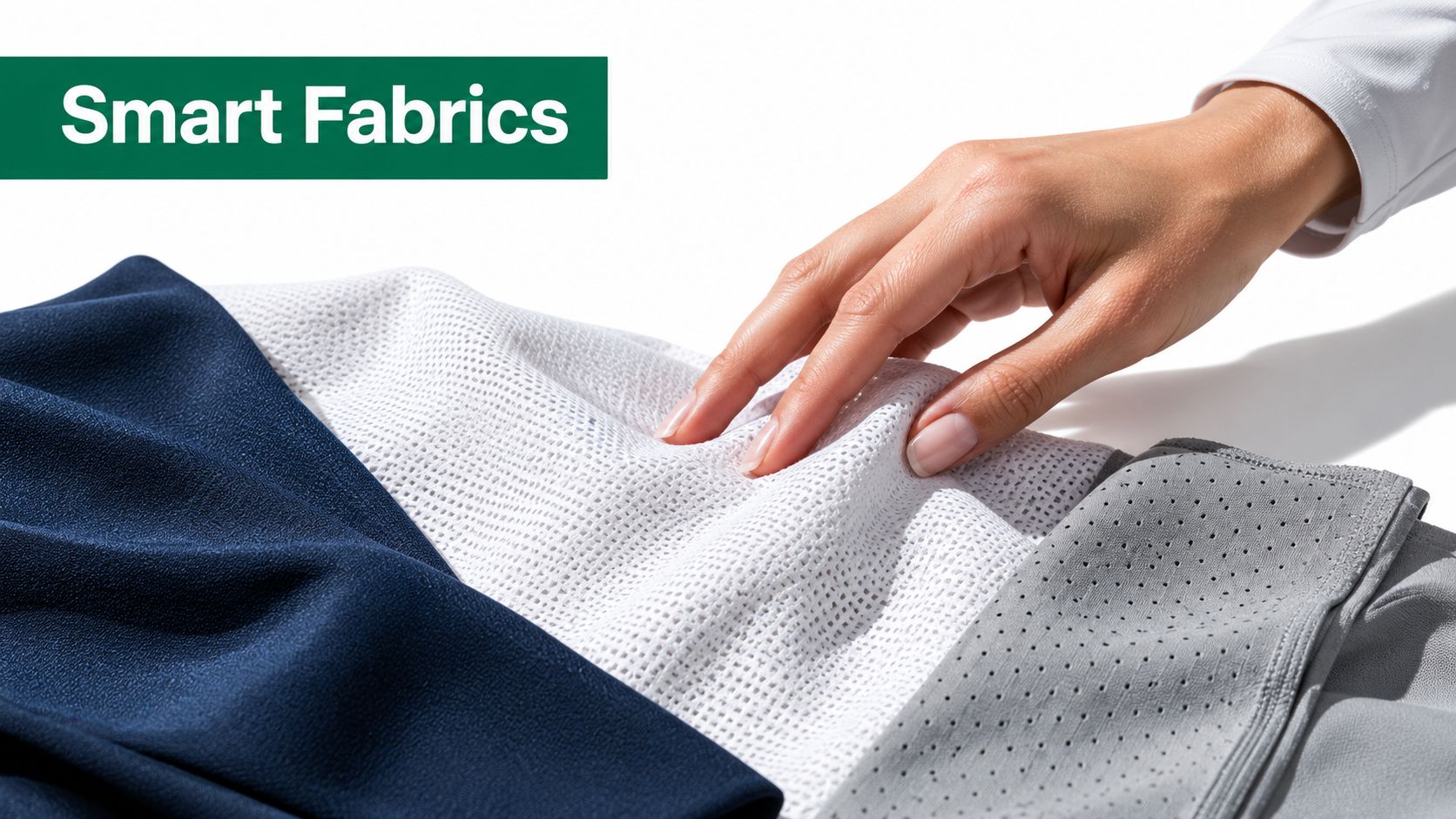
Start with the piece that matches the climate
For hot, humid rounds, a breathable polo or sleeveless top usually earns first place. Look for a cut that stays close without compressing the chest, a neckline that remains comfortable in the address position, and enough length to stay tucked or anchored during rotation. If the bust pulls when the arms move forward, the top is too small, too narrow through the armhole, or poorly proportioned for that body.
The skort is the practical favorite because it offers skirt movement with built-in coverage. It should allow full hip rotation without the inner short cutting into the thigh. Pockets need to hold a glove, tees, or a phone without dragging the waistband sideways. A skirt that looks sleek while standing but climbs during the follow-through is not a successful golf garment.
Ankle trousers solve cooler mornings, formal clubhouses, and golfers who prefer leg coverage. A stretch woven fabric gives a sharper line than a legging while preserving movement. The waist should sit securely through the trunk rotation, not roll under pressure from a tucked top.
A golf dress can be efficient, but it demands careful testing. The torso must be long enough for the golfer's proportions, the built-in shorts must stay in place, and the hem must provide coverage during a deep bend. Dresses also need a layer that works over the entire silhouette, not just a jacket that makes the shoulders bulky.
Fit problems show up in motion
Static fitting misses the failures that matter. Check the bust at address, the armhole during the backswing, the waistband through the downswing, and the hem during the follow-through. Stretch is useful only when the garment recovers rather than staying distorted after repeated movement.
For online shoppers, detailed measurement guidance can prevent an attractive but unusable purchase. A virtual fitting resource such as the Nereo AI try on guide can help shoppers think about garment proportions before ordering, but real movement testing still decides whether the piece belongs on the course.
The best second purchase depends on the first. After a hot-weather top, choose a skort if mobility and storage are missing. After a skort, choose a lightweight trouser or outer layer if the golfer plays early, late, or in changing weather. A second polo rarely solves either problem.
Fabric and Sun Protection That Actually Work
Cotton feels pleasant in a shop and can feel heavy once heat and humidity build. For warm rounds, a polyester-rich knit generally manages moisture more effectively because polyester absorbs less moisture than cotton, but fiber content alone doesn't guarantee comfort. Knit structure, thickness, finishing, and air permeability all affect how quickly a garment dries and how much air reaches the skin, as explained in this golf apparel fabric guide.
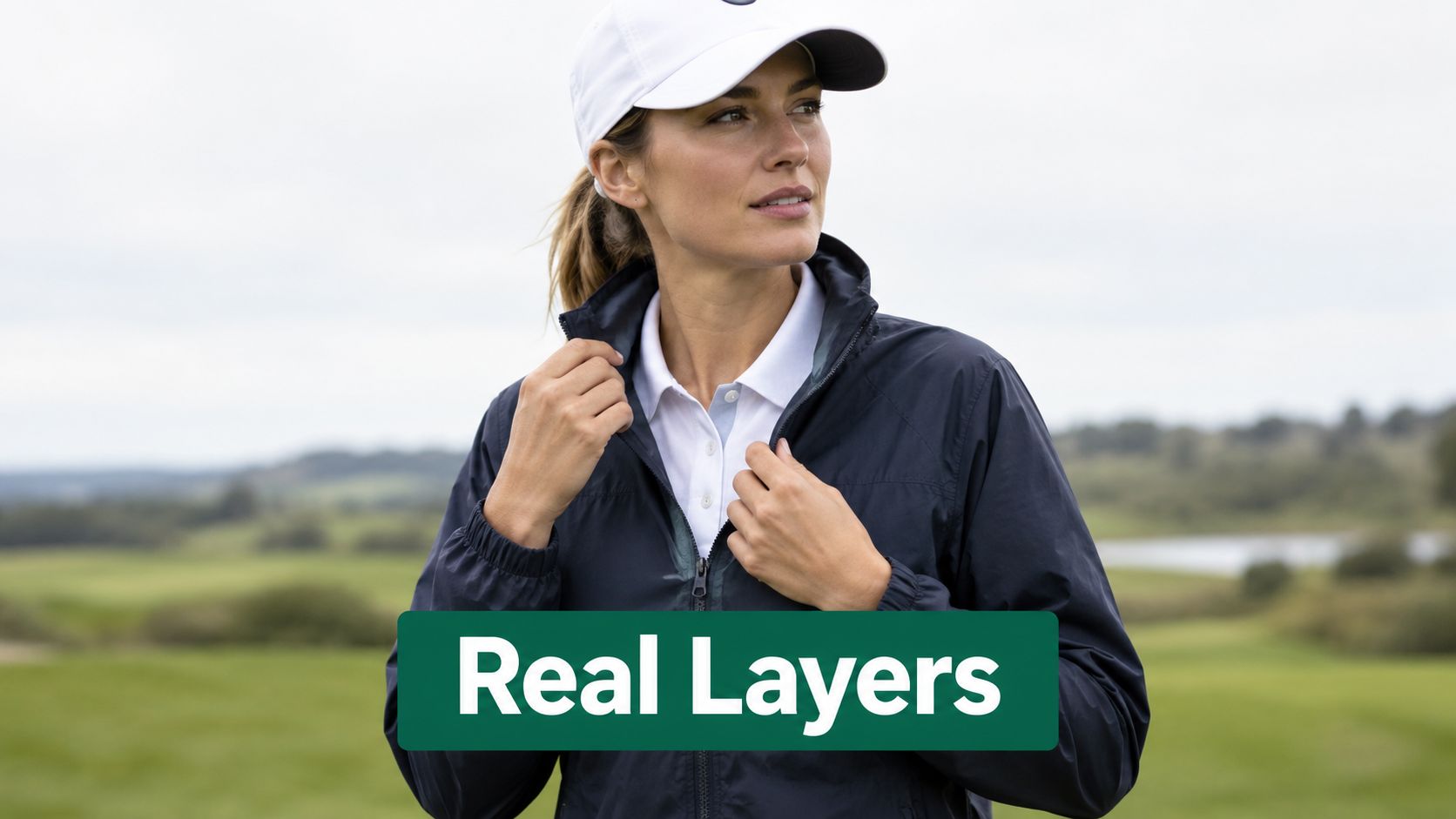
Use a three-part fabric check
Start with exposure. A golfer walking a sunny course needs different coverage from someone spending a short session in a shaded simulator. Consider exposed shoulders, upper back, neck, arms, and hands before choosing a sleeveless silhouette just because it looks cooler.
Then check airflow and moisture management. Hold the fabric up to light, examine the knit, and look for panels that encourage ventilation without creating weak points. A garment can be lightweight yet clammy if the construction traps moisture.
Finally, verify UPF. UPF 30 is classified as good protection, while UPF 50 or 50+ is excellent. UPF 50 allows approximately 2% of ultraviolet radiation to pass through, so a verified rating is more meaningful than guessing from a dark color or synthetic fiber.
Coverage beats vague sun claims
A practical warm-weather outfit uses a breathable, stretch top with verified UPF 50+ coverage across the shoulders, upper back, and arms, paired with a skirt or skort that permits hip rotation. Sleeveless tops can work, but exposed shoulders need a separate plan. A lightweight long sleeve, sun sleeve, hat, visor, and glove each cover a different gap.
A peer-reviewed assessment of 671 golf-apparel items found that UPF labeling appeared on only 7.1% to 16.7% of products, while women's shoulder coverage was 79.4% and coverage for the arms, hands, and neck was generally weak, according to the published golf-apparel sun-protection assessment. The shopping implication is blunt. A polo isn't automatically sun-safe, and a sleeveless top leaves a predictable exposure problem.
Sun rule: Verify the UPF claim, cover the shoulders and neck, then use accessories to close the remaining gaps.
A hat with a stable brim protects the scalp and face while adding a deliberate finish. A personalized accessory can also make a practical outfit feel considered. For golfers building a coordinated headwear detail, a personalized golf hat can supply identity without forcing the entire outfit into a novelty theme.
Layering for Real Weather, Not Just Looks
A golf layer should earn its place by solving a specific problem. The morning may be cool, the wind may rise across open terrain, and the temperature may change before the round is finished. A pretty sweater that restricts the shoulders is not a layer. It's luggage.
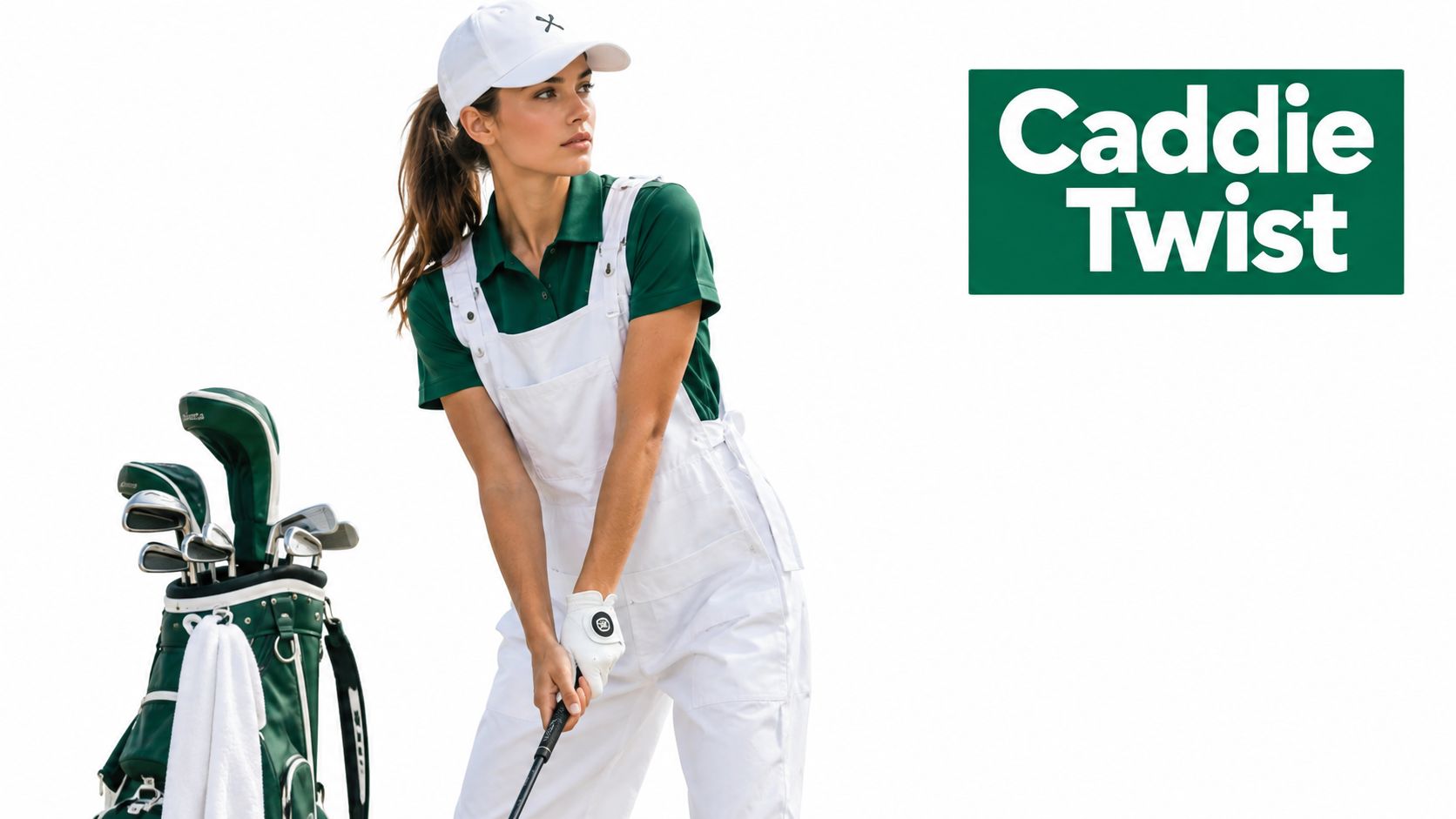
Build from the skin outward
For a cool morning that warms later, use a moisture-managing polo or long sleeve as the base. Add a thin sweater, quarter-zip, or sleeveless vest that can come off without disturbing the swing. Finish with a compact windbreaker if the first holes are exposed.
The sleeveless vest deserves more attention. It adds warmth through the torso while preserving full arm movement, and its structured shape gives a skort or trouser outfit more polish. A lightweight technical sweater can do the same work as a sweatshirt while looking appropriate in a traditional clubhouse.
Match the outer layer to the weather
A coastal or exposed round needs wind resistance more than heavy insulation. Choose a shell with enough room for the base and mid layer, articulated sleeves, and a hem that won't flap into the stance. For an overcast spring day, a soft pullover may be sufficient, especially if it can fold into a cart bag.
Autumn and twilight rounds call for warmth, visibility, and a layer that doesn't become cumbersome near the end of play. A thin vest over a long sleeve is often more useful than a single thick jacket because the golfer can adjust without losing shoulder mobility.
Women's participation now extends well beyond traditional course play. Women made up 28% of on-course golfers in the United States in 2024, nearly 7.9 million players, and represented 43% of more than 19 million off-course participants, according to R&A participation reporting. That range of settings makes removable layers especially valuable. The same base can work for a lesson bay, a walking round, and a casual meal if the outer pieces are chosen with intention.
The best third layer is the one that still feels useful after the weather changes.
Adding a Caddie-Inspired Twist
Caddie-inspired style works when it borrows a silhouette rather than copying an entire costume. The cleanest approach is one recognizable element, such as a white bib, green hat, or removable numbered patch, combined with ordinary golf clothing underneath.
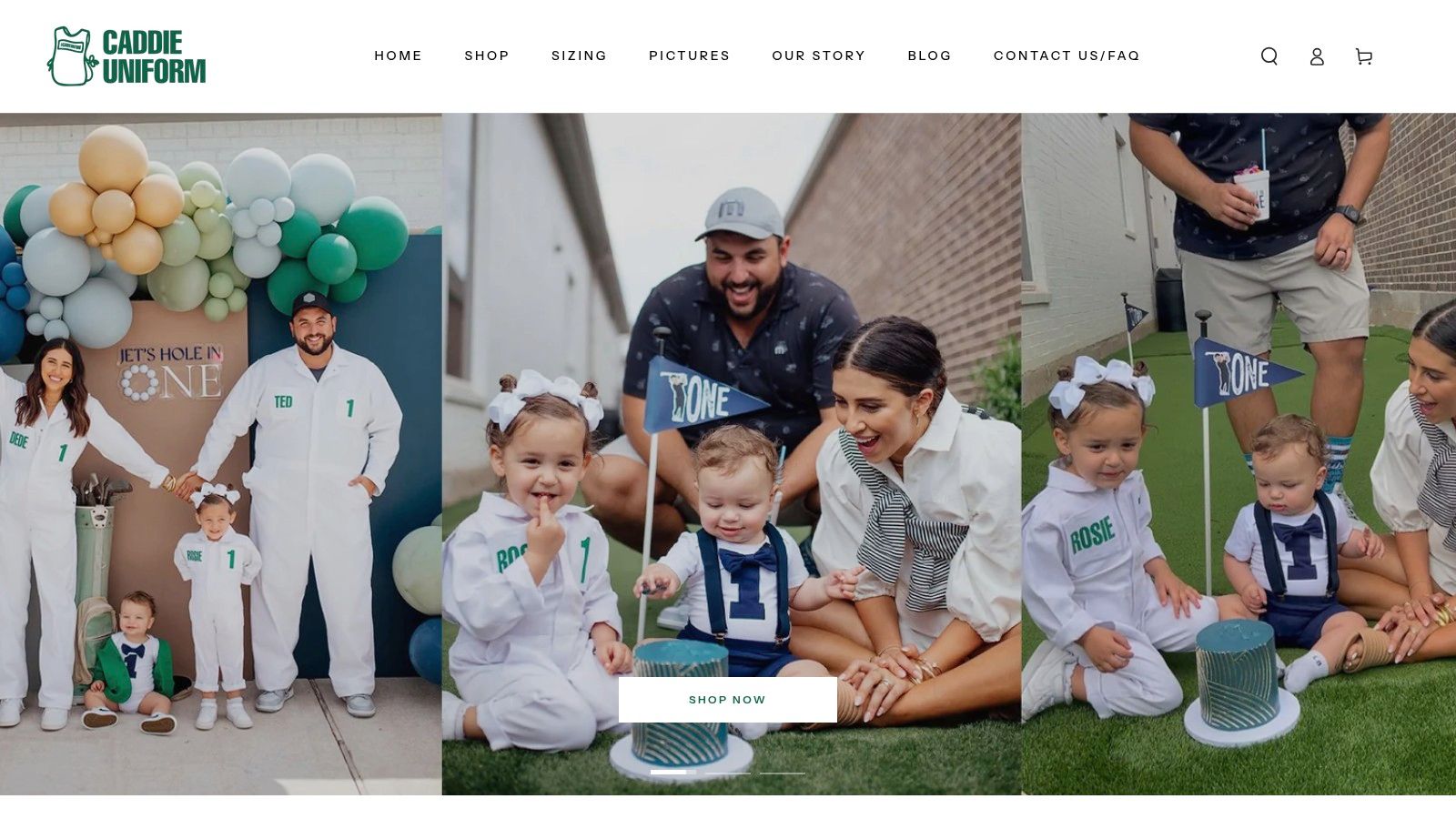
Use one statement piece
For a tournament watch party, a green hat over a white polo and navy skort delivers the reference without making the outfit feel theatrical. The hat can come off for lunch, and the base outfit remains completely wearable.
For a photo shoot, a white coverall or bib can sit over a fitted polo and stretch trouser. The bib creates the caddie shape for the camera, while the golfer can remove it before moving, dining, or changing locations. A removable Velcro patch makes the styling flexible, particularly when the same garment will appear at several events.
A family golf-themed day benefits from coordinated color rather than identical clothing. One adult might wear a green hat and white bib, a child could wear a personalized cap, and another adult could use a green polo with neutral trousers. The group looks connected without forcing every person into the same silhouette.
The publisher's Caddie Uniform offers customizable adult and children's uniforms, bibs, hats, and removable patches, so the outfit can carry a name, number, or logo and then be restyled for another occasion. Its dedicated guide to choosing a golf caddie outfit is useful when the event needs a more complete caddie reference rather than a single accent.
Keep the golf outfit underneath functional
The base still needs to pass a movement test. A stiff bib over a restrictive top compounds the problem, while a flexible polo and skort preserve the swing. Side pockets and adjustable elements matter for events where the wearer moves between photos, spectators, and food service.
A Halloween look can push the theme further, but the same principle keeps it polished. Use the coverall, green hat, or patch as the visual signal, then keep the footwear comfortable and the layer easy to remove. The result reads as golf culture, not a costume assembled from unrelated props.
Outfit Formulas by Situation
A good golf outfit formula saves time on the hard days. You are dressing for the range, the first tee, the clubhouse, and the dress-code gray zone around all of them. Use these combinations as a starting point, then adjust the attitude with color, jewelry, or one caddie-inspired piece instead of piling on details that get in the way.
| Situation | Top | Bottom | Layer | Footwear & Accessories |
|---|---|---|---|---|
| First lesson | Stretch polo or breathable short-sleeve top | Forgiving skort or stretch trouser | Lightweight quarter-zip | Spikeless golf shoes, cap, glove |
| Member-guest | Collared polo or refined sleeveless top | Structured skort or ankle trouser | Fine knit vest or neat sweater | Coordinated golf shoes, visor, compact belt |
| Clubhouse lunch | Sleeveless knit top or polished blouse-style top | Fitted ankle trouser | Cropped cardigan or structured vest | Clean golf shoes for arrival, simple jewelry, sunglasses |
| Twilight nine | Long-sleeve technical top | Stretch trouser or longer skort | Vest plus packable wind shell | Cushioned golf shoes, brimmed hat, light gloves |
| Spectator party | Polo or fitted base layer | Skort, trouser, or comfortable dress | White caddie-inspired bib or coverall | Green hat, removable patch, walking-friendly shoes |
The first lesson
Start simple. A stretch polo with a skort works because it lets a new golfer focus on stance, grip, and rotation instead of checking the hem after every practice swing. If she wants more coverage, go with an ankle trouser that moves easily through the hips and waist.
This is not the moment for a precious outfit. Pick pieces that forgive nerves, missed contact, and a lot of bending over to tee up another ball.
The member-guest
This outfit needs polish without stiffness. A collared top with a structured skort or ankle trouser looks right at check-in, still works on the course, and does not turn into a hassle by the third hole. Add a fine vest or neat sweater only if it keeps the shoulder line clean and the arms free.
Here is the mistake I see constantly. Women dress for the photo, then spend the round tugging the hem, adjusting the waistband, or wishing they had skipped the cute-but-fussy layer. Choose the piece that stays put. That always looks more expensive and more flattering.
The clubhouse lunch
A polo is not the only answer here. A sleeveless knit or polished blouse-style top with fitted ankle trousers reads sharper for lunch and still fits the golf setting better than random casualwear. Keep a collared layer nearby if the clubhouse runs stricter than expected.
This is also where personality can show up a little more. Clean lines, simple jewelry, and sunglasses do enough. You do not need a full sporty uniform if you are mostly there to eat, socialize, and look like you understand the setting.
The twilight nine
Late-day golf is where practical dressing wins. A long-sleeve technical top protects from dropping temperatures and lingering sun exposure, and a vest adds warmth without trapping the swing. Bring the packable wind shell if the course gets exposed.
Skip anything bulky at the cuff or loose at the hem. Once the light fades and the breeze picks up, annoying details feel twice as annoying.
The spectator party
This is the best place for the caddie-inspired twist. One white bib or coverall over a green or navy base gives the look a clear point of view without tipping into costume territory. Add a green hat or removable patch, then stop.
Keep the base outfit comfortable enough to walk, sit, and stay in for hours. If the event shifts from photos to dinner, the top layer should come off cleanly and leave you in a normal, flattering golf outfit.
A small wardrobe can cover all five situations. One breathable top, one skort, one trouser, and one adaptable layer get the job done. Everything else is styling.
Fit Checks, FAQ, and Final Reminders
A size label can't tell a golfer whether a garment will work through a swing. Measure the bust, waist, hip, torso, and inseam, then compare those measurements with both body and garment charts. A resource such as this guide to size charts online can help clarify the difference between the two.
The movement test
Put the garment on with the undergarments and layer normally worn for golf. Then test:
- Address: Check bust pulling, neckline comfort, and waistband stability.
- Backswing: Watch for sleeve lift, armhole tension, and shoulder restriction.
- Downswing: Look for waistband roll, fabric drag, and trouser pulling at the hip.
- Follow-through: Check skirt or short ride-up and whether the hem stays comfortable.
The fit should preserve overhead reach and trunk rotation without fabric pulling across the chest or hips. For women comparing garment proportions, the women's sizing chart offers a useful reference for checking measurements before ordering a caddie-inspired piece.
Common questions
What should a golfer wear when nothing in the closet feels right? Start with a breathable top, a stretch trouser or skort, comfortable golf shoes, and a removable layer. Avoid improvising with denim or restrictive casualwear just because it looks polished in a mirror.
What works at a strict country club? Choose a collar, a conservative hem, fitted bottoms, covered midriff, and restrained accessories. Check the club's current policy before arriving, especially for sleeveless tops and outer layers.
How can families coordinate? Use a shared palette and one repeated detail, such as green hats, white accents, or removable patches. Matching every garment often looks forced, while coordinated cues create a cleaner group result.
The final checklist is short: cover exposed areas, test the swing, plan for weather, and let one personality piece lead. A golf outfit earns its place when it moves well, meets the setting, and still feels like the wearer.
Caddie Uniform offers customizable adult and children's caddie uniforms, bibs, hats, and removable patches for golf-themed events, family photos, parties, and fan wear. Visit Caddie Uniform to build a personalized caddie-inspired layer that can complement a practical women's golf outfit without replacing it.


