


A tournament organizer has the player list, the tee-time schedule, and a table full of plain caps. The hats are practical, but they all look alike, so guests can't tell teams apart and sponsors have little room to make the event feel personal. A small choice, such as an embroidered surname, a club crest patch, or a removable nameplate, can turn an ordinary cap into part of the occasion.
That small detail also changes how the rest of the outfit comes together. A personalized golf hat can identify a player, echo a caddie-inspired uniform, support a charity outing, or become a useful gift instead of another generic piece of pro-shop gear. The right result depends on more than the decoration. Fabric, fit, color, order timing, and care all influence whether the hat looks good on the first tee and remains useful after the event.
The Moment a Custom Hat Changes the Whole Look
The organizer has two days before a weekend foursome arrives. Four caps are available in the same neutral color, but there's no practical way to separate the groups, and the gifts feel unfinished. A quick personalization decision solves both problems: one team receives initials, another gets a crest-style patch, and the event host uses removable nameplates for player identification.
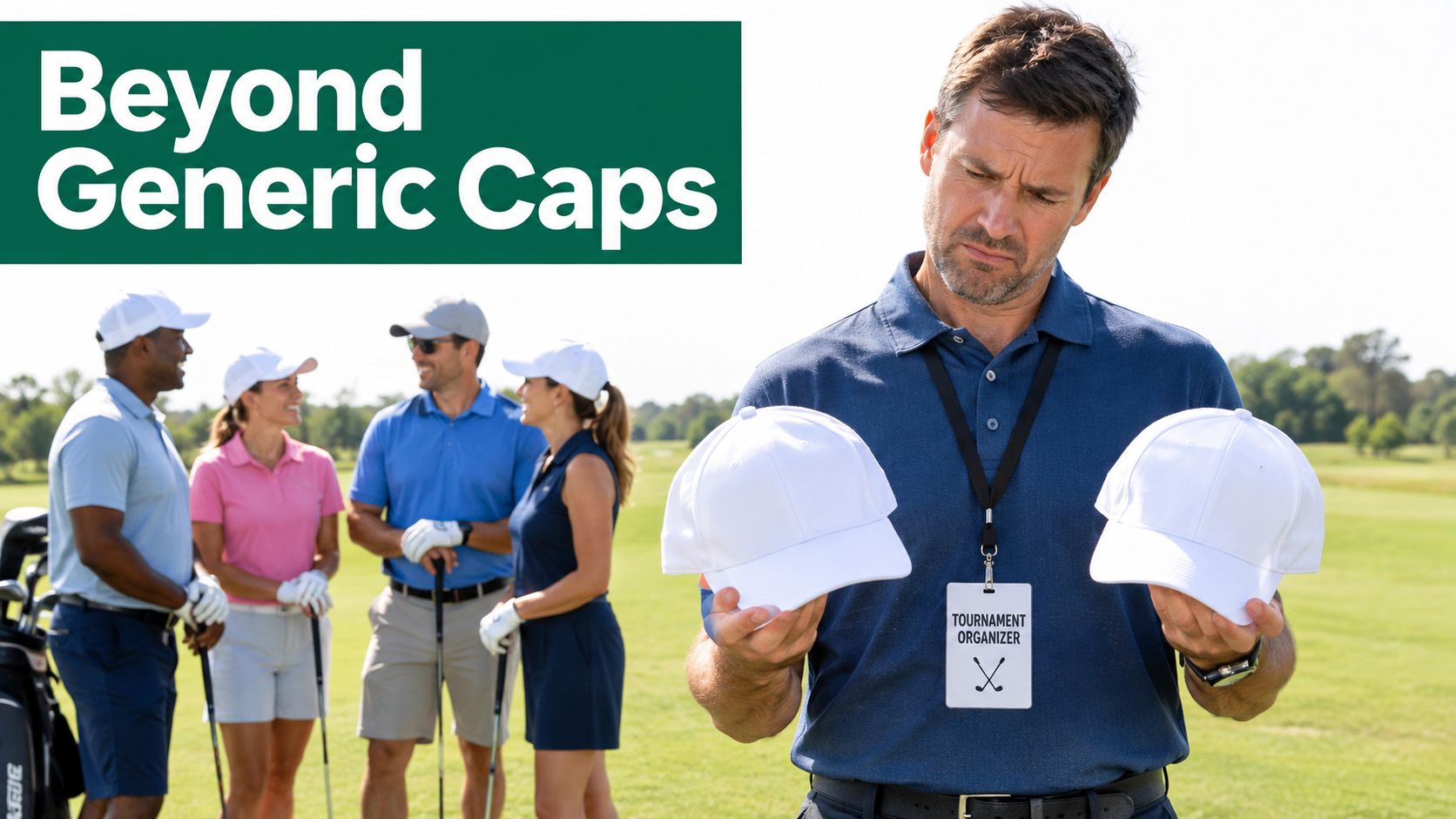
The same situation appears at a golf-themed wedding, a charity outing, or a family weekend. Generic caps may protect the face from the sun, but they don't explain who belongs to which group or preserve the memory of the day. A short name, date, team mark, or playful phrase gives each hat a clear role without requiring a completely custom garment.
Why the small detail matters
A personalized golf hat works because it combines a familiar golf silhouette with a visible identity marker. The base remains easy to wear with polos, quarter-zips, or caddie-style bibs, while the added detail gives the item a reason to exist beyond basic sun coverage.
For a gift, initials can feel more considered than a standard logo. For a tournament, a removable badge can help players and staff stay organized. For a club or corporate group, a consistent crest can create a unified appearance in photographs without forcing every person into an identical full outfit.
The broader category already has substantial commercial scale. The global golf hat market is estimated at about USD 1.5 billion in 2024 and is projected to reach roughly USD 2.9 billion by 2033, with a reported 6.5% CAGR from 2025 to 2033. North America is reported to hold around 40% of the market, or about USD 800 million in 2024, showing that golf headwear is an established accessory category rather than a novelty niche. These figures come from DataHorizzon Research's golf hat market overview.
Practical rule: If the hat needs to identify a person, choose text. If it needs to represent a group, choose a logo or patch. If the identity may change, choose a removable system.
The rest of the buying decision becomes easier once the buyer separates the cap itself from the decoration placed on it.
What a Personalized Golf Hat Actually Is
A personalized golf hat is a course-ready cap customized with a name, initials, monogram, logo, number, or other identifying design. The customization is applied to a standard golf hat silhouette, so the buyer chooses two separate things: the base hat and the decoration layer.
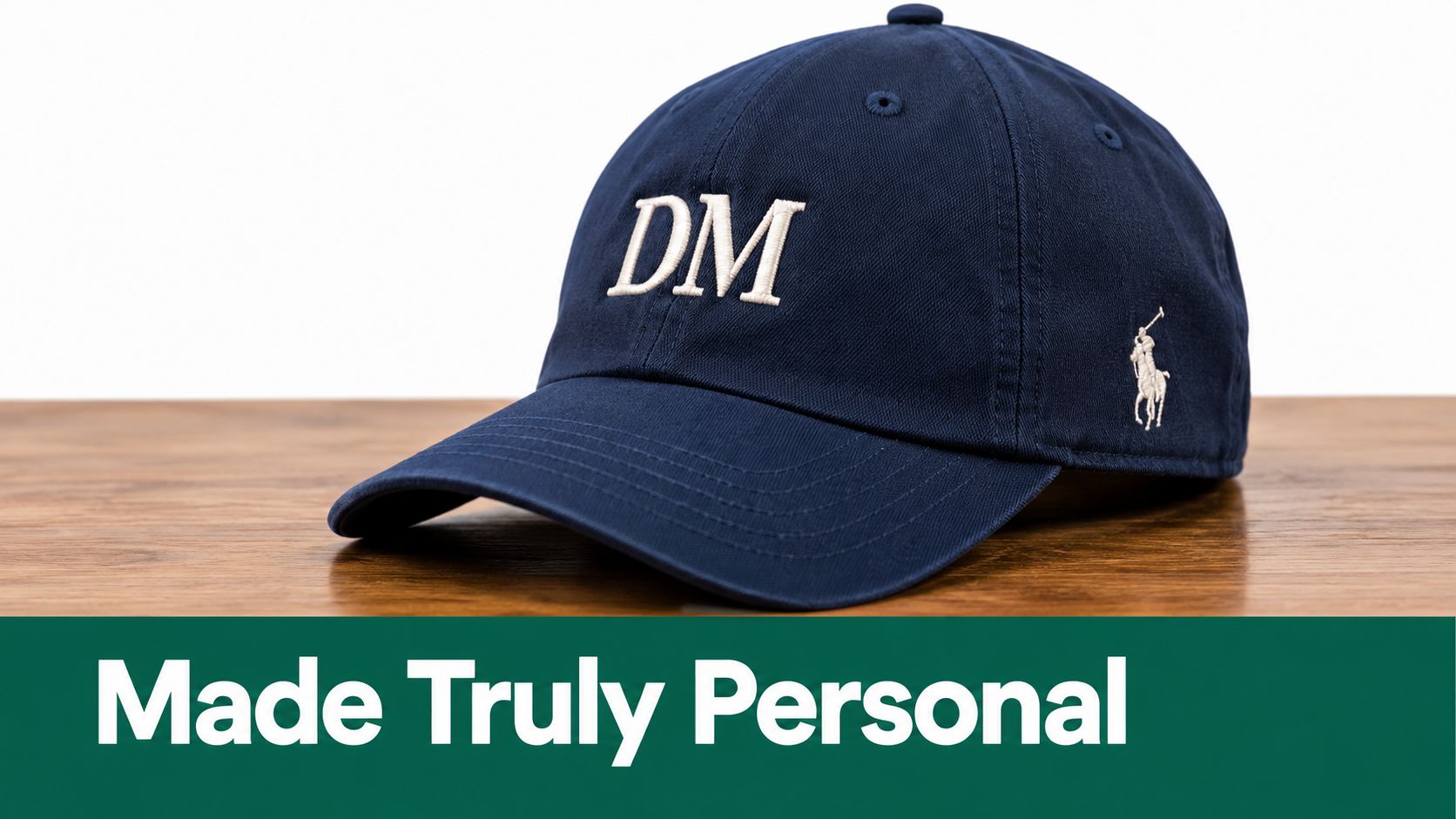
Start with the base
The base controls how the hat sits and feels. A structured crown has internal support that keeps the front panel upright, much like a firm handshake. A semi-structured crown keeps some shape while feeling less rigid. An unstructured crown collapses more naturally, similar to a relaxed handshake, and often suits casual outfits.
The closure matters too. An adjustable strap or snapback is forgiving for gifts and group orders because the wearer can change the circumference. A fitted cap gives a cleaner uninterrupted look but requires a more accurate measurement. A flex band adds some give, though it still needs a sensible size range.
Material is another part of the base decision. Performance polyester or nylon blends generally move moisture away from the skin and dry faster than cotton, while cotton can provide a softer, more traditional hand feel. For sunny rounds, a performance fabric with a high UPF rating and a moisture-wicking sweatband addresses the two comfort problems most likely to appear on the course, sun exposure and forehead sweat. Guidance for golf headwear commonly cites UPF 50+ as blocking about 98% of UV radiation, as described in this golf sun-protection guidance.
Add the decoration
Think of embroidery as stitched artwork. Thread becomes part of the fabric, creating a raised, durable mark. A patch works more like a wearable badge that can carry a crest, illustration, or event emblem. A Velcro nameplate resembles a luggage tag, allowing the visible identity to be removed or replaced.
That distinction prevents a common mistake. A buyer who wants a season-long personal gift may need permanent stitching, while a tournament director with changing rosters may need a removable identifier. The hat is only half the product. The decoration method determines how permanent, detailed, and reusable the final piece will be.
Choosing Embroidery, Patches, or Velcro Nameplates
The decoration method should follow the hat's job. Embroidery suits a fixed identity, patches create a stronger graphic statement, and Velcro nameplates provide the most practical flexibility for groups whose roles change.
A side-by-side decision
| Method | Durability | Cost | Flexibility | Best For |
|---|---|---|---|---|
| Embroidery | High when properly produced and cared for | Usually higher than basic applied decoration | Low once stitched | Personal gifts, club marks, season-long use |
| Patches | Durable, with construction and attachment affecting longevity | Moderate, depending on size and detail | Moderate, especially when removable | Crests, event artwork, themed collections |
| Velcro nameplates | Good when removed before washing and handled carefully | Often practical for repeatable name systems | High | Tournaments, caddie roles, shared hats, changing rosters |
Embroidery gives the most integrated appearance. The design is sewn into the crown rather than placed on top, so it looks like part of the hat. It handles repeated wear well, but very small lettering and intricate artwork can lose clarity because thread needs room to form clean shapes. Industry decoration guidance reports that heat-applied methods can begin lifting at edges after roughly 25 to 40 wash cycles, while quality embroidery is described as potentially outlasting the garment itself. That makes embroidery guidance for curved hat surfaces relevant when durability matters.
Patches are useful when the artwork needs a border, multiple colors, or a more noticeable surface texture. An embroidered patch can give a club crest a traditional appearance, while a woven patch can preserve finer visual detail. A removable patch also lets one base hat support different events. Buyers considering a crest or swap-ready design can review custom logo patch options.
Velcro nameplates work differently. The hat carries the attachment panel, while the name, role, number, or group label sits on a removable piece. That makes the system valuable for caddie-style teams, tournament staff, or shared event inventory. The tradeoff is that the attachment area can look more functional than decorative, and the nameplate needs careful handling during cleaning.
A simple choice rule helps:
- Choose embroidery when the message won't change and the hat should feel like a lasting gift.
- Choose a patch when the design is a crest, illustration, or event emblem with visual weight.
- Choose Velcro when people, roles, or teams may change between rounds.
Getting the Size and Fit Right
Personalization can't rescue a hat that pinches, rides too high, or slips during a swing. Fit starts with a head measurement, not with the wearer's usual shirt size.
Measure before choosing
A soft tape measure should sit one finger-width above the eyebrows, pass around the widest part of the head, and remain level as it returns to the starting point. The wearer should keep the tape comfortable rather than pulling it tight. The measurement can then be matched to the seller's S, M, or L chart, or to a numeric fitted range.
Specialty sizing guidance, such as the adult sizing information from Caddie Uniform, helps translate that measurement into a product choice. A buyer should use the exact chart for the chosen hat because crown depth, closure design, and fabric stretch can change how the same nominal size feels.
Match the crown to the wearer
A structured crown keeps the front panel crisp and often creates a more formal tournament appearance. A semi-structured crown provides shape without the same firm feel. An unstructured crown tends to mold more readily to the head and can suit a relaxed weekend round.
Hair volume and accessories deserve attention. A person with thicker hair may need a little more room, while sunglasses can make a tight hat feel uncomfortable at the temples. A slightly looser fit can also help during a long round, provided the cap doesn't move when the wearer bends or walks.
Gift buyers usually have the safest path with an adjustable snapback or Velcro strap. A fitted flex band can work when the recipient's measurement is known and the size range is clear. Adjustable doesn't mean shapeless, so the front profile and crown height still need to match the intended look.
Test the final feel
Before approving a personalized order, the buyer should check:
- Circumference: The band should contact the head without leaving pressure marks.
- Depth: The crown should cover the head securely without sitting on top like a shallow bowl.
- Front height: The decoration should sit flat and remain readable when the brim points forward.
- Brim position: The brim should shade the eyes without obstructing sunglasses.
- Movement: A gentle head turn should not make the hat slide or twist.
A new cap often feels firmer before the fabric relaxes. Wearing it briefly indoors can reveal pressure points before a name or logo is finalized.
Styling With Caddie-Inspired Hat Collections
A single personalized cap can complete an outfit, but a small themed collection creates a stronger visual language. Caddie-inspired styling works because the hat is treated as part of a wardrobe rather than an isolated accessory. The same wearer can use a quieter design for a member-guest event, a breathable option for a summer league, and a bolder color for a team photograph.
A khaki-and-cream lineup feels at home with classic golf separates. Forest green supports a traditional course palette, while navy creates a clean tournament identity. The important point isn't matching every item exactly. A simple three-tone rule keeps the outfit controlled: one dominant color, one supporting color, and one small accent repeated in the hat, belt, glove, or polo.
Build the outfit around the hat
The Heritage Linen collection pairs naturally with a tucked oxford and chinos. That combination suits a member-guest day or a clubhouse setting where the outfit needs to look polished without becoming formalwear. The hat's personalization can remain restrained, such as initials or a small crest.
The Performance Mesh collection belongs in a more active setting. A moisture-wicking polo and classic shorts support the same practical feel, while the breathable construction keeps the outfit visually lighter for summer leagues. A nameplate or compact front mark can identify the player without overpowering the rest of the clothing.
| Collection | Outfit Pairing | Best For |
|---|---|---|
| Heritage Linen | Tucked oxford, chinos, leather belt | Member-guest days and clubhouse events |
| Performance Mesh | Moisture-wicking polo, tailored shorts, athletic shoes | Summer leagues and active rounds |
| Navy Tournament Edition | Coordinated polo, dark trousers or shorts, restrained accessories | Team photos, charity outings, and formal tournament presentation |
The hat can also anchor a caddie-style wardrobe built around a white coverall or bib, green accents, and a removable event patch. Readers looking for a rope-front silhouette can view the rope cap catalog while deciding whether a retro detail suits the collection.
A coordinated lineup photographs better because the colors and silhouettes repeat without making every person look exactly the same. For event planners, the Caddie Uniform hat collection provides a starting point for pairing headwear with a broader caddie-inspired theme. The final look should feel intentional from the first tee through the group photograph.
Ordering, Caring For, and Maintaining Your Hat
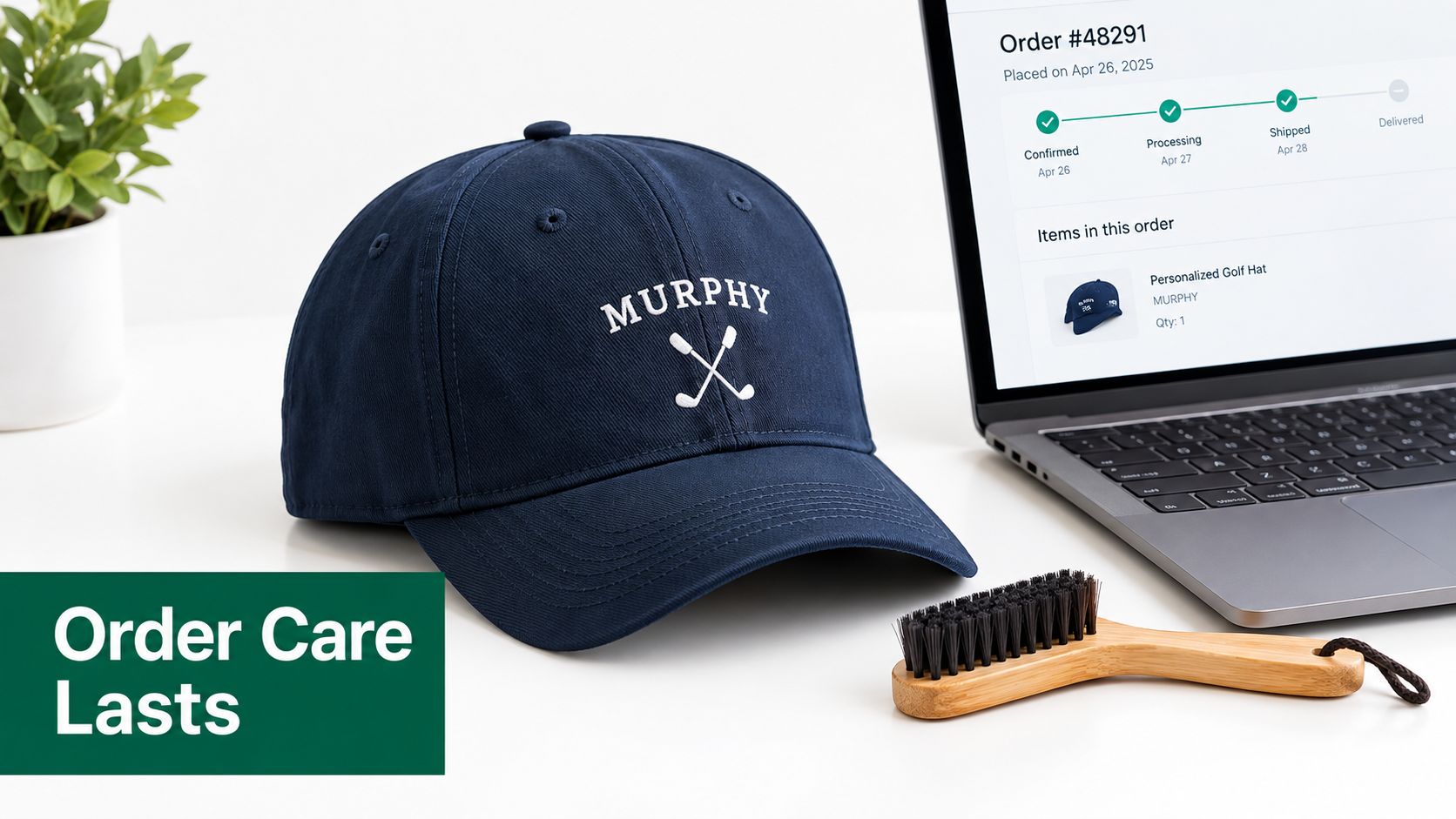
The ordering process becomes straightforward when the buyer treats personalization as an approval workflow rather than an afterthought. The selected cap, decoration method, artwork, thread or patch colors, and delivery date all need attention before production begins.
Follow the approval path
The usual sequence looks like this:
- Select the base hat: Choose the silhouette, fabric, color, closure, and crown structure.
- Choose the decoration: Decide between embroidery, a patch, or a removable nameplate.
- Submit the details: Provide the text, logo, number, or crest in the clearest available file.
- Review the mockup: Check spelling, placement, scale, contrast, and orientation.
- Approve production: Confirm the delivery window before authorizing the order.
A clear digital file gives the decorator a better starting point, but the mockup remains essential. Low-resolution artwork may need cleanup, unusual characters may not translate cleanly into stitches, and screen colors can differ from thread or fabric colors. A buyer should ask for a correction before approval rather than assuming the finished hat will match an on-screen preview exactly.
The supplied ordering guidance describes production windows of 7 to 14 business days for embroidery and 5 to 10 days for Velcro nameplates. Those are planning references, not guarantees, so an event organizer should allow room for proofing, shipping, and any artwork revision.
Protect the decoration
Embroidered hats should be spot-cleaned with mild detergent and a soft brush. The crown can be reshaped while damp, then left to air-dry away from direct sunlight. High heat and aggressive scrubbing can distort the fabric, weaken adhesives, or roughen thread.
For Velcro nameplates, removal before washing helps protect both the hook surface and the hat. The nameplate should be reattached only after the cap is completely dry. Patches need similar care around their edges, especially if the patch uses an adhesive or stitched border.
Storage affects appearance between rounds. A hat form can support the crown, while a clean shelf prevents crushing under heavier items. Stacking should be gentle, and the brim should remain free from bending pressure so the personalized golf hat keeps its shape and readable decoration.
Picking the Right Personalized Hat for Your Event
The best choice comes from matching four decisions: decoration, fit, collection, and timing. Each event places different demands on those elements, so the buyer should start with the occasion rather than with the decoration style alone.
For a season-long league or corporate gift, embroidered lettering gives the hat a fixed identity and a finished appearance. A patch suits a casual outing, especially when the event logo needs more graphic detail or the wearer may want to move the design between compatible hats. A Velcro nameplate fits tournaments with changing rosters, caddie roles, or last-minute team assignments.
Color and silhouette should follow the event's visual character. A crisp white tournament look works well with green accents and coordinated group clothing. Heritage navy supports a caddie-bib pairing and photographs with a more traditional tone. A vintage flat-bridge or rope-front shape adds personality when the occasion is informal and the group wants a stronger retro cue.
Use this final selection path
- For a personal gift: Choose an adjustable or accurately measured cap with embroidered initials.
- For a formal team event: Use a consistent color collection and a restrained crest or logo.
- For a changing tournament roster: Select removable nameplates and confirm spare labels before ordering.
- For a themed photo shoot: Coordinate the hat with the bib, polo, belt, and accent color.
- For a long day outdoors: Prioritize a performance fabric, a high UPF rating, and a moisture-wicking sweatband, as outlined in the earlier sun-protection guidance.
The buyer should confirm head measurements, compare them with the selected size chart, approve the mockup, and set the delivery window before the first tee time. After the event, spot-clean the crown, remove Velcro pieces before washing, and store the hat so the brim and decoration stay in shape.
A confident final choice is simple: select the collection first, match the fit carefully, use permanent or removable personalization according to the event, and protect the finished hat with gentle care.
Caddie Uniform offers caddie-inspired hats, custom patches, removable Velcro nameplates, and coordinated uniform pieces for events, gifts, and group styling. Visit Caddie Uniform to choose a hat collection and build a personalized look that fits the occasion.


