


October arrives with the same familiar problem. One child wants a full character costume, another refuses anything itchy, an infant needs a stroller-safe layer, and the adults want something coordinated without squeezing into plastic or novelty fabric. By the time every family member agrees on a theme, the best sizes may be gone and the only remaining option is a mismatched collection of uncomfortable costumes.
The stronger approach to family Halloween costumes starts with outfit architecture rather than a character list. A caddie-inspired uniform gives each person a shared visual language while allowing different silhouettes, sizes, names, numbers, hats, and accessories. The result feels intentional in photographs, stays practical during trick-or-treating, and can remain useful after Halloween instead of becoming a one-night purchase.
The Challenge of Coordinating Family Halloween Costumes
A family of four can spend an entire evening choosing a theme and still end up with four separate costume problems. The toddler needs room to walk, sit, and move freely. The baby needs easy access for feeding and diaper changes. The tween wants a recognizable idea without looking childish, while the adults need clothing that fits like clothing rather than theatrical equipment. One rigid costume rarely works for every age and body type.
The usual compromise looks familiar: one person wears a full-body character suit, another settles for a printed shirt, and the youngest gets an oversized accessory that slips over the face. The theme technically matches, but the photos look accidental and the evening turns into repeated costume adjustments. Set the comfort requirements first, then build the visual theme around them.
A custom caddie uniform solves the problem by separating theme from silhouette. One family member can wear coveralls, another can choose a bib over a shirt, an infant can wear a soft layer with a small accessory, and a pregnant parent can adapt the look around existing clothing. White garments with green accents still read as one coordinated caddie group, even when each person wears a different cut. Names, numbers, hats, and patches add family identity without forcing identical outfits.
Practical rule: A family costume should coordinate at a glance without requiring identical garments.
Use textile projects as a source of color and pattern ideas for a broader Halloween event. Guides to jelly rolls for Halloween quilts can suggest seasonal prints, repeating motifs, and restrained palettes for patches, hat details, or a family photo backdrop. Keep the uniform colors controlled. Too many unrelated character colors make a group look cluttered in photographs.
Before ordering from Caddie Uniform, review practical group Halloween costume ideas and test the theme against the least flexible member of the household. Start with the infant, the tallest adult, the most sensitive child, and anyone who needs maternity-friendly comfort. Then assign colors, layers, and accessories to everyone else. That order prevents last-minute substitutions and produces a coordinated family look that remains wearable after Halloween.
The Shift Toward Flexible and Reusable Themes
A family heading from a school parade to a Halloween party needs clothing that can handle movement, weather changes, photographs, and different comfort limits. That requirement is pushing families away from sealed, single-use character suits and toward coordinated themes built from wearable pieces. A brief history of Halloween costumes shows the shift from homemade disguises to standardized store-bought products after World War II, with one company controlling an estimated 70% to 80% of the Halloween costume market by the 1960s, according to CNN's history of Halloween costumes.
The buying process became easier, but the standard package also made the costume more rigid. One character usually meant one jumpsuit, one shape, and one set of restrictions. Mixed-age families need a theme that can stretch across infants, children, adults, tall bodies, maternity needs, and different tolerance for hats, masks, or heavy layers.
A 2025 survey of 1,770 U.S. adults found that 87% had not worn a family Halloween costume as children, while 55% said their parents never dressed up and only 11% said their parents always or usually dressed up, as reported in the Yahoo lifestyle survey. The practical takeaway is clear: choose a base palette and removable details that survive stroller rides, school parades, and long evenings instead of committing everyone to one sealed character suit.
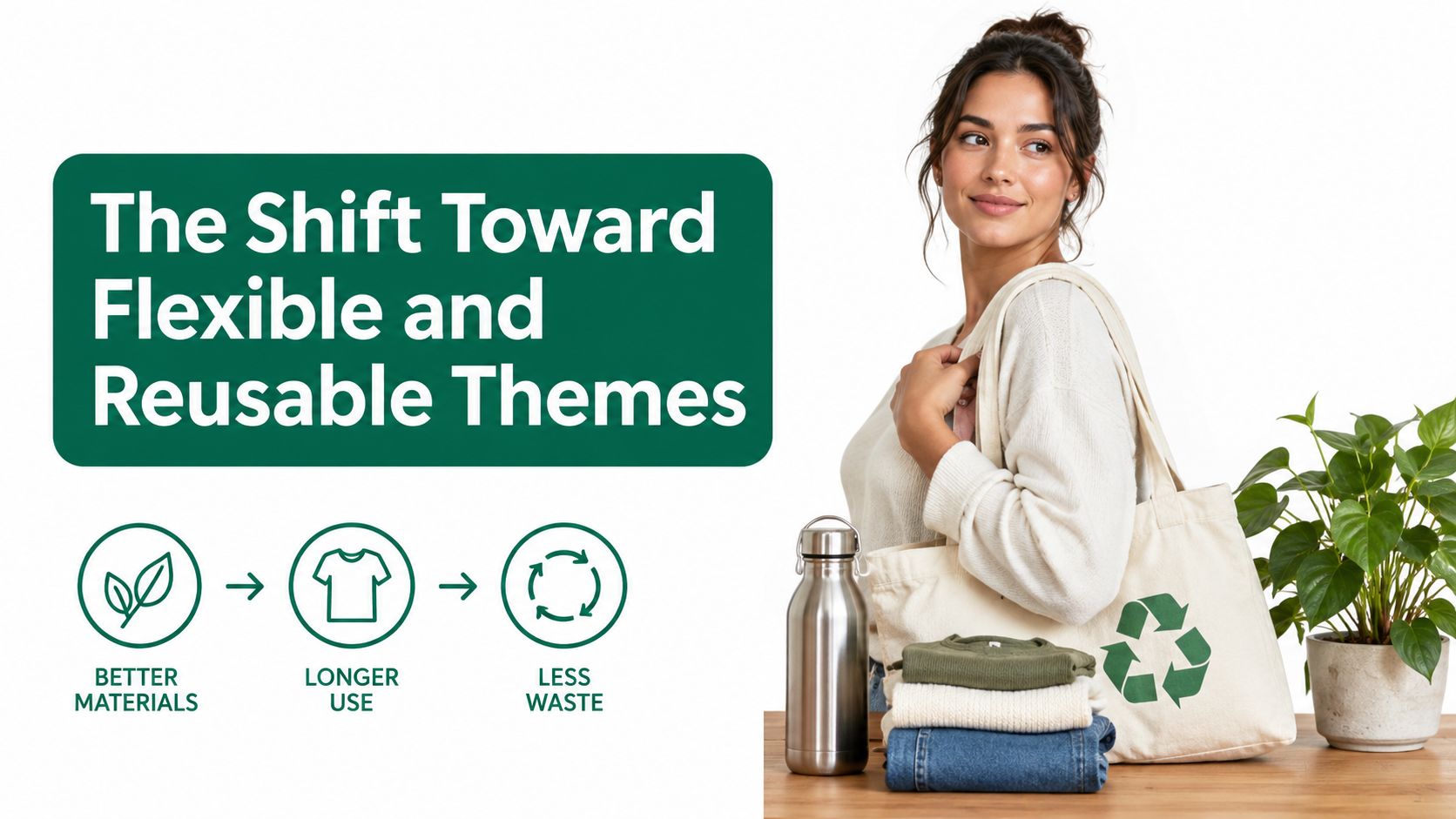
Why flexible themes work better
Flexible ensemble themes preserve a clear group identity while allowing each person to wear a practical variation. Set the visual system first: choose two or three main colors, one repeated detail, and a recognizable role. Then apply that system to apparel that can be layered, adjusted, washed, and worn again.
The Halloween costume market is estimated at $5.8 billion in 2025 and projected to reach $8.1 billion by 2034, with a projected 4.2% CAGR, according to MarketIntelo's Halloween costume market report. For family shoppers, the useful point is not market size. It is timing. Seasonal demand concentrates from August through October, so families should settle on colors, sizes, and custom details before popular options become harder to source.
Online purchasing makes accurate measurements and adaptable construction even more important. One analysis estimates that online channels represented 52.8% of global kids' Halloween costume sales in 2025, compared with 38.4% in 2019, citing convenience, assortment, price comparison, and customer reviews in its kids' Halloween costume market analysis. Measure the wearer, check garment length and closure placement, and leave room for a base layer.
What families are buying now
Parents are choosing a complete group solution: clothing that photographs well, remains comfortable during transport, and does not become useless after one night. Custom caddie uniforms answer that need with a consistent visual language and reusable apparel. A caddie look can support Halloween, team events, school activities, family photos, or golf-related gatherings without rebuilding the entire costume.
Use the uniform as the foundation, then change the presentation with removable patches, nameplates, hats, or small golf accessories. The result feels coordinated without forcing every family member into identical clothing, and the core pieces remain useful after Halloween ends.
Comparing Pop Culture Costumes and Custom Caddie Uniforms
A family photo can look coordinated on paper and still fall apart at the event. The infant needs room for feeding and stroller use, the adult needs usable length, the pregnant parent needs flexibility, and the child who dislikes masks or hoods needs a comfortable alternative. Pop-culture costumes create instant recognition, but one character design rarely serves every person equally well.
A custom caddie outfit solves the group problem through shared styling. Use a common base color, green accents, coordinated hats, and personalized names or numbers. Each family member can wear a practical variation while the group still reads as one team.
Costume Theme Comparison Matrix
| Feature | Standard Pop Culture Costumes | Custom Caddie Uniforms |
|---|---|---|
| Comfort | Often depends on novelty fabric, an attached hood, or an enclosed shape | Uses an apparel-based structure with shirts, layers, bibs, or coveralls |
| Infant suitability | Some designs make feeding, changing, sitting, or stroller use difficult | A small bib, soft layer, or simple accessory establishes the theme without a restrictive suit |
| Mixed body types | Each person may need a separate character garment with limited shape flexibility | The same caddie aesthetic works across different cuts and proportions |
| Tall adult fit | Character costumes may have limited lengths or depend on loose sizing | Longer variations and separate garments offer more practical options where available |
| Maternity adaptation | A fixed costume shape can become uncomfortable as the event approaches | A bib, hat, or coordinated top keeps the theme compatible with maternity clothing |
| Personalization | Usually limited to the printed character design | Names, numbers, logos, patches, and accessories give each outfit an individual detail |
| Reuse | Often tied closely to one Halloween or one character | Base garments and removable details work for birthdays, photographs, gatherings, or fan wear |
| Photo consistency | Looks strong when every costume fits well, but uneven sizing can disrupt the group | A controlled color palette and repeated details keep the photo unified |
| Packing and movement | Bulky pieces can complicate car rides, strollers, school events, and meals | Separate garments and lightweight accessories are easier to transport and remove |
The caddie approach suits families that prioritize comfort, flexible styling, and repeat use. A character costume still makes sense when one child has a firm preference and the character drives the celebration. Coordinate that choice with shared colors, accessories, or supporting roles instead of forcing every person into a matching suit.
Choose the pop-culture option when the character itself matters most. Choose a caddie uniform when the group photograph, fit range, and future wear matter most. Adults also get a more comfortable way to participate. A clean, sporty uniform feels appropriate for family photos and gatherings without requiring anyone to wear a cartoon suit.
A caddie uniform gives reluctant participants a clear role. One person can wear a polo or structured top, another can use a bib over everyday clothing, and a child can add a hat or personalized patch. The visual connection stays intact while comfort determines the garment.
A coordinated family look needs a common visual system, not identical clothing.
Build that system around three repeated elements: a light base garment, a green accent, and one personalized detail. Keep the palette controlled and the accessories limited. Too many props, printed characters, or competing colors make a group photo look busy. Reusable caddie pieces create a polished Halloween look while remaining useful after the holiday.
Sizing and Coordination Across Mixed Ages
A family can choose the right theme and still end up with a poor fit. The usual problems appear during ordering: an adult needs extra length, a tween falls between youth and adult measurements, or one garment leaves too little room for movement. Solve sizing before choosing names, patches, and finishing details. A photo-ready group depends on garments people can sit, walk, bend, and move in comfortably.
Use measurements, not age labels, as the basis for every order. Measure each child while they stand naturally, with the tape level and close to the body. Record chest, waist, height, and, where relevant, inseam measurements. Compare those figures with the children's sizing guide, then check the garment's intended fit and whether it will be worn over another layer.
For example, measure a child's chest at its fullest point, compare that measurement with the chart, and choose the larger size when the child falls between sizes or needs space for a shirt underneath. Do not order from last year's clothing size. Children can change proportions quickly, and a familiar label does not guarantee the same fit across garments.
Order by measurement, then coordinate
Create one simple order sheet for the household. List each person's measurements, preferred garment, color, name or patch placement, and any layering requirement. This prevents a late switch from coveralls to a bib from disrupting the visual plan. It also shows where identical garments would create unnecessary fit problems.
Adults should not be forced into children's cuts, and children should not be sized by comparison with an adult family member. A tall wearer may need extra length. Another may need a looser top or a bib that sits over a personal shirt. A pregnant parent can follow the shared palette and personalization plan while choosing a base garment with enough room for comfort.
Review youth proportions before placing an order. The shop junior golf collection can provide useful reference points for movement-friendly cuts, layering, and proportions suited to active children. Use those ideas to guide garment selection, not to replace individual measurements.
Use a clear garment hierarchy
Assign each person a role in the uniform system before checkout:
- Anchor garments: Adults or older children who want the strongest caddie silhouette can wear the main uniform pieces.
- Flexible garments: Bibs can coordinate different shirts, accommodate changing temperatures, and reduce the risk of forcing one cut on every body shape.
- Finishing details: Caps, green accents, and name patches can connect the group when garment styles differ.
Check five points before paying:
- Chest and waist: Compare current measurements with the garment chart.
- Length and inseam: Confirm that tall wearers have enough coverage, especially over layers.
- Movement: Make sure each child can sit, bend, climb stairs, and get into a car seat safely.
- Layering: Allow room for a long-sleeve shirt or light jacket if the evening is cool.
- Personalization: Place names and patches where bags, straps, and seat belts will not hide them.
Place the order only after every wearer has a recorded size and garment assignment. That small step prevents mismatched substitutions and keeps the group visually connected.
The final look does not require identical outfits. White coveralls, green bibs, matching caps, and shared name patches can establish one repeatable system while respecting different bodies, ages, and comfort needs.
Use Cases Beyond Halloween Night
A family costume should earn space in the wardrobe after the candy is gone. Custom caddie uniforms do that better than disposable character costumes because the base pieces read as coordinated apparel. Remove the patches and themed accessories, and the same clothing can support birthdays, photographs, golf events, and future gatherings without looking like leftover Halloween gear.
Start with a golf-themed birthday party. Children can wear personalized bibs during putting activities, while adults use coordinated hats or shirts as hosts, photographers, or team captains. Keep the shared color palette for the family, and let guests participate without asking everyone to buy a complete outfit.
Four practical settings
Family photographs benefit from clean lines and a controlled color palette. White garments and green accents stand out against grass, neutral architecture, and outdoor backgrounds. Names or small role details give each person an individual identity while keeping the group visually organized.
Birthday celebrations can use removable numbers or patches to mark teams, identify the birthday child, or add structure to party photos. A toddler can wear a bib over familiar clothing, while older children and adults use more complete uniform pieces. This approach keeps the look coordinated without forcing the same garment on every age group.
Golf outings and fan events give adults a practical reason to keep wearing the pieces. A personalized garment, patch, or cap can become part of an event outfit, especially for families already using a shared golf theme. Choose the pieces people are likely to wear again, rather than ordering props that serve one evening.
Staged content and portraits need styling that can be repeated. Photographers and content creators can adjust roles, layers, and accessories without rebuilding the concept. The same base garments can support a family portrait, seasonal card, or themed birthday shoot.
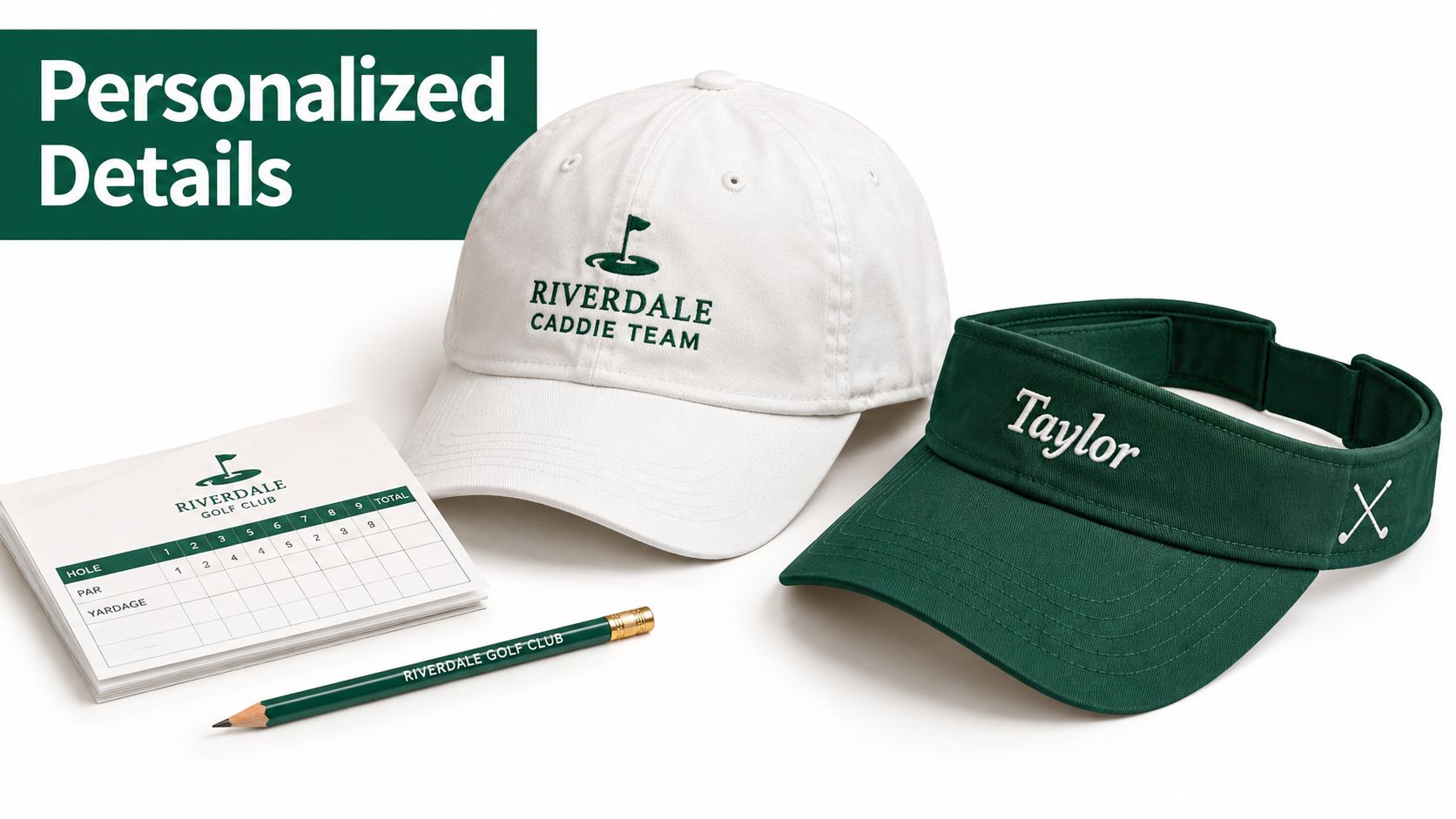
Keep the repeat-use plan in mind
Choose pieces that can change roles. A name patch can come off, a golf cap can be worn without the uniform, and a bib can layer over another shirt. A plain base garment can also join a different themed outfit when the family changes the accessories.
Modular clothing reduces costume stress. If a child removes the hat, the outfit still reads as part of the group. If a parent adds a warmer layer, the color story remains intact. If a prop becomes inconvenient, the family keeps its identity through coordinated apparel.
The strongest family Halloween costumes work beyond the front-door photograph. They handle car rides, school activities, dinner, and another event without constant repairs. A caddie aesthetic supports that continuity through comfortable, reusable garments rather than fragile character-specific parts.
Accessorizing and Personalizing the Caddie Look
A coordinated uniform provides the family identity. Accessories should clarify each person's role without making the outfit heavy, noisy, or difficult to manage. Start with comfort, then add details that improve the photograph. Children should be able to walk, sit, eat, and remove a layer without losing the group's visual connection.
Personalization works best as a system. Give each family member a name, number, or role, and keep the placement consistent across the uniforms. A child can wear a small name patch, an adult can use a number, and the birthday child can receive one distinct color accent. Repeating the same detail makes the group look intentional instead of randomly decorated.
Build accessories in order of importance
Begin with headwear. Matching caps or visors establish the caddie theme quickly, but no child should be forced to wear one. Infants and children who dislike hats can skip them while keeping the same color palette and uniform layer. Adults and older children can wear coordinated headwear suited to the venue, weather, and planned activity.
Add removable identity details next. Velcro nameplates and themed patches change the message without requiring a new garment. Use names for Halloween, numbers for a birthday gathering, or a different patch for a future portrait. For further guidance, review how a caddie uniform name patch can complete a Halloween costume.
Finish with one small golf-related prop. A scorecard, pencil, or putter cover can complete the visual story, but young children do not need a full set of accessories. Choose items that are easy to hold, store, and remove during walking, meals, or car rides.
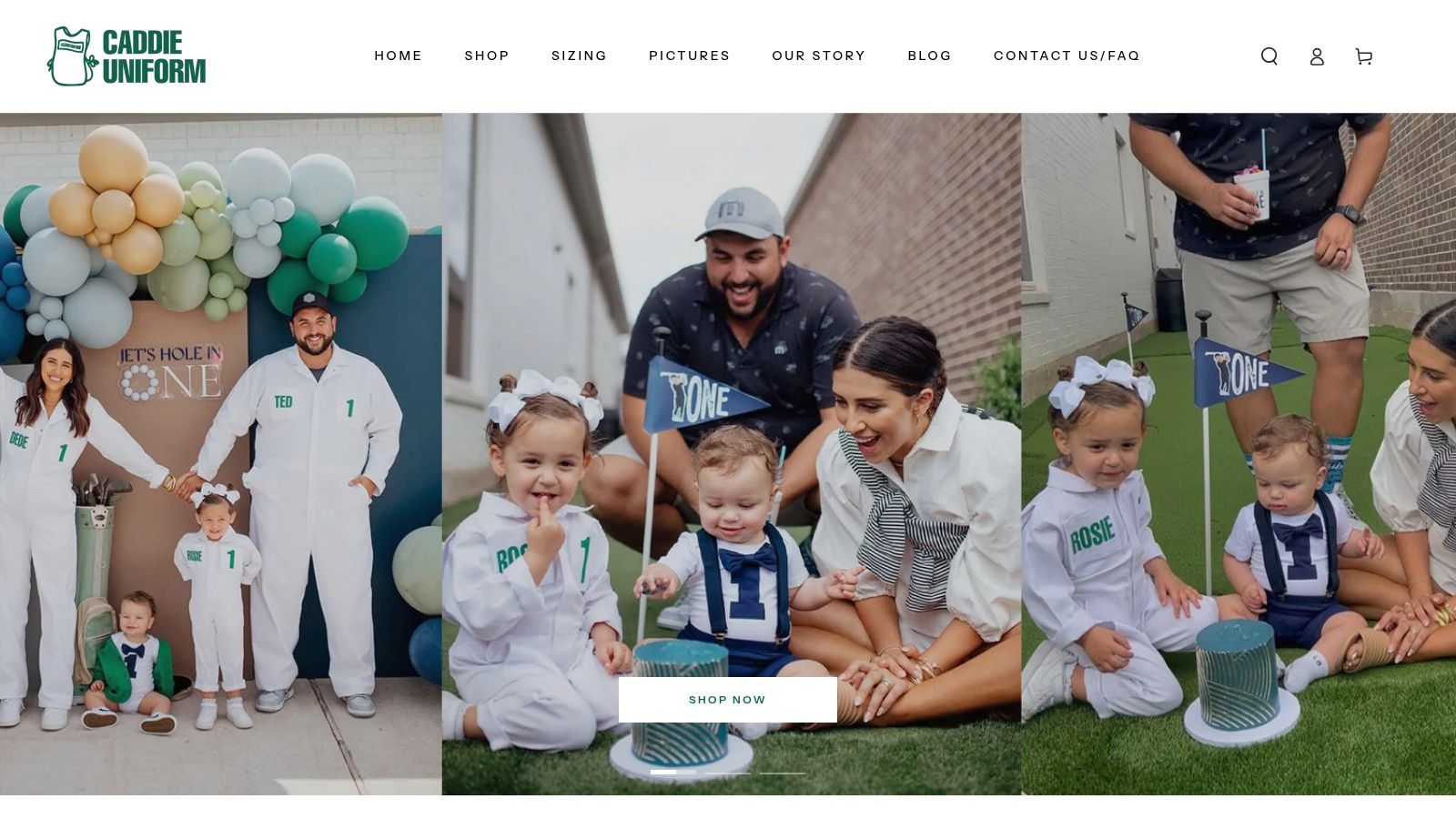
Recent coverage of adaptable Halloween costume trends supports using wearable separates and personalized details that remain useful after Halloween. That approach suits custom caddie uniforms because the family can refresh the look with patches, layers, and accessories instead of replacing the entire costume.
Use contrast without losing cohesion
Family photographs need a clear visual hierarchy. Repeat the main uniform color, then vary only one or two details for each person. Too many different hats, patches, colors, and props make the image look scattered.
Use this styling order:
- Base layer: Choose white, green, or another shared color family.
- Uniform layer: Select coveralls or bibs according to age, mobility, and layering needs.
- Headwear: Match adults and older children, while keeping infants comfortable and visible.
- Name detail: Place patches consistently so names align in photographs.
- Prop: Add one lightweight golf cue per person or subgroup.
A properly fitted belt can help an adult uniform sit securely and look finished. Families seeking general guidance on how a belt can support comfort and presentation can elevate your on-course look. Keep belts and other accessories away from children if they restrict movement, create pressure, or present a snagging risk.
The final test is simple. Remove one accessory and check whether the family still reads as a coordinated group. If the answer is no, strengthen the base colors or patch placement instead of adding more decoration. One visible name patch usually communicates more than several competing details.
Building Your Custom Family Caddie Order
Start with the household's ages, measurements, mobility needs, and event schedule. A family of four with a toddler should not automatically order four identical coveralls. A practical setup may use coveralls for one or two adults, a bib for an older child, and a lighter coordinated piece for the toddler. This keeps the group visually consistent without forcing every wearer into the same fit.
Multigenerational groups need the same color system with different garment choices. Grandparents may be more comfortable in a hat, polo-style layer, or bib, while children wear personalized uniforms. Repeating colors, patch placement, and headwear keeps the family connected in photos.
Choose the garment structure first
Coveralls deliver the clearest caddie silhouette. Bibs allow easier layering, faster changes, and more freedom of movement. Assign coveralls to family members who want a complete uniform, then use bibs for anyone who needs a less restrictive fit or expects to add clothing underneath.
Match the order to the event:
- Indoor party: Choose lightweight layers and removable accessories.
- Outdoor trick-or-treating: Leave room for weather-appropriate clothing underneath.
- Stroller-heavy evening: Keep the infant's outfit simple and skip bulky props.
- School event: Choose pieces that allow walking, sitting, bathroom access, and quick removal.
- Photo session: Prioritize consistent colors, visible personalization, and clean lines over extra accessories.
Audit the order before paying
Review every item before submitting the order. Each person needs a garment based on current measurements, a clear personalization choice, and an accessory role that does not duplicate someone else's.
Confirm these details:
- Every size is based on measurements.
- The smallest child has a safe, comfortable version of the theme.
- Tall or long-length needs have been addressed.
- Maternity-friendly layering has been planned where necessary.
- Names, numbers, patches, and logos are spelled and positioned correctly.
- Everyone can move, sit, eat, travel, and use the bathroom without removing the entire outfit.
- Personalized elements have enough lead time before the October rush.
A coordinated order does not require identical garments. It requires a shared base, controlled accents, and personal details that make each family member recognizable. Reusable uniforms also solve a common Halloween problem: buying pieces that look good for one evening but become uncomfortable or impractical afterward.
Caddie Uniform offers personalized adult and children's caddie uniforms, bibs, hats, removable patches, nameplates, numbers, and golf accessories. Build the order around each person's size, comfort, mobility, and planned use rather than choosing one garment for everyone.
Families can begin with the smallest wearer, select coveralls or bibs for adults and older children, then add personalized hats and removable patches for a photo-ready group. Visit Caddie Uniform to create a coordinated family Halloween look that remains useful for birthdays, portraits, golf events, and future celebrations.


