


A lot of golf gifts start with good intentions and end in a closet.
A relative buys a novelty driver cover shaped like a cartoon animal. A friend orders a heavy desktop keepsake with a golfer's initials on it. A company hands out branded items that look polished in a gift bag but never make it onto the course. The problem usually isn't the thought. It's that the gift doesn't fit how people use golf gear.
A personalized golf gift works better when it solves two simple jobs at once. It needs to be useful enough to reach for again, and personal enough to feel like it belongs to one person, one family, or one group. That's a very different standard from “add a name and call it custom.”
That shift matters more now because personalization is already a large consumer habit, not a fringe idea. The global personalized gifts market is projected to reach about USD 40.16 billion in 2026, with the United States representing roughly 33%, or about USD 13.5 billion, according to personalized gifting market coverage. The same coverage projects about 8.9% CAGR from 2025 to 2030 and notes that photo-based personalized gifts make up about 29% of the U.S. market, which shows how strongly buyers respond to gifts that feel individual and memorable.
Golf adds a big audience to that trend. Coverage summarized in this golf participation market report notes the R&A reported 108 million adults and juniors playing golf across affiliated markets in 2025, while a separate 2025 participation report cited 112.2 million people engaging with golf worldwide outside the USA and Mexico.
Those numbers don't mean every golfer wants a monogram on everything. They do suggest something simpler. A lot of people buy for golfers, and the winning gifts aren't just decorative. They're wearable, reusable, easy to recognize, and comfortable to use in real life.
Introduction Why Personalized Golf Gifts Miss or Hit
One common scene plays out after birthdays, holidays, and tournament parties. The golfer smiles, says thanks, and sets the gift aside. Weeks later, it's still in the box because it was fun to open but awkward to use.
That's where many personalized golf gifts miss. They treat personalization like a finishing touch instead of the main decision. The name is customized, but the item itself isn't practical. The result feels personal for a moment and irrelevant after that.
Why some gifts disappear
Golf gift buying gets confusing because buyers often focus on what looks impressive on a table, not what survives regular use. A large framed keepsake can be thoughtful, but it doesn't travel to the course. A novelty item can get laughs, but it may not fit into a bag, a routine, or a family photo.
Independent gift coverage has pointed to the same pattern. Buyers often prefer gifts that are smaller, practical, and experience-based, while bulky golf items can turn into clutter, as noted in golf gift guidance focused on what people actually use.
The best personalized golf gift usually isn't the flashiest one. It's the one that gets picked up without thinking.
A better way to judge the gift
A stronger test is simple. Ask whether the recipient can wear it, carry it, or use it regularly without changing how they already enjoy golf. If the answer is yes, personalization has room to matter.
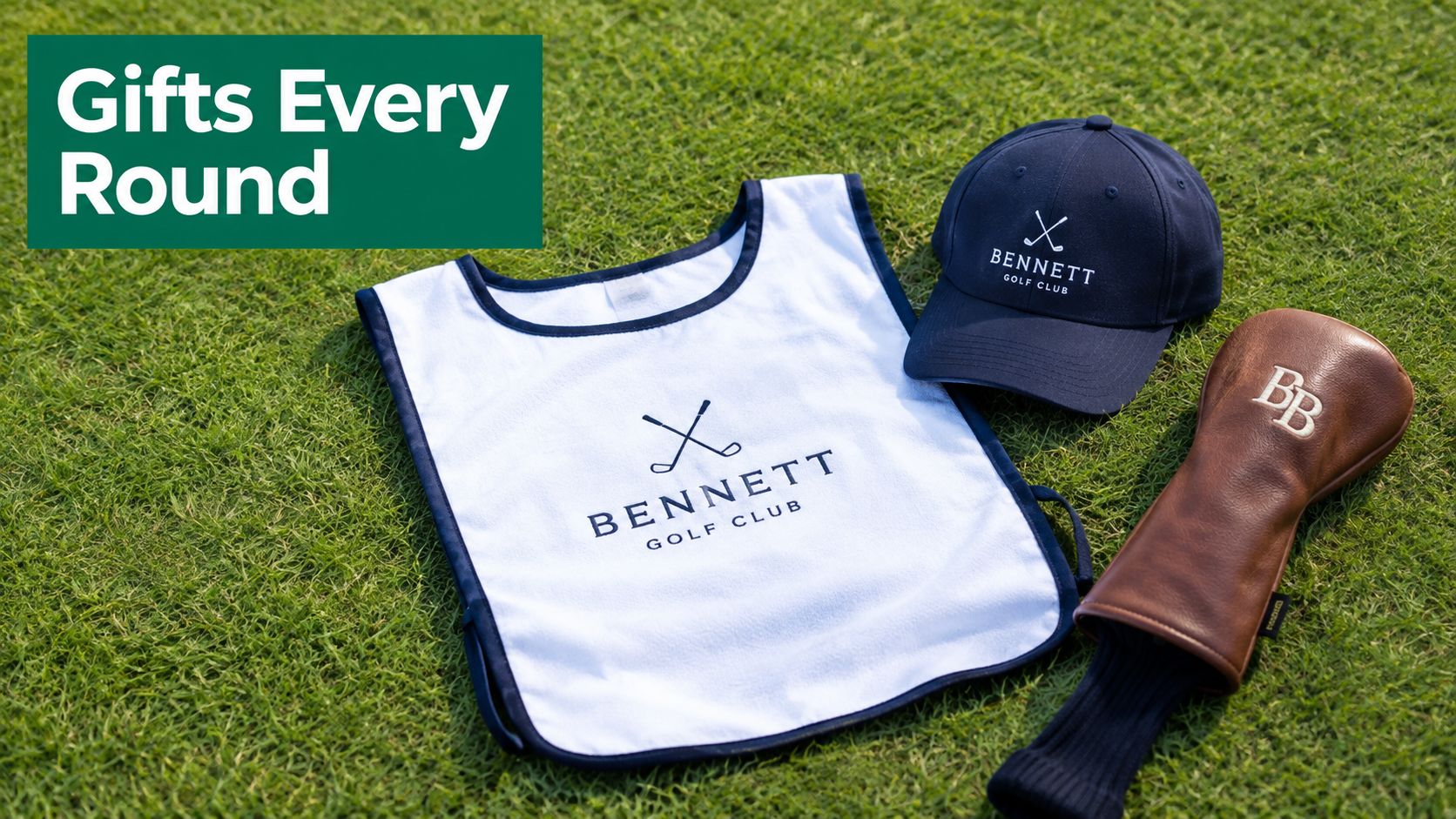
That's why useful identity items often beat display pieces. A hat with a meaningful patch, a towel with initials, a headcover with a short phrase, or a caddie-style bib for a themed event all have a job before personalization is added. The custom detail then makes the item feel owned, not just labeled.
Why identity matters as much as utility
Golf gifts also work differently from highly technical equipment. A buyer might not know the right shaft, grip, or club setup. But almost any buyer can understand identity. A family wants matching looks for a photo. A parent wants a child's golf-themed outfit to feel special. A group wants a tournament or birthday to feel coordinated.
That's why personalization works so well when it signals belonging. It says, “this is yours,” or “this is your group,” without forcing the buyer to guess exact performance preferences.
Core principle: Utility gives the gift a reason to stay. Identity gives it a reason to be remembered.
What Makes a Personalized Golf Gift Truly Personal
A personalized golf gift isn't just an object with a name on it. It's closer to a made‑to‑measure uniform than a souvenir shop keychain. Both may carry the same name, but only one feels designed for the person using it.
Three layers make it personal
The easiest way to judge a gift is by looking at three layers.
Identity. This is the most obvious layer. It includes initials, a name, a number, a logo, or a short phrase. Identity tells the recipient, “this isn't generic.”
Occasion. A great gift usually connects to a moment. That could be a birthday round, a family trip, a junior tournament, a club event, or a themed party. Occasion turns the item into a memory marker.
Usability. This is the layer buyers skip most often. If the item doesn't fit the person's real life, the personalization doesn't rescue it. A gift needs to be easy to wear, easy to size, or easy to attach to gear.
Why this matters in golf
Golf reaches a broad mix of people. Some play often. Some mostly watch. Some want something for a child's outfit, a tournament weekend, or a photo shoot rather than a strict performance product. That range is exactly why useful personalization matters.
A junior golfer might love a bib with a name patch because it creates identity without needing adult equipment. An adult fan might prefer a hat with a place-based golf design because it's wearable beyond one event. A family might want matching pieces that look coordinated in pictures without everyone needing the same clubs or skill level.
A gift feels more personal when it reflects how the recipient shows up around golf, not just what sport they like.
The difference between custom and thoughtful
Custom and thoughtful aren't always the same thing. A custom item can still feel random if the detail is too specific, too hard to reuse, or attached to an item that rarely comes out of storage.
Thoughtful personalization usually has these traits:
- Visible enough to matter: The personal detail can be seen in a photo, on a bag, or on the course.
- Flexible enough to reuse: The item still works after the birthday party, themed weekend, or corporate outing ends.
- Simple enough to wear confidently: The recipient doesn't need instructions, extra storage, or niche golf knowledge to use it.
That's one reason visible but adaptable details work so well. Recent golf gift coverage highlights demand for gifts that feel unique, style-aware, and suitable across skill levels, leaving room for customizable apparel and accessories that signal identity without tying the buyer to exact club specs or handicap assumptions, as discussed in golf gift trend coverage focused on customization and style.
A plain-language test
If the personalization can answer these three questions, the gift is on solid ground:
- Who is this for?
- What moment does it connect to?
- Will this person use it again?
If all three answers are clear, the gift is personal in the way that counts.
How Personalization Options Work and Which to Choose
Many buyers don't struggle with the wording. They struggle with the method. The confusion usually sounds like this: should the gift be embroidered, engraved, patched, or printed onto something removable?
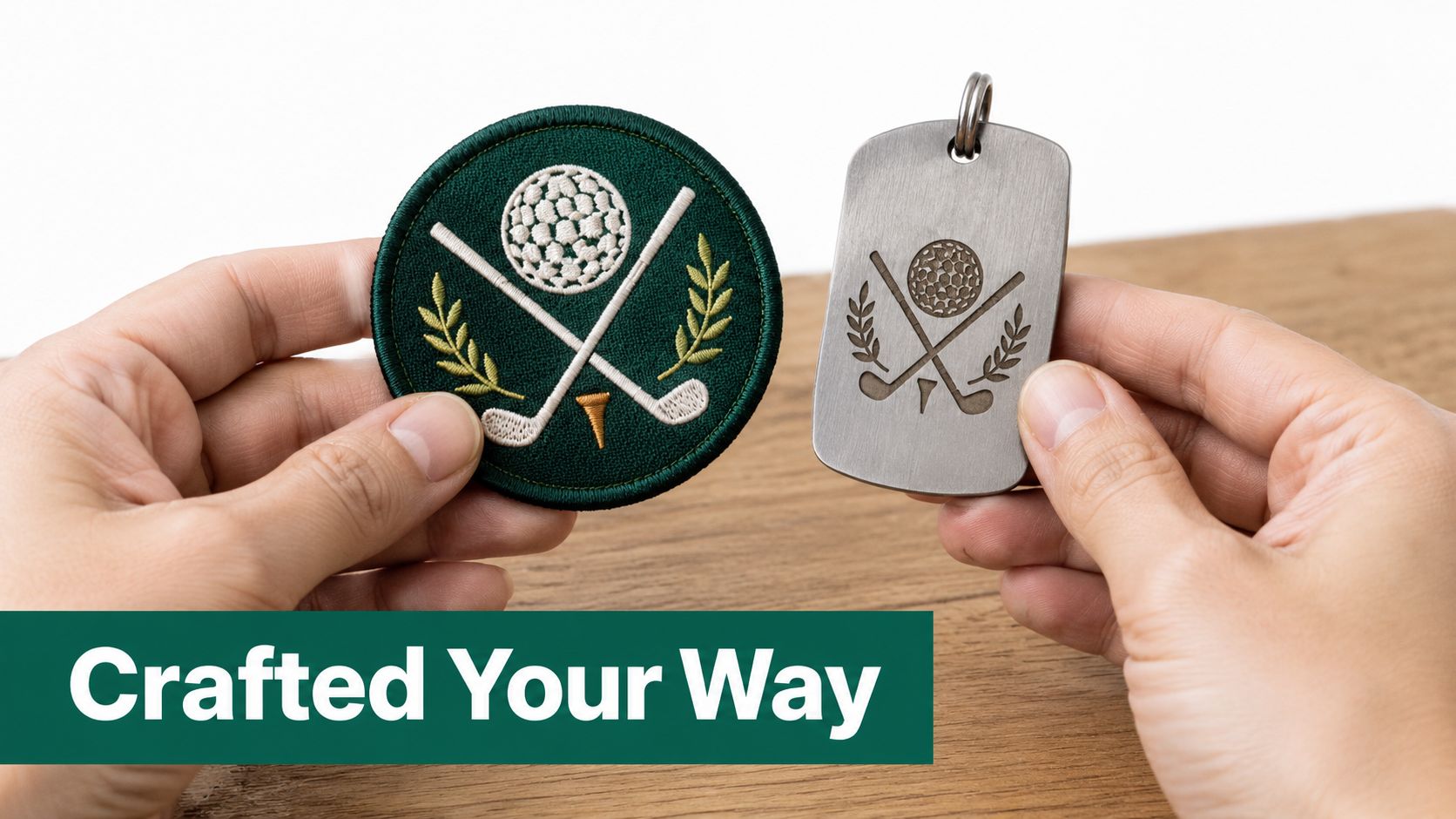
That choice matters because golf gear has to deal with sun, rain, wet grass, cart vibration, and repeated handling. Industry guidance on personalized golf gift durability and decoration methods notes that the strongest items are used every round, hold up in real course conditions, and match the personalization method to the material. It also notes that leather, quality microfiber, and reinforced stitching hold up better than thin synthetics, while embroidery and debossing suit leather and fabric, and laser engraving is better for metal tags and accents.
Start with the material, not the artwork
A common mistake is choosing the design first. It's better to ask what the item is made of and how it will be used.
If the gift is fabric, such as a towel, cap, or bib, stitching-based decoration usually makes sense. If the gift includes leather, debossing can create a cleaner, quieter look. If the personalized detail sits on a metal plate, zipper pull, or marker, laser engraving is usually the better fit.
Choosing the Right Personalization Method by Material
| Material Type | Best Method | Why It Works |
|---|---|---|
| Fabric such as hats, towels, bibs, and patches | Embroidery | Holds up well with repeated use and stays visible from a distance |
| Leather headcovers or leather accents | Debossing or embroidery | Keeps a premium look and suits the texture of leather |
| Metal tags, accents, or ball markers | Laser engraving | Creates a crisp, durable mark on hard surfaces |
| Removable fabric nameplates or patches | Embroidery with hook-and-loop backing | Makes swapping names, numbers, or logos easy without replacing the whole item |
What each personal mark does
Not every custom detail serves the same purpose.
- Initials: Clean and timeless. Good for recipients who prefer subtle personalization.
- Full names: Better for kids, teams, and event pieces where clear identification helps.
- Numbers: Useful for caddie-inspired looks, group coordination, or playful sports styling.
- Dates: Best for milestone events, but they can make the item feel more single-purpose.
- Logos: Helpful for clubs, parties, and company events when the group identity matters.
- Course outlines or short phrases: Memorable when the recipient has a strong connection to a place or moment.
Why removable Velcro details solve a real problem
Personalization gets more practical. A sewn-in name is permanent. That can be great, but it can also limit reuse. Removable hook-and-loop nameplates and patches give buyers a middle option. The item still feels custom, but the detail can be changed later for a sibling, another event, a costume, or a branded group outing.
That flexibility matters most with apparel and themed accessories. It lowers the pressure to get every detail perfect forever. It also helps when sizing is shared or when a family wants a coordinated set that can be used more than once.
Practical rule: Permanent personalization fits personal ownership items. Removable personalization fits shared, seasonal, or repeat-event items.
Buyers exploring wearable options can see how this applies in custom golf apparel examples, where names, numbers, and logos function as visible identity signals rather than hidden details.
Personalized Golf Gift Ideas That Get Used Every Round
The easiest way to spot a strong gift category is to ask one question. Does the recipient have a natural reason to reach for it often?
That's why practical, wearable, and reusable gifts usually outperform bulky display items. They fit into routines. They show up in photos. They travel more easily. They also avoid one of the biggest golf gifting mistakes, which is forcing the buyer to guess highly specific equipment preferences.
Wearable gifts often win first
Apparel and headwear solve several gifting problems at once. They're visible, social, and usually easier to choose than clubs or training gear. They also work for people who enjoy golf culture even if they aren't serious players.
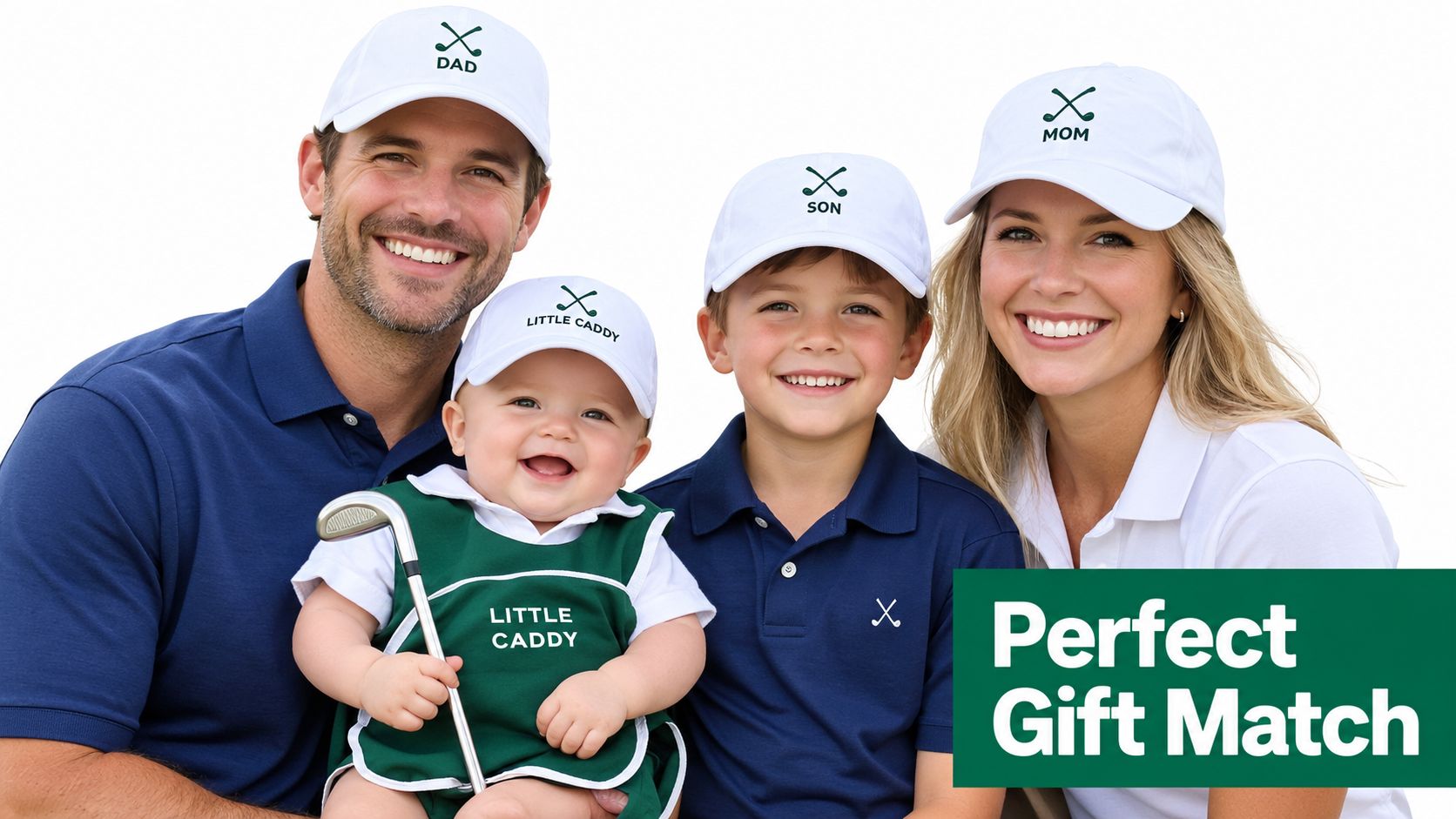
Custom caddie-style uniforms and bibs are a good example. They create an instantly recognizable golf identity for adults and kids, and they work for events, themed parties, family pictures, and casual fandom. One factual option in this category is Caddie Uniform, which offers adult and kids custom caddie uniforms, bibs, hats, patches, and removable Velcro nameplates with size coverage from infant ranges through adult 3XL, including selected long options.
A family birthday setup shows why this works. The parent doesn't need to know anyone's driver loft or putter preference. A coordinated outfit with names, numbers, or patches gives everyone a role and creates something people wear during the event.
Smaller accessories carry less risk
When the buyer wants a safer choice, smaller accessories are often the smartest lane.
Consider these categories:
- Towels: They're used regularly, easy to personalize, and simple to pair with initials or logos.
- Headcovers and putter covers: They combine visibility with protection and fit naturally into a golf bag.
- Ball markers: Small, easy to carry, and well suited to engraved names or symbols.
- Caps and themed hats: Good for sun protection, photos, and everyday wear beyond the course.
A useful example of a compact gift category is a personalized putter cover gift idea, because it blends identity with something the golfer already needs.
Why flexible sizing matters more than buyers expect
Sizing is where many gift ideas fall apart. A beautiful jacket that fits poorly won't get worn. A novelty costume that's hard to size becomes a one-time item. Flexible categories avoid that trap.
That's one reason hats, bibs, patches, and removable nameplates are strong gift formats. They reduce sizing friction. Broad size ranges also help families and groups coordinate across ages, from infants and children to adults who need roomier or longer fits.
The easier a gift is to size, the easier it is to use more than once.
Practical use cases that make sense
A few real-world scenarios show why utility-first personalization works so well:
- Birthday party: A child receives a caddie-style bib with a name patch and matching hat. It works during the party, in photos, and later for dress-up or another golf outing.
- Halloween or themed event: A removable patch system lets the outfit carry a seasonal logo now and a simpler golf look later.
- Family photo shoot: Matching hats or uniforms create a shared visual identity without requiring everyone to wear technical golf apparel.
- Golf trip gift: A towel, cap, or marker with initials is easy to pack and likely to be used immediately.
For buyers who aren't sure which item to personalize, experience-based options can also help narrow the choice. A resource like Golf Gift Vouchers is useful because it reminds buyers that golf gifting doesn't always need to revolve around equipment. It can start with the kind of golf experience or occasion the gift supports, then pair that with a practical personalized item.
The common thread
The categories that get used tend to share the same qualities. They aren't too technical. They aren't too fragile. And they don't ask the recipient to make space for one more decorative object.
They give the recipient something to wear, carry, clip on, or reach for every round.
Matching Gifts to Occasions and Recipients
The same personalization idea can feel completely different depending on who receives it. A name patch on a child's bib says something different from initials on a leather accessory or a logo on a group hat. The smartest gifts match the moment as much as the item.
For children and parents
Parents usually want a gift that's fun now and reusable later. That makes flexible apparel, hats, and removable patches especially practical. A golf-themed birthday outfit, caddie bib, or matching family set gives the child a recognizable role without needing any real golf gear.
This also works well for infants and younger children because the gift becomes part of the event itself. It's worn, photographed, and remembered.
For adult fans and casual golfers
Not every adult recipient wants performance equipment. Many prefer something that feels golf-related without being tied to their exact game. A personalized hat, towel, headcover, or visible accessory works because it signals identity without guessing swing preferences or club setup.
Father-focused buyers often lean into this category, which is why occasion-based inspiration such as customized golf accessories for Father's Day can be more useful than a generic gear list.
For events, shoots, and social moments
Event planners, photographers, and content creators usually need cohesion. They aren't choosing one gift in isolation. They're building a look.
That's where coordinated sets become valuable:
- Birthday groups: Matching bibs or hats make guests feel included without overcomplicating dress expectations.
- Halloween themes: A caddie-inspired outfit with removable patches supports the theme and still has later use.
- Photo shoots: A consistent color palette and visible names or numbers help the images read clearly.
- Wedding or engagement golf parties: Coordinated accessories can create a shared identity without everyone dressing identically.
A strong golf gift for a group doesn't need to match everyone's game. It needs to match the occasion.
For clubs, companies, and mixed audiences
Corporate and club gifting often fails when it gets too technical or too personal in the wrong way. Apparel and accessories with visible but flexible branding solve that problem better than spec-heavy golf products.
This matters when the audience includes kids, adults, beginners, fans, and experienced golfers all at once. A premium-feeling kit with a hat, patch, towel, or bib can create a polished group identity while staying reusable beyond the single event.
The most useful personalization in these cases signals belonging, not expertise. It says “part of this event,” “part of this team,” or “part of this family” without asking whether the recipient carries a certain handicap or preferred club brand.
How to Choose the Right Customization Without Overthinking It
Personalization gets easier when it's treated like a specification problem. The buyer isn't trying to create art from scratch. The buyer is matching recipient, item, material, and timing.
Mainstream personalized golf programs now commonly support uploaded logos, names, initials, and custom text, along with preview tools and proof-approval steps before production. Some advertise turnaround in 3 days or less, according to personalized golf ordering workflows. That matters because it shows customization has become a repeatable process, not just a slow novelty order.
A simple five-part checklist
- Define the recipient clearly An adult golfer, a child, a parent, a tournament guest, and a mixed corporate group all need different levels of flexibility. The right gift starts with who will use it, not with what looks exciting in a product photo.
- Pick the item before the wording Start with a category the person can use. Hats, towels, bibs, patches, headcovers, and small accessories are often easier choices than highly fitted or highly technical gear.
- Decide how permanent the personalization should be If the item is meant for one person long term, permanent details make sense. If the item may be reused, shared, or adapted for another event, removable Velcro elements are often the better choice.
- Match the method to the material Fabric usually pairs better with embroidery. Leather often suits debossing. Metal accents are better candidates for laser engraving. This one step prevents a lot of disappointment.
- Use previews and proofs carefully Preview tools help buyers check placement, spelling, spacing, and scale before production. That matters most with names, numbers, and logos because small mistakes stand out more on visible items.
Common mistakes worth avoiding
Some personalization choices sound meaningful but reduce reuse.
- Over-specific dates: Great for one milestone, less flexible afterward.
- Tiny text placements: Personal in theory, hard to notice in practice.
- Too many design elements: A name, logo, number, and phrase can crowd a small item.
- Material mismatch: The wrong decoration method can wear poorly or look out of place.
- Sizing guesses: Wearable gifts need a real size check, especially for children or taller adults.
If a buyer feels stuck, the safest move is usually a useful item with one strong visible detail, not five smaller ones.
A good order feels uncomplicated
A strong customization order usually has a calm logic to it. The item fits the occasion. The size is verified. The mark is visible. The production method suits the material. The proof looks clean.
That's enough. Personalization doesn't need to be complicated to feel thoughtful.
Finding a Gift Worth Giving Again and Again
The best personalized golf gift earns its place. It doesn't rely on surprise alone, and it doesn't need to be oversized or elaborate to feel special.
What tends to last is a simple combination. The gift is useful in real life. It signals identity clearly. It fits the recipient without forcing the buyer to guess technical golf details. And it leaves room for the item to be worn, carried, or reused well after the event that inspired it.
That's why utility-first gifts keep winning. A wearable piece, a reusable accessory, or a flexible patch system has a better chance of becoming part of someone's routine than a bulky display item. The personalization isn't there to rescue the product. It's there to deepen something already practical.
For families, that may mean coordinated caddie-style outfits for birthdays, Halloween, or photos. For adult recipients, it may mean a hat, towel, or headcover they'll bring along. For clubs and companies, it may mean visible branding on items that work across ages and skill levels.
A gift is more memorable when it keeps showing up in everyday use.
A buyer doesn't need to know every golf detail to choose well. It's enough to choose something the recipient can use comfortably, personalize it in a way that feels visible and meaningful, and keep the design flexible when reuse matters.
That approach turns personalization from novelty into something much more reliable. It becomes part of how the gift works.
Caddie Uniform offers custom caddie-style uniforms, bibs, hats, patches, and accessories designed for golf-themed events, family outfits, photo shoots, and personalized gifting. Buyers who want a wearable, reusable personalized golf gift with flexible name, number, and logo options can explore the full collection at Caddie Uniform.


