


Three generations are trying to get one golf-photo look together at 10 p.m., and the problem isn't style, it's coordination. One person needs a coverall that fits, another needs a bib that won't look awkward in the frame, the kids need something comfortable enough to wear twice, and everybody wants the hats to match without looking identical. That's where custom golf apparel earns its keep, because the job is less about buying a single outfit and more about building a set that works across ages, body types, and events.
The market context backs that up. The global golf apparel market has been estimated at USD 4.42 billion in 2024 and is projected to reach USD 6.61 billion by 2030, a path that reflects a 6.9% CAGR from 2025 to 2030. Golf participation has also broadened, with one summary citing 48.1 million participants, 41% above 2019 levels, and another citing more than 66 million golfers across 200+ countries. That growth matters because apparel is where a lot of golf identity shows up, especially for families, events, caddie-themed groups, and branded occasions.
What Custom Golf Apparel Really Covers
The easiest way to misunderstand this category is to treat it like generic golf fashion. It isn't. In this niche, custom golf apparel usually means caddie-style pieces built for groups, not solo fashion shoppers. The purchase is a coordinated kit, something that can handle a reunion tournament, a costume party, a photo shoot, or a club event without forcing everybody into the same exact garment.

The category starts with coordination
A family doesn't buy this because they want a polo drawer full of similar shirts. They buy it because somebody needs to look like the caddie, somebody needs to match the caddie, and somebody else needs a child-size version that still reads correctly in a group photo. That pushes the decision away from single-garment fashion and toward set design, where color, trim, patch placement, and hat style all need to work together.
The caddie-style niche usually centers on coveralls, bibs, hats, and patches. Coveralls give the strongest costume effect. Bibs are lighter and easier for hot weather or fast growth. Hats carry the visual identity across the whole group. Patches do the heavy lifting on names, numbers, logos, and event-specific marks.
The sizing range matters more than people expect
This category also solves an annoying reality, families and groups don't fit one template. A serious custom setup has to cover infant sizes through adult 3XL, with tall options for longer torsos and inseams. That range is part of the product, not an afterthought. If the smallest child and the tallest adult can't be dressed from the same order logic, the whole concept breaks down.
Practical rule: if the outfit can't be matched across ages, it isn't really a group uniform, it's just a few related pieces.
The most useful way to shop this category is to think in terms of who will wear it, where it will be worn, and whether the look needs to be reused. That approach keeps the buyer focused on the actual coordination problem instead of getting distracted by a single item that looks good on a product page.
The Core Pieces in a Custom Golf Wardrobe
The wardrobe works because each part does a different job. A full caddie-style set doesn't need every item in every quantity. It needs the right mix of coveralls, bibs, hats, and patches so the group looks unified without overbuying duplicate pieces.
For buyers comparing structured caddie options, a practical starting point is the caddie uniforms collection, because that sort of lineup shows how the pieces are meant to work together rather than as isolated items.
Coveralls carry the main look
Coveralls are the centerpiece. They're the full-length, one-piece option, usually in white, khaki, or black twill, often with a bib front, pockets, and a button or zip closure. They create the strongest caddie silhouette and work especially well when the outfit needs to read clearly in photos or at themed events.
For adults, coveralls are the safest choice when the group wants a sharp, unmistakable look. For kids, they can be fun, but they're also more commitment than some families need if the child is likely to outgrow the size quickly. That's why many buyers reserve coveralls for the main person in the lineup and use bibs for everyone else.
Bibs are the flexible alternative
Bibs are the smart compromise. They give the caddie front-panel look without making the wearer commit to a full one-piece garment. That matters in warm weather and for younger kids, where comfort and growth room matter more than a perfectly rigid costume silhouette.
Bibs also make sense when the group wants variety. One person can wear coveralls, another can wear a bib over a shirt, and the hat plus patch set still pulls everything together. That's the point, the group reads as coordinated even when the garment types differ.
Hats and patches finish the system
Hats are not an accessory here, they're part of the uniform language. Flat-brim caddie caps and structured snapbacks usually carry the name, number, or group mark that ties the look together. Patches are the connective tissue. They can be sewn on or attached with removable Velcro, which is useful when one garment needs to serve more than one event.
A well-built order often looks like this, one coverall or bib per person, one matching hat each, and one or two patches per group identity. That leaves room for extras, swaps, and reuse without forcing every piece to be duplicated.
Personalization Options Worth Choosing
Personalization is where a caddie-style order either stays useful or turns into expensive clutter. Pick the method based on how often the group will reuse the piece, how fixed the name or number needs to be, and whether the same item has to work across more than one event.
Match the method to the job
Embroidery is the right call for names, numbers, and hat fronts that need to stay on the garment. It looks clean, reads well from a distance, and holds up through repeated washing because the thread sits in the fabric structure. Industry durability guidance from The Apparel Lab durability guidance favors stitched logos for uniforms and hats for that reason.
Heat-pressed vinyl fits short-term use. It works for a birthday, Halloween, or a child whose size and role may change fast. The trade-off is simple, it gives you quick decoration without the same staying power as stitched work.
Sewn patches are the better middle ground for families, clubs, and repeat events. A patch can move from one garment to another, so the same branding keeps working even when the lineup changes. Velcro-backed patches give even more flexibility, especially when the logo, team name, or event title still needs to change. Use them when you want the option to swap, not when you want a permanent finish.
For a deeper walkthrough of personalization choices, see the complete guide to choosing the right personalized putter headcover.
For shoppers who want layout ideas for decorated apparel, shirt decorating ideas from B-Sew Inn helps as a visual reference. The caddie look is more specific, but the placement ideas still translate well.
Personalization Options Compared
| Method | Durability | Best For | Reusable |
|---|---|---|---|
| Embroidery | High | Permanent names, numbers, hats | Limited |
| Heat-pressed vinyl | Moderate | One-time events, fast turnaround | No |
| Sewn patches | High | Repeat events, shared logos | Yes |
| Velcro-backed patches | Moderate | Flexible group branding, swap-outs | Yes |
The smartest buyers do not ask which method looks strongest on day one. They ask which one still makes sense after the second, third, and fourth wear.
Start with embroidery for permanence, vinyl for speed, sewn patches for reuse, and Velcro when the group still needs room to change the branding later. That keeps you from paying for decoration depth you will not use.
Matching Outfits to Real Events and Occasions
This category works because it adapts to the event, not because every buyer wants the same visual. A good order starts with the occasion and then backs into the garment mix.
Halloween and birthday parties need the strongest character read
For Halloween, full coveralls or a bib-and-suspender look gives the most immediate caddie effect. Kids usually need the simpler version, because comfort and movement matter when they're wearing the outfit for a party or a night of photos and walking around. Adults can go heavier on detail, especially if the event is more costume than casual.
Birthday parties work differently. A personalized hat or a single name detail can be enough to make the item feel like a gift rather than a uniform. That makes the outfit more wearable later, which is the smarter buy if the family wants to avoid buying a costume that only gets used once.
Photoshoots and group events need consistency
For family photos, matching color palette and repeated logo placement matter more than novelty. The set should read cleanly from one person to the next, including infant sizes, if the shot includes toddlers or babies. Removable patches are useful here because they let the group adjust between takes or reuse the same garments for another shoot.
Corporate outings, charity tournaments, and bachelor group events usually need a sharper line. Adult coveralls with coordinated logos and group numbers do the job without looking flimsy. In those settings, the outfit has to survive transit, wear, and repeat use, so stitched or patch-based branding is the safer call.
If the event has fundraising, outing logistics, or signage built around the apparel, how to run premium golf outings gives a useful planning frame for the bigger event around the clothing.
Occasion-Based Outfit Combinations
| Occasion | Core Piece | Personalization | Add-Ons |
|---|---|---|---|
| Halloween | Coverall or bib set | Name, number, themed patch | Matching hat |
| Birthday party | Hat or bib | Name detail, small number | Gift-ready patch |
| Family photoshoot | Bibs or coveralls | Consistent logo placement | Infant-size coordination |
| Corporate outing | Adult coveralls | Logo, number, role mark | Structured hats |
| Charity tournament | Bibs or coveralls | Group number, logo patch | Event patch set |
Lead time matters more than you might think. Parties and tournament dates don't move, and custom pieces need enough time for proofing and correction. The best orders are the ones placed before the event panic starts.
Getting the Right Fit Across Every Age
Fit is where families either get a smooth order or start a return cycle. The biggest mistake is assuming all golf-themed outfits size like a standard tee. They don't, especially when the order spans infants, children, teens, and adults in one cart.
Size strategy changes by age group
Infant and toddler pieces work like novelty costume items first and everyday clothing second. That means comfort, safety, and simple movement beat complex tailoring. For families with younger kids, the win is usually a size that fits now and still leaves enough room for a layer underneath.
Adult coveralls and bibs are different. They usually follow unisex measurements with room for layering, which is helpful for cooler weather or for anyone wearing the outfit over a shirt. Tall options matter here because torso length can ruin the fit long before chest width does.
Sizing guidance for children is worth checking directly through the children's sizes page, especially when the same family order needs both small and growing-room pieces.
Measurement points that prevent mistakes
Chest should be measured where the garment needs room, not guessed from a regular T-shirt size. Inseam matters on coveralls because a short rise or short leg can make a full suit look wrong fast. Head circumference matters for hats, and that's the measurement people skip most often.
Most custom caps fit a head around 21 to 23 inches, so buyers shouldn't assume every hat is automatically universal. That's a common return trigger, especially for older kids and adults with larger or smaller head shapes.
Size Range and Measurement Guidance
| Size Group | Age Range | Key Measurements | Fit Notes |
|---|---|---|---|
| Infant | 0 to 3 months and up | Chest, torso length | Costume wear, soft fit |
| Toddler | 2T to small youth | Chest, inseam, shoulder ease | Size up only if needed |
| Youth | Growing children | Chest, height, head size | Check growth room carefully |
| Adult | Standard adult range | Chest, inseam, torso length | Unisex fit with layering room |
| Tall adult | Longer torsos and legs | Torso length, inseam | Don't rely on chest alone |
| Hat sizing | Older youth and adults | Head circumference | Universal fit is not guaranteed |
Practical rule: if the torso is wrong, the whole suit looks wrong, even when the chest fits.
Ordering across multiple ages works best when each person is measured once, then matched to the chart instead of guessed by age alone. That's especially true in mixed family orders, where one wrong size can throw off the visual balance in the whole set.
How the Ordering Process Actually Works
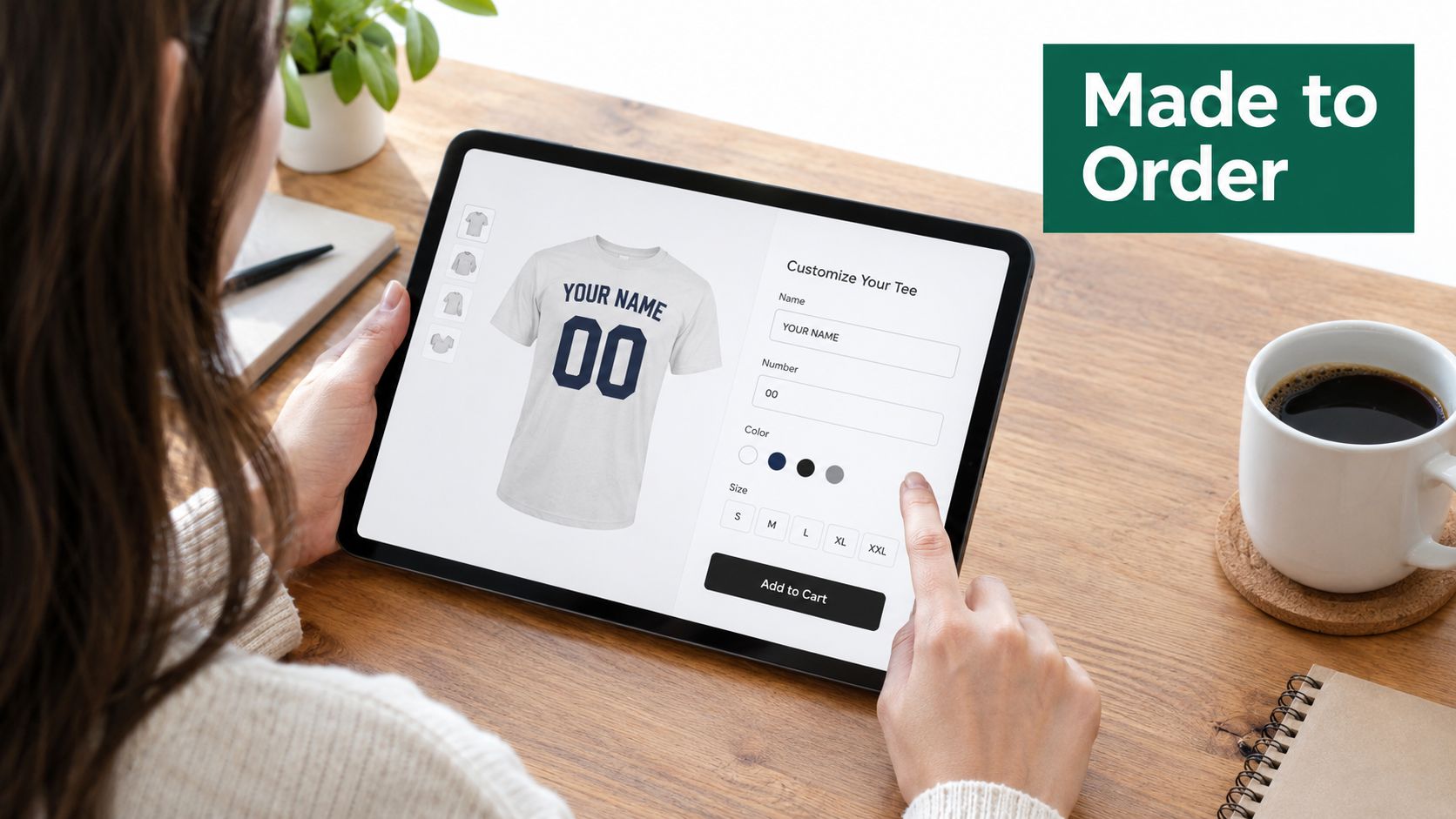
The ordering flow is usually straightforward, but the details matter. Buyers start by choosing the base piece, then add the personalization fields, then review the proof before anything is made. The more custom the order, the more important that proof becomes.
What gets entered first
The first step is always the garment itself, coverall, bib, hat, or patch set. After that comes the personalization field, usually a name, number, logo upload, or patch placement note. If the order uses removable Velcro, the configurator normally separates that from sewn customization so the buyer can tell what can be swapped later and what stays fixed.
That distinction matters because it changes the garment's future use. A sewn patch is a commitment. A Velcro patch is a reusable module. Buyers should know which one they're buying before they approve the design.
Proofing and payment are where errors get caught
A proof is not a formality. It's the last clean chance to catch spelling mistakes, number placement issues, logo alignment, and patch size problems. Payment terms vary by order type, but the buyer should expect either a deposit or full payment at checkout for customized pieces.
Lead times also vary. In-stock items move faster, while customized garments need time for production and finishing. That's why event orders should be placed early, not after the date is already on the calendar.
What should be checked on arrival
When the order arrives, the first inspection should be practical. Check embroidery stitching, printed logo alignment, and patch security before the first wear. If a Velcro patch is loose or a name is off-center, catching it early saves the event outfit.
Shipping tracking matters, but inspection matters more. A shirt can arrive on time and still miss the mark if the personalization wasn't executed cleanly. That's the difference between a usable order and a rushed one.
Care and Longevity Tips for Custom Pieces
Custom pieces last longer when they're treated like event apparel, not laundry-room throwaways. That's especially true for children's coveralls and repeat-use hats, where the details matter as much as the fabric.
Washing should protect the decoration
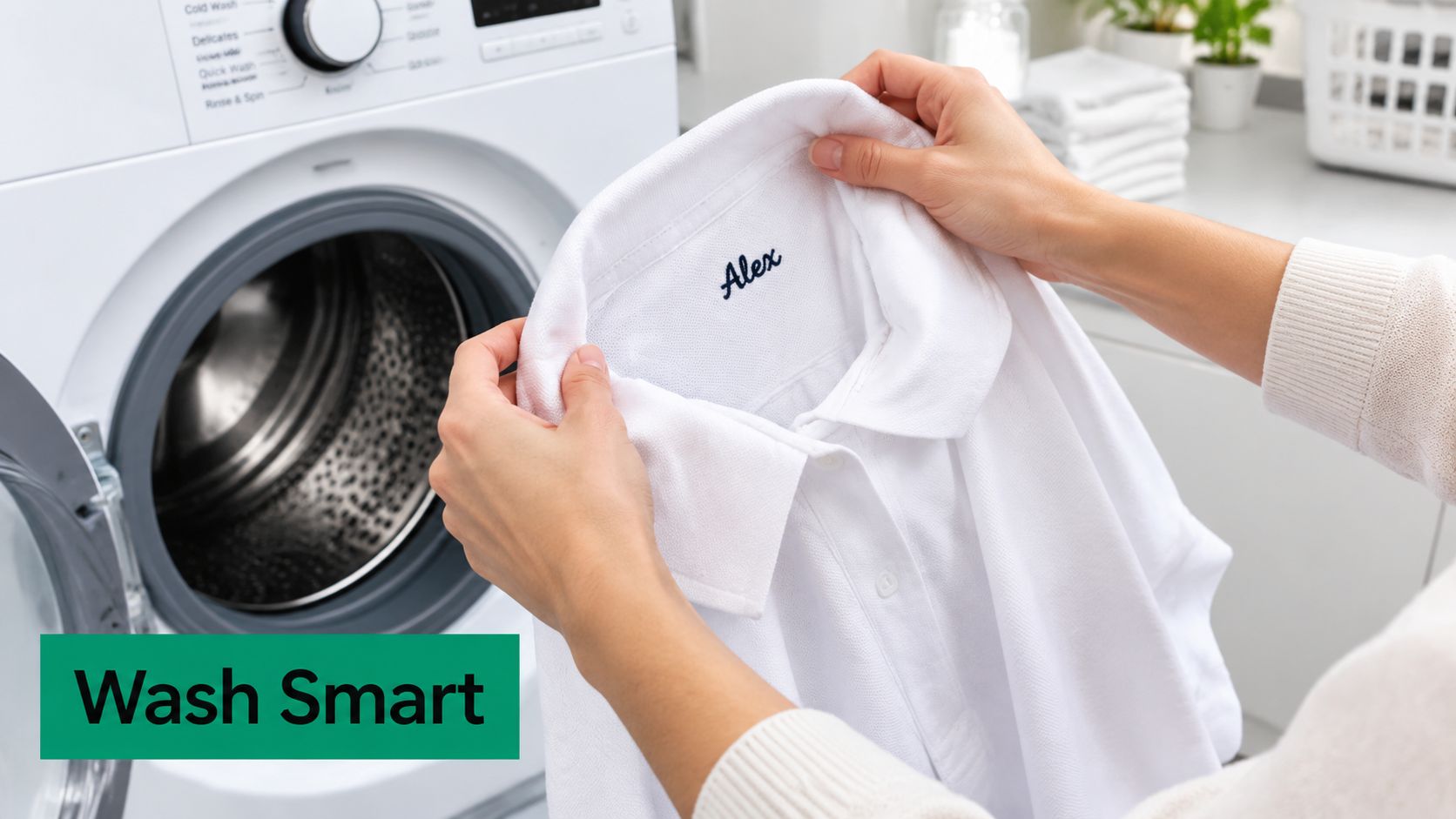
Cold water and inside-out washing are the safest default for embroidered names, numbers, and logos. That reduces friction on the stitched surface and helps the decoration stay sharp longer. High heat is the faster way to shrink cotton-poly coveralls and bibs, so air-drying is the better habit.
Velcro patches need their own rule. Remove them before washing, otherwise the hooks can snag neighboring fabric and dull the grip for the next event. That simple step protects both the garment and the patch.
Stains and hats need separate handling
Kids bring turf marks, grass stains, and mystery smudges with them. Spot cleaning between full washes is usually the right move, because repeated full cycles wear out custom pieces faster than necessary. Gentle treatment keeps the garment event-ready without overworking the fabric.
Hats should be reshaped while damp, never wrung out, and stored flat so the crown holds its shape. Embroidery on a hat front looks better when the brim isn't crushed in storage. That's basic care, but it makes a visible difference.
The goal isn't perfect preservation forever. The goal is keeping the outfit sharp enough to reuse for the next party, shoot, or tournament.
Frequent washing after outdoor events will always shorten fabric life somewhat. The smart buyer accepts that reality and keeps the care routine simple, consistent, and gentle.
Smart Buying Considerations Before You Order
A confident order comes from checking the boring details before the cart closes. That's especially true when the purchase spans ages, sizes, and event types. The shoppers who rush are usually the ones who end up reordering patches, swapping hats, or dealing with a late fit problem.
Use a four-point checklist
First, match the personalization depth to the occasion. Velcro patches make sense for flexible, reusable events. Embroidered logos make more sense when the branding is permanent and the garment will be worn often.
Second, verify every size group. That includes infants, youth, standard adults, and adult 3XL if the group needs it. Tall options shouldn't be an afterthought, because torso length can ruin an otherwise correct order.
Third, check the calendar against lead time. A birthday party, corporate tournament, or photo shoot leaves no room for sloppy timing. If the date is fixed, the order should be placed with enough buffer to absorb proof corrections.
Fourth, review return and reprint terms before approving spelling. Names and numbers are the most common customization errors, and a buyer needs to know how those are handled before the order ships.
Common oversights are easy to avoid
A lot of problems come from simple misses. Buyers forget to coordinate hat color with bib trim. They order one patch style for adults and a different one for kids, so the set looks split. They underestimate demand for tall sizes because they're focused on chest measurements instead of full proportions.
For larger group orders, a single test piece is the smartest first move. It lets the buyer check fit, fabric hand-feel, print quality, and patch placement before committing to the full run. That one sample can prevent a lot of expensive guessing.
The difference between a rushed order and a confident one is simple. The rushed order chases the event date. The confident order checks the set logic, the fit range, and the decoration method before money changes hands.
Caddie Uniform focuses on custom caddie uniforms, bibs, hats, and removable patch options for adults and kids, so it fits the exact coordination problem this guide is about. Anyone planning a family event, themed shoot, or group outing should visit Caddie Uniform and compare the available pieces before the next date on the calendar sneaks up.


