


The most popular advice for a first birthday outfit for a boy gets the order wrong. Parents are told to buy the cutest complete costume, keep every accessory on all day, and chase photos whenever guests arrive. That approach looks tidy online, but it ignores how a newly mobile one-year-old spends a party. He sits, crawls, pulls at fasteners, rubs frosting into fabric, and tires quickly.
A better rule is photo-ready but toddler-safe. Choose the look and size first, photograph the full set while it's clean, then remove anything loose, detachable, or restrictive before eating and active play. The outfit doesn't need to survive the whole party unchanged. It needs one comfortable base, a few deliberate details for portraits, and a simpler version ready once the cake appears.
Caddie-Style Looks That Suit a One-Year-Old Boy
| Look | Core pieces | Best for | Personalization |
|---|---|---|---|
| Classic caddie coverall | White coverall, green cap | Seated parties and group portraits | Name or number on the chest |
| Caddie bib over a knit shirt | White bib, plain knit shirt or onesie | Cake smash and messy eating | Name on the bib |
| Golf polo and shorts | Polo, shorts, small caddie cap | Warm-weather backyard parties | Embroidered initial on the polo |
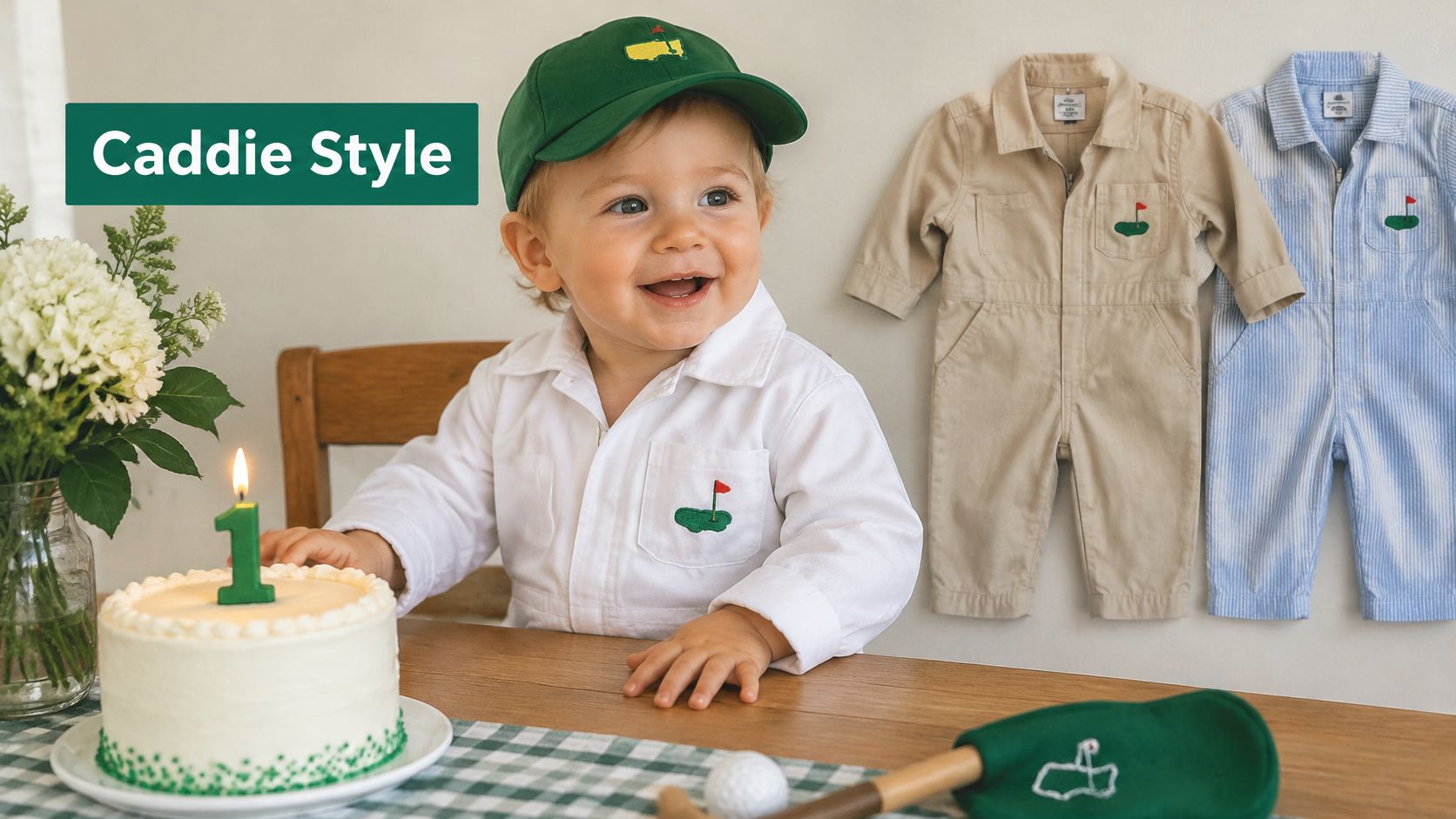
The classic caddie coverall works as the default because it gives the camera one clear shape and keeps the child visually distinct in group portraits. It's strongest indoors, where he's mostly seated, held, or placed on a clean floor. A long outdoor crawl across grass is different, since white fabric shows every mark and wet knees can make a child uncomfortable before portraits even begin.
Choose the Anchor Piece First
The bib look solves a narrower job. It protects the clothing underneath, comes off quickly, and lets parents switch from party outfit to cake outfit without a complete change. The polo and shorts give more freedom in warm weather and suit a backyard where the child will sit on a blanket or crawl on grass. Neither option automatically beats the coverall; the setting decides.
Decision rule: Pick the anchor garment for the venue first, then add cap and bib. Accessories shouldn't force the base outfit to work harder than it can.
A hole-in-one theme reads clearly when white and green repeat across the anchor piece, cap, and bib. Too many extra colors split the set into unrelated items, while one repeated palette makes even a simple substitution look planned. Parents planning decorations and sibling outfits can use hole-in-one first birthday ideas to keep that palette consistent without matching every object exactly.
Popular mom bloggers have posted their kids in caddie uniforms for golf-themed hole-in-one first birthday parties, which shows why the look travels well on camera. The practical test still matters more than a styled post. If the child can't sit comfortably, reach forward, and tolerate the cap for portraits, the simpler bib or polo is the better choice.
Non-Caddie Outfit Ideas for a Boy's First Birthday
A golf theme is only one option, and a plain, well-fitting look often photographs just as well. Strong color, clean lines, and a relaxed child matter more than a recognizable costume. For any first birthday outfit for a boy, the base garment should stay simple enough that one or two themed details carry the celebration.
Four Base Looks That Work
- Knit sweater vest: Layer it over a collared shirt in cream and navy for a seated indoor party. The vest adds warmth in a cool room and can come off if the child gets hot.
- Short-sleeved romper: Choose linen or cotton with bottom snaps for warm weather. It's the fastest option for diaper changes and doesn't separate at the waist when he's lifted.
- Striped top and chino shorts: Use one bright repeated color for a circus, beach, or picnic theme. Let the top carry the pattern and keep the shorts plain.
- Button-down with suspenders and bow tie: Save this classic combination for group portraits. Adults can echo its palette without wearing identical outfits.
Each look needs one color family and one accent. A navy outfit with one red detail reads as deliberate; navy, red, yellow, and patterned shoes compete with the child's face. The same restraint helps when decorations are colorful, because the child remains easy to find in wide party photos.
Closures deserve the same attention as colors. Snaps, buttons, and hook-and-loop fasteners should be firmly attached, and the outfit shouldn't include a neck or hood cord. Suspenders need to clip to a waistband, never bare skin, and a bow tie works best as a short portrait detail rather than something left within reach during crawling.
Parents should choose the comfortable base first and match accessories afterward. That order prevents a theme item from dictating stiff fabric, awkward layers, or a waistband that digs in during the high-chair portion of the party.
Find the Right Size for a Boy Turning One
| Size label | Typical age | Fit note |
|---|---|---|
| 12 months | About 12 months | Common first-birthday size; check chest and length |
| 2T | About 2 years | Choose for a tall child; confirm against the brand chart |
Brand charts differ, so those bands are only a starting point. The first birthday falls at the transition from infancy to toddlerhood, and a child can move into a new size only weeks before the party. Broader market research cited by the Statista baby and young children's apparel market page estimates that infants aged 3 to 12 months accounted for 33.45% of the global baby-apparel market in 2025. That age concentration reflects how often families replace sizes during the first year.
Measure Before Trusting the Label
- Weigh him that day: Use a current weight rather than one from an appointment months earlier.
- Measure the chest: Place a soft tape under the arms, level and snug but not tight.
- Measure length: For a one-piece, check shoulder to hem or crotch against the garment measurement.
- Compare both numbers: Match chest and length to the brand's own chart, not another brand's label.
- Size up between bands: Choose the larger band when measurements fall between sizes.
Parents comparing everyday children's clothing with an occasion set can use golf apparel guidance for kids as a reminder to check construction as well as the printed age. A standing child can make a garment look roomy while hiding problems that appear when he sits. Sitting, crawling, reaching, and diaper changes all need ease through the torso and seat.
A slightly generous fit is usually correct at this age. A tight first birthday outfit won't look polished if the child keeps pulling at it.
A 12-month garment may soon be outgrown, so a large or tall child may get more use from the next band, especially if parents want the outfit as a keepsake or for later photos. The final test is simple. He should raise both arms and sit down without shoulder pulling, waistband pressure, or the hem riding sharply upward.
Personalize and Check Every Piece Before the Party
A Velcro nameplate can look secure at first, then lift at one corner after twenty minutes of crawling. Choose personalization that lies flat against the garment and stays readable in a photo, without creating an edge for small hands to pick at.
Place Personalization Once
Pick one placement, usually the chest of a coverall or the front of a bib. Use a name or number, not both if they crowd the space. Green thread on white stands out in portraits; pale thread may look subtle up close but disappear on camera.
- Check removable pieces: Press nameplates and patches flat, then inspect their edges for lifting or loose threads.
- Check comfort: Look for rubbing at the neck, arms, and edges of the personalization.
- Recheck after movement: See whether a patch has shifted or become easier to peel up.
Families planning activities alongside the outfit may find creative ways to celebrate birthdays useful. Keep clothing checks separate from party planning, since the garment will be within the child's reach throughout the celebration.
Check Fabric and Fasteners
Read the fiber and care information, and treat the outfit as everyday apparel rather than sleepwear. The U.S. Consumer Product Safety Commission guide to apparel and household textiles classifies Class 1 as normal flammability acceptable for apparel, Class 2 as intermediate flammability to use cautiously, and Class 3 as dangerously flammable and prohibited for clothing. Where available, Class 1 material is the preferred starting point.
The U.S. Consumer Product Safety Commission textiles session warns that poorly secured buttons, snaps, zippers, and similar fasteners can detach and become hazards. Drawstrings can catch on playground equipment, doors, or other objects. Before dressing him:
- Remove cords: Take off any neck or hood cord.
- Pull-test attachments: Tug buttons, snaps, patches, and decorative fasteners to check that they stay firmly attached.
- Simplify for eating: Use a soft, nonrestrictive base or plain bib for food.
Removable details can stay on for a supervised portrait, then go back in the bag before eating or crawling. If a piece could detach and reach his mouth, leave it off.
Photo-Ready Pairings for Cake Smash and Group Shots
Say the party starts late morning after a nap. The photographer has perhaps one good stretch before hunger or tiredness changes the child's mood, so the shot order matters more than collecting extra props. The full first birthday outfit for a boy should appear first, while it's clean and every supervised detail is still in place.
Shoot in This Order
- Solo portrait: Place him against a plain backdrop in the complete look, with cap and personalization visible. Use a wide frame first so the whole outfit reads as one set.
- Cake smash: Switch to the bib over the simple base. Keep the background uncluttered so frosting, hands, and facial expressions carry the picture.
- Group photo: Bring in siblings or adults after the messy sequence, using matching caps or a repeated white and green palette.
Parents planning that middle sequence can review cake smash outfit ideas before deciding which base layer can get frosting on it. The cake outfit shouldn't be the only clean garment available. A child who dislikes the texture may need a quick wipe, a dry bib, and a reset before joining relatives.
Soft window light usually gives cleaner skin tones than a harsh overhead light. Indoors, parents should choose a bright spot without strong shadows across the face and keep large logos off adult clothing. Adults work best as a frame around the child, not as competing patterns at the same visual weight.
Portraits belong in the first hour, before cake and before the room gets loud. A rested child gives the photographer more usable expressions than any extra accessory.
Caddie Uniform once outfitted the entire guest list for an NBA player's daughter's birthday party, showing how matching pieces can coordinate a large group. Most family parties need much less. One repeated cap color or palette is enough, and detachable pieces should still come off the birthday boy before active play. A backup bib and plain onesie in the bag protect the final group shot if the first look gets soaked or covered in frosting.
Order Your Look and Confirm the Size This Week
The decision comes down to three choices: look, size, and personalization. Parents who settle those in the wrong order often discover a fit problem after the name has been approved or the party week has arrived. Size confirmation comes before ordering, not after the date starts dictating compromises.
The Five Ordering Actions
- Measure and match: Compare current chest and length measurements with the brand chart.
- Pick the anchor: Select the coverall, bib-based look, or polo set, plus any matching cap.
- Approve personalization: Confirm the name or number and check that removable pieces will sit flat.
- Allow production time: Order early enough for personalization and delivery before the party.
- Test the outfit: Dress him at home and separate loose photo-only pieces from the play outfit.
The kids custom caddie uniform from Caddie Uniform is available in sizes from 0-3 Months to 11-12 Years Old, giving parents room to size beyond a single first-birthday band. The BUNDLE: Kids Caddie Hat with Caddie Uniform is currently priced at $129.99. Those details still don't replace a measurement check, because a broad range only helps when the selected band matches the child.
Parents should confirm the size this week, while there's still time to exchange the anchor piece or simplify personalization. A calm test wear at home is worth more than last-minute steaming, pinning, or hoping a tight torso photographs well.
Visit Caddie Uniform to compare kids' custom caddie uniforms, matching hats, bibs, and removable personalization for a coordinated first birthday look. Measure the birthday boy first, choose the anchor piece that fits the party setting, and order early enough to test every fastener and patch before portraits begin.


