


In the United States, the number of on-course golfers ages 6–17 reached roughly 3.5 million in 2024, after growing 40% from 2019. Off-course youth participation rose from 2.2 million to 4 million, an 82% increase, according to the United States Golf Association's participation overview. That means golf apparel for kids is no longer a specialist purchase reserved for tournament families. It's a practical decision for parents preparing a child for a clinic, range session, simulator visit, school activity, club event, or golf-themed party.
The right outfit depends less on the word “golf” and more on what the child will do, where the activity takes place, and how formal the setting feels. A breathable polo and flexible shorts can support movement on a warm course, while a caddie-style bib may be perfect for photographs but unsuitable for repeated swings.
This guide helps parents choose by activity, measure for a useful fit, evaluate comfort and sun protection, and separate performance clothing from costume, fanwear, and event attire.
Why Kids' Golf Apparel Matters More Than Ever
More children are showing up to golf in more ways than before. That changes what parents need to buy, and it also changes how we should talk about kids' golf clothing.
For one child, the outfit needs to handle a clinic with stretching, waiting, and a lot of first swings. For another, it needs to meet a dress code for a course or junior program. A third child may be headed to a simulator, a driving range, or a golf-themed event where the goal is to look the part for an hour, not stay cool through a full round. Those are different jobs, just as soccer cleats and a team sweatshirt serve different purposes even though both belong to the same sport.
That is why it helps to sort kids' golf apparel by activity instead of treating it as one big category. Performance golfwear is built for movement, weather, and time on your feet. Caddie-style clothing is different. It usually aims for a recognizable look, often for photos, themed parties, ceremonies, or fan experiences. It can be fun and appropriate in the right setting, but it is not automatically the best choice for repeated swings, warm conditions, or a long junior session.
The core idea: golf apparel for kids should match what the child is actually doing, not just the fact that the word “golf” is involved.
Parents often feel pressure to get something that looks correct. Kids usually care more about comfort and whether they can move without tugging at a collar, waistband, or stiff fabric. Good choices respect both concerns. Start with the setting, then check fit, freedom of movement, weather, and formality. That approach works whether your child is learning on the range, playing on a course, visiting a simulator, or dressing up for a golf-themed event.
The Essential Types of Golf Apparel for Kids
A useful junior golf wardrobe begins with a small group of dependable pieces. Each item should have a clear job, and parents don't need to buy every category at once.
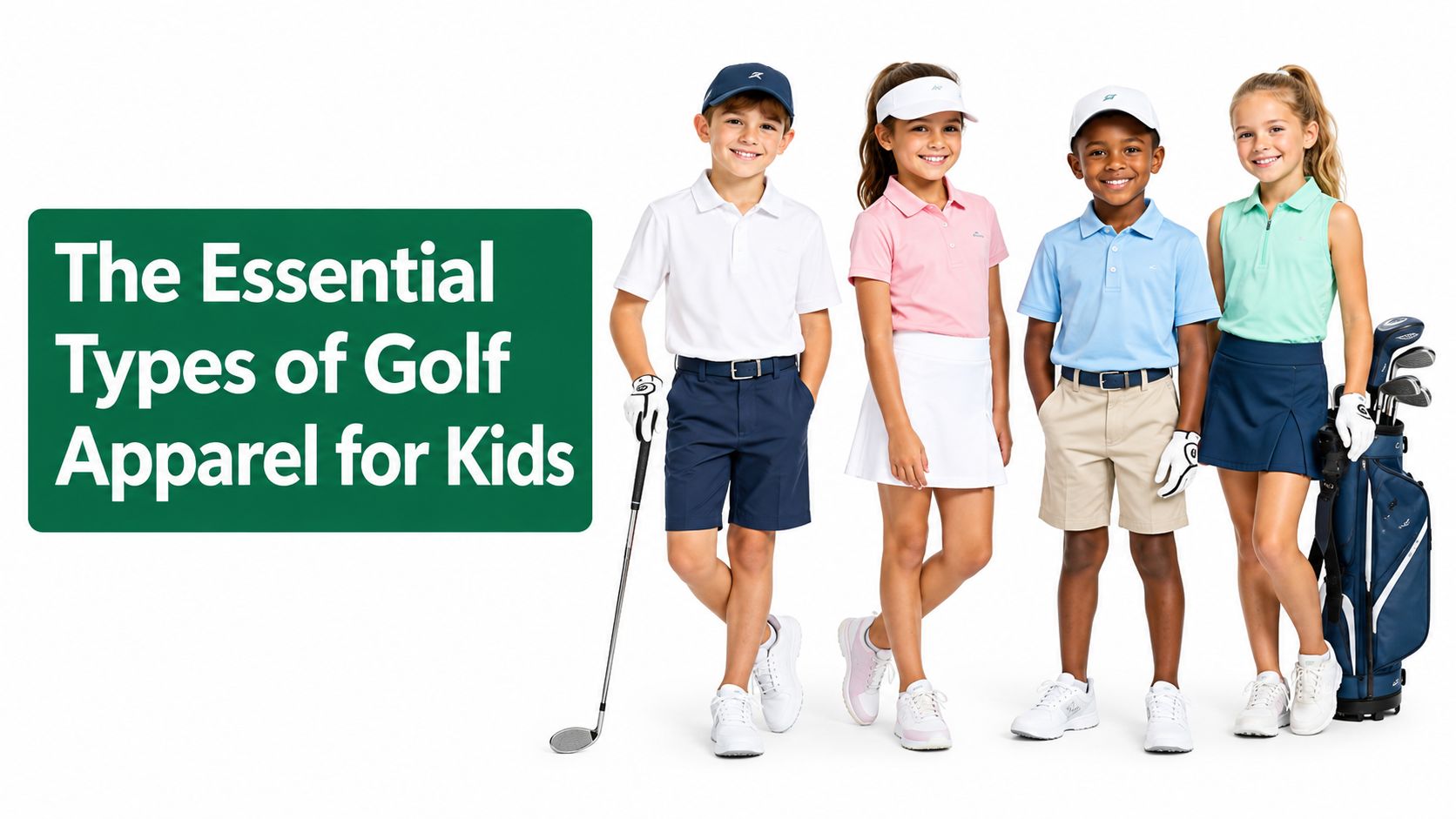
Start with the base outfit
A polo shirt is the most versatile foundation. A collar can suit a formal course or junior program, while a soft, flexible knit allows a child to bend, rotate, and reach. Choose a length that stays tucked or comfortably covered during movement without becoming bulky.
For bottoms, look for stretch shorts, trousers, skorts, or skirts with built-in shorts. A child should be able to crouch to read a putt, step over uneven ground, and complete a swing without a tight waistband or restrictive fabric. Pockets are useful for tees or small personal items, but oversized pockets can feel cumbersome.
A warm-weather round might use:
- Lightweight polo: A breathable, relaxed fit that doesn't cling.
- Flexible shorts or skort: Secure waistband, practical length, and room to move.
- Brimmed hat: Protection for the face and eyes.
- Clean athletic shoes: Suitable for walking and stable movement.
Add layers for changing conditions
A lightweight quarter-zip, cardigan, vest, or overshirt earns its place for early clinics and cool mornings. The layer should come off easily and fit over the polo without pulling across the shoulders. A child attending outdoor instruction may also need a light rain layer or warmer outerwear, depending on local conditions.
A chilly morning clinic could include a long-sleeve base layer, polo or overshirt, flexible trousers, a brimmed cap, and a removable outer layer. For an indoor lesson, the formula can be simpler: a soft polo or athletic top, comfortable shorts or trousers, and indoor-safe shoes.
Know what performance clothing is for
Performance golfwear is made for play. It prioritizes movement, comfort, weather management, and sometimes verified sun protection. A caddie-inspired coverall, bib, or themed hat serves a different purpose. It can work as costume, fanwear, teamwear, or photography attire, but it shouldn't automatically be treated as technical clothing for repeated swings or hot-weather play.
For event-focused choices, parents can browse caddie-style uniforms for children and adults and decide whether the garment belongs in the play wardrobe or the occasion wardrobe.
Finding the Right Size from Infancy to Youth
Age labels are shortcuts, not measurements. A child labeled “six” by one brand may need a different size from another, especially when the garment must accommodate a polo collar, an extra layer, a longer torso, or a particular body shape.
Parents should measure height, chest, and waist before ordering. Height helps identify overall proportion, chest measurement prevents tightness through the shoulders and upper body, and waist measurement helps determine whether shorts or trousers will stay comfortable during movement. A flexible tape measure works best, but a piece of string measured against a ruler can also help with a wriggling child.
Measure in a calm, repeatable way
Have the child stand naturally, without pulling in the stomach or stretching upward. Measure the chest around its fullest area, keep the tape level, and measure the waist where the garment will sit. Record the numbers before opening a size chart, then compare each measurement separately rather than choosing by age alone.
Parents comparing children's clothing for different occasions may also find a general resource such as choosing the right dress size useful for understanding how body measurements can differ from age-based labels.
Growth requires judgment. A performance polo that's too large may bunch under a layer or catch during a swing, while a caddie-style costume can allow a little more room if the event is brief. The best choice usually leaves enough space for natural movement without adding so much fabric that the child trips, overheats, or loses confidence.
Use the chart, not the label
Infant apparel often uses month ranges, while older children's apparel may use year-based labels. Those labels can help locate a chart, but the chart should make the final decision.
| Stage | Typical Size Labels | What to Verify |
|---|---|---|
| Infant | Month ranges | Chest, torso length, diaper coverage, and easy openings |
| Toddler | Toddler sizes or early age labels | Waist comfort, mobility, and room for a light layer |
| Young child | Age-based youth labels | Height, chest, waist, and sleeve length |
| Older youth | Youth year labels | Shoulder fit, torso length, inseam, and stretch |
| Layered outfit | Any standard size label | Measurements while wearing the intended base layer |
The junior audience also needs broader fit thinking. A USGA junior-program fact sheet reports that girls represented 15% of junior golfers in 2000 and approximately one-third by 2021, with one breakdown placing girls at 36%. The same fact sheet reports that non-Caucasian players represented 28% of juniors in 2021, compared with 6% in 2000. Those shifts, detailed in the USGA junior-program fact sheet, support inclusive sizing, varied colors, gender-neutral options, and adjustable features.
A practical size guide should also consider hairstyles, head coverings, longer torsos, fuller waists, and different preferences for fitted or relaxed clothing. A child shouldn't have to choose between cultural comfort and a usable golf outfit. Parents can review children's size guidance alongside the actual body measurements before checkout.
Materials, Comfort, and Sun Safety
Fabric choice affects how a child feels after the first few minutes of movement. A shirt that feels smooth in a fitting room may become clingy, hot, or irritating after walking, practicing, and sweating.
Sports-textile research finds that synthetic shirts with higher air permeability can increase sweat evaporation compared with less-permeable natural-fiber shirts. The same research also notes that polyester absorbs little moisture, which can create a wet-skin sensation during heavy sweating. The peer-reviewed textile review supports a more careful buying rule: fiber content alone doesn't prove comfort.
Compare the whole garment
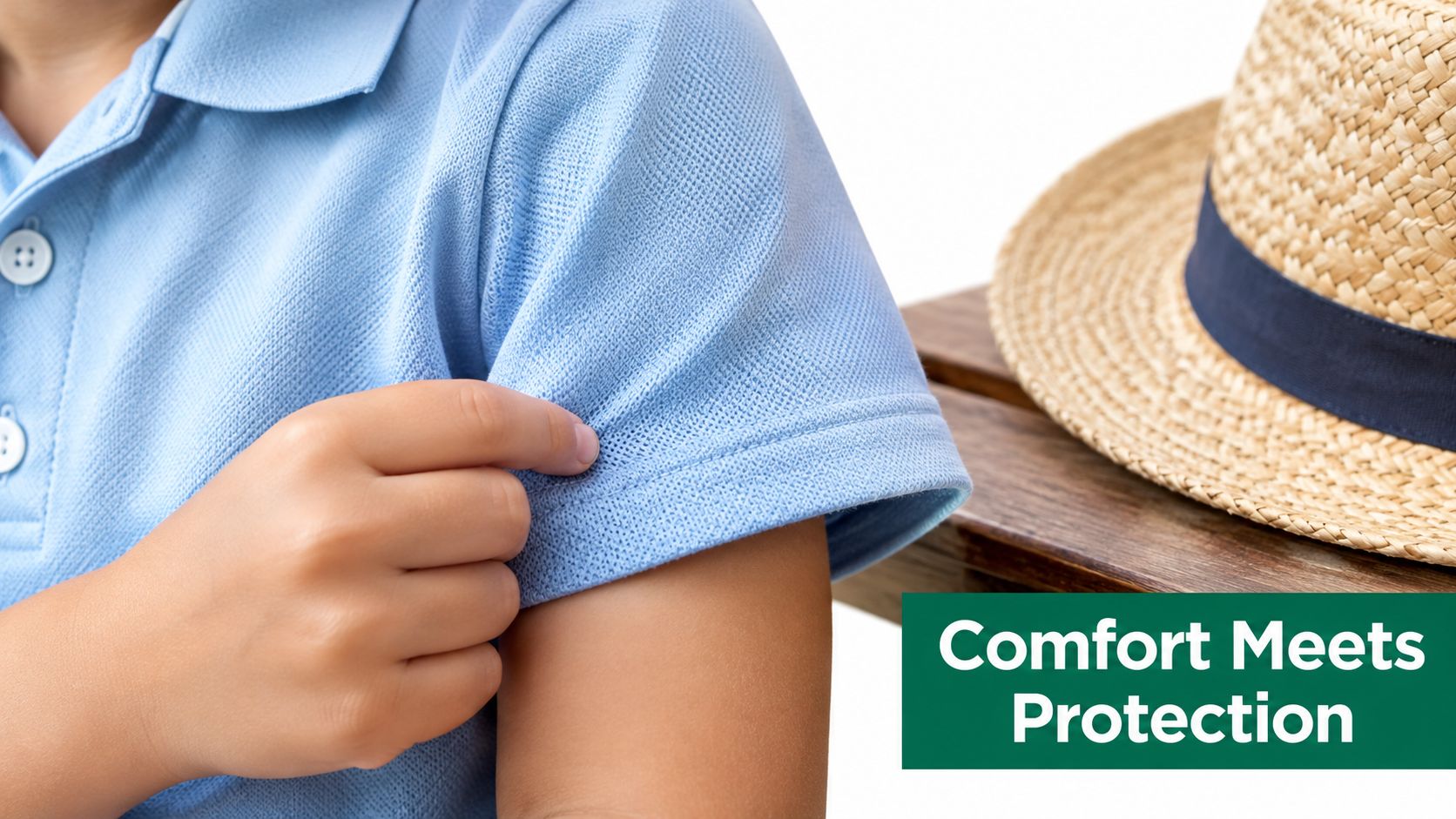
Parents should look for a lightweight, loosely fitted knit with tested breathability and moisture-transfer performance when those specifications are available. Smooth seams help reduce rubbing around the neck, underarms, and shoulders. Non-restrictive openings make it easier for a child to dress independently and remove a layer during a lesson.
A tightly fitted shirt may look neat but trap heat and cling to damp skin. A very loose shirt may ventilate well but catch on equipment or distract during the swing. The useful middle ground is enough space for air and movement, combined with a stable neckline and secure hem.
Cotton can feel familiar and soft, while synthetic blends may dry faster. Neither category guarantees comfort in every condition. A child who sweats heavily may prefer a breathable blend, while another may dislike the wet sensation associated with low-absorption fibers.
Treat UPF as a test result
Ultraviolet Protection Factor, or UPF, should be verified rather than implied. UPF measures how effectively a garment blocks solar ultraviolet radiation through an objective laboratory test. Recognized testing frameworks include AS/NZS 4399, EN 13758-1, and UV Standard 801, as described by New Zealand's standards information for AS/NZS 4399.
The rating should apply to the finished garment, not only the raw fabric. Seams, coverage, stretch, wetness, and construction can change protection during wear. A label should identify the test standard and rating, while fit guidance should discourage excessive stretching because thinner fabric density may reduce real-world protection.
For exposed play, a high-tested-UPF long-sleeve polo or lightweight overshirt can be paired with a brimmed hat and protection for uncovered skin. A dark color isn't proof of UPF performance, and marketing phrases such as “sun safe” shouldn't replace a stated rating and test standard.
Dressing for the Activity, Not Just the Course
The phrase “golf clothing” covers several environments with different demands. A child at a driving range needs freedom to rotate and reach. A child at a simulator may need nothing more technical than comfortable clothing that doesn't restrict movement. A child attending a formal club event may need a polished appearance without playing at all.
Junior golf has expanded beyond the traditional 18-hole course. A 2025 industry report described nearly 4 million U.S. children ages 6–17 playing on a course, with off-course participation at ranges, simulators, and entertainment venues reaching about 4 million. The report also cited 47.1 million junior participants outside the United States and Mexico, based on reporting from The R&A. These figures and activity patterns are summarized in the junior golf participation overview.
Match the outfit to the setting
Driving range: Choose a stretch top, flexible shorts or trousers, and breathable shoes. Pack a light layer, water, a hat, and an extra shirt if the child tends to sweat.
Simulator or entertainment venue: Prioritize comfort and easy movement. A polo is optional unless the venue or group has a dress expectation. Pack a soft layer for indoor temperature changes and shoes that won't distract during repeated movement.
Outdoor instruction: Use a durable base outfit with a removable layer. Add a brimmed hat in exposed conditions and choose fabrics that don't become restrictive when worn under a jacket.
Tournament or formal course: Check the facility's rules before dressing the child. A neat polo, well-fitted bottom, stable footwear, and tested sun coverage create a practical starting point, but local expectations still control.
School program: Favor washable pieces, secure waistbands, and simple layers that a child can manage without help. Personalization can support group identity, but it shouldn't replace comfort.
Club event without active play: Polished styling can take priority over technical performance. A clean polo, coordinated bottom, neat shoes, and a lightweight layer may be enough.
Separate caddie style from playwear
Caddie-inspired uniforms and bibs work especially well for golf-themed birthdays, Halloween, family photographs, fanwear, and group events. They create an instantly recognizable look and can coordinate with hats, patches, and accessories. They aren't automatically substitutes for a breathable performance polo, flexible playing bottom, or tested sun-protective layer.
Parents can use a simple decision rule:
- Will the child swing, walk, or practice for an extended period? Choose movement-focused clothing.
- Will the child mainly pose, watch, celebrate, or take photographs? A caddie-style outfit may be appropriate.
- Will the child do both? Use performance clothing underneath or bring a change of outfit.
That distinction prevents a fun event garment from being judged by the wrong standard.
Coordinating Family and Group Golf Looks
Group outfits look intentional when they share one visual idea, not when every person wears exactly the same garment. A family can coordinate through a common color, repeated accessory, matching patch, or consistent silhouette while allowing each person to choose a comfortable base layer.
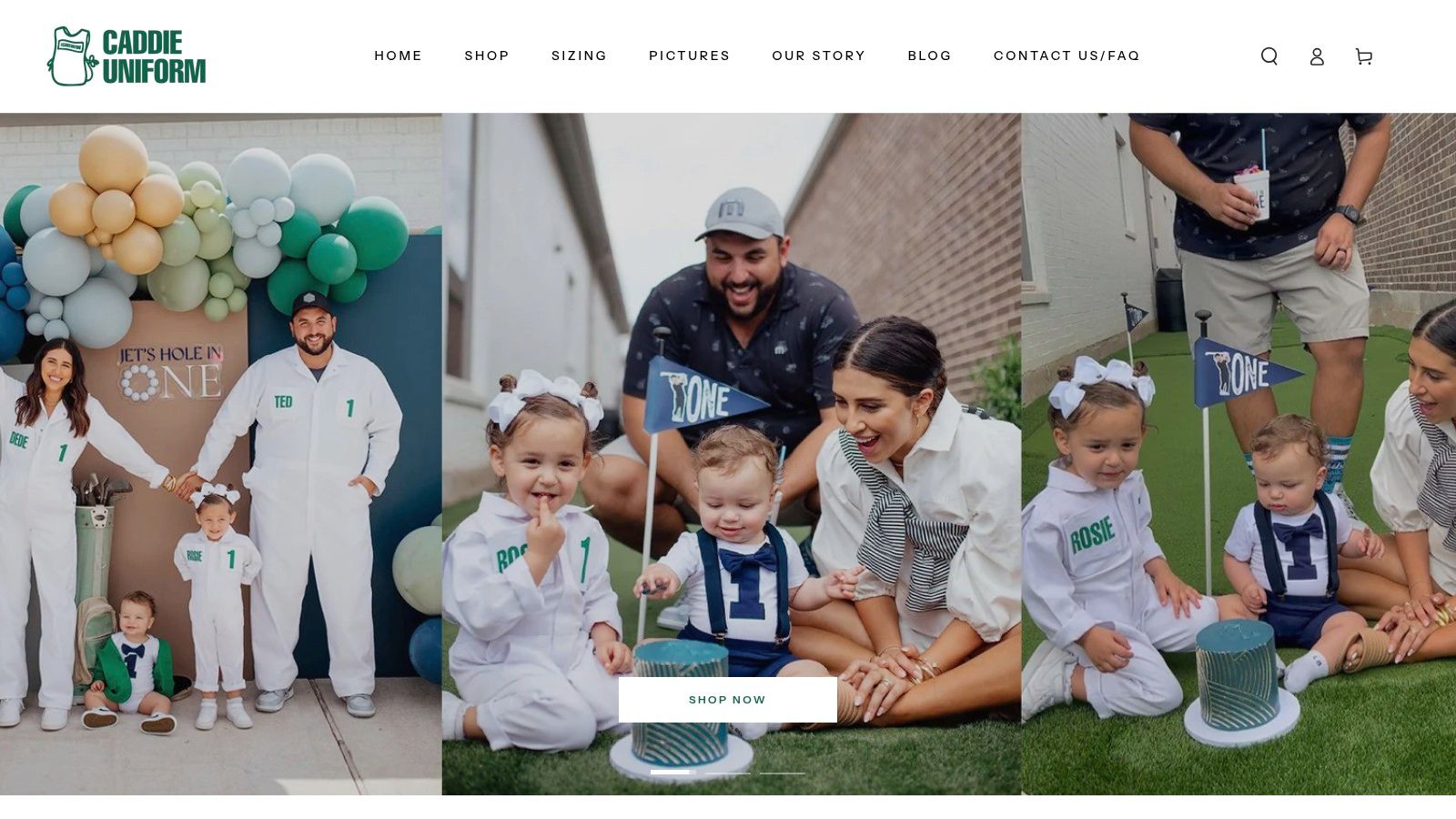
For a golf-themed birthday, white coveralls or bibs with green accents can create a clear caddie identity. Matching hats add cohesion, while a putter cover or small accessory can extend the theme without requiring every child to carry the same costume. For a photo shoot, a restrained palette usually photographs more cleanly than several competing patterns.
Families planning a larger celebration can also explore unique event themes for 2026 for ways to connect clothing, décor, invitations, and activities.
Three repeatable group formulas
Classic caddie crew
- White caddie-style coveralls or bibs
- Green caps or coordinated brimmed hats
- Individual name or number details
- A shared accessory, such as matching putter covers
- Comfortable base layers underneath for temperature changes
Tournament spectators
- Clean polos in a shared color family
- Neutral shorts, trousers, or skirts
- Coordinated caps with forward-facing brims
- Comfortable closed shoes for walking
- A light layer that keeps the group visually tidy
Themed party squad
- A central color, such as green, orange, or white
- Caddie bibs or uniforms for children who want a costume
- Simple polos or themed tops for adults
- Matching patches or names instead of identical full outfits
- Accessories chosen for photographs rather than active play
A family photograph may justify a more structured outfit than a long outdoor event. Children should still be able to sit, walk, and move comfortably. If the event includes putting, running, or a lesson, the group can keep the caddie look for arrival and photographs, then switch to performance clothing for activity time.
Personalization Options That Grow with Your Child
Personalization gives a garment a role beyond one occasion. A child may wear a name patch and favorite number for everyday fanwear, change to a family surname for a group photograph, and use a themed logo for a birthday or Halloween event.
Removable Velcro patches make that flexibility practical. A parent can keep one base garment and change the identity without ordering a new uniform for every celebration. For example, a child might use a nameplate and lucky number at home, an orange-themed patch set for a seasonal party, and matching family numbers for a photo shoot.
The sizing challenge still matters. A personalized garment should be selected from body measurements, with enough room for the child to sit and move but not so much excess fabric that the patches shift or the outfit becomes unwieldy. Parents should also confirm whether the item is intended for costume wear, casual fanwear, or more active use.
Build a reusable patch system
A practical personalization set might include:
- Nameplate: The child's first name or nickname.
- Number patch: A favorite number, birth number, or team identifier.
- Logo patch: A family symbol, event mark, or themed design.
- Seasonal patch: A removable detail for a party, holiday, or special gathering.
- Group patch: A shared surname or club identity for coordinated outfits.
Caddie Uniform offers personalized children's caddie uniforms and bibs with names, numbers, logos, and removable patch options. Parents comparing ideas for a keepsake or event outfit can review personalized golf apparel and decide which details will remain useful after the first occasion.
Personalized children's apparel also works as a gift for grandparents, golf clubs, family groups, and corporate programs. A grandparent might choose a child's name and number, while a club could use matching group patches. The strongest design is one that reflects the child without turning the garment into a single-use purchase.
Your Buying Checklist for Kids' Golf Apparel
Before checkout, a parent can answer five questions:
- What will the child do? A course, range, simulator, clinic, school activity, party, and photo shoot each call for a different balance of movement and appearance.
- What are the child's current measurements? Check height, chest, waist, and relevant sleeve or inseam details against the seller's chart.
- How will the garment feel after movement? Look for breathable construction, smooth seams, comfortable openings, and enough room for a swing or a layer.
- Does the child need verified sun protection? If the outfit is for exposed play, look for a stated UPF rating, test standard, and finished-garment application.
- Is this performance golfwear or event attire? Choose technical clothing for repeated play, and reserve caddie-inspired uniforms for costume, fanwear, teamwear, photographs, and celebrations unless the activity is brief and comfortable.
A child doesn't need a large wardrobe to feel prepared. One comfortable base outfit, a useful layer, a brimmed hat, and an occasion-specific option can cover many activities. The right clothing removes distractions and helps the child feel included, whether the first experience happens on grass, indoors, at a party, or in front of a camera.
Caddie Uniform offers customizable children's caddie uniforms, bibs, hats, patches, and golf-themed accessories for events, photographs, fanwear, and family group looks. Parents can explore the options and choose a personalized outfit that fits the child and the occasion by visiting Caddie Uniform.


