


A caddie-themed group order can look polished on the screen and fall apart at the fitting table. The same thing happens with golf outings, charity scrambles, and family event wear, the idea feels simple until the shirt rides up, the logo sits too low, or the name patch looks like an afterthought.
Personalized golf apparel works best when the garment is treated like a technical build, not a decoration pass. Fabric behavior, placement balance, and sizing strategy decide whether the final piece feels intentional, premium, and wearable, or awkward and cheap. In golf, that difference shows up fast, because people notice movement, collar shape, and logo clarity before they notice the rest.
Why Personalized Golf Apparel Matters Beyond the Scorecard
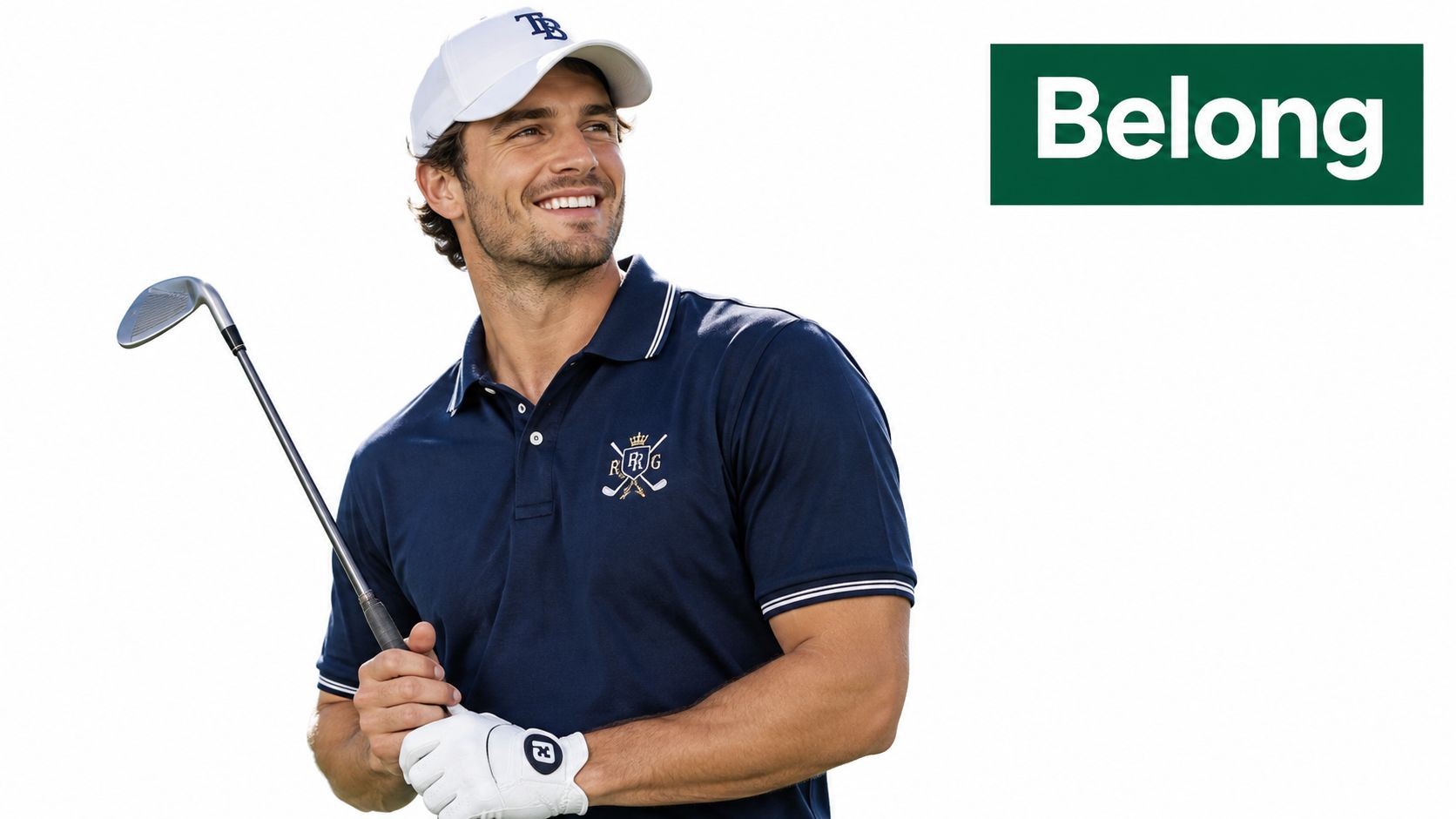
A caddie-event order usually starts with a simple request, make the group look unified. The problem is that unity can look either sharp or amateur depending on how the names, numbers, and logos are handled. A white bib with a centered patch, a clean cap, and a consistent shirt silhouette reads like a deliberate uniform. A scattered mix of mismatched blanks reads like leftovers.
That difference matters because golf apparel has become more identity-driven over time. Branded and custom-marked garments grew from novelty into standard merchandising after the 1970s, and customization is now part of how buyers expect golf goods to behave as the market history shows. The broader category is also expanding in multi-billion-dollar terms, which tells buyers that personalization is no longer a side project in golf apparel, it's part of how value gets created across the market.
Identity beats decoration
A tournament shirt doesn't need to shout to work. It needs to make the wearer feel included, and it needs to make the group easy to read from ten feet away. That's why name and number placement should support social function first, then style.
For event planners, that might mean a small chest logo, a readable back name patch, and matching hats that tie the group together. For family sets, the logic changes slightly, but the goal stays the same, the outfit should tell people who belongs together without making the wearer feel like a billboard. That's where product imagery matters too, especially for ecommerce pages, where on-model imaging for ecommerce can help buyers judge proportion, drape, and placement before ordering.
Practical rule: if the customization only looks good flat, it's not ready.
A strong caddie aesthetic depends on restraint. Too many patches, too much contrast, or oversized placement can make the garment feel costume-like instead of intentional. That's why a curated look often wins over a louder one.
For a live example of how themed uniforming is handled in practice, the internal guide at custom golf apparel shows how group identity can be built around a consistent visual system rather than random add-ons.
Choosing Your Base Uniform and Sizing Strategy
The base garment decides whether personalization has a clean foundation. If the blank fit is off, the names and logos won't rescue it. That's especially true in golf, where a golfer still needs room to rotate, bend, and swing without the fabric pulling across the shoulders or belly.
Start with movement, not just measurements
A polo that looks fine on a size chart can still fail once it's worn. The most reliable approach is to collect actual wearer measurements, compare them to the specific blank garment's size chart, and confirm how the fabric behaves after washing. Generic labels are a weak signal because brand-to-brand sizing shifts enough to change the fit even when the tag says the same thing.
Extended sizing needs extra discipline. Adult runs, tall options, and children's sizes don't grade the same way, so a scaled-up pattern can't be assumed to behave like the core size. Buyers planning a mixed-age order should expect that infant, child, and adult garments need separate fitting logic, not one blanket rule.
Sample the exact blank before volume ordering. A size label tells less than the physical garment on body.
A good sizing workflow also starts with the role. Bibs, polos, and hats solve different problems, so the base choice should match how the outfit will be used. A bib or coverall supports a strong caddie look, while a polo needs more attention to drape and swing comfort.
For adult size guidance, the page on adult sizing for caddie uniforms is useful because it reinforces a simple principle, fit should be checked before decoration, not after.
Common base-garment checks
- Verify shoulder balance: If the shoulders sit wrong, the name and logo won't save the look.
- Check torso length: Short garments ride up during movement, especially when tucked or layered.
- Confirm fabric compatibility: The blank should support the chosen decoration method without distortion.
- Order physical samples: Samples expose differences in cut, stretch, and color that size charts can't show.
The material choice matters here too. A performance knit and a structured cotton blank don't behave the same way under embroidery, so the garment should be selected with the final decoration in mind. That's the point where fit strategy and production strategy have to meet.
How to Customize Names, Numbers, and Logos Correctly
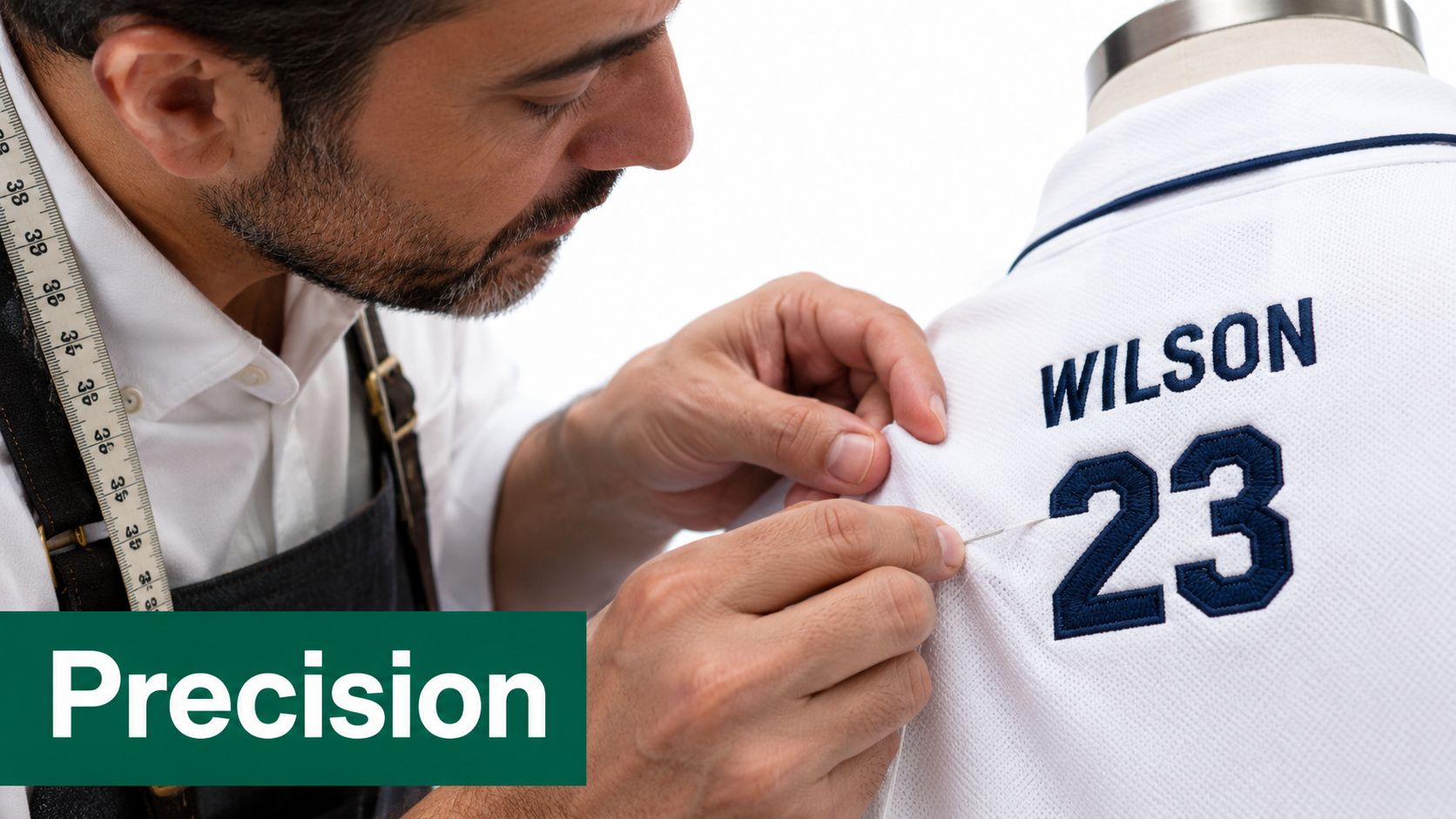
The most common customization mistake is treating every element like it belongs in the same spot. Names, numbers, and logos each serve a different job. A name identifies the wearer, a number gives the group a visual system, and a logo establishes the event, club, or brand identity.
Placement has to match the garment's visual weight
The chest carries the most immediate attention, so a front logo usually belongs there if it needs to be seen from a distance. The back is where a name patch works best, because it gives teammates, event staff, and guests an easy way to identify the wearer without turning the garment into clutter. Numbers sit between those jobs, they're visible enough to organize a group, but only if they're scaled with the garment's proportions.
A removable nameplate and a permanent embroidered name don't solve the same problem. Velcro lets a uniform shift between users or events, while embroidery gives a fixed, cleaner finish for a single wearer or a fixed roster. That trade-off matters for caddie-style apparel, where the same pieces may need to be reused across parties, shoots, or seasonal events.
For a practical patch workflow, the internal resource on custom Velcro name patch is relevant because it shows how removable identification supports reuse without forcing a single permanent identity onto the garment.
Make the lettering readable first
Contrast is not a style detail, it's a legibility decision. Light lettering on a light shirt disappears, and dense thread or tiny lettering can blur once the garment moves. The right pairing keeps the name visible at a glance and still feels balanced against the fabric texture.
If the design includes patches, hats, or novelty accents, those pieces should reinforce the main uniform, not compete with it. A matched cap collection can make a group feel coordinated, but if every surface carries a different treatment, the outfit loses hierarchy. That's where restraint matters more than novelty.
When a logo file looks soft or broken at the edges, it needs cleanup before production. A helpful reference for that stage is fix blurry logo artifacts fast, especially when the artwork has to be legible on a small patch or embroidery field.
A clean specification sheet should include
- Exact placement: front, back, sleeve, or cap panel.
- Attachment method: embroidery, heat transfer, patch, or Velcro.
- Color pairing: thread and fabric colors that stay readable.
- Scale limits: how large the mark can be before it overwhelms the garment.
That level of specificity prevents back-and-forth with the vendor and keeps the finished garment from drifting into guesswork.
Comparing Application Methods for Durable Custom Golf Wear
Decoration method changes how the garment behaves over time. Some finishes look crisp at first and then age badly. Others cost more up front but stay cleaner through repeated wear and washing. The right choice depends on whether the uniform is permanent, reusable, or meant to rotate across different people.
What each method does well
Embroidery gives the most premium surface texture on stable garments. It's usually the safest choice for a personal tournament shirt or a fixed event uniform because it feels built into the fabric rather than sitting on top of it. Screen printing can work when the artwork is simple and the fabric surface is compatible, but it doesn't always carry the same raised, custom look.
Heat transfer is useful when the design needs a cleaner graphic edge or when the garment should stay lightweight. Velcro patches are the most flexible option for reusable group pieces, especially when names or themed marks may change from one event to the next. The catch is that flexibility can come with a slightly less formal finish if the patch dimensions aren't controlled.
For a broader branded-apparel context, the guide on green grass expansion for golf brands is relevant because it reflects how embroidery and branded finishing continue to shape golf merchandising.
Customization Application Methods Compared
| Method | Durability | Reusability | Best Use |
|---|---|---|---|
| Embroidery | High | Low to medium | Fixed names, logos, tournament uniforms |
| Screen printing | Medium | Low | Simple graphic branding on compatible fabric |
| Heat transfer | Medium | Low to medium | Cleaner graphic marks, lighter-weight garments |
| Velcro patches | Medium | High | Reusable names, event rotation, group rental use |
The table makes the trade-off simple, but the decision still comes from use case. If the outfit will be worn repeatedly by the same person, embroidery usually wins. If the outfit has to adapt between wearers or themes, removable patches make more sense.
Permanent decoration should feel permanent. If it needs constant repair, it wasn't the right method.
Golf wear also faces more motion than many other uniform categories. That means the decoration has to survive bending, sitting, pulling, and laundering without looking tired. A patch that shifts or a transfer that cracks quickly can make an otherwise solid garment look cheap.
Caring for Personalized Golf Apparel to Extend Its Life
A well-made garment can still fail early if care is careless. Heat, friction, and poor storage do more damage to personalization than many buyers expect. Embroidery can flatten, adhesive-backed pieces can lift, and printed sections can lose clarity when the wash routine is too hard on the fabric.
Laundering choices matter more than people think
Turn garments inside out before washing. That protects lettering, patches, and applied graphics from direct abrasion, and it reduces contact with zippers, buttons, and rough items in the load. Dryer heat is another weak point, especially for adhesive-backed elements, because high heat can weaken the bond or distort the surrounding fabric.
Fit-related returns in custom apparel commonly run 25% to 40% and can reach 75% in some categories according to the care and fit guidance. That is a fit issue first, but it also shows why care instructions should be agreed before the order ships. If the finish is sensitive and the wash routine is vague, the garment may not stay usable for long enough to justify the order.
Storage should protect shape, not just keep things out of the way
Stacked uniforms crease, crush, and wear at the same stress points. Hanging helps, but only if the hanger supports the shoulder line and does not stretch the neck. For seasonal uniforms, breathable storage keeps the pieces ready for the next event without trapping moisture or leaving odor behind.
A practical routine is straightforward. Wash gently, dry on low heat or air dry when possible, and store each set together so pieces do not get separated before the next outing. That keeps the order usable across more than one season.
If the garment is meant to be reused, care has to be part of the purchase decision, not an afterthought.
Sizing discipline matters here too. Buyers should use the blank garment's own size chart and keep a small buffer of extra inventory in common sizes when building group programs for fit and reorder planning. That reduces the chance that one worn size creates a problem for the next event.
Final Checklist for Ordering Successful Custom Golf Outfits
A good order starts with fit, then decoration, then reuse. If those three aren't aligned, the garment may look fine in isolation and still fail as a group piece. The safest sequence is to validate the base blank, confirm the decoration method, and then decide how the pieces will be maintained after delivery.
Before placing an order, the buyer should confirm the wearer list, the exact garment style, and where each name, number, or logo will sit on the body. The mockup should be checked against the actual size chart, not just a flat art board. That prevents the most common mistake, which is approving a design that looks balanced on paper but lands too low or too high on the wearer.
A practical order checklist looks like this:
- Measure the wearers first: Don't rely on generic size assumptions.
- Approve the blank garment: The fit has to work before personalization begins.
- Lock the decoration method: Choose embroidery, transfer, or patches based on reuse and durability.
- Check placement on the actual size: Small garments and large garments don't carry the same layout.
- Plan care instructions up front: Washing and storage should match the chosen finish.
For event teams, families, and clubs, the best-looking outfit is usually the one that was planned as a system. The shirt, patch, and cap should all support the same visual story, and the sizing should let the wearer move naturally.
Caddie Uniform creates personalized caddie-style apparel, including adult and kids' uniforms, hats, and removable name or logo elements that support event wear and repeat use. For teams, families, or organizers who want a coordinated look built around fit and customization, Caddie Uniform is a practical place to start.


