


A parent has a golf-themed party on the calendar, a child wants to dress up, and the closet offers plenty of pieces but no clear costume. White coveralls, a green cap, and a name or number can solve the styling puzzle with a recognizable caddie look that's easy to adapt.
Unlike an outfit built for one night, a white overalls costume can work for Halloween, family photos, a birthday, or a tournament gathering. Its history gives the look meaning, while thoughtful choices about fit, personalization, and care make the garment more comfortable and reusable.
What Is a White Overalls Costume
A white caddie costume usually consists of white coveralls, a green cap, and identifying details such as a name across the back and a number on the chest or pocket. The pieces work together: the cap supplies a strong color accent, while the markings make the outfit feel like a caddie uniform rather than plain workwear.

The look is closely associated with the Masters and Augusta National, where white uniforms stand out against green fairways. The contrast makes the caddie easy to pick out at a distance, and the personalized markings help distinguish one player's caddie from another. The same details give a costume its familiar golf-course character.
For a first-time wearer, the outfit doesn't need to be elaborate. A plain white shirt underneath and comfortable shoes can complete the basic look; a cap and detachable nameplate can add personality without permanently changing the coveralls. For a more playful party outfit, a themed patch or golf prop can signal the occasion.
The costume's appeal comes from that balance of recognizable tradition and practical simplicity. It can read as a respectful nod to golf, a coordinated group look, or a fun photo outfit, depending on the accessories. A good starting point is to choose the coverall fit first, then add only the details that suit the event.
The History Behind the White Caddie Look
The white caddie outfit began as a solution to a practical problem. At the first Masters tournament in 1934, caddies wore ordinary shirts and trousers that looked much like spectators' clothes. Augusta National co-founder Clifford Roberts proposed standardized caddie uniforms in 1940 because caddies were difficult to distinguish from patrons, as described in this account of the Masters caddie uniform's history.
The first standardized uniforms weren't white. Caddies initially wore bluish denim, green caps, and yellow buttons. After experimentation in the late 1940s, the recognizable white coverall became established for Masters play in the early 1950s. Against the course's green backdrop, white gave spectators a clearer visual cue.
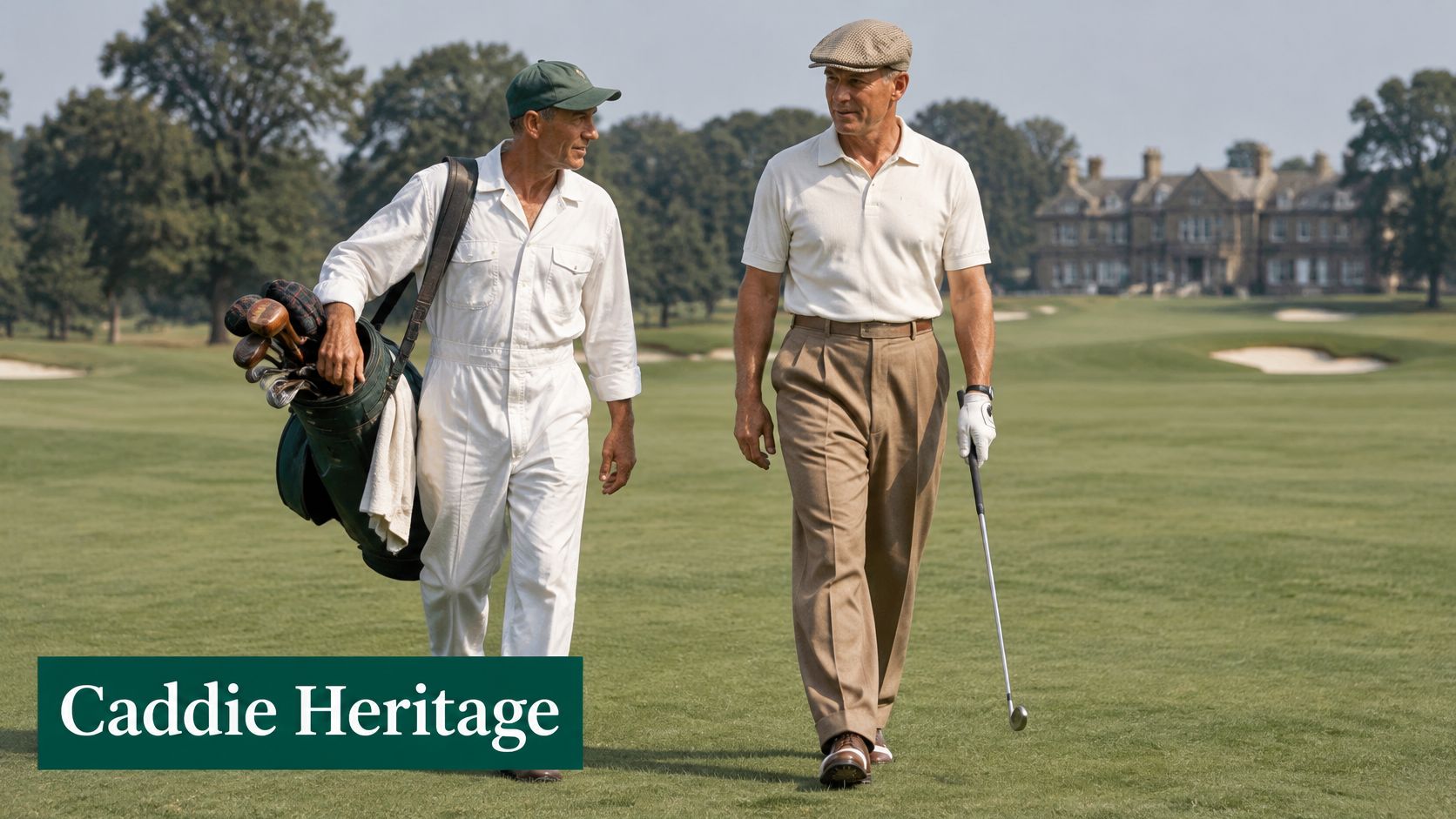
Personalization made the uniform useful as well as distinctive. A golfer's name appeared on the back, with a number on the chest or pocket area. A 1983 report described caddies wearing white coveralls and green caps with golfers' names in green lettering, showing how firmly the look had become part of the tournament's visual identity by then (contemporary coverage of the Masters caddies).
The numbers also connect the outfit to particular moments in golf history. Willie “Pappy” Stokes carried for Ben Hogan with number 6 in 1951; Steve Williams wore number 1 while caddying for Tiger Woods in 2002; and Ted Scott wore number 39 for Scottie Scheffler in 2022. Those details show why a number can feel more authentic than a decorative add-on. Modern versions often use lighter polyester-and-cotton blends than early jumpsuits, but the central combination remains simple: white coveralls, a green cap, and identifying details.
Sizing Guide for Children Adults and Tall Wearers
A costume should allow the wearer to move comfortably without sleeves or legs dragging. Before ordering, measure the person who'll wear it and compare those measurements with the garment's own size chart. Age labels can be a starting point for children, but height, torso length, and the clothes worn underneath can affect the fit.
| Category | Size Range | Notes |
|---|---|---|
| Infant and children | 0–3 months through 11–12 years | Check current height and allow room for comfortable movement. |
| Adults | XS to 3XL | Compare body measurements with the garment chart. |
| Tall adults | Selected long variations | Useful for wearers over 5'11"; check inseam and torso length. |
For children, measure height and chest while the child stands naturally. Check the inseam by measuring from the crotch to the floor or to the point where the trouser leg should end. A small amount of growing room can be useful, but excess fabric around the cuffs or sleeves can catch on shoes or objects.
Adults should check chest, waist, hip, and inseam measurements, especially if they plan to wear a sweater or sweatshirt underneath. Coveralls that fit closely when standing can feel restrictive when the wearer sits, reaches, or bends. A relaxed fit gives more room for everyday movement, but the hem still shouldn't trail underfoot.
Fit check: Have the wearer sit, raise both arms, and take a few steps before the event. If the garment pulls across the shoulders or bunches under the shoes, adjust the size or styling before wearing it out.
For children's golf-themed outfits and sizing considerations, the guide to golf apparel for kids offers related context. When a child is between sizes, prioritize safe sleeve and leg length over extra room for future growth. A base layer can add warmth without requiring an oversized costume.
Personalization Options Names Numbers and Patches
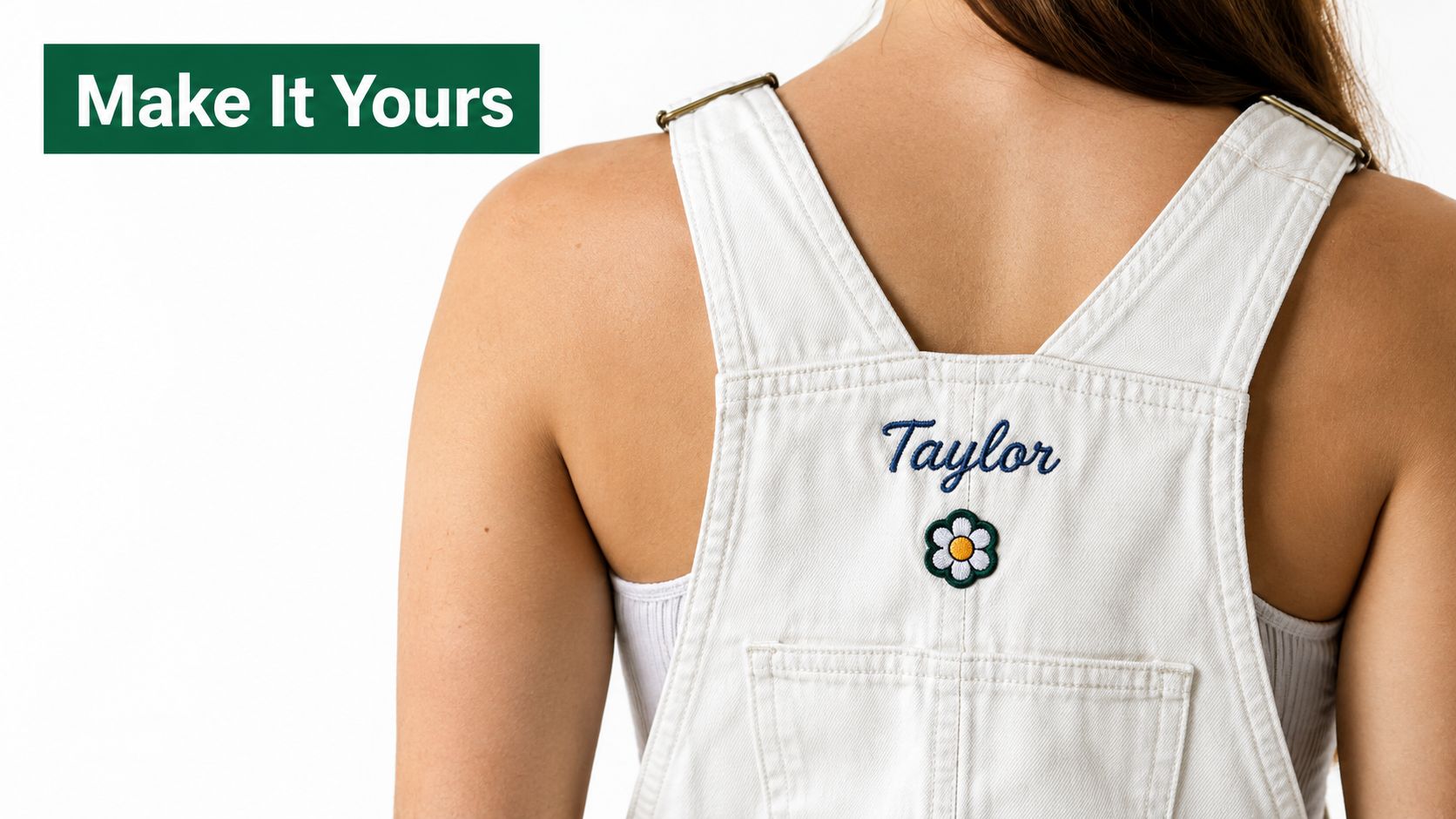
Personalization gives plain coveralls their caddie character. A name across the back and a number near the chest or pocket are the classic choices. Patches can add a team theme, family name, or playful motif, but a restrained arrangement often reads more clearly than covering the garment with decorations.
Choose how permanent the details should be
Embroidery is a polished option for a garment intended to keep the same identity. It becomes part of the fabric, which can make frequent changes difficult. A removable Velcro nameplate, number, or patch is more flexible: it can be taken off for washing or switched for another event.
For a family group, matching white coveralls can still feel individual. Each person can wear a different name or number, while a shared patch or cap color ties the group together. At a crowded gathering, a large, legible name can also help adults identify a child's costume quickly.
The guide to personalized name patches can help with choosing a detachable name detail. For children, secure any small parts carefully and avoid accessories that could come loose during active play.
Match the hat and accessories to the occasion
A green cap is the most familiar pairing, but the best headwear depends on the setting. A simple cap suits a golf-themed gathering, while a themed or novelty hat can make the outfit more playful for a party. Props should complement the costume without getting in the way.
| Occasion | Hat choice | Optional add-ons |
|---|---|---|
| Tournament gathering | Classic green cap | Name and number markings |
| Family costume | Matching caps or coordinated headwear | Shared patch theme |
| Photo session | Clean, simple cap | Putter cover or golf prop |
| Children's party | Comfortable, secure cap | Lightweight novelty patch |
A putter cover or small golf accessory can add context in a posed photo, but it shouldn't become a tripping hazard or interfere with a child's hands. For active events, comfort and secure attachment matter more than extra detail. Detachable elements make it easier to shift from a caddie look to another event style without buying a new base garment.
Use Cases Halloween Photoshoots and Events
A white overall can serve different roles with a few deliberate changes. For Halloween, the green cap and nameplate establish the caddie look, while comfortable shoes and a well-fitting hem help the wearer move safely. If the outing continues after dark, removable reflective details can add visibility without changing the outfit's overall character.
For a birthday or family party, matching coveralls create a shared theme without making every outfit identical. Names, numbers, or patches can distinguish each person. At a tournament viewing party, a cap and a restrained set of golf-themed accessories keep the costume recognizable without requiring a full set of props.
Photoshoots call for a different approach. A clean garment, tidy personalization, and uncluttered accessories keep attention on the person rather than the styling. Photographers planning a golf-inspired or vehicle-centered portrait can also consult this studio car photography post-production advice for ideas relevant to polished studio images.
A single base outfit can move between occasions if its additions are easy to remove. That makes detachable patches, number pieces, and nameplates especially useful: the same coveralls can look personal at a birthday, coordinated in a group photo, and more classic at a golf gathering.
For more ways to adapt the look to themed occasions, browse these golf costume ideas. The useful question isn't whether the outfit can work in several settings; it's which accessories suit each one. Keeping the base simple and changing only the details helps avoid a costume that feels overdone or too specific to one night.
Care and Maintenance for White Fabric
White fabric shows dirt quickly, so care starts before the event. Keep the coveralls away from food and drink during setup, and consider a removable layer or apron if the wearer will be handling snacks, paint, or craft materials. At outdoor events, a clean place to sit can help prevent grass and soil from transferring to the seat and knees.
When a spill happens, blot it gently rather than rubbing it deeper into the fabric. Check the garment's care label before applying stain treatment or washing, since fabric blends and printed details can have different needs. A prompt response is usually easier than dealing with a stain after it has dried.
Wash detachable details with care
Remove Velcro patches, nameplates, and number pieces before washing when possible. Fasten any exposed hook surfaces so they don't catch on fabric, and follow the garment's instructions for water temperature and drying. If a detail is embroidered or attached permanently, inspect its care guidance before putting the coveralls through a wash.
After cleaning, make sure the garment is fully dry before storing it. A hanger helps preserve the shape and keeps the legs from becoming creased at the bottom. Store the outfit in a clean, dry place away from direct sunlight, which can affect the appearance of white fabric over time.
A simple routine makes repeat wear easier: remove accessories, check for stains, wash according to the label, dry completely, then return detachable pieces to a safe storage spot. Keeping patches and caps together with the coveralls also makes the next event easier to prepare for. Reusable styling works best when the costume is cared for as a garment, not treated as disposable dress-up clothing.
Safety and Visibility Tips for Nighttime Wear
White coveralls can be easier to notice than a dark costume in some settings, but white fabric alone doesn't guarantee that drivers will see the wearer. Bright backgrounds, snow, white walls, and vehicle headlights can reduce contrast. For outdoor events after dark, add visibility measures rather than relying on color alone.
New York State safety guidance recommends well-fitting costumes that don't drag, flame-resistant materials, reflective tape, and flashlights for nighttime visibility (Halloween costume safety guidance). These precautions matter especially for children, who may run, turn suddenly, or move between adults during an event.
- Check the length: Keep sleeves and hems clear of hands and shoes so the wearer can walk without stepping on loose fabric.
- Add removable reflective details: Place reflective tape where it can be seen from different angles, and remove it later if the costume is being restyled.
- Choose stable footwear: Select shoes that fit securely and provide a steady step. Long cuffs shouldn't cover the sole or heel.
- Layer without crowding: Use a comfortable base layer for cold weather, then make sure the coveralls still allow the wearer to sit, bend, and reach.
- Keep children close: A flashlight and adult supervision support visibility, but neither replaces careful attention near roads or moving vehicles.
A white costume isn't certified high-visibility apparel. Safety garments are designed and classified for specific visibility uses; ordinary costume coveralls don't automatically meet those requirements. OSHA's clothing adjustment guidance also illustrates why heavier or less-permeable clothing can add heat burden: ordinary cloth coveralls have a 0°C adjustment to measured WBGT, while some synthetic coveralls have higher adjustments (OSHA and NIOSH guidance on heat stress and clothing). For an active outdoor event, choose a breathable, loose-fitting garment and use certified high-visibility apparel instead if the wearer will be near traffic or work zones.
Frequently Asked Questions
Can the costume work in warm weather?
Yes, if the garment is lightweight and the wearer can move comfortably. A single-layer coverall with a breathable shirt underneath is often more practical than heavy fabric or several tight layers. For active outdoor events, plan for shade and breaks.
How can a group make the outfits coordinated but not identical?
Use the same white base and green accent, then vary names, numbers, or detachable patches. That keeps the group connected while helping each wearer's outfit feel personal. Families can also choose a shared theme for their patches.
What if the coveralls arrive creased?
Check the care label before applying heat. If ironing is permitted, use the recommended setting and test an inconspicuous area first. Hanging the garment after washing can help reduce wrinkles; avoid heat treatments that could damage printed or attached details.
Can the costume be worn with regular clothes?
Yes. A plain shirt underneath keeps the caddie look simple, while a warm base layer can make the outfit more comfortable in cool weather. The coveralls should still fit properly over whatever the wearer plans to wear.
What helps the costume suit different body shapes?
Compare measurements with the size chart, paying close attention to torso and inseam length. A relaxed cut can allow movement and layering, but cuffs and sleeves should remain clear of the wearer's feet and hands.
Caddie Uniform offers personalized caddie coveralls and bibs for adults and children, along with hats and removable patches that can help complete a reusable white overalls costume. Explore the options at Caddie Uniform and choose a base outfit that can be restyled for the next party, photo session, or golf gathering.


