


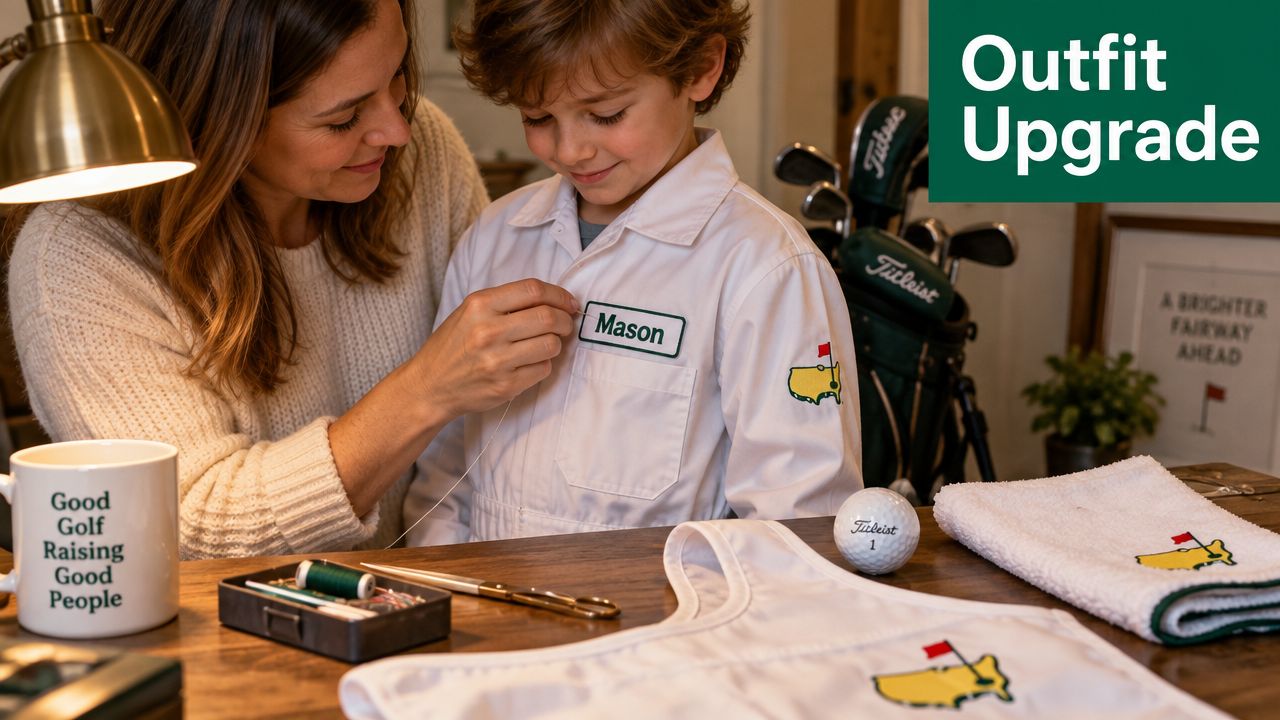
The white jumpsuit is ready. The bib is fitted, the towel is tucked over one arm, and the cap is sitting straight. Then a parent notices the blank space on the chest where the child's name should be. Without that small detail, the outfit can look borrowed. With a personalized name patch, the same caddie uniform feels finished, intentional, and made for one particular wearer.
That effect matters beyond costumes. A name patch can help adults identify children in a busy group, give a shared uniform a clear role, and turn an outfit into a keepsake. The right combination of material, size, and backing also determines whether the patch belongs on a one-night costume, a washable bib, a reusable hat, or a gift meant to last.
Why a Personalized Name Patch Changes the Whole Outfit
A caddie-style outfit depends on recognizable details. The light-colored jumpsuit, bib, cap, towel, and practical pockets establish the character, but the name patch supplies identity. A child dressed for a tournament-themed birthday party no longer looks like someone wearing a generic costume. The name on the chest suggests a real role, even when the wearer is heading to a backyard game rather than a golf course.
A small detail with several jobs
The patch works visually because uniforms traditionally use names and insignia to make standard clothing feel specific. It also serves a practical purpose at parties, school productions, family gatherings, and group photographs. Parents can identify children more easily, and children often feel more connected to an outfit when it carries their own name rather than a generic label.
A stitched patch suits a permanent costume or a garment that belongs to one child. A hook-and-loop version makes more sense when a family plans to reuse the jumpsuit, share a bib, or change the name for another event. The choice depends less on appearance than on how often the garment will be worn, washed, and reassigned.
Practical rule: If the uniform will keep the same wearer, choose a permanent attachment. If the uniform will rotate between people, choose a removable system.
The same principle applies to adults. A caddie outfit for a photo session, golf-themed wedding, or family portrait looks more deliberate when every participant has a clear name or role. A patch can also become a souvenir after the event, especially when the design uses durable embroidery, a distinctive border, or a carefully chosen color combination.
Where Personalized Name Patches Came From
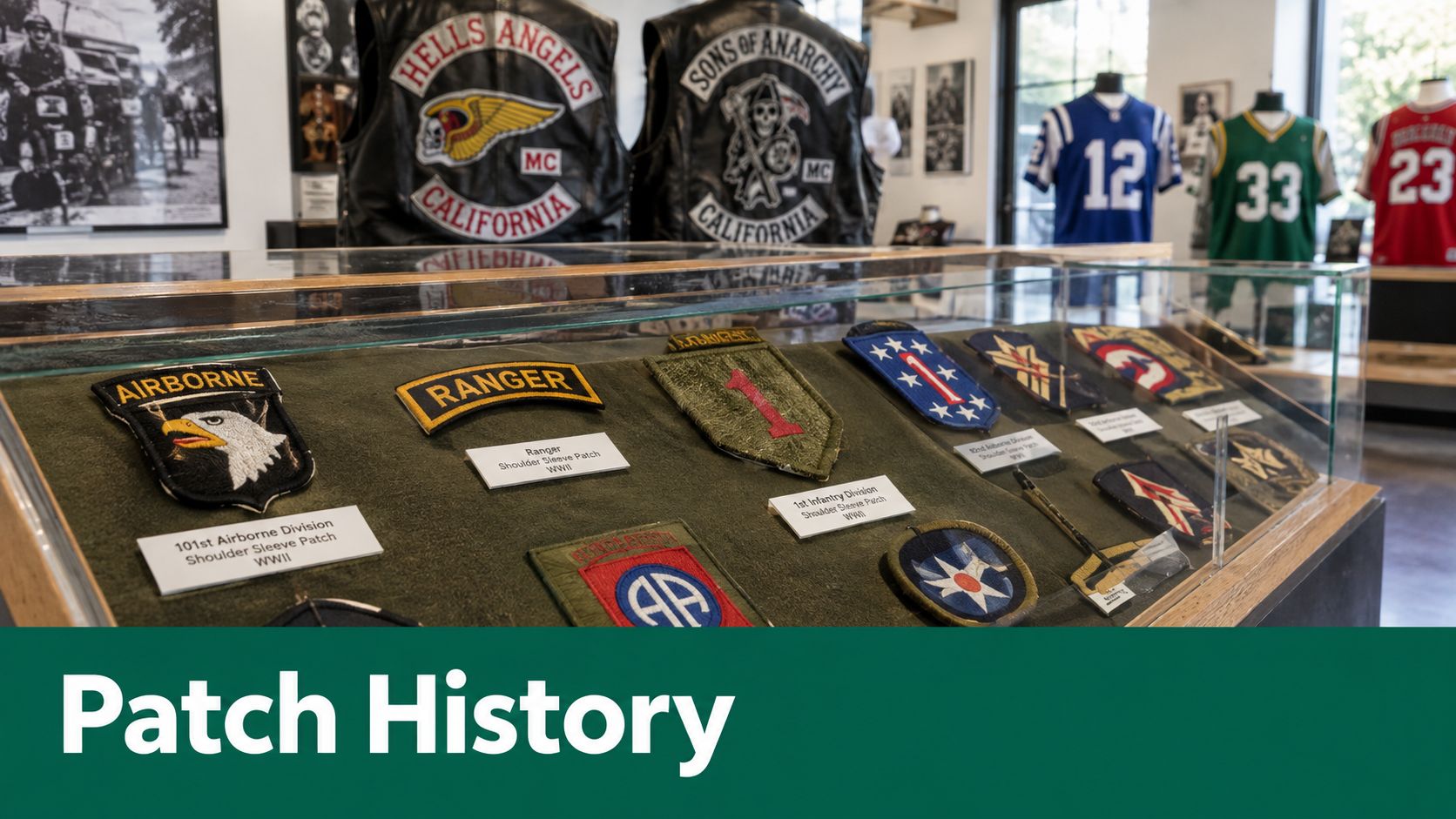
A child in a caddie costume may wear a name patch for a single event, yet that small label belongs to a much older clothing tradition. Modern military use expanded during World War I, and the U.S. Army's 81st Infantry Division is widely cited as one of the earliest units authorized to wear a cloth shoulder sleeve insignia in 1918. Within about 20 years, every U.S. Army group, squad, corps, and division had its own shoulder sleeve insignia. Fabric had become a clear way to show identity and belonging.
From unit identity to everyday clothing
The original job was straightforward. A patch identified someone's unit without making others search for a small printed label. The same visual language later appeared on club clothing, sportswear, work uniforms, school groups, and event apparel. A patch could show membership, responsibility, location, or personal identity while staying visible and replaceable.
That background makes a name patch feel natural on a caddie bib. Caddie clothing draws on athletic, service, and work-uniform details, so a name does more than decorate the garment. It identifies the wearer and helps a costume look like a role with a purpose. The effect works for a child's golf-themed outfit, an adult's event clothing, or a coordinated group uniform.
Personalization has also made the format useful for costumes, gifts, and shared clothing. A removable hook-and-loop patch lets a family change names between children, reuse a bib for different events, or give a personalized accessory that can keep serving after the occasion. A permanently attached patch suits one wearer or a costume intended to become a keepsake.
Market data also shows continuing demand for custom text formats. A 2025 market snapshot recorded 183 sales in the latest month for one military-style custom name patch listing and 1,440 sales for another custom text or tag patch listing. The figures point to sustained commercial interest in name-based personalization, without limiting the idea to military clothing.
For a first-time buyer, the practical lesson is clear. A personalized name patch looks authentic on a caddie uniform because fabric insignia already signals organized roles. The choice of backing then determines whether that identity stays with one garment or can move between costumes, hats, bags, and uniforms.
Materials Explained From Embroidered to Leather
Material changes the patch's surface, clarity, flexibility, and personality. Buyers comparing a personalized name patch should first decide whether the patch needs to look traditional, display fine detail, resist moisture, or feel like a premium gift.
Four common materials
Embroidered patches use raised thread on a fabric base, often twill or felt. The lettering has visible texture and a classic uniform appearance, which makes embroidery a natural fit for caddie bibs, coveralls, caps, and themed group outfits. It works especially well when the name itself is the main feature and the design needs a familiar insignia-like finish.
Woven patches use a flatter thread construction. Fine lettering and compact logos can remain clearer because the surface doesn't have the same raised texture as embroidery. Woven material suits lightweight garments, smaller labels, and designs where narrow details matter more than a traditional relief effect.
PVC patches use molded rubber-like material with a firm, wipe-clean surface. They fit rain gear, bags, outdoor equipment, and workwear where moisture and easy cleaning matter. The look is more modern and dimensional than fabric embroidery, so it may feel less traditional on a classic white caddie jumpsuit but practical on an accessory.
Leather and faux-leather patches create a restrained, premium appearance. Names can be engraved or pressed into the surface, making this option suitable for dress hats, golf bags, keepsake gifts, and event favors. The material gives the patch an accessory-like character rather than a purely uniform-like one.
| Material | Look & Feel | Best For |
|---|---|---|
| Embroidered | Raised, textured thread on fabric | Traditional caddie uniforms, bibs, and caps |
| Woven | Flat surface with fine thread detail | Small text, detailed logos, and lightweight fabric |
| PVC | Firm, molded, and easy to wipe clean | Bags, rain gear, and outdoor workwear |
| Leather or faux leather | Premium, engraved, and understated | Gifts, dress hats, and golf bags |
A buyer choosing a classic caddie appearance will usually find embroidery the most convincing. Woven construction earns consideration when the name is long or the design includes small details. PVC makes sense for equipment that faces wet conditions, while leather or faux leather gives a gift or keepsake a more refined finish. For additional ideas about coordinating a name patch with headwear, the personalized golf hat guide offers a relevant styling reference.
Attachment Options That Survive Real Wear
A child changes from a costume into everyday clothes, a caddie rotates between bibs, or an adult receives a personalized gift they want to wear on several garments. The backing determines whether that name patch stays put, moves easily, or needs sewing tools. Choose it before approving the design, because a backing that suits a shared uniform may be inconvenient on a frequently washed jumpsuit.
Sew-on, iron-on, and hook-and-loop choices
Sew-on backing gives the most permanent result. Stitches hold the patch directly against the fabric, so secure sewing handles rough use and repeated laundering well. The tradeoff is a fixed name. Reassigning a bib or jumpsuit means removing the patch and dealing with the old stitch marks.
Iron-on backing offers a quick application on suitable cotton, twill, and uniform fabrics. Heat activates the adhesive, but repeated hot washing can weaken its hold. It fits light-duty costumes and garments washed gently. Edge stitching adds support when the patch will be worn often.
Hook-and-loop backing connects through tiny hooks that grip a sewn loop field. The patch can be removed and replaced without repeatedly puncturing the garment, much like changing a label on a reusable folder. A properly sewn loop field supports repeated attachment, making this choice practical for shared bibs, rotating shifts, children's costumes, and uniforms that need a different name later. Buyers can review removable Velcro nameplates when switching names between outfits matters.
| Backing Type | Wash Durability | Skill Needed | Best Use Case |
|---|---|---|---|
| Sew-on | Strong for demanding wear when securely stitched | Sewing skill or a tailor | Permanent uniforms and hard-washed garments |
| Iron-on | Suitable for lighter use, but heat can weaken the bond | Household iron and careful placement | Casual costumes and simple cotton garments |
| Hook-and-loop | Reusable when the patch is removed before washing | Sewing for the garment-side loop field | Shared uniforms, kids' outfits, and name changes |
Match the backing to washing and handling
Industrial heat-seal backing can withstand 52 industrial wash cycles, while heat-applied and Velcro-backed versions can withstand 52 domestic wash cycles under the manufacturer's stated conditions, including inside-out machine washing with mild detergent. The manufacturer's name-patch specifications provide that guidance.
In daily use, attachment problems often begin with a lifted edge or tired adhesive rather than immediate fading. Remove hook-and-loop patches before washing, reduce unnecessary heat, and follow the garment's care instructions. For a permanent caddie uniform, sew-on backing is usually the steadier choice. For a costume, group outfit, gift, or child's changing wardrobe, removable backing keeps the name useful after the first event.
Sizing and Design Tips for Caddie Uniforms and Hats
A name patch needs to be readable without overpowering the garment. For a caddie bib, the eye should find the name quickly, while a cap requires a design that follows the limited width and curve of the front panel.
Choose dimensions around the garment
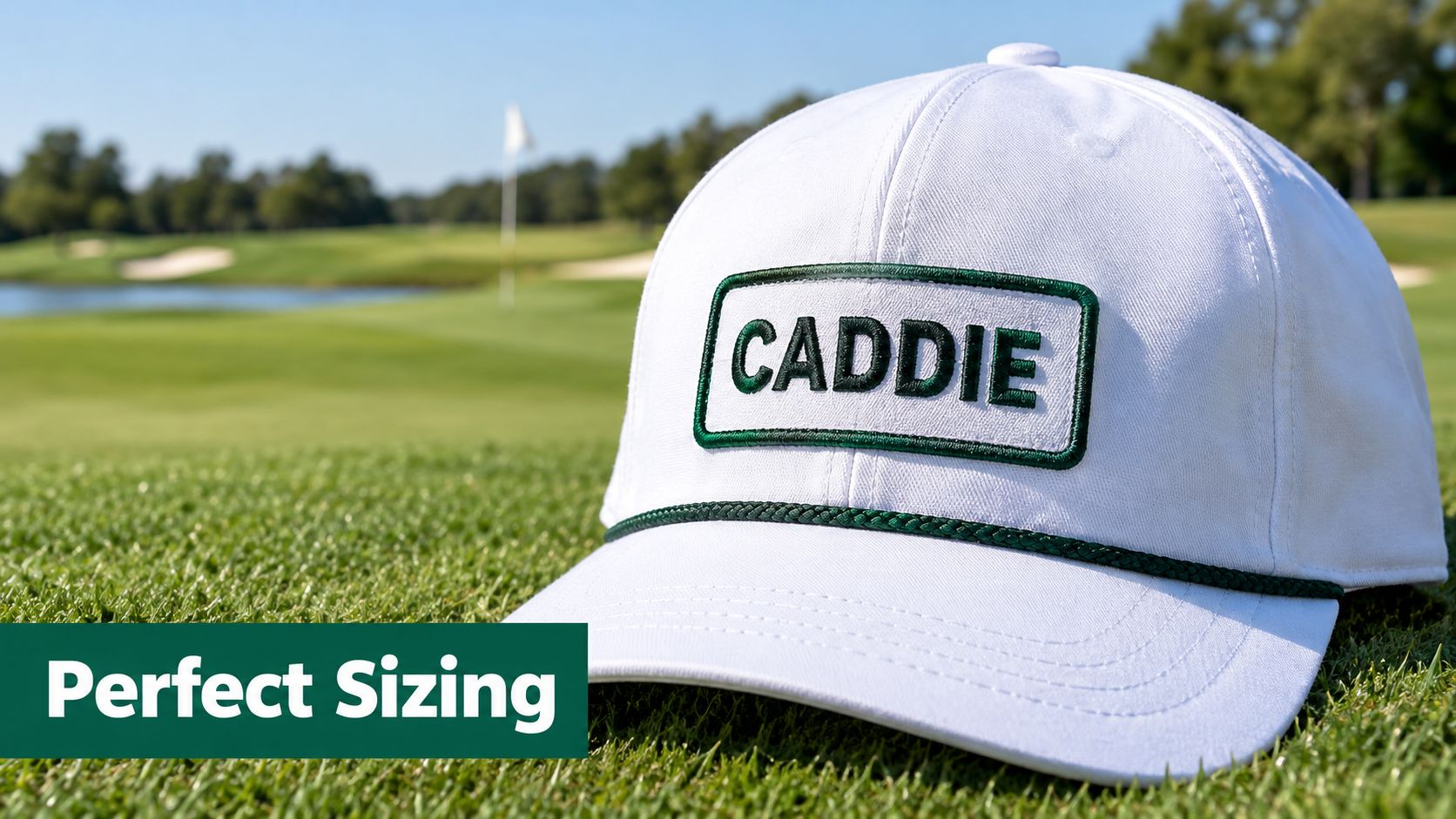
Common adult proportions are about 1 inch tall by 4 inches wide, a shape that fits above a bib pocket or across the front of a cap. Longer names or taller adult garments may need an extended LONG format measuring 5 or 6 inches wide. These dimensions are practical starting points, not rules, so the available placement area should be measured before ordering.
Children need proportional sizing. A patch designed for a toddler coverall can look oversized on a small cap, while very narrow lettering may disappear when stitched onto a busy costume. Kids' sizing can cover the range from infant wear through 12 years, so the name should be matched to the actual garment rather than chosen only by age label.
Make the lettering easy to find
Contrast usually matters more than decorative typography. White thread on navy or forest-green twill creates a clearer visual separation than tone-on-tone thread, especially outdoors or in photographs. A clean block font generally serves a caddie uniform better than an ultra-thin script that loses its narrow strokes.
Before approving a design, check these details:
- Border space: Keep at least a quarter-inch border so the name doesn't crowd the edge.
- Letter weight: Avoid extremely thin scripts and delicate flourishes.
- Hat placement: Center the patch on the front panel, checking that the curve won't distort the lettering.
- Bib placement: Position the patch about 2 inches below the shoulder seam when that location suits the garment.
- Name length: Consider a wider format or shorter display name if the full name becomes cramped.
A child's nickname may suit a costume or birthday party, while a team or corporate event may need a surname, role, or first name with an initial. The strongest design is the one that can be read quickly and still looks balanced when the wearer is moving.
Ordering Workflow, Lead Times, and Personalization
A smooth order starts with the garment rather than the patch. The buyer should photograph the bib, jumpsuit, hat, or bag, measure the available area, and decide whether the name will remain with one wearer or move between several garments. Those details prevent an attractive design from arriving in the wrong proportion or with an unsuitable backing.
Four decisions before production
- Select the material and attachment. Embroidery and sew-on backing create a traditional permanent look. Hook-and-loop makes more sense for shared or reusable apparel.
- Enter the personalization. Provide the exact spelling, then add an optional number, flag, logo, or thread color if the design allows it.
- Review the proof. Embroidered and woven orders commonly receive a digital proof within one to two business days. PVC and leather designs may use a different mockup process.
- Approve production. The production clock begins after the design receives approval, so a fast proof review helps protect the event date.
Production timing varies by material. Standard embroidery may take 7 to 12 business days, woven patches 10 to 15 business days, and PVC patches 14 to 21 business days because tooling adds another production consideration. Rush service may reduce the schedule by 3 to 5 days at an added cost, but buyers should confirm availability before relying on it.
A removable system can simplify repeat orders because the same patch can move from a bib to a hat or jacket without recreating the name. Group buyers can also gather correct spellings and reference photos in one place. For teams collecting visual details from several families, a resource that lets participants upload photos to Saucial can help organize artwork and garment references before submission.
Caddie Uniform offers custom caddie apparel, bibs, hats, and removable name elements for children and adults. Buyers planning coordinated clothing can also review custom golf apparel before deciding whether a standalone patch or a complete personalized outfit fits the event.
Use Cases From Costumes to Corporate Gifts
A family preparing a child for Halloween may need only one name patch on a white jumpsuit. An embroidered patch with a permanent backing works when the child will keep the costume, while hook-and-loop is more practical if the garment may be handed down or reused for another character.
A youth golf league faces a different problem. The bibs or jerseys may return for another season, but the players change. A sewn loop field on each garment and separate name patches allow the apparel to stay in service while the identity pieces change. A readable woven patch can suit compact names or small team marks, while embroidery offers the traditional uniform texture many groups expect.
Match the patch to the event
- Birthday parties: Choose bright contrast and removable backing when several children may trade hats or bibs during activities.
- Photo shoots: Embroidery creates a strong visual texture in close photographs, while a carefully sized leather patch can support a more styled, editorial look.
- Golf outings: A removable nameplate lets each participant personalize a shared caddie-inspired outfit without permanently altering it.
- Weddings and bachelor parties: Small embroidered or faux-leather patches can act as favors, role markers, or matching details on hats and bags.
- Corporate retreats: Consistent name patches give staff a coordinated identity without requiring every participant to receive a fully monogrammed jacket.
- Shared sports equipment: A hook-and-loop system lets a team manager move names between common hats, bibs, or bags.
A sports team parent managing shared bucket hats will value reversibility more than a one-time costume buyer. A gift buyer may prefer leather or faux leather because the patch feels like a lasting memento rather than a disposable label. A photographer styling a family portrait may prioritize color contrast and placement so names remain visible without distracting from the composition.
The best choice follows the event's handling pattern. One wearer and heavy washing favor sewn attachment. Frequent swapping favors hook-and-loop. A short, casual event can use iron-on when the fabric and care routine are compatible.
Care Instructions and Common Buyer Questions
A child may wear a name patch through a costume party, then place the same hat in the wash. Care starts by matching the cleaning routine to the patch backing and the garment. For industrial heat-seal, heat-applied, and Velcro-backed name patches, machine washing inside out with mild detergent is the stated condition for tested durability. The earlier wash guidance also points buyers toward practical warning signs, especially edge lift and adhesive fatigue.
Use cold to warm water, avoid chlorine bleach, and keep dryer heat moderate. Remove hook-and-loop patches before laundering. This keeps the hooks from collecting lint or catching on other fabric. Store the patch with its hook side protected, then press the loop field flat before attaching it again.
Sew-on and iron-on patches should not be pressed directly from the front. If reshaping or extra application heat is needed, place a cloth barrier between the iron and patch, and work from the garment's reverse side when the construction allows. Inspect the edges after washing. Early lifting is easier to repair than peeling that continues through repeated drying.
Questions buyers ask before checkout
How long will a patch last?
Durability depends on the material, attachment method, washing, and handling. A well-sewn patch suits demanding wear, while adhesive systems require gentler heat and washing conditions.
Can the same name be reordered later?
Usually, yes, if the original design details are saved. Keep the approved spelling, size, thread colors, and backing type so a repeat order stays consistent.
How much text fits?
Short names are easiest to read. Longer names may need a wider patch, a simpler font, or a shortened display version.
Which font should be chosen?
A bold, clean font usually reads better on a moving caddie uniform or curved cap than narrow script.
Can colors match a team or costume?
Yes, though contrast comes first. Similar shades can make the name difficult to read against the garment.
Do patches work on cotton and performance fabrics?
Many do, but the backing must suit the fabric's heat tolerance, stretch, and surface. Check the garment label and confirm compatibility before applying adhesive or heat.
Caddie Uniform offers personalized caddie uniforms, bibs, hats, and removable name patches for children's costumes, group outfits, gifts, and golf-themed events. Choose the garment, backing, and name format for the intended wear, then visit Caddie Uniform to create a coordinated caddie look.


