


A parent searching for a baby boy golf outfit may be choosing between a cute photo look and something a baby can wear comfortably. A white caddie-style coverall with green details can make a memorable costume, but the right choice also depends on the baby's size, activity, the weather, and how long the outfit will stay on.
A useful way to plan is to treat the costume as a styling layer, not as a reason to compromise comfort or safety. A breathable base, an easy diaper change, and a good fit matter just as much as the finishing details.
What Is a Baby Boy Golf Outfit
A baby boy golf outfit is usually a caddie-inspired costume built around a white coverall or a bib worn over a simple base layer. Green accents, such as a collar, trim, or hat, help create the familiar look. Some designs add a name, number, or golf-themed patch to make the outfit feel like a miniature uniform.
The style suits more than a day on the course. A family might choose it for a golf-themed birthday, a Halloween costume, a tournament visit, or a short photo session. For example, a parent preparing family portraits might choose a full coverall for a crisp, coordinated appearance, while another might use a bib over a soft bodysuit for a warmer gathering.
Coverall or bib
A coverall is a one-piece garment that creates a more complete uniform look. It can work well for a brief supervised photo session, especially when the room is comfortable and the baby can move freely. The trade-off is that a full garment may take more effort to adjust for temperature or diaper access.
A bib-style outfit sits over a separate base layer. That makes it easier to remove the decorative part if the baby gets warm, and it allows caregivers to choose a lighter layer underneath. Think of the bib as the costume jacket: it provides the visual effect, while the bodysuit does the everyday comfort work.
The look also sits within a wider interest in children's golf. The National Golf Foundation reports that just under 4 million juniors played golf on a course in 2025, the highest level recorded since 2004, and that junior participation had increased 58% since 2019 (National Golf Foundation golf industry research). That context helps explain why golf-inspired clothing can appeal to families even when the baby isn't playing.
The key is to separate appearance from function. A caddie outfit can be charming without being suitable for every hour of an outdoor event. Choosing the style, fit, and layers together makes the costume easier to enjoy and easier to take off when the baby needs a break.
The Core Pieces of a Caddie-Style Outfit
The recognizable caddie look comes from a few coordinated details, not from piling on accessories. A white coverall or bib forms the base; green trim or a complementary cap adds contrast; and a nameplate, number, or patch can make the outfit feel personal. Each detail should support the look without making the garment cumbersome.
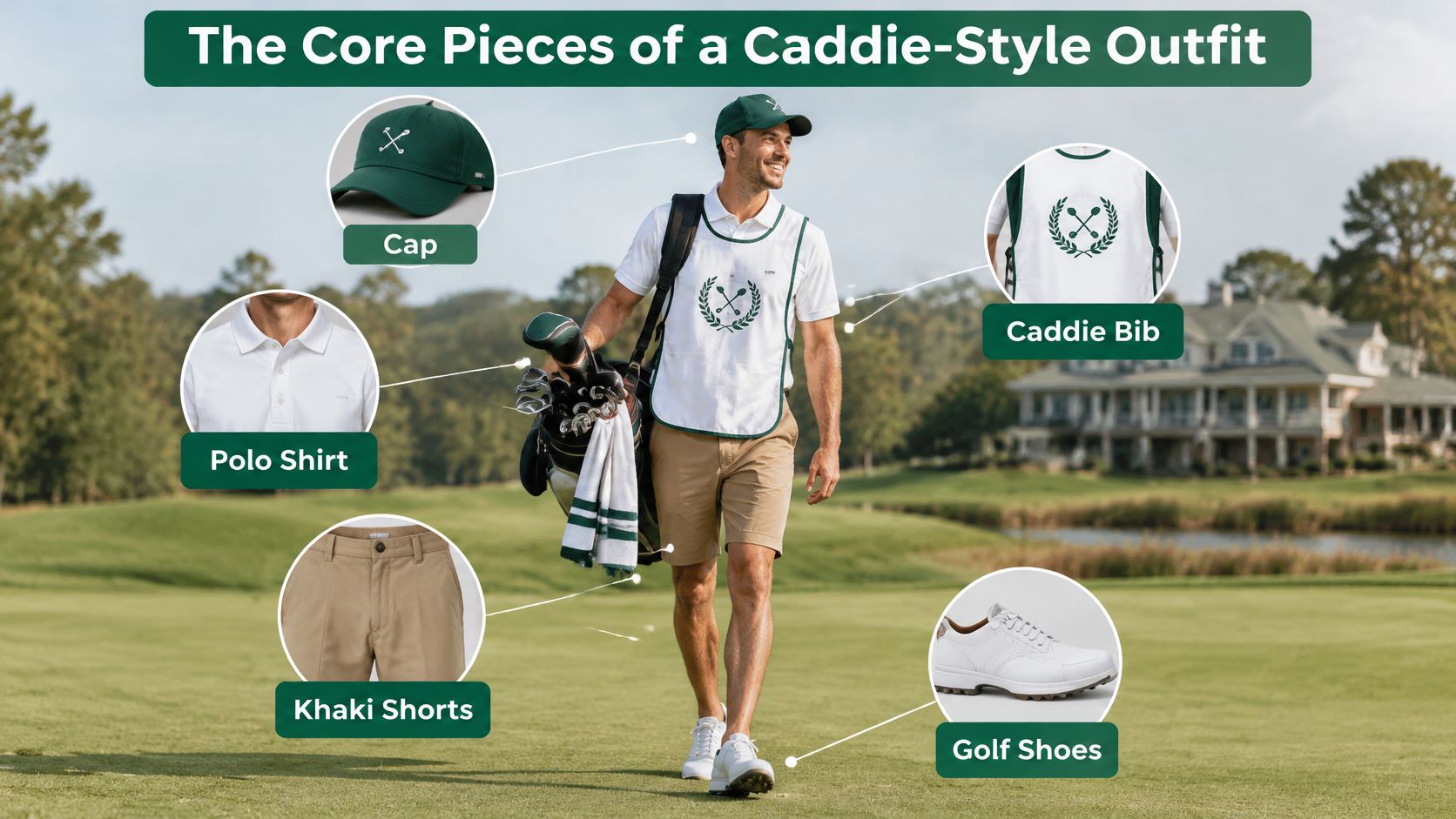
Build the look from the base outward
Start with a soft, lightweight bodysuit. A short-sleeve version can suit a warm indoor celebration, while a long-sleeve option may feel more comfortable in a cooler room. Over it, a loose caddie-style bib adds the uniform silhouette without requiring a thick costume layer.
Green accents can come through a collar, a cap, or a patch. Keeping the palette simple makes the outfit recognizable and avoids adding unnecessary pieces. A nameplate or number can finish the look, but it should be securely attached and checked before each wear.
A full coverall may look more like a complete costume, but a bib is often easier to manage for infants. Caregivers can take the bib off if the baby becomes warm, and the base layer remains available for diaper changes and movement. That flexibility matters because a photo-ready costume is best treated as a brief, supervised outer layer, not automatically as an all-day outfit.
Practical rule: If the baby's comfort depends on keeping every decorative layer in place, the outfit is too complicated for the occasion.
When considering golf-themed gifts or seasonal pieces, parents can also browse SwagglyLife holiday babywear for another example of coordinated children's apparel. Whatever the source, check that the garment has comfortable openings, secure fasteners, and no loose decorations that could catch or come away.
Before choosing a caddie-style piece, look at the fabric, seams, closures, and ease of removal. A convincing uniform doesn't need to feel stiff or restrictive. The strongest outfit is the one that gives the caddie look while still letting the baby move, rest, and be changed comfortably.
Sizing and Fit for Every Stage
Age labels are a starting point, not a fit guarantee. Two babies of the same age can differ in height, weight, and torso shape, so parents should compare the garment's size chart with the child's measurements. An infant sizing chart may divide the baby range into stages from newborn through 24 months, but those stages describe ranges rather than exact developmental predictions (infant and toddler clothing size chart).
Measure the areas the garment must fit
For a coverall or bib, chest, waist, and seat measurements help show whether the garment will sit comfortably and allow movement. Use a soft measuring tape, keep it level around the body, and avoid pulling it tight. If the product chart lists height and weight as well, compare those too rather than selecting a size by age alone.
| Age Stage | Height Range | Weight Range |
|---|---|---|
| Newborn/0–3 months | 20–22 inches | 6–9.5 pounds |
| 3 months | Check the garment chart | Check the garment chart |
| 6 months | Check the garment chart | Check the garment chart |
| 9 months | Check the garment chart | Check the garment chart |
| 12 months | Check the garment chart | Check the garment chart |
| 18 months | Check the garment chart | Check the garment chart |
| 24 months | 34–36 inches | 28.5–30 pounds |
The endpoints in this table illustrate how much an infant size range can change; the intermediate stages should be checked against the current chart rather than guessed. Parents choosing children's golf apparel can also use this guide to golf apparel for kids as a related fit resource.
Check the fit in motion
A garment can look right while the baby is still, then feel tight when the child bends or sits. With the outfit on, check that the torso doesn't press on the abdomen, the shoulders allow arm movement, and the legs can bend freely. Two adult fingers should pass comfortably beneath waist or leg openings: snug enough to stay in place, but not so tight that the elastic leaves pressure marks.
Fit should reflect the baby's activity. For newborn photography, ease of dressing and a soft feel may matter most. A baby who sits or crawls needs room to move at the hips and shoulders, while a walking toddler needs a garment that won't bunch around the legs or trip them.
“Room to grow” shouldn't mean buying a costume that hangs loose. Excess fabric can bunch or catch, while a well-fitted base layer is easier to manage. If the outfit will be worn in a car seat, caregivers should check that the clothing doesn't interfere with a properly adjusted harness.
Personalization Options for a Unique Look
Personalization can turn a simple caddie costume into a keepsake, but each added detail should earn its place. Names, numbers, and patches create the familiar team-uniform effect. For a baby, the best choice is usually the one that remains legible and securely attached without adding loose pieces or irritating seams.

Name, number, or patch
An embroidered name gives the outfit a lasting, sewn-in detail. It can look polished in a family portrait, but placement matters: lettering should be easy to see without landing where the garment folds or rubs. A number adds a sporty uniform touch and can balance a name on the opposite side.
Removable patches offer a different kind of flexibility. A Velcro nameplate or themed patch can be changed for another event or removed before washing, which may make the outfit easier to reuse. Parents should still check that the patch is firmly attached before wear and remove it if it loosens or becomes a small detachable piece.
A themed patch can help shift the same outfit from one occasion to another. A golf emblem may suit a tournament visit, while a seasonal design may work better for a party or costume event. Keep the overall look simple enough that the baby remains the focus rather than the collection of decorations.
For ideas about customized golf clothing, parents can read this guide to personalized golf apparel. Before choosing a design, it helps to ask three practical questions: Can the name or number be read in a photo? Does the placement sit comfortably against the baby's body? Can removable details be taken off for washing or when they aren't needed?
A personal detail should make the outfit more meaningful, not harder to wear or care for.
Wash instructions matter, too. Remove detachable elements first, protect embroidery from rough handling, and fasten Velcro surfaces as directed so they don't snag other fabric. With those checks, personalization can add character without turning a simple costume into a fussy one.
Best Occasions for a Baby Boy Golf Outfit
The same caddie-style outfit can work differently depending on the event. A parent planning a short indoor photo session may prioritize a complete uniform look, while someone attending an outdoor party may need a lighter layer that can come off easily. Matching the costume to the setting keeps the occasion enjoyable for the baby as well as the adults.
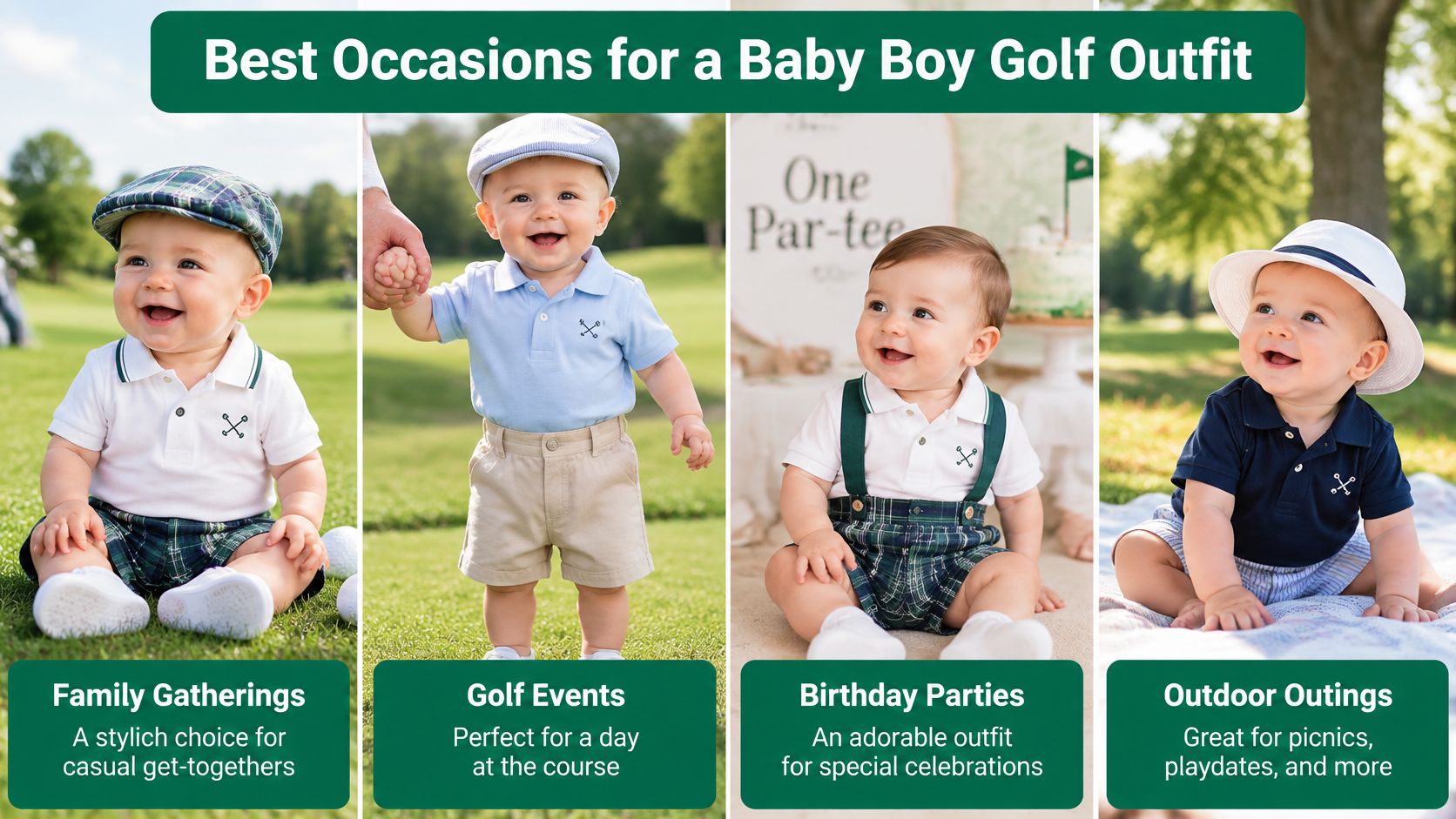
Match the outfit to the moment
For family photos, a coverall can create a neat, complete silhouette. Keep the session brief, check that the baby isn't getting warm, and remove the costume layer once the photographs are done. A bib over a familiar bodysuit can be a comfortable alternative if the room is warm.
At a birthday party or indoor gathering, a bib is often easier to manage. It can be removed for feeding, changing, or a quiet break without requiring the baby to change into a different base outfit. For Halloween, a coverall may provide a more complete costume, but comfort should still set the limits on how long it stays on.
An outdoor tournament visit needs a different plan. Babies younger than six months should be kept out of direct sunlight, and the FDA advises protective clothing and shade for infants (FDA guidance on sunscreen for infants). Use shade, plan breaks, and choose clothing that covers exposed areas without adding unnecessary warmth. The American Academy of Pediatrics recommends dressing babies in no more than one additional layer compared with an adult in the same environment; its safe-sleep guidance also advises against overheating (AAP guide to safe sleep).
For sun coverage, fabric performance matters more than color or a vague “summer weight” label. A peer-reviewed assessment of children's summer clothing found that approximately 88.2% of blended textiles achieved UPF greater than 15, compared with 60% of 100% cotton fabrics (assessment of children's summer clothing and ultraviolet protection). A tightly constructed, breathable fabric with a certified UPF rating can help cover the shoulders and upper back, but it doesn't replace shade or supervision.
The simple decision is this: choose a full coverall for a short, comfortable photo moment; choose a removable bib for flexible wear; and for outdoor events, plan around shade, breathable coverage, and breaks. If the baby becomes flushed, sweaty, unusually warm, or lethargic, remove the outer layer and move to a cooler shaded place.
Coordinating Hats and Accessories
A hat can complete the caddie look, but a photo-ready cap and useful sun protection aren't always the same thing. A classic golf-style cap may suit a supervised indoor picture. For outdoor protection, a brim that shades the ears and neck is more helpful than a baseball cap, which doesn't adequately cover those areas.
| Option | Best use | What to check |
|---|---|---|
| Golf-style cap | A brief, supervised photo | It stays in place without a tight or dangling strap |
| Brimmed hat | Outdoor wear with caregiver supervision | It shades the face, ears, and neck without obstructing breathing |
| No hat | Sleep or any moment it could cover the face | Remove headwear before putting the baby down |
The World Health Organization advises keeping babies under 12 months in the shade and using protective clothing, hats, and sunglasses outdoors. Babies younger than six months should be kept out of direct sunlight, so a hat shouldn't become a substitute for shade or a reason to extend an outdoor visit.
Accessories call for the same practical judgment. A golf-themed prop can add context to a supervised photograph, but it shouldn't be left within the baby's reach if it has small detachable pieces. Putter covers and decorative items can work as background props when an adult controls them; loose cords, dangling attachments, and small removable pieces should be avoided on the baby's clothing.
Keep it simple: The outfit carries the theme. Accessories should never make it harder to supervise, hold, or change the baby.
Take hats and costume accessories off for sleep, and remove anything that could cover the baby's face. Before dressing the baby, check that patches and fasteners are secure and that no loops or threads can catch. These checks preserve the caddie-inspired look while keeping the clothing practical for an infant.
Care Tips and Where to Source Authentic Pieces
A costume stays photo-ready when it's cared for before and after each wear. Start by reading the garment's care label, then remove detachable patches or nameplates before washing if the instructions allow it. Fasten Velcro surfaces as directed so they don't catch on other fabric, and turn embroidered garments inside out when appropriate to protect the stitching.
After washing, inspect the outfit rather than assuming it's ready for the next event. Look for loose threads, worn snaps, damaged seams, or patches that no longer stay attached. Store the garment clean and dry, with removable decorations kept together so they don't get lost or end up in a baby's reach.
Choose the garment, then check the details
A retailer focused on caddie-style apparel may offer a more coordinated look than a general children's outfit selection. Parents can compare the available infant sizing guidance, personalization options, and matching hats or accessories before deciding. A guide to custom golf apparel can help clarify the kinds of personalization choices available.
Caddie Uniform offers custom children's caddie uniforms, bibs, hats, and patches, with sizing that includes infants. As with any outfit, caregivers should compare the garment measurements with the baby's body and review care and attachment details before ordering.
Before the first wear, use this checklist:
- Check the fit: Confirm that the garment allows comfortable movement and doesn't interfere with changing or a car-seat harness.
- Inspect attachments: Make sure patches, snaps, and other fasteners are secure, with no loose cords or dangling pieces.
- Plan the layers: Choose a lightweight base and make sure the decorative layer can be removed easily.
- Review the care label: Follow the washing instructions and remove detachable details when appropriate.
- Set the occasion: Treat the costume as supervised event wear, and take it off when comfort, temperature, or the baby's routine calls for a change.
A well-chosen baby boy golf outfit balances the visual charm of a caddie uniform with the ordinary needs of baby care. When the fit is comfortable, the layers are easy to adjust, and the decorations are secure, the outfit is ready for a memorable photo or a short family event.
Caddie Uniform offers personalized children's caddie uniforms, bibs, hats, and patches for golf-themed photos, parties, and events. Parents can explore the available options and sizing at Caddie Uniform and choose a look that fits the occasion as well as the baby.


