

You can spot the problem fast. The apron looks fine on the hanger, then it gets worn for a dinner rush, a school event, or a long day around the grill, and suddenly the pockets sag, the neck strap digs in, and the whole thing feels like it was designed by someone who never bent down with a phone in one pocket and keys in the other. A bib apron with pockets only works when the fabric, straps, seams, and pocket layout all pull in the same direction.
That's the standard worth using. The right one protects clothing, keeps small tools close, and stays comfortable after repeated wear and washing. The wrong one turns storage into drag.
What a Bib Apron with Pockets Actually Is
A server weaving through a crowded dining room, a caddie carrying score notes between holes, and a parent handing out snacks at a party all need the same thing, a garment that shields the front of the body and keeps essentials within reach. A bib apron with pockets does that job with storage built into the apron itself, not added as decoration. Historical apron design treated protection and identification as a pair, and pocketed versions extended that idea by turning the apron into a portable work surface as well as a shield against messes.
The structure is straightforward. The bib covers the chest and upper torso, the lower panel protects the lap and front of the body, and the ties or straps hold the whole piece in place. Pockets turn the apron from passive coverage into active storage, which is why they belong to the design, not the afterthought pile.
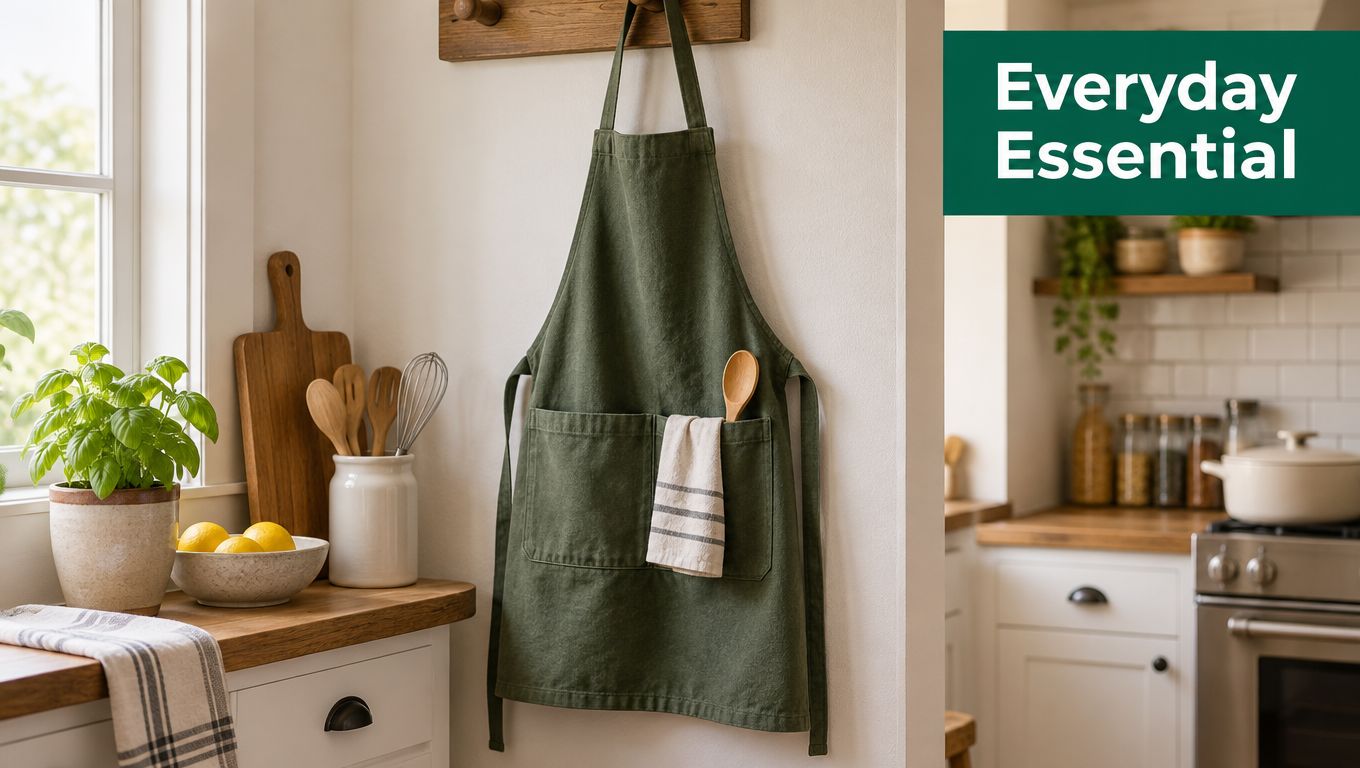
Treating a pocketed apron like a flat accessory is the usual mistake. Once a phone, marker, towel, or packet of cards goes inside, the apron becomes a load-bearing system, and fit starts to matter as much as fabric. A weak strap or sloppy pocket placement shows up fast as sagging, twisting, or a front panel that pulls out of position.
Practical rule: if the apron cannot carry a few everyday items without sliding, sagging, or twisting, it is not doing its job.
Buyers should stop counting pockets and start asking what the apron is meant to carry, how often it will be washed, and how much movement the wearer needs. That gives a clearer read on whether the apron will work in a kitchen, at a caddie event, or during a family outing.
Anatomy of a Pocketed Bib Apron
A pocketed bib apron is easier to judge when it's broken into parts. The strap system controls how the apron sits on the body, the bib panel covers the chest, the waist section carries the lower load, and the ties or closures stabilize everything at the back. Each piece has a job, and each one can fail in a different way.
Read the garment from top to bottom
The neck loop or cross-back strap takes the first hit because it carries the apron's hang point. A wider strap spreads pressure better than a narrow one, especially when pockets are loaded and the apron pulls downward. The bib-to-waist transition is the next stress point, because that's where motion and carried weight meet.
Pocket anchors deserve real attention. If the corners are weak, the fabric puckers, the pocket mouth stretches, and the apron begins to twist under load. Manufacturers that use double stitching or bar-tacks at pocket corners and strap anchors are addressing the right failure points, not decorating the spec sheet.
A product photo tells more than the color does. Look for where the seams land, how high the pockets sit, and whether the bib panel has room to move when the wearer bends.
The lower edge matters too. If the apron is too long, it catches on footwear and gets annoying fast. If it's too short, it stops protecting the clothing that gets dirty. A good pocketed bib apron balances those issues by keeping the load close to the body and the hem out of the way.
That's the structure to check before anything else. A neat-looking apron with weak anchors and shallow pocket construction won't survive real use, no matter how polished it looks online.
Common Pocket Layouts and What Each One Is For
Pocket count gets too much attention. Layout matters more than raw number, because pockets behave differently once the apron is moving, bending, or sitting. A single large pocket can be flexible, but it's easy to overload. Divided pockets keep items from collapsing into one heavy lump. A chest pocket can be useful, but it can also get in the way if the wearer bends forward or sits often.
Pocket Layouts Compared
| Layout | Best For | Watch Out For |
|---|---|---|
| Single kangaroo pocket | Bulky, loose items that need quick access | Can sag if overloaded, and items slide together |
| Split front pocket | Phones, pens, cards, keys, and small tools | Less room for larger items |
| Divided or compartmentalized pocket | Mixed small items that need separation | Too many compartments can waste space and add weight |
| Chest pocket | Light items that must stay visible and close | Can interfere with bending or sitting |
A divided pocket usually wins for small loose objects because it keeps a phone from knocking into keys and keeps cards from disappearing into the bottom of one deep pouch. A large central pocket works better for bulkier gear when flexibility matters more than separation. The chest pocket should stay light, because anything heavy up top changes how the bib settles on the torso.
“More pockets” stops being an advantage here. More pockets can mean more stitching, more weight, and more places for clutter to collect. Overbuilt pocket systems also encourage people to carry too much, which slows movement and puts extra strain on the apron.
Best rule of thumb: match the pocket layout to the actual carry list, not the fantasy of what might be useful someday. If the wearer only needs a phone, pen, and small accessories, divided front storage is cleaner than a crowded layout.
Materials, Weight, and How the Apron Holds Up
Fabric choice decides whether a pocketed bib apron feels dependable or flimsy once it is loaded and washed. For repeated commercial or event use, a weight around 260–340 GSM, or about 8–10 oz per square yard, gives a practical balance of abrasion resistance, shape retention, and mobility fabric weight and durability guidance. That is the range to ask for when the apron has to work, not just look good on a hanger.
Poly-cotton twill is the sensible default for many buyers because it resists wrinkles, stains, and shrinkage better than untreated cotton while staying more breathable than full polyester. For a bib apron with pockets, that balance matters. The apron needs to keep its shape when the pockets are full, but it should still move with the body instead of feeling stiff and overheated.
Reinforcement is not optional
Pocket corners, strap anchors, and the bib-to-waist transition need double stitching or bar-tack reinforcement because those points take the most stress when items are carried. Weak construction usually shows up there first. The fabric may still look fine while the seams start to distort, sag, or tear early.
The phrase heavy duty means nothing unless the seller translates it into specs. Ask for fabric weight, fiber ratio, seam reinforcement, and the expected wash life. A commercial-grade 10-ounce twill apron is commonly treated as a benchmark for roughly 100–150 industrial wash cycles before visible thinning at stress points, though actual life still depends on detergent chemistry, temperature, loading, and pocket weight. Treat that as a useful durability check, not a promise.
For readers comparing pocket counts and build quality, the complete guide to two pocket aprons is a useful companion. The point is simple. A lighter pocket setup can be the better choice when the load stays small and movement stays constant.
If an apron sounds durable but will not say how it is built, skip it. The pocket system, stitching, and fabric weight are the actual specs.
Sizing, Fit, and Adjustability That Actually Works
Fit is where good intentions fail. An apron can cover the body on paper and still be miserable in motion because the neck strap pulls, the bib sits too low, or the pockets land in the wrong place for the wearer's height. That's why the fit check needs more than one measurement.
Measure the body, then check the movement
Start with chest, waist, torso length, and height. Chest and torso length tell how much front coverage the bib can provide. Waist matters for where the lower panel lands. Height helps predict whether the hem will clear the knees or catch at the thighs.
Strap adjustment is not the same as true size flexibility. An adjustable strap can change how the apron hangs, but it can't fix a bib that's too short or a pocket placement that sits too high. That distinction matters for children, taller adults, plus-size wearers, and seated users who need the apron to sit differently across the body.
Good fit check: the wearer should be able to bend, turn, and sit without the bib riding up, the neck digging in, or the pockets swinging into the body.
For children, coverage should leave room for growth without swallowing the torso. For taller adults, the bib length needs to keep the upper body protected without forcing the hem too low. For seated or wheelchair use, the pocket position should not bunch at the lap or press into the thighs.
A sizing resource built around adult caddie uniforms can help when the fit question is about torso length and coverage, not just nominal size. See the adult sizing guidance for caddie uniforms for a useful frame of reference on how adjusted proportions change comfort.
The simple test is this. If the apron fits only while standing still, it doesn't really fit.
Real Uses from Caddie Events to Family Outings
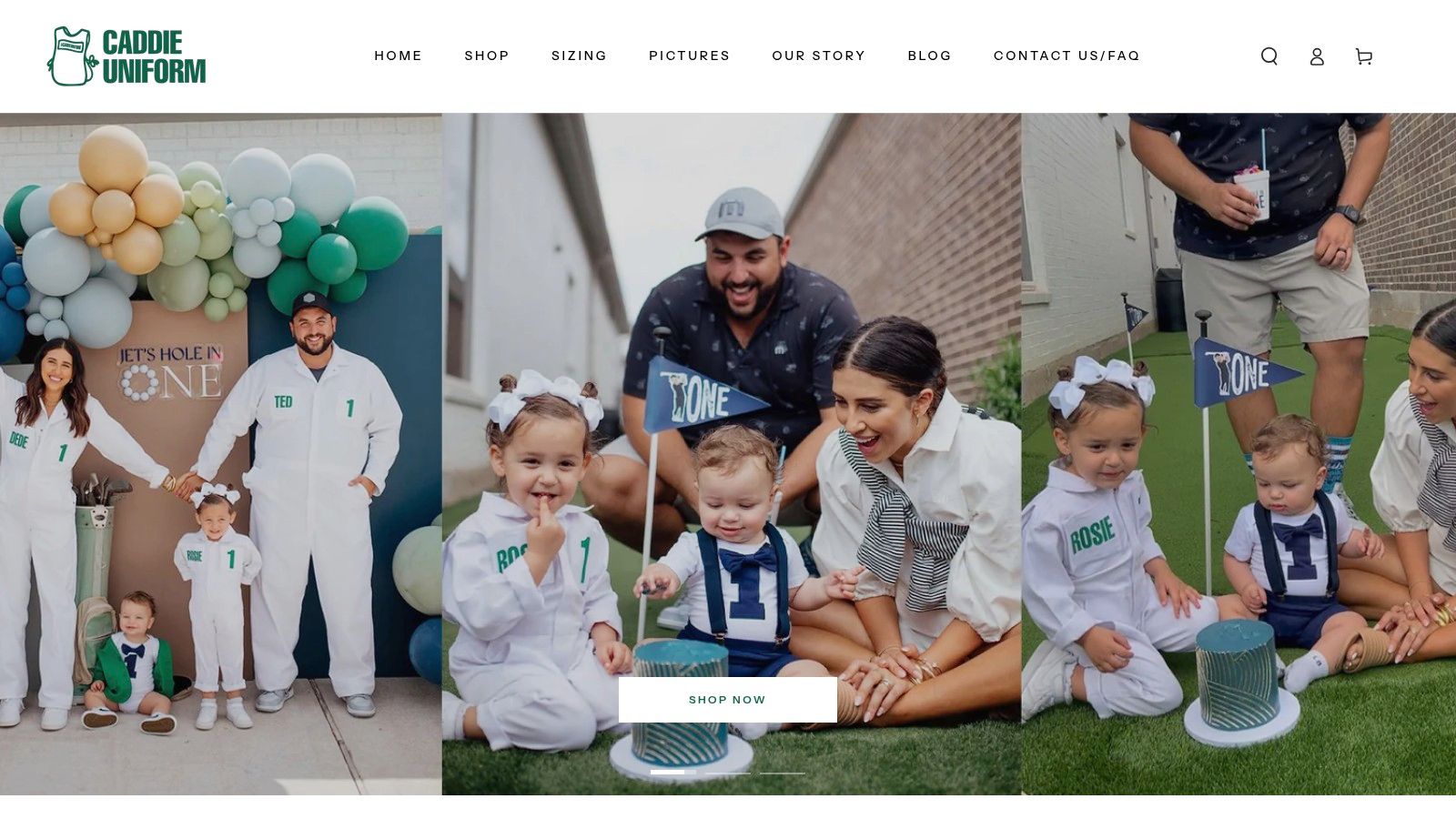
A pocketed bib apron earns its keep in different ways depending on the scene. At a caddie-style event, the best version is usually clean, readable, and easy to move in, with pockets that hold only the essentials. At a family birthday or Halloween setup, the priority shifts toward appearance and fast access to small items like cards, treats, or a phone for photos.
For everyday kitchen or workshop wear, a heavier twill or canvas-style apron with a split pocket is usually the better call. It handles repeated movement better and keeps tools from pooling into one bulky pocket. For a photo shoot or themed gathering, the pocket system can stay lighter, because the apron is doing double duty as a costume piece and a functional layer.
Match the layout to the job
- Caddie event or golf-themed gathering: use light front storage and clean lines, because movement and appearance both matter.
- Family outing or party hosting: choose pockets that hold a phone, cards, and a few small essentials without bouncing.
- Kitchen or workshop wear: pick stronger fabric, reinforced pockets, and a layout that keeps tools separated.
- Photo or costume use: prioritize fit and visual balance, then make sure the pockets don't distort the silhouette.
The wrong move is stuffing the same apron for every setting. A pocket layout that works for a casual host may be too loose for active wear, and a heavy utility layout may look clumsy in a styled event.
The right apron changes with the use case. The build should follow the task, not the other way around.
Customization, Patches, and Group Coordination
Personalization works best when it stays readable and durable. Embroidered names and numbers hold up well because they're fixed into the garment, which makes them a strong choice for repeat wear. Removable Velcro nameplates and themed patches are more flexible, especially when the same apron has to move between events or between family members.
That flexibility has trade-offs. Added patch thickness can create small ridges, and removable pieces can shift if they're placed where pockets or folds tug at them. Fixed embroidery doesn't move, but it doesn't adapt either, so it's better for a garment that has one clear identity.
For group orders, the smartest move is to standardize the base apron and vary only the personalization. That keeps the look coordinated while leaving room for names, roles, or event-specific identifiers. It also makes hand-me-down use easier, which matters when the same garment needs to serve a child now and another child later.
For removable systems and repeat-use planning, the custom Velcro name patch guide is a practical reference on how flexible identification should be handled when reuse matters.
Good ordering rule: choose one stable base color, one personalization method, and one placement strategy. Too many variations make group coordination look sloppy instead of intentional.
If the apron is for a party, team, or gift set, keep the personalization readable from a short distance and simple enough to survive washing without special handling.
Care, Washing, and a Smart Shopping Checklist
Wash the apron like gear, not like delicate fashion. Pretreat stains early, wash with the gentlest method that still clears the fabric, and air-dry when possible so the pockets and straps keep their shape. Heat is rough on seam integrity, and it's especially hard on pocketed aprons that already carry extra stress at the corners and anchors.
For bulk buying or event planning, the Dirt Cheap Product guide to aprons is useful because it frames apron purchasing as a specification problem, not a style hunt. That mindset works whether the order is for a few themed outfits or a larger coordinated set. The same logic also helps when reviewing custom golf apparel guidance for matching looks across a group.
Buy with this checklist
- Fabric weight and blend: ask for GSM or ounce weight plus the fiber ratio.
- Pocket layout: verify whether pockets are split, divided, chest-mounted, or single-compartment.
- Reinforcement: look for bar-tacks or double stitching at pocket corners and strap anchors.
- Fit coverage: check chest, torso, and height compatibility, not just one size label.
- Customization method: decide between embroidery and removable patches before ordering.
- Care expectations: confirm wash method, drying guidance, and whether the apron is meant for repeated laundering.
If the listing won't answer those questions, it's too vague to trust. A good pocketed bib apron is a piece of working gear, and it should be sold like one.
Caddie Uniform makes custom caddie uniforms, bibs, hats, and patches that fit the exact use cases covered here, from family events to golf-themed gatherings to everyday fandom. If a bib apron with pockets needs to look right, carry well, and hold up under real use, visit Caddie Uniform and compare the sizing, personalization, and event-ready options for yourself.


