


You're standing over a table of half-finished favors, and the obvious question is already clear: will guests take these home, or leave them in the car and forget them by Monday? Most hosts solve the theme and then grab the cheapest filler they can find, but golf party favors work best when they behave like part of the event, not like clutter. The right pick should photograph well, fit the guest, and earn a second use after the cake is gone.
Why the Favor Choice Matters More Than the Theme
The host is usually staring at two carts in the checkout line, one packed with tiny trinkets and one with a single wearable item that looks good on a person. The cheap cart feels safe because it's full. The better cart feels riskier because every guest gets one thing, not a bag of noise. In practice, the second cart wins, because guests remember what they wear, carry, or keep on a shelf, not the plastic filler that melts into the trash.
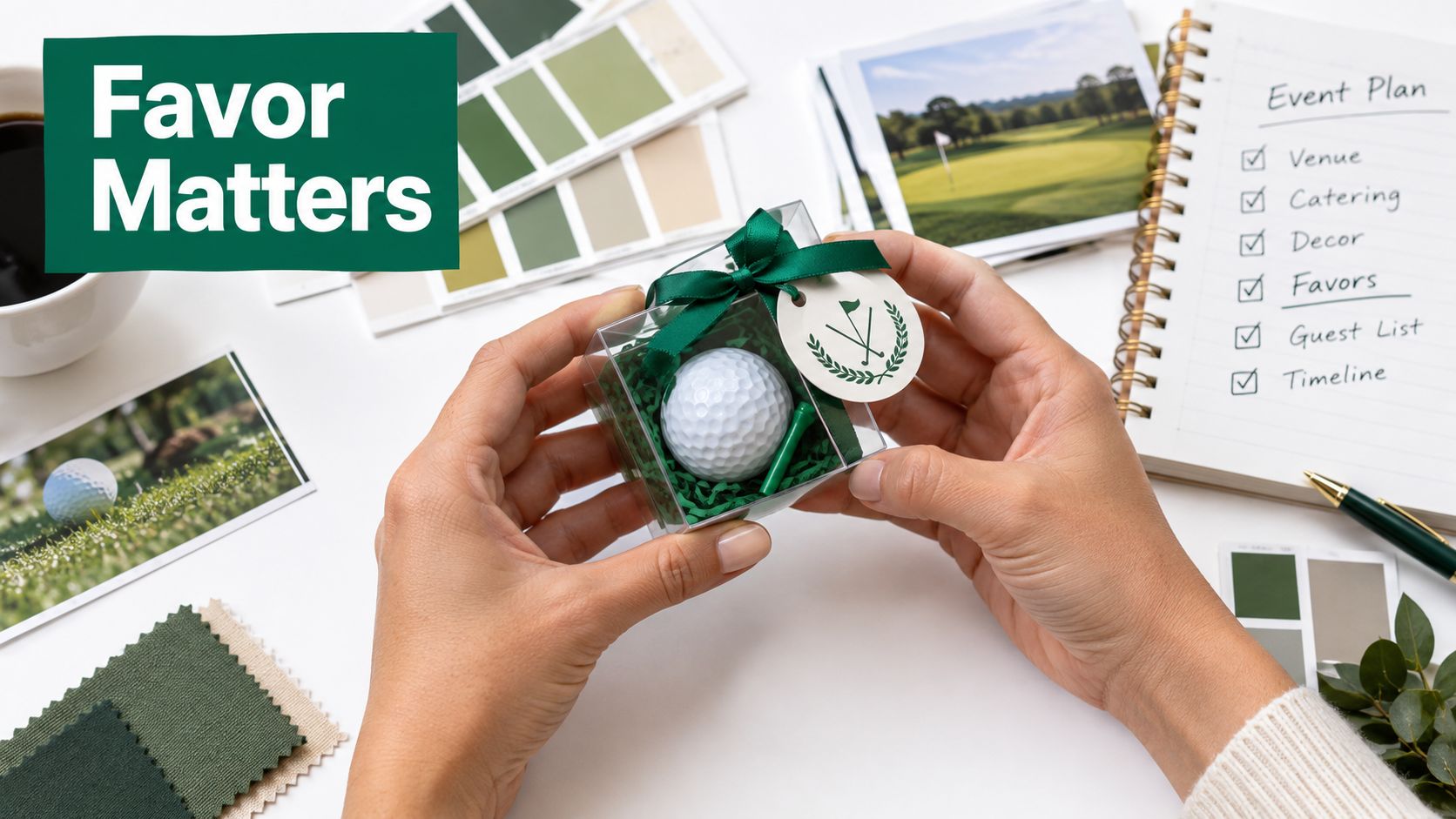
The most useful golf favors do three jobs at once. They mark the occasion, they work in photos, and they survive the ride home. That's why a hat, patch, or nameable accessory beats a pile of throwaways every time, especially for guests who want to show the theme without looking like they were dressed by a party aisle.
Practical rule: one durable favor per guest is almost always better than a bag of five forgettable items.
The guest list matters too. Kids want to dress like they belong in the scene. Adults will wear something again if it doesn't scream “party favor.” Teens are brutal judges, which is exactly why anything flimsy gets called out fast. A favor that looks intentional turns into a photo prop first and a keepsake second.
For hosts who want a cleaner visual, a themed accessory can do the work that ten small objects can't. A simple reference like Custom Sticker Shop's Golf Mom design shows how one playful piece can carry the mood without turning the table into a junk drawer. That's the standard worth following: fewer items, better items, and no guilt when the event ends.
Matching Favors to Each Guest Profile
A smart favor plan starts with the guest list, not a single stack of the same item. Handing everyone the same thing is how hosts end up with leftovers nobody wants. Build the favors person by person, and the waste drops fast.
Build the list by age and use
Infants and toddlers need favors that are soft, simple, and safe. Bibs, coverall-style pieces, and teether-like keepsakes make sense because they hold up without turning into a choking hazard or a sensory annoyance. Tiny golf accessories look charming in a box and useless the moment a child drops them or puts them in their mouth.
Older kids want something they can wear, not just hold for a minute. Caddie-style bibs, small uniforms, and child-size hats work because they make the child part of the event. If the item still works for a birthday photo, school spirit day, or dress-up bin later, it earns its keep. For a stronger keepsake angle, a reusable, photo-ready golf gift fits this group well: https://caddieuniform.com/blogs/news/personalized-golf-gift
Teens judge fast. They care about whether the favor looks good on camera and whether it feels intentional. Wearable accessories, clean patches, and simple headwear get picked up. Loud novelty pieces get ignored.
Adults are the easiest group to disappoint, because hosts assume any golf-branded item will do. It won't. Adults keep favors that feel useful, washable, or collectible, such as a putter-cover keepsake or a personalized accessory they can use again.
Sort the guest list like this:
| Guest Profile | Best Favor Fit | Watch Out For |
|---|---|---|
| Kids 0 to 3 | Soft bibs, teether-style items, plush-like keepsakes | Small parts, hard edges, anything that can be swallowed |
| Kids 4 to 12 | Caddie-style coveralls, child-size hats, wearable patches | Oversized pieces that slip off or frustrate them |
| Teens | Camera-friendly hats, clean patches, wearable accessories | Babyish novelty items or anything too toy-like |
| Adults and non-players | Putter-cover keepsakes, practical accessories, subtle personalization | Loud designs that look childish or disposable |
Guests who do not play golf still want to match the room. They just want a favor that respects their role at the event.
The best shopping list lets each person leave with something they will use or display. That is the difference between a favor and a leftover.
Personalization That Travels Between Events
A stitched name looks charming once and limiting forever. Removable personalization solves that problem. The item keeps its identity without getting trapped in one date, one party, or one costume.
Kids versus adults, side by side
For children, the sweet spot is a base outfit with swappable details. A 7-year-old in a caddie uniform can wear a monogrammed patch for a birthday, then pull the patch off and use the same outfit for Halloween or a school dress-up day. The personalization stays flexible, not permanent.
Adults need the same logic, just in a larger size. One base uniform, a set of numbers, and a few themed patches can cover a tournament watch party, a charity event, and a birthday without buying a different outfit each time. The wearer gets more replay value, and the host keeps the budget under control.
| Age Band | Best Personalization | Why It Holds Up |
|---|---|---|
| Children | Removable Velcro nameplates, number patches, themed tabs | Easy to swap between parties and costumes |
| Adults | Swappable patches, clean logo tabs, number sets | Reusable across multiple events and photo shoots |
| Mixed-age groups | Shared base colors with removable identifiers | Keeps the group coordinated without locking anyone in |
Keep the personalization light and let the details do the work. A birthday nameplate should peel off cleanly. A number should read as a signal, not a tattoo. Patches should make the outfit more useful, not more fragile.
A good reference point for this style of flexible gifting is a reusable, photo-ready golf gift that moves from event to event. The same rule applies whether the item is for a child or an adult. The favor should still earn its place after the party ends.
Best practice: if the personalization cannot be removed, the item should be good enough to justify losing its future use.
That is the standard that keeps favors out of the trash and leaves a uniform ready for the next event with swapped patches.
Coordinating Hats, Patches, and Accessories
The frame matters. Guests look more polished in photos when the accessories connect, but they look ridiculous when every item screams for attention. The best setup feels coordinated, not costume-heavy.
Start with the hat shape, because the silhouette does most of the visual work. A structured cap reads sharper and more formal. A softer Dad Hat feels relaxed and fits casual backyard settings better. A beach-style silhouette works when the event is less about traditional golf and more about a social gathering with a golf cue.
The caddie-inspired look also changes depending on the venue. A clean green cap gives a tighter, more deliberate image. A lighter, laid-back silhouette works better for warm-weather parties, outdoor lunches, and photo shoots where the mood should feel easy instead of competitive.
Make the accessories work as one system
Patches and removable nameplates should be the anchor pieces. They create the theme without forcing every guest into the same outfit. When the base color stays consistent and the patch changes, the whole group still reads as connected in photos.
For adults, smaller accessories matter more than oversized novelties. A putter cover, a divot tool, or a ball-marker set can carry the theme without looking childish. Those pieces fit in a bag, show up in a flat lay, and get used later.
When hats need to be stored or displayed before the event, a simple stand keeps the shape from collapsing. The visual discipline matters, and a practical guide like Display Guru hat stand tips is useful for keeping the presentation clean instead of crumpled.
The workflow is simple:
- Pick one base hat style for the group.
- Add one patch family, not a pile of unrelated graphics.
- Match the accessory scale to the guest age.
- Keep adult add-ons practical and small.
- Use the same color story across every item.
A coordinated set looks expensive even when it isn't. A random set looks cheap even when it is.
The same logic applies to internal styling across events, too. A well-chosen hat paired with a clean patch set can move from one gathering to the next without losing its shape or its purpose, which is exactly what good favor planning should do.
Avoiding the Disposable Trinket Trap
Most golf favor tables start with good intentions and end with trash bags. Stickers, plastic tees, wrapped candy, and novelty bits feel cheap at checkout, then feel even cheaper when half the guests leave them behind. Hosts should stop pretending that quantity equals value.
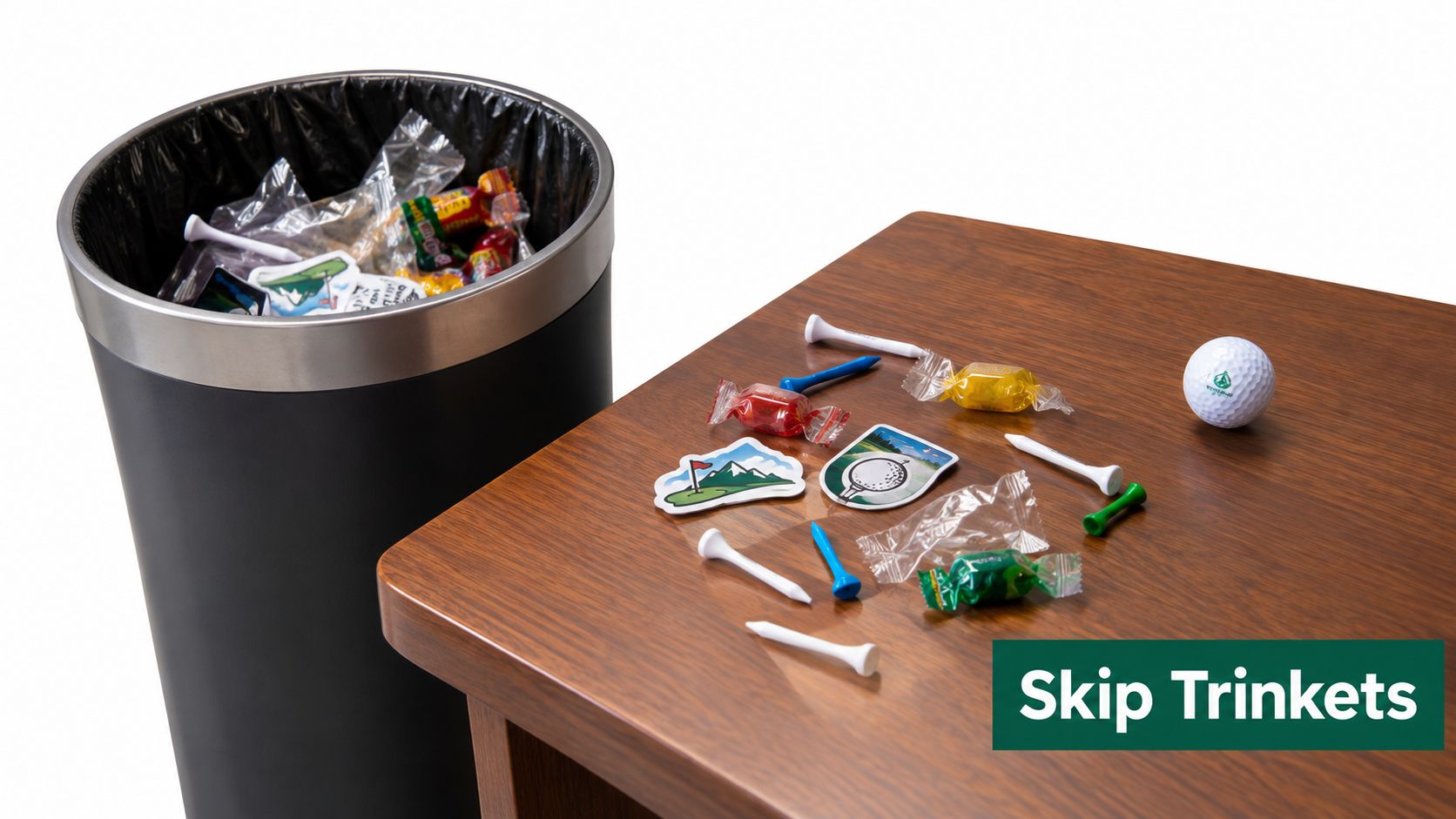
The better test is brutally simple. Does the item survive a car ride? Does it photograph well? Can it be reused? If the answer is no three times, it probably doesn't belong on the table.
The waste angle is not theoretical. A golf event can generate a lot of discarded material, and the 2025 Women's Amateur Team Championship reported 7,820 kg of event waste, with recycling covering slightly more than 28% of it and an estimated 1.74 tonnes of CO2e avoided through recycling (sustainability report). That's a useful reminder that small objects add up fast when hosts multiply them across every guest place setting.
Use a low-waste favor system
A better setup uses one durable item per guest, then gives people an easy out if they don't want it. That can mean a donation option, a food swap, or a prize entry instead of a physical favor. It also means choosing packaging that doesn't create another layer of waste.
A practical checklist before checkout:
- Durability first: choose something that can be reused after the event.
- Packaging next: prefer kraft bags or reusable pouches over plastic wrap.
- Opt-out option: give adults a no-item alternative without awkwardness.
- Visual payoff: make sure it still looks good in photos.
- Guest fit: confirm the item makes sense for the age group and setting.
For hosts thinking in terms of children's party bags, the usual filler-heavy model is easy to copy and hard to defend. A helpful planning reference is the guide to pre-teen party bags, but golf events do better when they replace filler with one item worth keeping.
The savings are emotional as much as financial. Guests notice when the favor feels deliberate. They also notice when it feels like afterthought junk.
Packaging, Presentation, and a Final Favor Checklist
A good favor can still look sloppy if the packaging is lazy. The bag or sleeve is the last thing guests see, so it should signal order, not excess. Reusable drawstring bags work well for larger pieces, while printed kraft sleeves make smaller items feel intentional without hiding what's inside.
Labeling matters more than people think. A simple name tag or table card keeps each favor from turning into a grab bag at the end of the night. That's especially useful when the guest list includes children, siblings, or mixed-age groups, because nobody wants to sort through a pile of nearly identical items while shoes are already on.
Final checklist for the host
- Guest count by age band: separate children, teens, adults, and non-players before ordering.
- Primary favor per group: choose the item each segment will keep.
- Backup favor or opt-out: set a prize, donation, or snack alternative for guests who don't want gear.
- Personalization order: confirm names, numbers, or initials before the deadline.
- Hat and patch coordination: make sure the colors and shapes read as one system.
- Presentation plan: choose bags, sleeves, or labels that match the rest of the table.
- Day-of setup: place each favor at the right seat or check-in point before guests arrive.
A good rule is to work backward from the event date. The personalization order should be settled early enough to fix mistakes, and the packaging should be ready before the final assembly day. That way, the host isn't stuffing bags at midnight and hoping everything fits.
For a broader party supply perspective, the planning logic is much smoother when favors, hats, and uniforms are treated as one coordinated set. The same approach appears in golf birthday party supplies guidance, where the whole table works better when each piece has a job.
The cleanest setup is simple, personalized, and easy to hand off to a co-host. If the favor plan can survive a messy morning, a mixed guest list, and a photo-op, it's good enough.
Caddie Uniform builds the kind of golf event pieces that make this whole approach easier, from custom caddie uniforms to hats, patches, and kid-size options that fit the guest list. For a favor plan that looks polished, photographs well, and gets used again, visit Caddie Uniform and build the pieces around your next golf party.


