


A wedding checklist is already crowded, but the couple still needs engagement photos that feel like them. If golf is where they spend weekends, share jokes, or even first connected, a course can provide a personal setting without turning the session into a staged sports catalog. The strongest golf engagement photos balance the game with the relationship: the course should add meaning, not take over every frame.
A good plan starts with the right setting, then accounts for light, crowd flow, clothing, and how each partner relates to golf. Caddie-inspired details can give the images a distinctive thread, while flexible posing keeps the shoot welcoming whether both partners play, one does, or neither wants to swing a club. The recommendations below focus on making the photos look polished and feel genuine.
Why Golf Engagement Photos Are Worth the Hype
If one partner loves golf and the other prefers the clubhouse, the session can still feel like both of you. Golf gives the photos a visual language beyond a park, city street, or studio. An open fairway adds graphic space, a cart path brings movement, and a clubhouse or practice green adds character without requiring a posed swing. Those settings also give you something natural to do together, which makes for more relaxed photographs.
The theme reaches beyond avid players. The National Golf Foundation reported that 48.1 million Americans aged six and older participated in golf in 2025, counting both course play and off-course formats such as driving ranges, simulators, and golf-entertainment venues. (National Golf Foundation golf industry research)
The strongest gallery makes room for different relationships with the game. One partner can play while the other reads a yardage book, carries a club, or shares a moment beside the cart. If neither of you wants to swing, use a favorite golf venue or recognizable accessories to give the images a personal connection. Caddie-inspired styling can tie the frames together, too: choose practical, polished details that feel like part of your story, not a costume.
The test for every frame: Does it show something about the couple, or is it only showing golf?
Plan the gallery around how each image will be used. A wide fairway portrait with open space can work as a save-the-date background, while a close moment beside the cart suits an announcement post. Ask for both compositions rather than cropping one type of photograph to fit every format.
Keep the mood true to you, whether playful, classic, or understated. Include a few portraits that establish the setting, close frames that focus on connection, and candid interactions that make the gallery feel lived-in. The course should support the relationship, and both partners should feel equally present in the story.
Picking the Right Course or Venue
Start with the couple's connection to the place, then assess what the camera can do with it. A familiar public course may feel more personal than a polished resort, while a driving range brings movement and an indoor simulator offers reliable access when outdoor conditions or permissions are a concern. A practice green can also provide golf details without the visual traffic of a busy fairway. Shortlist two or three venues with different settings.

Compare the setting, then confirm access
A beautiful course can look generic if every frame relies on the same wide fairway. Scout for variety: tree lines, bunkers, water, cart paths, clubhouse details, and quiet corners where the couple can interact without golfers crossing the background. Choose spots with depth and contrasting textures. That variety helps the gallery feel tied to the venue, not like a stock collection of golf images.
Consider how styling fits the place, too. Caddie-inspired details, such as a practical cap or a neat golf bag, can give the shoot a clear visual thread without turning either partner into a costume. Make sure both people feel at home in the setting and have a part in the story, whether one plays more often or neither wants to swing. The strongest venue supports their dynamic instead of dictating a single country-club look.
Before booking, ask staff about photography permission, facility fees, dress requirements, guest policies, and whether a member must sponsor the session. Confirm which areas are off limits and whether carts are allowed during the shoot. An invitation to play does not automatically include permission to stage photographs.
A quieter weekday may be easier to arrange, but ask the venue rather than assuming. A modest course can photograph beautifully when the backgrounds are varied and the compositions are deliberate. Couples planning other golf-themed celebrations can also browse golf party ideas for adults for ways to carry a shared visual theme into the festivities.
Choose the venue that combines access, visual variety, and personal meaning. If it could be swapped for any course without changing the story, keep looking.
Timing the Shoot for Light and Crowd Flow
Light can make a familiar course feel cinematic, but the sunset window needs a practical plan. The hour before sunset often gives golf-course portraits warm, directional light. A tree line can soften that light into a backlit glow, while water may throw distracting reflections into the frame. A photographer should scout at roughly the planned shooting time because terrain, tree cover, and buildings can change where usable light falls. (Golf-course wedding photography guidance)
Scout the route before the session
The photographer and couple should identify a small set of strong locations, then map a short route between them. At each stop, decide on a main composition and a few natural actions: walking between shots, adjusting a hat, leaning together by a cart, or sharing a club. That preparation keeps the couple from spending the best light searching for a backdrop.
Crowd flow matters as much as the sun. Ask the venue when golfers are likely to use the areas on the route, and avoid building the session around an active tee box unless that activity is part of the intended look. A 60-to-90-minute session can feel generous when the route and wardrobe are organized, but it gets tight if the couple has to cross the property repeatedly or wait for clear backgrounds.
Keep a weather plan that still fits the story
Overcast skies can produce even, flattering light, so cloudy weather doesn't automatically call for a reschedule. Rain needs a clear decision with the venue and photographer: light showers may support a playful look, but wet paths, slippery grass, and soaked clothing can make the session uncomfortable. If the couple wants to proceed, use covered areas and bring a change of shoes and a towel.
Midday sun is harder to work with. Shade from trees or clubhouse structures can help, but the photographer should avoid placing the couple in patchy light that creates bright spots across faces and clothing. If the schedule lands in harsh sun or the weather makes the course impractical, an indoor simulator venue can keep the golf theme while offering a predictable setting.
Coordinating Outfits That Look Like a Set
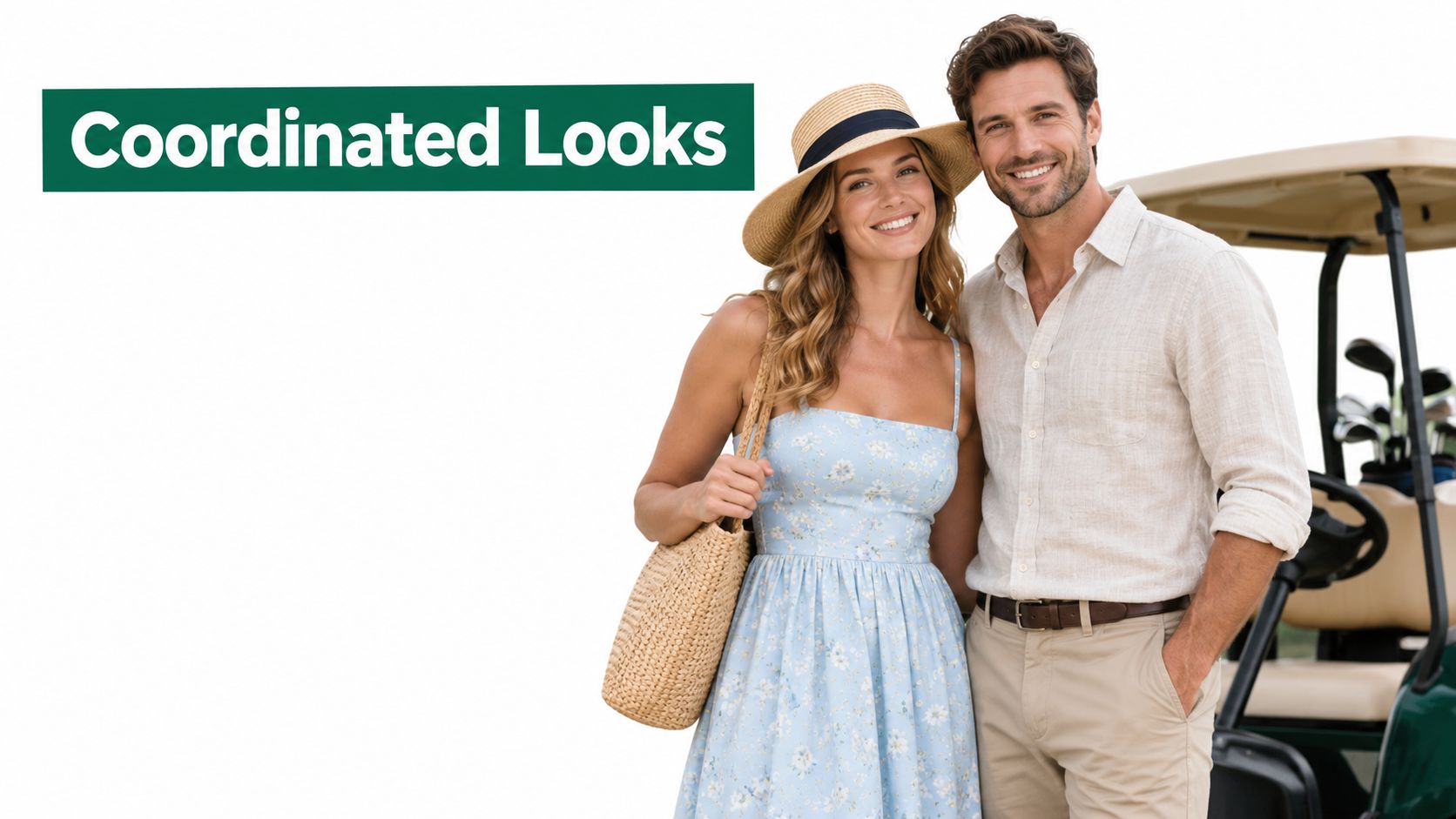
Matching polos are the easiest wardrobe choice, and usually the least interesting. A coordinated look comes from shared colors and compatible textures, not identical outfits. One partner might wear a crisp shirt and fitted trousers while the other chooses a knit top, skirt, or relaxed separates in a related palette.
Start with a neutral base, then add one strong accent color drawn from the venue or the couple's personal style. Green can connect naturally to the course, but it doesn't need to dominate. Soft neutrals, navy, muted blue, or warm earth tones can also work, especially when the backdrop already has plenty of green.
Make caddie-inspired details intentional
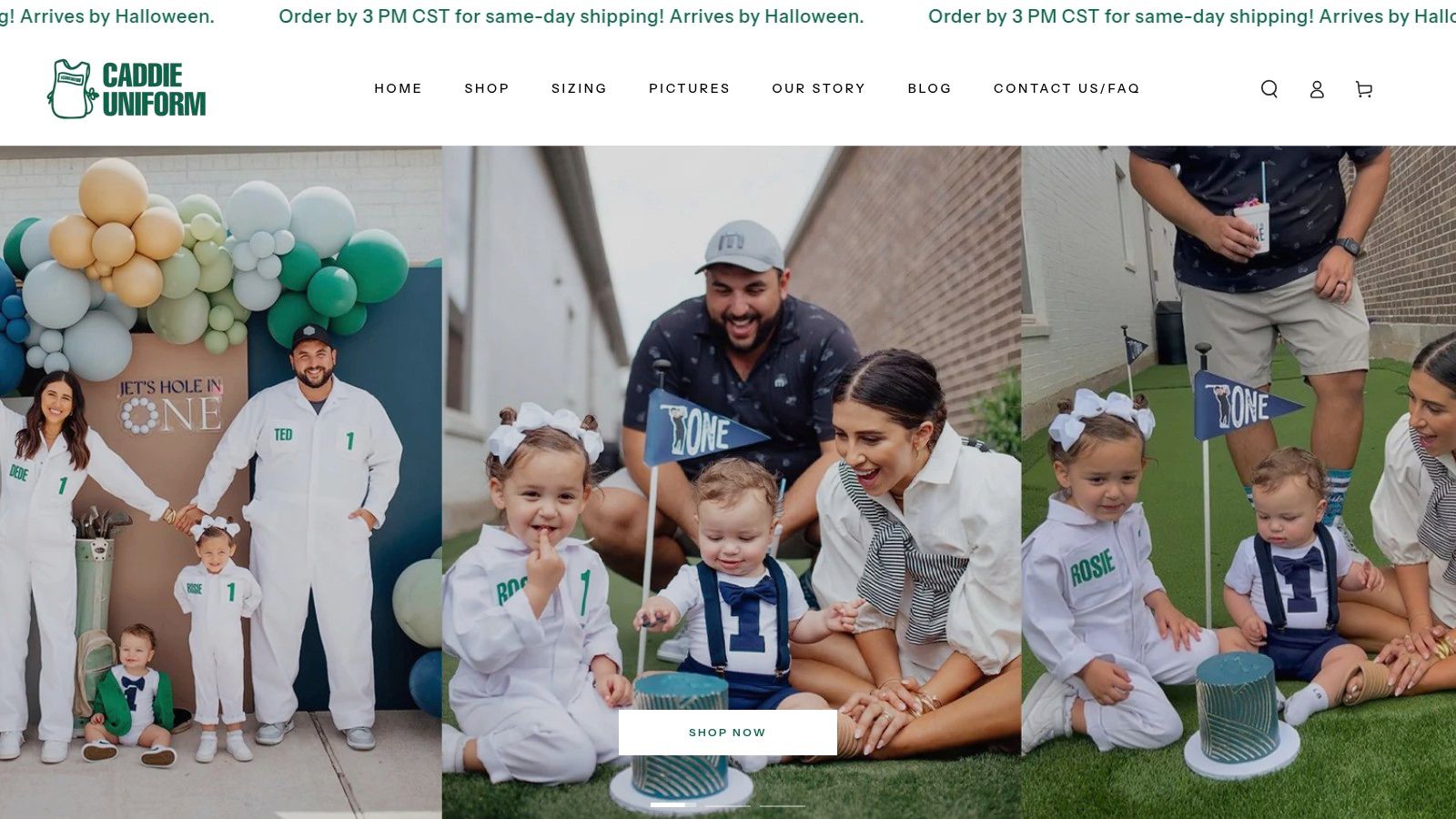
A caddie-inspired uniform, bib, hat, or removable patch can become the shoot's visual anchor. Keep it personal rather than theatrical. A name, number, or small logo can make the detail feel specific to the couple; piling on accessories can make the outfit look like a costume.
If the session includes both athletic and dressier portraits, plan a quick wardrobe change rather than trying to combine every style in one look. A simple golf-inspired outfit can suit the early frames, while a more formal outfit can give the couple an elegant option for save-the-date portraits. A range of apparel silhouettes can help couples compare styles before committing; Vice Golf apparel collections offer one place to browse golf-inspired clothing for different tastes.
Footwear needs to work on grass and cart paths. Choose shoes that look deliberate but won't sink into soft ground, and avoid anything the couple can't walk in comfortably. Hats can add character, but a low brim may cast a hard shadow across the eyes. The photographer should check the angle and adjust the brim or pose rather than letting the shadow hide a face.
Dress for comfort and movement
Temperature can shift during an outdoor session, so layers are more useful than a single heavy piece. A light sweater or jacket can add texture and be removed between looks. Check that cuffs, hems, and collars sit neatly, especially if the outfit includes a bib or customized uniform.
Couples planning appearances by children, family members, or pets should check sizing and comfort ahead of time. The women's golf outfit guide can offer additional ideas for building a coordinated look without relying on matching outfits. Prioritize clothes that fit well and allow movement; the best wardrobe choice is one the couple can wear naturally.
Poses and Props That Tell a Real Story
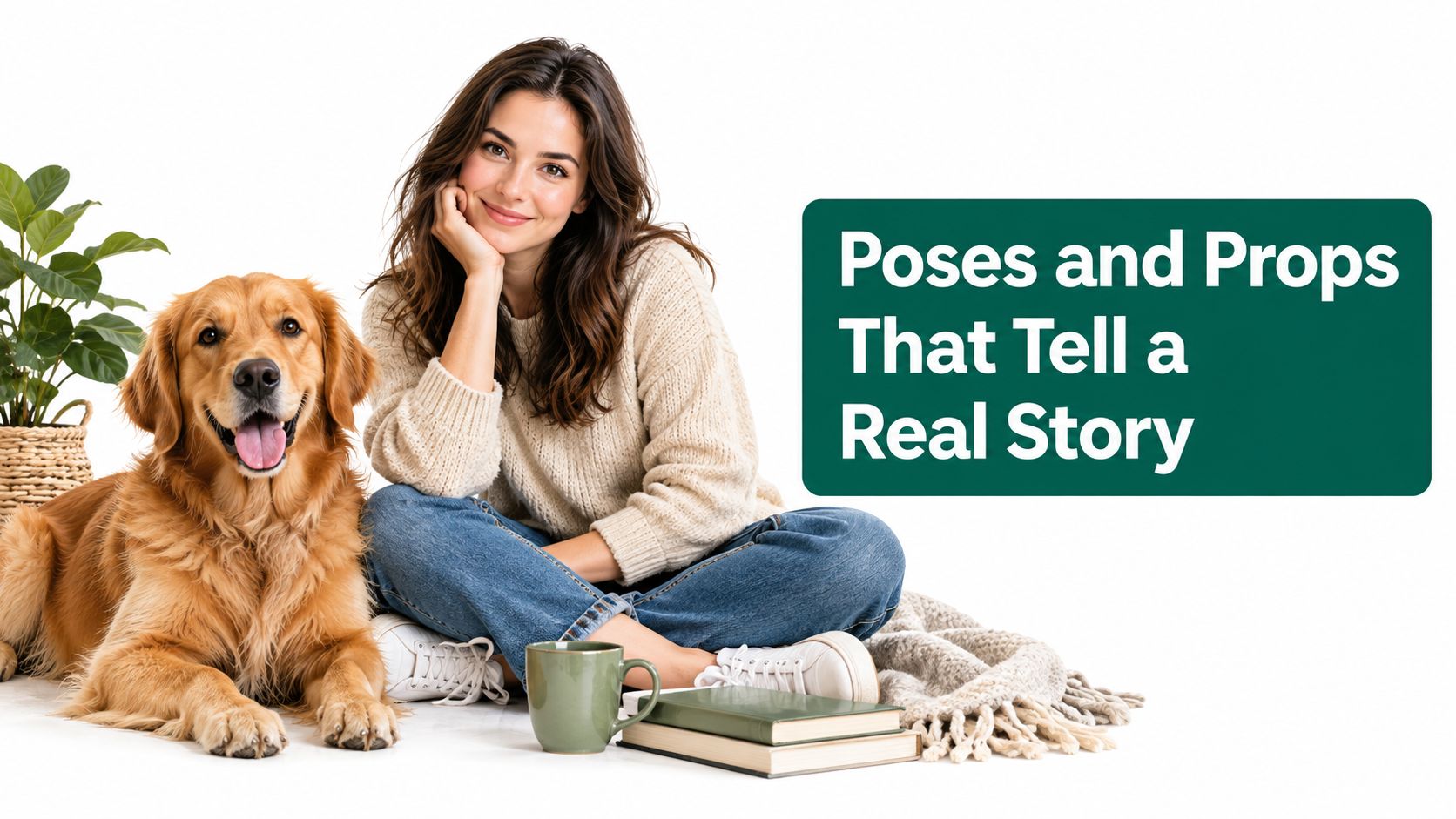
The strongest golf engagement photos don't ask the couple to perform a round of golf for the camera. They use the setting to give the couple something to share. A walking frame can show closeness; a moment beside the cart can feel playful; reading a yardage book together can create a quieter portrait without forcing a swing.
Consider a couple where one partner plays regularly and the other rarely touches a club. The experienced golfer can explain a shot or hold the club while the other partner asks a question, jokes, or leans in. The non-golfer isn't reduced to a spectator. They're part of the interaction, and the photograph tells a more convincing story than two people pretending to have identical skills.
Choose prompts that suit the couple
For couples who both play, ask them to walk between shots, compare notes, or share a club while one partner adjusts the other's hat. These small actions create natural hand placement and eye contact. For couples with different experience levels, the golfer can carry a bag while the other chooses a club or holds the scorecard. If golf is mostly a shared setting rather than a shared sport, a cart-side conversation or a quiet moment on the clubhouse steps can be enough.
Props should carry meaning instead of filling empty hands. A scorecard, yardage book, favorite club, or pair of tees can support a real interaction. A customized bib, wedding-date detail, or removable nameplate can add a personal touch, but it should be comfortable to wear and easy to take off between looks.
Inclusive posing starts with asking what feels natural to both partners. Don't assume who should hold the club, stand in front, or take the more active role. Offer options for seated and standing portraits, different levels of physical movement, and clothing that reflects each person's identity and comfort. Caddie-inspired styling works best when each partner chooses how much of the theme to wear, rather than being assigned a matching costume.
The same principle applies when children, relatives, or pets join the session. Keep the action simple and give everyone a clear, comfortable role. For more ideas about making a photo session personal across different family dynamics, the newborn photo shoot ideas guide can help prompt thoughtful planning without turning a golf session into a rigid set of poses.
Briefing the Photographer for a Golf Setting
A short, specific brief can prevent a golf-course session from becoming a sequence of improvised poses. The couple should tell the photographer what golf means to them, which partner plays, what they want to avoid, and how they plan to use the final images. That context helps the photographer choose prompts and frames that feel personal instead of generic.
Share the priorities before the shoot
A practical brief can include:
- Must-have frames: Request a wide environmental portrait, a close relationship-focused image, a walking frame, a cart-side moment, and any meaningful golf detail.
- Cropping needs: Ask for both horizontal and vertical versions, with some negative space for invitations, announcements, or social crops.
- Background concerns: Flag poles, signs, carts, bright patches, and passersby. The photographer can often remove distractions by changing position or focal length.
- Wardrobe details: Point out customized bibs, hats, patches, and any clothing alignment the couple wants preserved.
- Comfort and access: Note mobility needs, preferred posing, and any areas or actions that won't work for either partner.
For backlit fairway portraits, the photographer should expose to protect skin highlights while allowing the surroundings to sit slightly darker. A reflector or controlled fill can restore facial detail when needed. If off-camera flash is part of the plan, ask how the photographer will direct it and prevent spill onto nearby structures.
Exposure check: White clothing and bright sand can clip before faces look overexposed. The photographer should review highlight warnings or histograms during the session, not only after it.
Build movement gradually
The photographer should begin with static poses, check the wardrobe and light, then introduce walking prompts. Autofocus and shutter settings need to suit movement so the couple's faces stay sharp. Capturing a short sequence for each interaction gives the photographer options without making the couple repeat the same action until it feels forced. (Engagement photography lighting and posing guidance)
Ask the photographer to watch for mixed color temperatures, flash spill, clipped white clothing, and poses that fight the couple's mobility or clothing. A good brief doesn't dictate every frame. It gives the photographer the information needed to make strong choices while leaving room for spontaneous moments.
Editing, Sharing, and Using the Images
Editing should strengthen the setting and the couple's connection, not make the course look like a painted backdrop. The photographer should keep skin tones consistent across changing light, correct white balance where the scene shifts between shade and sun, and clean up small distractions only when doing so preserves the place's character. If a cart or sign pulls attention from the couple, subtle retouching can help; removing every trace of the venue can strip away the reason for choosing it.
Build the final gallery around variety. Keep a mix of wide course views, closer portraits, candid interactions, and the caddie-inspired details that make the session personal. For save-the-dates and wedding websites, shortlist images with clear expressions and room for text. For social sharing, choose both vertical and horizontal options so the crop doesn't cut off a face, hand, hat, or meaningful accessory.
Turn the gallery into keepsakes
Formal portraits often suit framed prints, album spreads, and printed announcements. Candid images can work well in a wedding website gallery, reception slideshow, rehearsal-dinner display, or thank-you note. A favorite close-up may also make a thoughtful gift for parents or members of the wedding party, especially if it captures a detail tied to the couple's story.
The couple should check image permissions and credit the photographer clearly when posting on social media. If a personalized bib, patch, or hat was part of the session, keep it as a memento or reuse it for a later event rather than treating it as disposable styling. Editing choices should remain consistent across the gallery; couples who want to understand the post-production process can browse video editing fundamentals for a helpful overview of how visual decisions shape a finished image.
Before calling the gallery complete, confirm that the couple has a selection for announcements, a set for personal sharing, and at least one print-worthy portrait. Save the full gallery in a place both partners can access, and keep a note of which images are intended for public posting. That small bit of organization makes the photos easier to enjoy long after the wedding planning rush has passed.
For a distinctive golf-inspired look, Caddie Uniform offers custom caddie uniforms, bibs, hats, and accessories that can be personalized for engagement photos and reused for celebrations afterward. Visit Caddie Uniform to explore options for a coordinated, caddie-inspired outfit.


