


The invitation is on the calendar, the theme is set, and the costume still isn't. A white jumpsuit costume often looks simple on a product page, but the final result depends on the details: whether the fabric stays opaque under bright lights, whether the torso allows a comfortable sit, and whether the accessories point clearly toward Elvis, a golf caddie, an astronaut, or another character.
The strongest version starts with one well-fitting white base and adapts around it. A green cap, bib, towel, and patch can create a caddie-inspired outfit, while a belt, cape, or flight harness can move the same garment into a different theme. The following guide focuses on the choices that make the costume wearable at Halloween parties, themed birthdays, and family photo shoots.
Why the White Jumpsuit Costume Keeps Coming Back
Someone preparing for a themed party often reaches the same conclusion after rejecting complicated outfits: a white jumpsuit is recognizable before the accessories are even added. The clean silhouette reads from across a room, leaves both arms free for movement, and gives a group a shared visual base without forcing every person into an identical character.
That familiarity comes from a long costume history. The jumpsuit began as a practical garment for parachuters and aviators, then entered mainstream fashion by the 1960s. Vogue featured white “moon shot” styles in January 1965, showing how utility clothing had already moved into imaginative fashion before the garment became a major performance symbol. The history of Elvis Presley's white jumpsuits traces the form's global stage recognition to the early 1970s, when Presley performed in white jumpsuits associated with his 1973 broadcast history moment and continued wearing them through the rest of his stage career until his death in 1977.
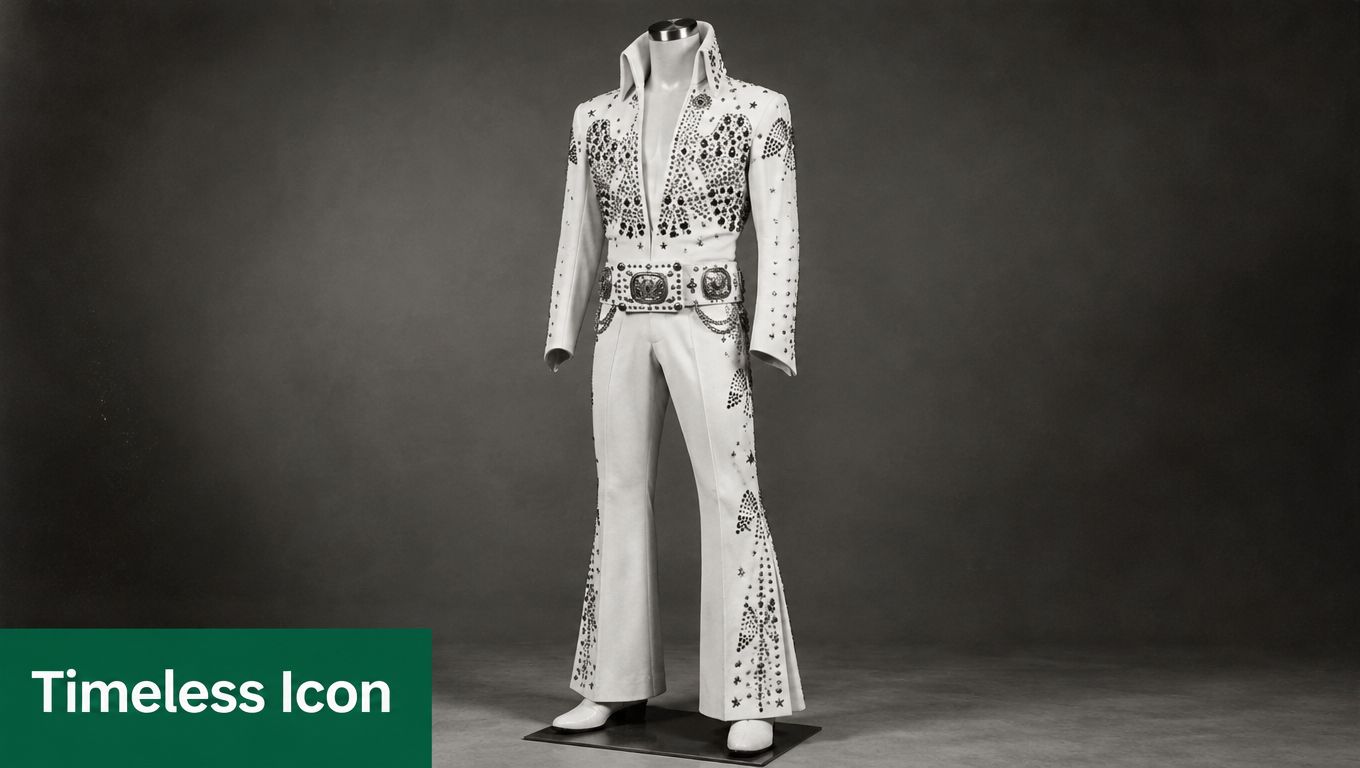
A silhouette with more than one reference
The same color carries a different association on the golf course. The Masters caddie uniform was formalized in the 1940s after club co-founder Cliff Roberts proposed uniformed caddies in a 1940 letter. Augusta National first used blue denim uniforms with a green hat and yellow button before the white jumpsuit appeared in the late 1940s. The history of the Masters caddie uniform explains how the white design created a stark, professional contrast against the course and became a stable visual identity for the tournament.
That dual history makes the costume unusually flexible. Elvis styling uses the jumpsuit as dramatic stagewear, while caddie styling uses it as a crisp uniform. A blank white base also accepts patches, belts, hats, bibs, and pocket details without competing with the character idea.
Practical rule: Let the silhouette establish the character, then use one or two strong accessories to make the reference unmistakable.
White also performs well in photographs because it creates a clear outline in daylight, indoor lighting, and flash. It can look polished in a family portrait, playful at a birthday party, or theatrical under Halloween lighting. The trade-off is visibility: stains, wrinkles, and poor underlayers show quickly, so preparation matters more than it does with a darker costume.
Building a Caddie-Inspired Look Step by Step
A caddie-inspired outfit works because each piece has a job. The white jumpsuit supplies the uniform base, green and yellow accents establish the golf reference, and practical props make the character legible without excessive decoration.
Start with the jumpsuit and choose a layer that won't create visible lines beneath it. A fitted white or neutral top can help in cooler venues, but bulky sleeves may restrict the shoulders. The garment should close comfortably while leaving enough room to bend, reach, and carry a small bag.
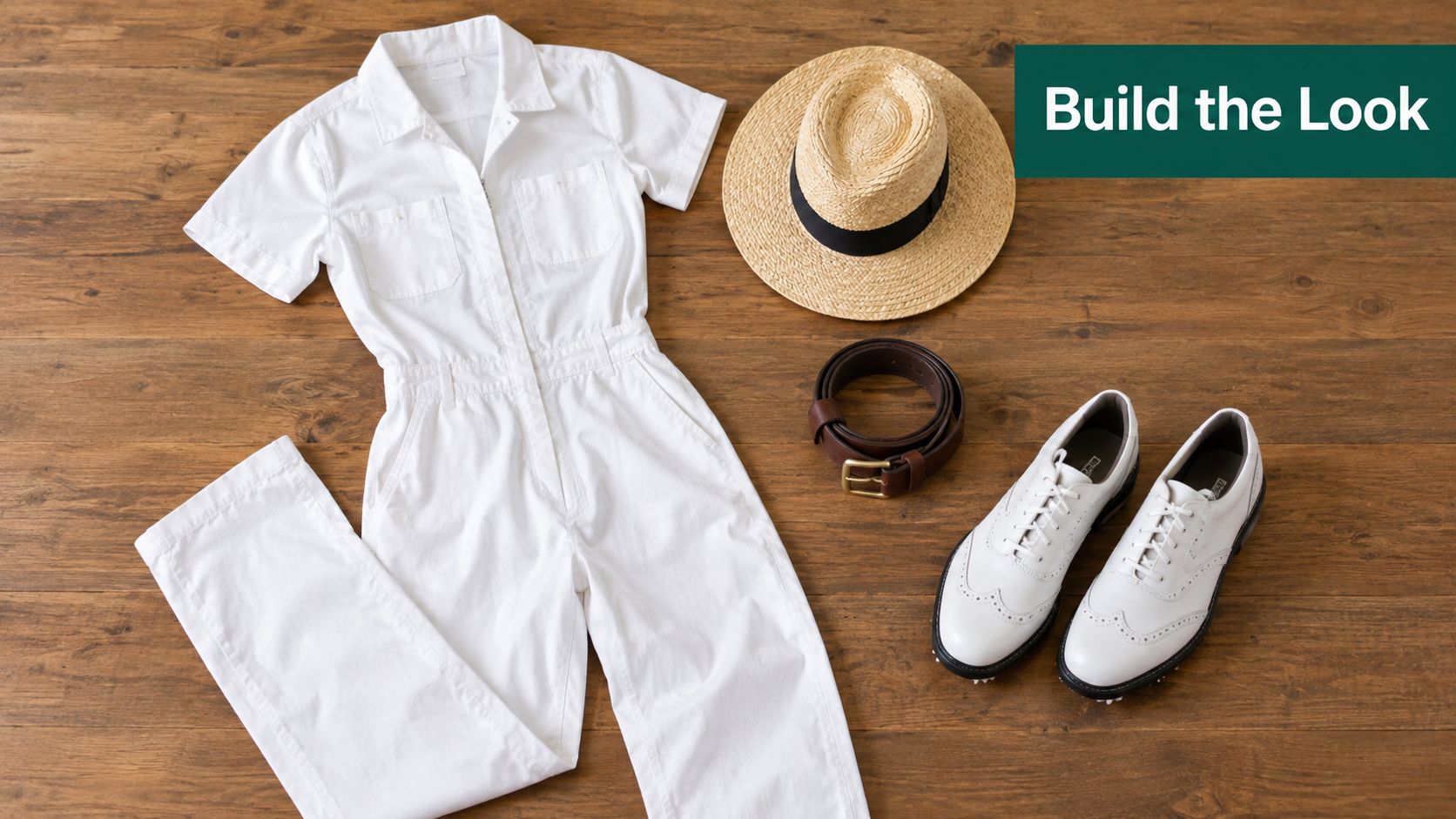
Build outward from the uniform
- Add the bib or apron. A green or yellow caddie bib apron gives the outfit its strongest visual cue. A tournament logo patch can sit at chest height, where it remains readable in group photos.
- Choose the cap. A flat-brimmed cap in green, yellow, or coordinated team colors frames the face and reinforces the athletic uniform aesthetic. It should sit securely without pressing against the forehead.
- Place the patches carefully. Chest patches should sit high enough to appear above the bib edge. Shoulder patches need to face forward slightly, rather than pointing directly toward the floor, so they read when the wearer turns sideways.
- Use functional-looking props. A towel draped over one shoulder, a yardage book tucked into a pocket, and a divot repair tool create character without requiring a full golf bag. Each prop should be lightweight and safe in a crowded venue.
- Finish with low-profile shoes. White or black sneakers keep the outfit practical for walking. Clean brogues can produce a dressier interpretation, but heavy footwear may overwhelm the simple line of the jumpsuit.
The common mistake is adding unrelated costume jewelry. Large novelty necklaces or glitter accessories compete with the athletic uniform language, while a restrained belt or neat name patch supports it. Layered pieces also make the costume easier to manage. The hat and towel can come off indoors, and the bib can be removed if the jumpsuit needs to work as a cleaner base for photographs.
For children, soft accessories and short, secure straps are more practical than loose metal props. For adults, the strongest look usually comes from one coordinated accent color rather than a collection of unrelated golf references.
Event-Specific Variations That Actually Work
The same base garment can serve several events, but the styling should respond to the venue, the expected movement, and the way the photographs will be used. Halloween rewards character exaggeration, birthday parties need comfort and easy supervision, and professional-looking shoots benefit from restraint.
| Event Type | Base Jumpsuit | Key Accessories | Footwear | Photo Priority |
|---|---|---|---|---|
| Halloween party | White jumpsuit with a defined silhouette | Green caddie bib and cap, or cape and belt for an Elvis-inspired direction | Comfortable sneakers or simple boots | Immediate character recognition |
| Sports or golf birthday | Soft, easy-moving white jumpsuit | Bib, cap, towel, name patch, lightweight yardage book | Walking shoes for children and adults | Group coordination and movement |
| Themed photo shoot | Pressed, opaque white jumpsuit | Neat patches, coordinated belts, restrained props | Clean low-profile shoes | Crisp lines and consistent framing |
Halloween favors character crossover
A caddie look becomes more theatrical with a green cap, logo-style patch, and towel, while an Elvis nod can use a wide belt, a dramatic collar, and a cape. An astronaut interpretation works better with a flight harness, mission-style patches, and a helmet-like cap than with golf accessories. The base stays constant, but the accessory vocabulary changes completely.
Birthdays need freedom to move
Children often sit on the floor, run between activities, and carry party favors. A bib and cap still establish the golf theme, but the outfit should avoid dangling straps, sharp props, and footwear that requires careful walking. A removable name patch gives each child an individual detail while keeping the group visually connected.
Photoshoots reward editing
For a family portrait, remove the yardage book and divot tool if they create clutter. Press the jumpsuits, align the collars, and coordinate the patch colors across the group. The white base will photograph cleanly, but uneven hems and different shoe styles can distract from faces, so those details deserve a final check.
Sizing and Fit Without the Guesswork
Generic S, M, and L labels aren't reliable enough for a one-piece garment. An independent costume-shop survey found that 90% of shops reported inconsistent sizing across manufacturers, while 35% said customers regularly left unhappy because they couldn't find the right size and 65% said that happened occasionally. The costume-shop sizing survey supports a measurement-first approach.
Measure the wearer, then compare those numbers with the seller's chart:
- Chest circumference: Measure around the fullest part of the chest, keeping the tape level. This controls upper-body comfort and determines whether the zipper or front closure pulls during movement.
- Inseam: Measure from the crotch to the ankle bone. A listed 34-inch inseam may suit many adults, but taller wearers need a longer option or an intentional ankle crop.
- Torso length: Measure from the shoulder seam area to the crotch seam. A short torso measurement can cause crotch tension, while excess length creates sagging and fabric bunching.
- Total height: Measure with the intended shoes on. Height helps resolve conflicts between a suitable chest measurement and a jumpsuit that may otherwise finish too high at the ankle.
Match the pattern to the body
Petite wearers often need a shorter inseam and may benefit from hemming rather than sizing down through the chest. Tall wearers should prioritize torso and inseam, because a tight chest can sometimes be adjusted more easily than a garment that pulls at the crotch. Plus-size wearers should check hip and waist room as well as chest width, especially if the costume will be worn over a base layer.
A waist tie can improve shape without restricting the entire garment. Hemming is usually a cleaner alteration than folding the legs inward, which can create bulk around the ankle. For a practical reference, the adult caddie uniform sizing guide should be read alongside the garment's own chart, not used as a substitute for current measurements.
The fit test takes about a minute:
- Raise both arms above the head.
- Sit in a chair.
- Squat as if picking up a prop.
- Reach forward and rotate the shoulders.
- Check that the zipper, crotch, and shoulder seams remain comfortable.
| Height Range | Chest | Inseam | Torso Length |
|---|---|---|---|
| Short or petite frame | Use the fullest-point chest measurement | Choose a shortened or hem-friendly length | Look for a shorter torso proportion |
| Average adult frame | Match the chart at the chest and hip | Confirm ankle placement with shoes | Check that the crotch seam doesn't pull |
| Tall frame | Prioritize chest room without over-sizing | Seek a long option or alteration allowance | Confirm shoulder-to-crotch length first |
These ranges are deliberately measurement-led rather than assigned invented numeric brackets. Manufacturers cut garments differently, so the chart attached to the exact costume remains the deciding reference.
Fabric and Material Choices That Matter
Fabric determines whether a white jumpsuit feels like a reusable outfit or a disposable prop. Lightweight polyester can keep costs and bulk down, but thin construction may wrinkle, show underlayers, or reveal sweat under strong lighting. Broadcloth can look neat when freshly pressed, yet it may lose that finish after sitting in a costume bag.
For repeated wear, a midweight cotton-polyester blend or twill usually offers a better balance of structure, comfort, and durability. Industry white-coverall listings commonly use 210 gsm fabric with a 65% polyester and 35% cotton blend for reusable construction, while disposable options often use about 60 gsm SMS nonwoven fabric or Tyvek flash-spun high-density polyethylene. The white coverall material information describes Tyvek as permeable to air and water vapor while repelling water-based liquids and aerosols, which explains why disposable garments serve different needs from costume-grade reusable clothing.
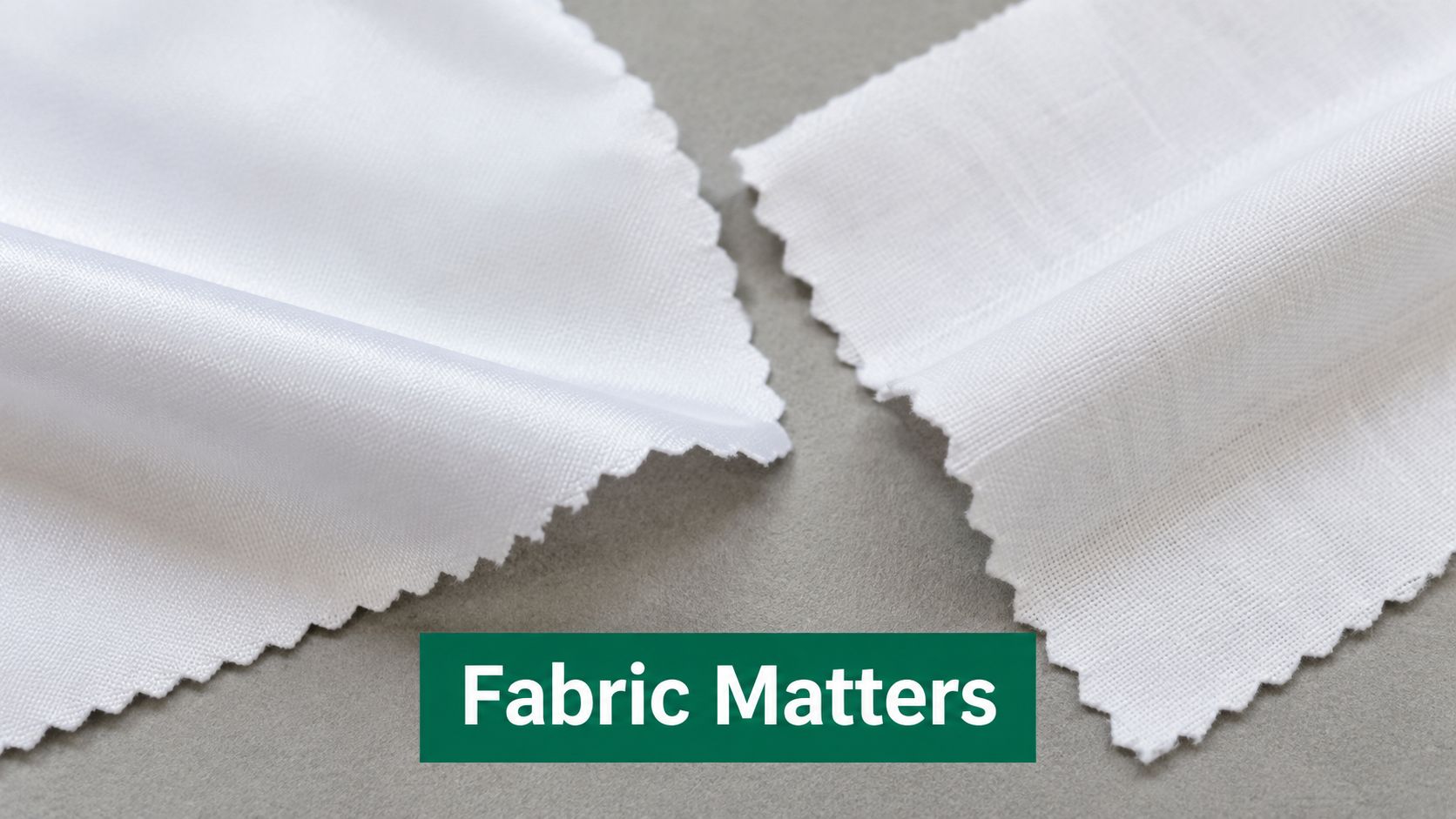
Match the cloth to the event
Crisp poplin suits a caddie bib when the priority is a clean, uniform appearance. Stretch scuba or ponte can work for a fitted, dressier Elvis-inspired version, although heavier stretch fabrics may feel warm indoors. A lighter cotton blend is more comfortable for an outdoor shoot, but it needs sufficient opacity so sunlight doesn't reveal every layer underneath.
Three checks matter before ordering:
- Opacity: Hold the fabric toward a bright window or strong lamp with the intended underlayer behind it.
- Wrinkle recovery: Remove a sample or garment from its packaging and see whether creases relax after hanging.
- Care instructions: Reusable costumes should tolerate the cleaning routine available after the event, whether that means machine washing or careful spot treatment.
The coveralls costume guide can help frame the difference between a costume built for occasional wear and a garment selected for repeated group use. A short indoor party may tolerate a lighter fabric. A summer photo shoot, long outdoor event, or family outfit intended for future occasions deserves breathable construction, secure seams, and better wrinkle recovery.
Personalization That Makes the Outfit Yours
“One size fits most” treats a white jumpsuit as a finished costume when it works better as a modular base. Personal details improve recognition, help groups coordinate, and let the same garment move between themes without being rebuilt from scratch.
Removable Velcro patches are the most flexible starting point. A caddie patch can come off before the outfit becomes a mechanic look, painter look, or sci-fi crew uniform. A family can share a patch library while assigning different names, numbers, or colors to each wearer.
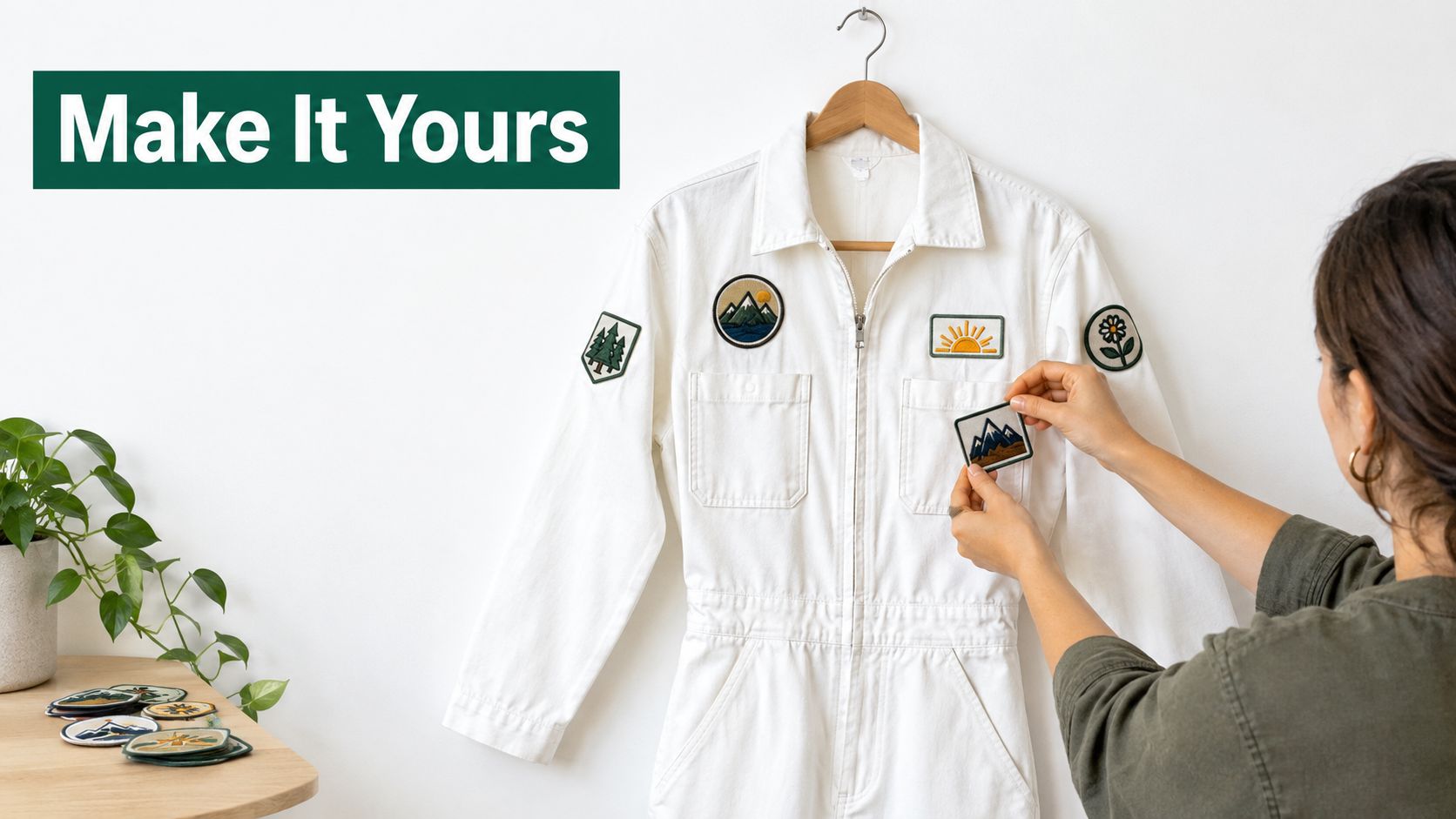
Use details that signal character quickly
A monogrammed sleeve, a colored belt, or a name badge can do more work than a large collection of props. A themed pocket square adds color near the face, while hand-stitched trim can distinguish siblings without breaking the shared silhouette. Keep the strongest detail at chest or shoulder height, where cameras and guests can see it.
Budget-conscious personalization doesn't require custom tailoring. Iron-on transfers, fabric paint, and hand-stitched ribbon can add a name, number, or simple emblem. Test any adhesive or paint on a hidden seam first, especially on bright white fabric where an edge or color bleed will remain visible.
Design principle: Personalize the removable parts first. Permanent alterations should be reserved for a garment that won't need to serve another theme.
Groups also need an orderly process for managing shared digital artwork, logo files, or approval documents before patches are produced. Teams that need a clear explanation of delegated OAuth access explained can use that resource to understand how limited access is granted without handing over an entire account. The costume decision remains simple, but the same principle applies: give each person only the access or accessory needed for the role.
A custom name patch can make a child feel individually represented while keeping the group unified. The custom Velcro name patch guide is relevant when a removable nameplate needs to survive more than one event. Place it where the bib won't cover it, secure every corner, and remove it before washing if the care instructions require that.
Quick Styling Checklist Before You Walk Out the Door
The final inspection should happen in a fixed order, because fit problems become harder to solve once the group is already leaving.
- Confirm the hem over the shoes. The trouser leg should clear the floor without riding high when the wearer walks. Check again with the exact shoes planned for the event.
- Tighten removable patches. Press Velcro patches firmly across the whole surface. Loose corners catch on bags, chairs, and other costumes.
- Straighten the collar or lapel. A folded collar can make a carefully styled costume look unfinished in every photograph.
- Tuck in small accessories. Secure gloves, cap straps, towels, or pocket items so nothing drags or swings into faces.
- Inspect the white fabric. Look at the front, knees, cuffs, and seat under bright light. A small mark is much easier to remove before departure.
- Repeat the movement test. Raise the arms, reach forward, sit, and squat. Restricted shoulders are often the complaint that appears after the first hour, not during the initial mirror check.
Pack a small stain pen and a safety pin. White fabric and themed events rarely remain spotless, and a pin can temporarily secure a loose hem, strap, or patch without changing the look.
The costume should now need very little rescuing. A caddie-inspired white jumpsuit reads clearly from across a room, photographs well in daylight and indoor settings, and adapts easily when the event shifts from mingling to group portraits.
Caddie Uniform offers personalized caddie uniforms, white coveralls and bibs, hats, patches, and removable nameplates for adults and children. Visit Caddie Uniform to build a coordinated white jumpsuit costume for Halloween, a golf-themed birthday, or a family photo shoot.


