


The worst costume mistake is digging a wrinkled one-piece out of a bin in October and pretending it'll somehow feel fresh again. It won't. A caddie-style coveralls costume fixes that problem because it reads as a clean uniform, works across ages, and doesn't collapse into novelty after one night.
That's the core appeal here. Coveralls started as hard-working protective clothing in the early to mid-19th century during the Industrial Revolution, then became a recognizable workwear staple by the 1920s before crossing into fashion and costume use (GORE-TEX Professional history of the coverall, Dickies coveralls history). A caddie look taps that history and turns it into something reusable, family-friendly, and easy to restyle for birthdays, photos, and sports-themed weekends.
Why a Caddie-Style Coveralls Costume Works for More Than Halloween
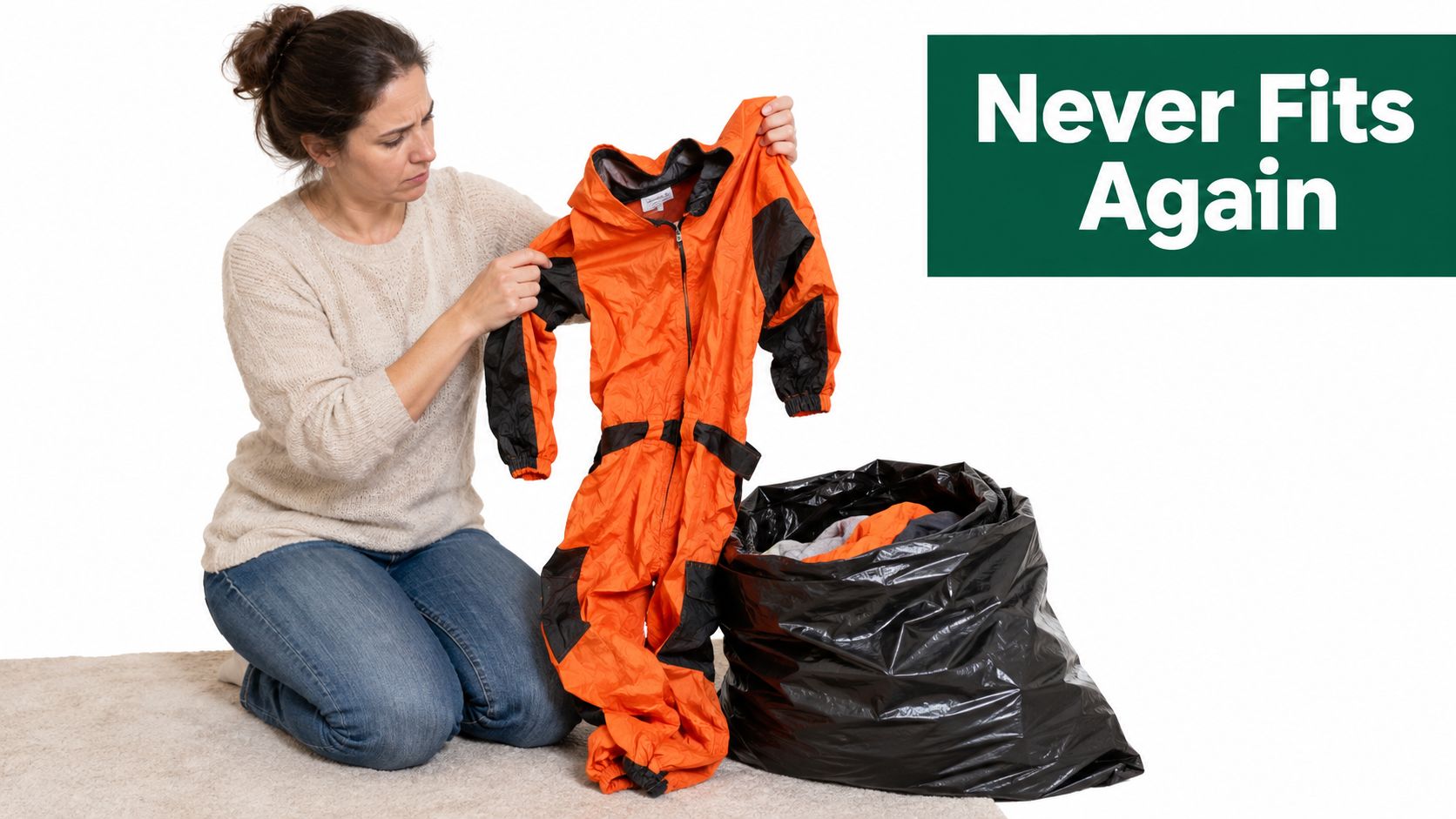
A parent reaches into a costume bin and pulls out the same shiny polyester outfit from last year. The seams are twisted, the zipper is tired, and the fit is already wrong because kids change fast. That's the moment to stop buying throwaway costumes and start treating the outfit like a uniform.
A caddie-style coveralls costume solves the reuse problem because the silhouette is simple, durable, and easy to hand down. Workwear histories show coveralls moving from trade clothing into lifestyle style, while still serving their original protective role across industries (Dickies coveralls history). That matters for families, because a good pair doesn't scream “one-and-done Halloween,” it looks right at a birthday party, a golf-themed photo shoot, or a themed weekend event.
Practical rule: if a costume can't survive storage, layering, and a second wear, it's not really a costume wardrobe piece.
The buying math also makes sense. A single quality set that gets reused beats stacking up disposable outfits that wear out or get outgrown immediately. If the garment works for a child this year and a sibling next year, it's doing its job.
For families who want a low-stress labeling system for shared costume bins, InchBug Halloween label ideas are a useful starting point, especially when the goal is to keep matching pieces together between seasons.
The Look Behind the Coveralls Costume
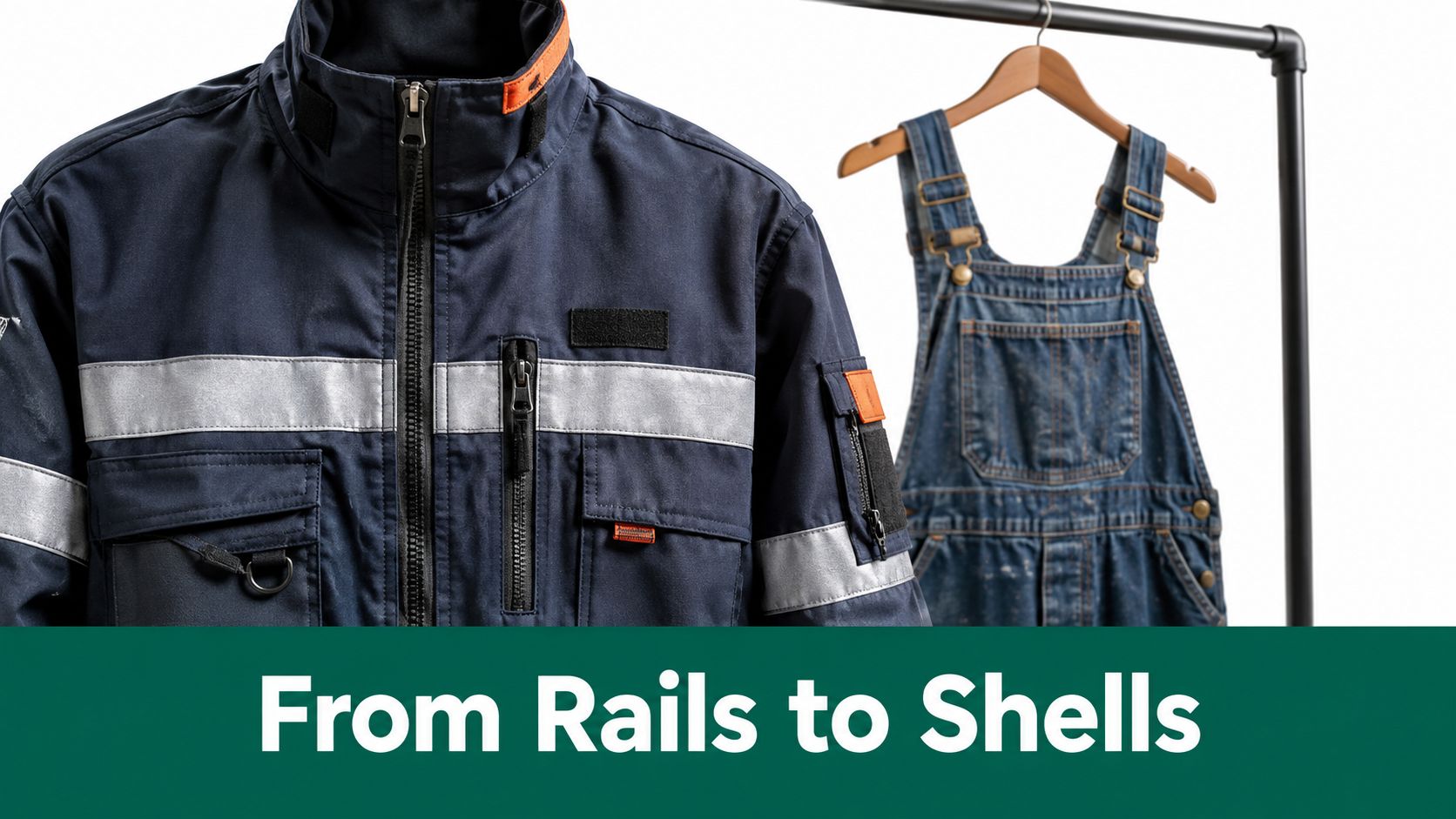
Coveralls look obvious at a glance because the silhouette is built to be read fast. The body runs loose, the chest sits cleanly, and the legs fall straight enough to look like a true uniform instead of a random jumpsuit. That shape is exactly why the costume works in photos, on a field, or in a crowded room.
Historically, coveralls began as loose-fitting, full-body protection designed to cover clothing from neck to ankle during industrial work, and by the 1920s they were a recognized workwear staple (GORE-TEX Professional history of the coverall, Dickies coveralls history). That legacy is the reason a caddie version feels instantly believable. The chest panel, shoulder line, pocket placement, and relaxed leg all telegraph “team uniform” before anyone notices the accessories.
Read the silhouette before you shop
A mechanic-style coverall usually leans heavier, rougher, and more tool-focused. A caddie-style version should look cleaner, lighter, and more photo-friendly, with a smoother finish and a chest area that can take a name bar or logo without fighting the fabric. That distinction matters because a caddie costume needs polish, not grit.
A good caddie look doesn't need a pile of props. It needs a uniform shape, one strong hat, and clean finishing details.
Modern workwear histories also show the garment moving into lifestyle and street style while staying useful as protective clothing (Dickies coveralls history). That crossover is why the look works as a costume now. It isn't vague workwear, it's recognizable shorthand for a character, a setting, and a whole group aesthetic.
Choosing the Right Coveralls Fabric, Fit, and Size
Start with fabric, because the wrong fabric ruins the whole look. Cotton twill gives the cleanest structure and takes names, numbers, and patches well. Poly-cotton blends hold wrinkles better. Lightweight technical shells make sense for outdoor events where weather matters. If you want a coveralls costume that photographs well and gets worn again, skip flimsy novelty fabric that droops after an hour.
Sizing is where people go wrong. Workwear retailers usually recommend about 4 inches of chest ease for coveralls worn over everyday clothes, and they warn that ordering to body measurement alone often leads to tight shoulders, stubborn zippers, and visible pulling. That changes the silhouette fast.
Measure the garment, not the label
Use the fit points below as a buying check, not a rigid rule. The brand chart still wins, but these numbers give you a realistic starting point.
| Size Label | Chest (in) | Inseam (in) | Recommended Height |
|---|---|---|---|
| Small | 38-40 | 30 | Up to 5'9" |
| Medium | 40-42 | 31 | 5'8" to 5'11" |
| Large | 42-44 | 32 | 5'10" to 6'1" |
| X-Large | 44-46 | 33 | 6'0" to 6'3" |
The four measurements that matter are chest at the armpit, inseam from crotch to hem, torso from shoulder seam to crotch, and rise. Order for the body plus the clothes underneath, not the body alone. That gives you room to sit, reach, and pose without the outfit looking strained.
Shrinkage is the other trap. Workwear fabric references note that polyester-based fabrics tend to shrink the least, while cotton can shrink more, and high heat is a major problem (fabric shrinkage and dimensional stability). For a costume you want to wear again, preshrunk or poly-blend coveralls are the safer pick. If the fabric is cotton, pre-wash it before any hemming and keep the dryer heat low.
For a sizing reference built around caddie uniforms, check the adult sizing guide for caddie uniforms to confirm fit before ordering.
Sizing rule: if the costume goes over street clothes, body measurement alone is too small a target.
Personalizing the Uniform With Names, Numbers, and Patches
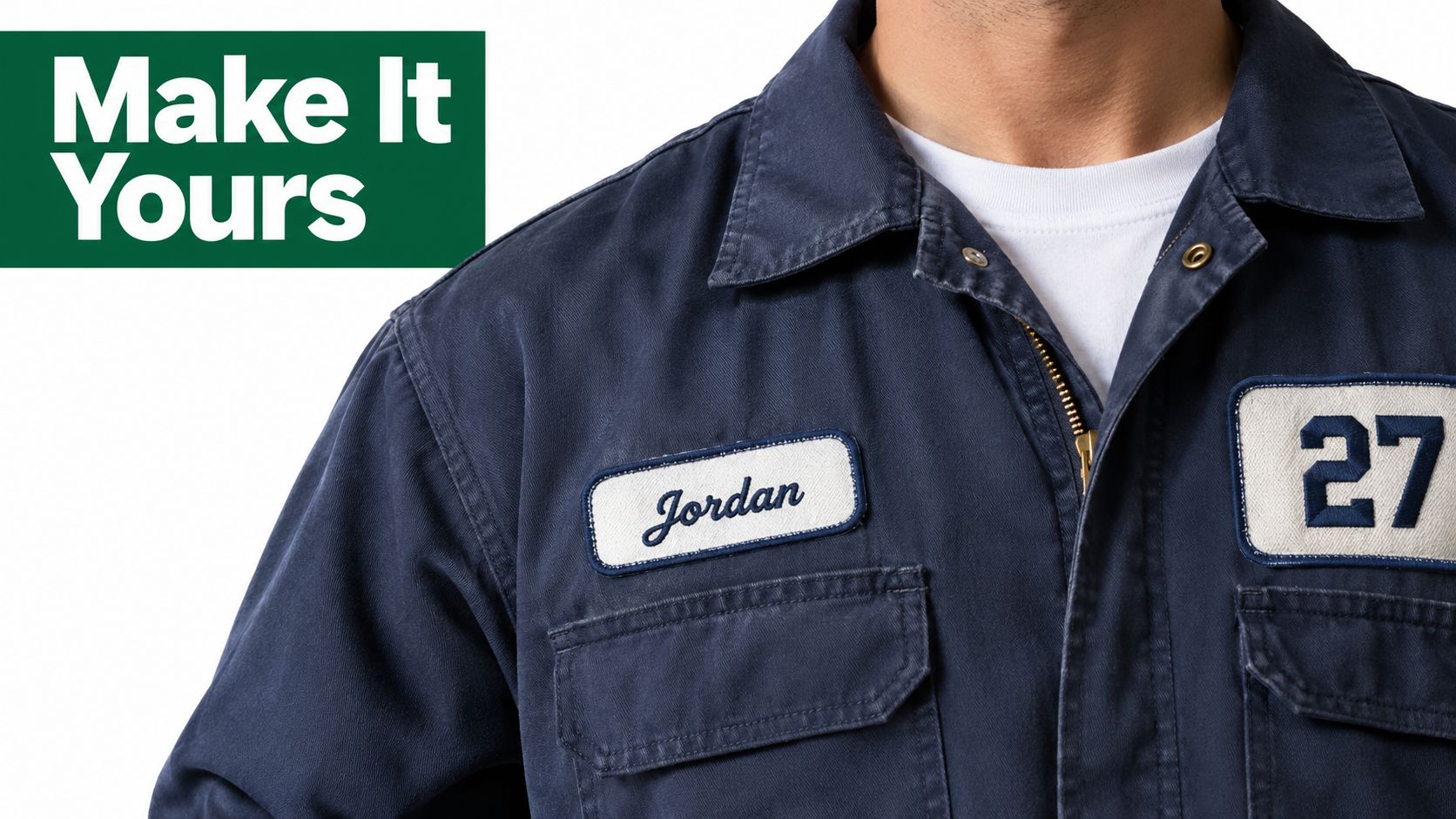
Personalization is what makes the outfit look intentional instead of borrowed from a generic costume rack. Start with a name bar across the chest or upper torso, then add one number, then stop. Once the uniform has too many elements, it stops reading as a caddie look and starts reading as clutter.
Keep the markings clean and legible
Use a chest name bar or a back nameplate with letters large enough to read from across a room. A simple rule works best, the text should be bold, straight, and easy to spot in photos. If the event is family-friendly, keep the treatment clean rather than gimmicky.
A number can go on the right thigh or upper back, depending on whether the outfit is being photographed front-facing or in a group lineup. Navy or white numbers tend to read sharply against the common caddie color palette. The point is visibility, not ornament.
- One name element: pick either a chest name bar or a back nameplate, not both.
- One number element: place it where the camera sees it fastest.
- Two to three patches max: enough to signal theme, not enough to crowd the torso.
- Consistent thread color: keep the stitching in the same visual family as the hat and patches.
Velcro-backed patches make the most sense when the costume needs to shift between events. A golf motif can work for one weekend, then a seasonal patch can swap in later without rebuilding the whole garment. The same logic works for kids and dogs too, but keep the backing light so the fabric doesn't sag or irritate skin.
For a direct patch-focused customization option, Caddie Uniform's name patch guide shows the exact role a nameplate can play in finishing the look.
Pairing Hats and Accessories to Complete the Costume
The hat does most of the character work. The coveralls establish the uniform, but the headwear tells people whether the look is polished, playful, or laid-back. That's why the hat choice should follow the event, not personal preference alone.
A structured Caddie Green Hat with a flat brim feels right for daylight, tournament energy, and clean group photos. A washed cotton style softens the uniform for indoor parties or vintage-styled shoots. A more relaxed Dad or Mom hat reads casual and approachable, which helps for school events or low-key neighborhood gatherings.
Match the hat to the setting
Structured hats belong outdoors when the sun and photos matter. Washed cotton hats belong indoors when the costume needs to feel lived-in. Packable hats make sense for travel because they hold the look without demanding a perfect setup.
If face shape matters, a general hat-style guide can help balance brim width, crown structure, and overall proportion, and Pandemonium Millinery's hat style guide is useful for that kind of practical matching. The point isn't fashion theory. The point is avoiding a hat that fights the wearer's face or the costume's clean line.
| Event Type | Best Hat | Fabric | Formality |
|---|---|---|---|
| Tournament or golf party | Caddie Green Hat | Structured | Higher |
| Vintage country-club look | Scottsdale Hat | Washed cotton | Mid |
| Coastal or sunset event | 30A Beach Hat | Washed cotton | Relaxed |
| Game day or tailgate | SEC City Hat | Structured or soft | Mid |
| School event or casual outing | Dad or Mom Hat | Unstructured | Low |
Finish with accessories that support the uniform instead of competing with it. A woven lanyard, a leather glove, a mock yardage book, and tan boat shoes keep the outfit coherent. Sneakers can work in a pinch, but they pull the look too far toward generic costume territory.
Building a Coordinated Family or Group Costume
A group costume works best when it behaves like a uniform spec, not a mood board. Pick one base color, usually caddie green or stone, and keep the whole group inside that lane. Once the colors drift, the eye stops seeing a team.
That logic fits the growing appetite for coordinated family costumes, especially because current trend coverage keeps pointing toward matching sets while most costume ideas still lean on pop-culture characters. A caddie-style setup is stronger than a character mashup because it photographs as one coherent group and can move from Halloween to holiday cards to milestone birthdays without changing the base outfit.
Assign roles by age and keep the details consistent
Infants should get the softest version, a bib-and-hat combination with initials. Toddlers can wear larger name bars so the text stays readable in photos. Adults can carry numbered back panels to give the group a clear visual hierarchy. Even a dog can fit the theme with a slim, lightweight version in tan or green, as long as the fit stays comfortable.
Group rule: matching hats, matching patch color, and matching base fabric matter more than trying to force every person into the same exact size or silhouette.
Size range matters. A real family set needs room for infants, kids, and adults without breaking the visual rhythm. That's why matching the full size run before personalization is essential, especially when the sleeves or inseams differ between pieces.
For a family-first version of the look, Caddie Uniform's matching caddie outfit guide gives a straightforward path for adults and kids who need to look like one crew.
Your Quick Coveralls Costume Checklist
- Choose a sturdy fabric: pick cotton twill, poly-cotton, or a lightweight technical shell based on weather and reuse.
- Order for layering: size up over street clothes instead of buying to bare body measurements.
- Check the four fit points: chest, inseam, torso length, and rise.
- Pre-wash first: control shrinkage before any hemming or patch work.
- Keep personalization lean: use one name element and one number.
- Limit patches: stay at two to three patches max.
- Match thread colors: keep the stitching coordinated with the hat and base color.
- Pick hats by event: structured for sun, washed cotton for indoor parties, relaxed styles for casual outings.
- Coordinate the group palette: keep one base color across infants, kids, adults, and pets.
- Confirm movement: test seated comfort, arm reach, and walking before event day.
- Secure loose pieces: fasten patches, closures, and any removable add-ons before the costume leaves the house.
Caddie Uniform makes custom caddie-style uniforms, hats, and patches for adults and kids, so the look stays cohesive whether the goal is Halloween, a birthday shoot, or a family event. If that's the kind of coveralls costume that needs to work again next year, visit Caddie Uniform and build the uniform around fit first, then finish it with the right hat and patches.


