


A parent finds the perfect white coverall for a golf themed birthday, adds a name and number, then pauses at the size menu. The child is tall for the age, sits between sizes, and will wear the outfit outdoors for hours. Choosing too small restricts bending and sitting. Choosing too large leaves hems dragging and cuffs catching. Kids coveralls need a different buying process from shirts or pants because torso length, safety closures, fabric care, and the planned activity all affect whether the garment works. Parents who match height first, check torso room second, and separate daytime wear from sleepwear avoid most returns and safety mistakes.
Kids Coverall Size Chart by Age and Height
Rule for choosing: match height first, then confirm torso length and chest room before settling on an age label. Heights vary by brand, so the brand sizing page governs the final choice. The chart below gives a checkout starting point, with typical age, approximate height, and one fit check per row.
| Size | Typical age | Approximate height | Fit check |
|---|---|---|---|
| 0-3 Months | Newborn to 3 months | Up to about 24 in | Move up if baby is near the top of the range |
| 3-6 Months | 3 to 6 months | About 24 to 27 in | Check torso length first |
| 6-12 Months | 6 to 12 months | About 27 to 31 in | Allow room for crawling |
| 12-18 Months | 12 to 18 months | About 31 to 34 in | Check seat room for sitting |
| 2T | 18 to 24 months | About 34 to 36 in | Confirm rise and inseam |
| 3T | 2 to 3 years | About 36 to 39 in | Check arm reach |
| 4T | 3 to 4 years | About 39 to 42 in | Check chest room |
| 5 | 4 to 5 years | About 42 to 45 in | Check closure ease |
| 6 | 5 to 6 years | About 45 to 48 in | Check hem length |
| 7 | 6 to 7 years | About 48 to 50 in | Check torso length |
| 8 | 7 to 8 years | About 50 to 53 in | Check waist fit |
| 10 | 9 to 10 years | About 53 to 57 in | Check shoulder width |
| 11-12 | 11 to 12 years | About 57 to 61 in | Check sleeve length |
Why Age Alone Misleads
Accurate sizing is a fit and mobility issue, not an age labeling exercise. The ASTM children's and infant apparel tables provide body measurement baselines for pattern development and require consideration of fabric type, ease for movement, styling, and fit. A practical specification separates body measurements from finished garment measurements and states intended ease, rather than presenting a single age range as a precise guarantee.
That distinction matters most in the torso. A coverall can match a child's height yet lack shoulder to crotch ease, which restricts sitting, crawling, bending, or climbing. Sleeves and legs can often be cuffed. A short rise can't be fixed after purchase.
Where Children Fall Between Sizes
Two gaps cause the most trouble. The move from 2T to 3T often coincides with diaper changes, faster leg growth, and more climbing, so seat room matters as much as height. The move from 8 to 10 often brings broader shoulders and a longer torso, even when waist size changes little.
Infant sizes change quickly too, because dedicated infant tables run from preemie through 24 months. A baby near the top of the 0-3 Months or 3-6 Months range usually needs the next size, especially when a diaper or base layer adds bulk.
Practical rule: When a child sits in the middle of two sizes, choose the larger size only if torso length needs the room, then manage sleeve and leg length with secure cuffs.
Club coordinators ordering for mixed age groups face the same problem at scale, which is why sizing guidance for club apparel coordinators helps as a reference for collecting measurements before a group order. Parents should still compare each child against the specific coverall chart before ordering.
How to Measure and Size Up for Growth
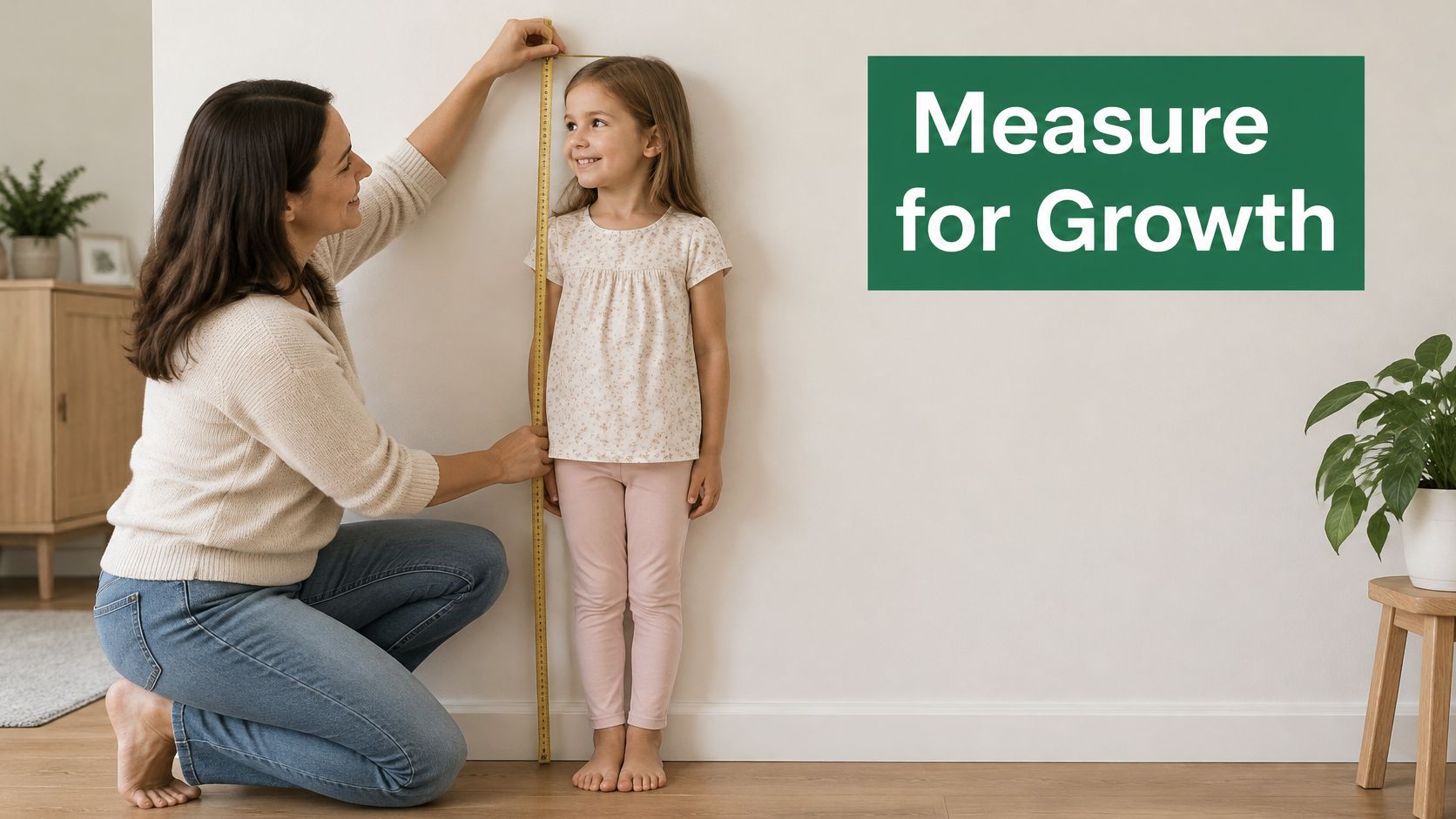
Measuring takes five quiet minutes and prevents the most common coverall mistake, which is buying by birthday age. A soft tape, a wall, and light clothing are enough. Shoes come off, bulky sweaters come off, and a diaper stays on if the child will wear one under the garment.
Seven Measurements in Order
- Set up correctly: The child stands straight and barefoot against a wall, wearing light clothing.
- Record height: Measure from the floor to the top of the head, keeping heels against the wall.
- Measure chest and waist: Chest goes around the fullest point under the arms. Waist goes at the natural waistline, not over a waistband.
- Measure hip or seat: The tape goes around the widest point, with room allowed for sitting.
- Measure torso length: Measure from the back of the neck down the spine to the crotch. This is the most reliable torso check for a one piece garment.
- Measure inseam and sleeve: Inseam runs from crotch to ankle. Sleeve runs from the shoulder point to the wrist with the arm slightly bent.
- Compare and choose: The right size fits torso length and chest room together. If those two point to different sizes, torso length wins.
The Growth Trade Off
One size up can add a season or two of wear, but it isn't free. Oversized cuffs slide over hands, long hems catch under shoes, and a low crotch pulls when a child climbs. A longer cut makes sense only when torso length is the limiting measure and the extra limb length can be secured without loose folds.
Say a child measures at the top of size 6 for height but still has torso ease while sitting. Staying with size 6 gives safer hems for an active event. If the same child can't sit cross legged without pulling at the shoulders, size 7 is the better choice even if sleeves need cuffing.
Four Movement Tests Before Removing Tags
- Squat test: The child squats and stands without tugging at the crotch or shoulders.
- Sit test: Sitting cross legged doesn't pull across the back.
- Stair test: Climbing three stairs doesn't trip on hems or drag the crotch downward.
- Reach test: Both arms rise overhead without lifting the whole garment.
Pulling across the back or shoulders means the fit is too small. A sagging crotch, pooled fabric at the ankle, or cuffs covering fingers means it's too large for safe active wear.
Fabrics That Hold Up Through Washing and Wear
Sturdy cotton remains the benchmark for a reason. A history of children's bib overalls and playsuits records that Levi Strauss & Co. introduced its first children's playsuit, called Koveralls, in 1912, adapting one piece work clothing for everyday play. Modern kids coveralls still follow that logic, but fabric weight and weave change how a garment washes, feels, and survives rough ground.
| Fabric | Durability | Washing | Best use |
|---|---|---|---|
| Cotton twill | High tear resistance; softens with washing | Warm wash, inside out, tumble dry low | Everyday play and costumes |
| Denim-weight cotton | Very high abrasion resistance; stiffer at first | Cold wash, inside out, line dry | Outdoor play and muddy events |
| Cotton-poly blend | Holds shape, resists wrinkles, dries fast | Warm wash, tumble dry low | Parties, photo days and tournaments |
| Cotton jersey | Stretches; can pill and lose shape | Cold wash, dry flat | Light layers, not heavy play |
Choosing by Real Use
Cotton twill suits most families because it balances structure with comfort. It photographs cleanly, resists tearing at knees and seat, and softens rather than thinning quickly. Denim weight cotton handles mud, grass, and repeated kneeling, but a stiff new pair can feel restrictive for a toddler who is still crawling.
A cotton poly blend is the event fabric. It keeps a crisp white caddie look through a long party or tournament day and dries faster after a quick wash. Jersey feels soft for short photo sessions, yet it pills under straps, rough play, and repeated hook and loop contact, so it shouldn't be the default for outdoor wear.
A Care Routine That Protects Fit
Wash inside out, close all hook and loop fasteners, and zip zippers before loading the machine. Warm water suits plain cotton, while cold water protects printed or dyed trims. Chlorine bleach weakens fibers and yellows some trims, so oxygen based stain treatment is safer for grass marks. Tumble dry low or line dry to limit shrinkage, since torso shrinkage is harder to tolerate than a slightly shorter sleeve.
Removable patches and nameplates should come off before washing, and hooks need lint cleared so they grip properly. After muddy multi day events, some families get your laundry washed and folded instead of risking a hot, rushed wash at home. Small tears in heavy cotton can be repaired with iron on patches away from closures. A worn out cuff, split crotch seam, or thinning seat is a retirement sign, not a repair project, especially for active climbing.
Wash for the torso, not just the stain. A garment that shrinks in rise becomes unwearable even if the legs still fit.
Safety Features to Check Before You Buy
A child wearing a coverall to a party or for daytime play may climb, crawl, and brush against equipment. Check cords, closures, and trims before choosing a style. These details affect whether the garment stays secure during movement.
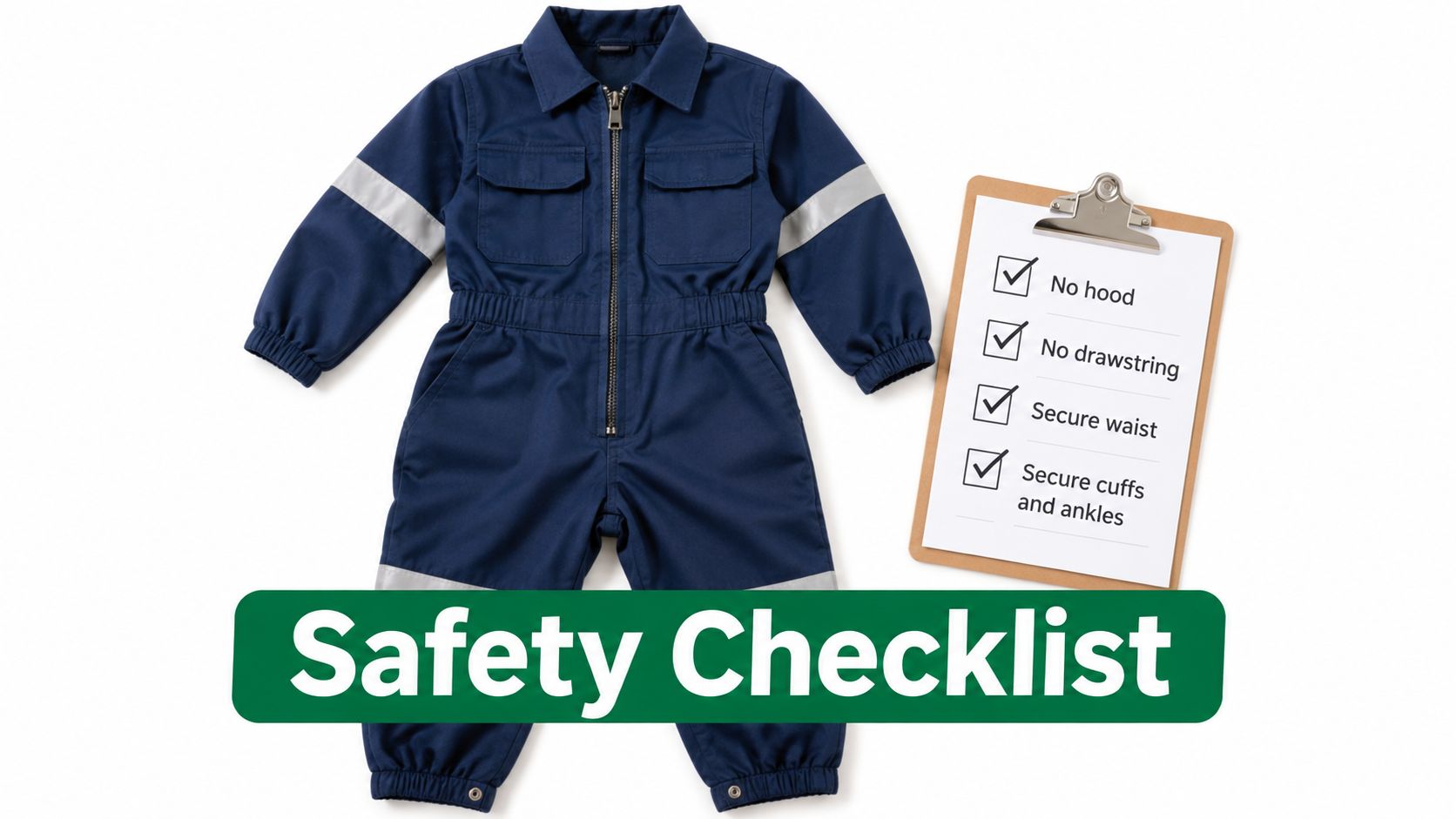
Pre Purchase Safety Checklist
- Avoid hood and neck drawstrings: For coveralls marketed in sizes 2T to 16, the U.S. Consumer Product Safety Commission guide to apparel and household textiles identifies these cords as a strangulation hazard. Check the hood and neckline carefully, especially for a garment intended for playground use.
- Check waist and bottom cords: Choose a design with no loose cords or dangling ends that could catch on equipment. If cords are present, ask the seller how they are secured and whether they follow applicable safety requirements.
- Prefer simple closures: Short elasticized cuffs, snaps, zippers, or hook and loop fasteners can hold sleeves and legs in place without loose cords. A zipper guard at the neck helps keep the zipper from rubbing or pinching skin.
- Ask about fabric flammability: Request information from the seller about the fabric's intended use and any applicable flammability testing. A daytime costume or workwear-style coverall should not be treated as sleepwear.
- Request product documentation: Ask the seller what testing or product documentation is available for the garment, including its trims and coatings. This is especially useful when the coverall has decorative parts or surface treatments.
- Inspect patches and trims: Sewn patches and hook and loop nameplates should have finished edges and secure stitching. Check for loose threads or small pieces that could detach during play.
What Those Checks Prevent
These checks address three practical concerns: cords can snag, fabric can be exposed to flame, and trims or coatings may need closer scrutiny. A simpler design with secure closures and firmly attached details is easier to assess before purchase.
Run a hand over the inside seams, too. Scratchy backing, exposed hook strips, or stiff neck tags can irritate skin and prompt a child to tug at the garment, loosening closures over time.
Where Kids Coveralls Are Safe to Wear
Not all coveralls are interchangeable. A daytime costume, a workwear style play suit, and children's sleepwear sit under different expectations, and treating them as the same garment leads to the riskiest mistake parents make with novelty outfits.
In the United States, garments marketed as children's sleepwear must satisfy flammability requirements, including testing and, for some products, flame resistant and self extinguishing performance, according to the Consumer Product Safety Commission children's sleepwear FAQ. The same guidance distinguishes infant garments sized nine months or smaller from regulated sleepwear and states that loose fitting sleepwear is more likely to catch fire. Tight fitting garments may instead require a safety warning that they are not flame resistant.
| Situation | Verdict | Condition |
|---|---|---|
| Daytime party or golf walk | Fine | Standard daytime wear |
| Trick-or-treating after dark | Fine with conditions | Add reflective trim or a light |
| Near candles, grills, campfires or heaters | Not fine | Remove capes, ties and loose parts |
| Overnight or sleep use | Not fine | A costume coverall is not sleepwear |
| Infant garment sized 9 months or smaller | Check label | Tight-fitting styles may need a not-flame-resistant warning |
Flame Proximity Needs a Hard Line
A costume coverall shouldn't be presented or used as pajamas, and flame resistant shouldn't be implied unless the garment is specifically tested and labeled for that purpose. Birthday candles, grills, campfires, space heaters, and sparklers all change the risk picture. Loose capes, ties, sashes, and oversized cuffs should come off near heat, and an adult should keep the child at a clear distance rather than relying on fabric alone.
After dark events create a different risk. White coveralls show up well, but reflective trim, a small clip light, or a bright hat still helps drivers and other families see a child crossing between houses or walking a course path.
Layering Changes Fit and Heat
Layers should stay snug and thin. A fitted long sleeve tee or turtleneck under a coverall adds warmth without changing torso ease much. A bulky sweater underneath can shorten effective rise, raise shoulder seams, and overheat a child during active play. On warm days, a single breathable layer and open ventilation at the neck work better than stacking clothes for growth room.
Parents planning golf themed events can compare outfit expectations with guidance on golf apparel for kids, then check the specific garment label and local regulations before use near heat or overnight. A label that says costume or daytime wear should be taken as written.
Personalizing with Velcro Nameplates and Patches
Personalization works best when it survives growth. A name sewn permanently onto a size a child will leave behind in one season costs more to replace than a removable nameplate that moves to the next garment. That simple logic should drive the choice between sewn and removable elements.
Removable Versus Sewn On
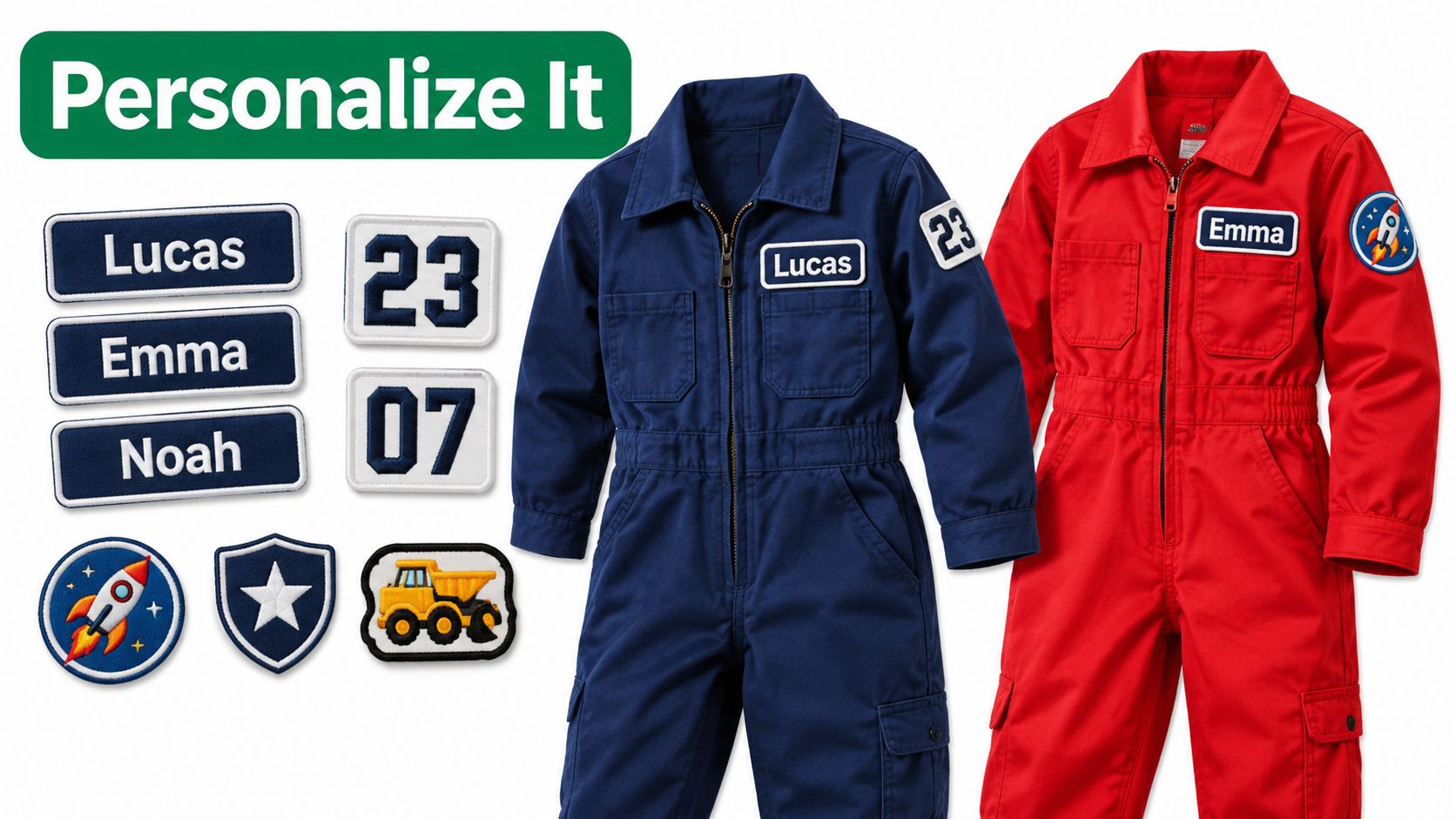
Three elements cover most orders, namely name, number, and logo. A name badge suits the front chest because it reads clearly in photos and helps adults identify children in group settings. A number suits the back, where there's more space and less interference from zippers or snaps. A logo works on the chest, sleeve, or back depending on width.
Removable hook and loop nameplates allow spelling updates, sibling reuse, and easy removal before washing. Sewn patches give a permanent, flatter finish and can also be sewn onto hats and bags, so the same design carries across a set. For children between sizes, removable is the practical default. For a keepsake outfit or a uniform that fits now with room to spare, sewn patches look cleaner.
Families preparing patches at home can review applying hook-and-loop backing to patches before attaching anything to lightweight fabric. Hook strength should be tested on a sample first, because strong hooks can distort jersey and pull threads from loosely woven trims.
Placement Checks Before Ordering
Spelling needs one slow read aloud, letter by letter. Placement should stay away from seams, zipper paths, snap lines, and elastic channels so patches don't lift when the garment flexes. Group orders need the same number format across sizes, since mixed fonts and widths look uncoordinated in photos.
Caddie Uniform offers removable Velcro nameplates, numbers, and themed logos, which suits family or group sets where the same system moves from one garment to another. Parents comparing attachment styles can read the custom Velcro name patch guide and then decide whether permanence or transferability matters more.
Growth rule: Put the child's name on the element that can move, not only on the garment that will be outgrown.
Pairing Coveralls with Hats, Bibs and Putter Covers
A coordinated set starts with restraint. A white base with green accents reads instantly as caddie inspired, so hats and bibs in the same palette look intentional without piling on accessories. The key decision is whether the occasion calls for a full coverall or if a bib over regular clothes achieves the same effect with less heat and easier changes.
| Occasion | Full coverall | Bib over regular clothes |
|---|---|---|
| Tournament or full caddie program | Best fit for a complete look | Less complete look |
| Casual loop or one-day event | Works but may run hot | Practical and easy to remove |
| Birthday party or Halloween | Strong costume look | Quick, lighter option |
| Photo shoot | Complete coordinated look | Good for close detail shots |
| Infant or toddler outing | Full coverage for play | Easier for diaper changes |
When a Bib Is the Smarter Choice
A full coverall gives the complete look for tournaments, formal photos, and full event days. A bib is lighter, easier to remove after cake or during a warm afternoon, and better for one day events where a child may resist a full costume change. For infants, easier diaper access often matters more than complete coverage. For toddlers who run hot, a bib over a breathable layer prevents the mid event meltdown that ends photos early.
Parents weighing that trend can read about personalized caddie bibs on the fairway before choosing. The practical test remains duration. Under an hour in mild weather, a bib usually wins. A full day with staged photos favors the coverall.
Hat and Accessory Rules
- No chin ties or drawstrings: Young children need hats that stay on through fit, not cords around the neck.
- Secure in wind: A hat should sit snugly without leaving marks, and a slightly larger size can work next season if it doesn't fall over the eyes.
- Match palette, not every detail: One green accent repeated on hat and bib is enough. Matching every patch and trim can look cluttered.
- Treat props as props: Putter covers and small accessories work for photos, but they should stay away from small children's mouths and shouldn't hang from the garment during active play.
A bib over a warm layer is often enough for a casual loop. A full coverall with a fitted hat suits a formal photo, a tournament morning, or a themed party where the complete silhouette is the point.
Pick Your Size and Setup Before You Order
Checkout goes better when decisions happen in a fixed order. Occasion first, measurements second, personalization third, safety fourth, and terms last prevents the common pattern of picking a cute patch before confirming that the torso fits.
Five Step Pre Order Sequence
- Choose the occasion format: Full coverall suits tournaments and photo shoots. A bib suits casual loops and one day events where heat or quick changes matter.
- Confirm measurements: Parents compare height, torso length, and chest room against the size chart, moving up only when growth or torso ease is the limiting factor.
- Decide personalization: Removable nameplates suit a child who will outgrow the garment soon. Sewn patches suit a permanent finish on a garment with confirmed fit.
- Check safety details: Closures, drawstrings, fabric labeling, and the Children's Product Certificate get checked before payment, not after delivery.
- Read terms before paying: Caddie Uniform publishes Terms of Service, a Refund policy and a Shipping policy, and personalized items anywhere deserve a careful spelling and size review because returns may be limited.
Price context helps parents judge whether personalization fits the budget. Retail listings in 2026 show 15 kids' bib-overall styles at $32.99 and 30 youth insulated-coverall styles at $72.99, which gives a plain workwear reference point. The Kids Custom Caddie Uniform With Name, Number and Logo costs $99.99, and the kids custom caddie uniform is available in sizes from 0-3 Months to 11-12 Years Old.
Those numbers describe different products, so parents shouldn't compare them as identical. Insulation, personalization, removable patches, and coordinated accessories change cost and use. A plain bib overall for muddy play solves a different problem from a white personalized coverall bought for photos and an event day.
The next step is concrete. Parents write down height, torso length, chest, and the chosen name spelling, select the size that passes the movement checks on paper, then order the matching hat or bib in the same session so colors and patch formats align.
Parents ready to order kids coveralls for a birthday, photo shoot, Halloween, or golf themed event can explore personalized caddie coveralls, bibs, hats, and removable patches at Caddie Uniform. Bring the child's height and torso measurement, choose removable personalization if growth is close, and pick the size that lets the child sit, squat, climb, and reach comfortably.


