

One partner has a closet full of black clothes and no patience for glue guns. The other wants a matching photo, a child may be tagging along, and the party is in nine days. That mismatch is where most couples Halloween costumes go wrong, not because the idea is bad, but because the effort, fit, and comfort were never checked against real life. A modular approach fixes that. Pick a recognizable base, link it with one shared color and a couple of removable details, and both people can move, sit, and wear the pieces again.
Couples Halloween Costume Ideas by Skill Level
The fastest way to choose is to match effort to the calendar first, then worry about cleverness. The National Retail Federation Halloween survey expected consumers to spend $13.5 billion on Halloween in 2026, with 71% of shoppers planning to purchase costumes, though the survey does not isolate couples costumes as a separate category.
Time in the table includes sourcing, not just getting dressed, and budget assumes thrifted or secondhand base pieces where possible. Readers who want more adult focused starting points can browse adult Halloween costume ideas with a golf pairing angle before committing to a row.
| Costume pair | Difficulty | Time to assemble | Typical budget |
|---|---|---|---|
| Golfer and caddie | Easy | 1-2 hours | Low to medium |
| Batman and Catwoman | Easy | 30-60 minutes | Low |
| Mario and Luigi | Easy | 1 hour | Low |
| Salt and Pepper | Easy | 30-60 minutes | Low |
| Cyclops and Jean Grey (X-Men) | Medium | 2-3 hours | Medium |
| Disco Scooby and Shaggy | Medium | 2-3 hours | Medium |
| Ghostbusters team | Medium | 3-4 hours | Medium |
| Pirate and mermaid | Medium | 2-3 hours | Medium |
| Mascot or large-prop pair | Hard | 6 hours or more | High |
What Easy Really Means
Easy pairs work because most of the clothes already exist at home and only one purchase carries the joke. A golfer and caddie needs a white shirt, a cap, and a bib for one person, plus ordinary golf style clothing for the other. Batman and Catwoman is black clothing, a mask, and ears. Mario and Luigi is red and green shirts with caps. Salt and Pepper uses one shared black and white palette, so even different body types read as a set.
These are the right choice for a work party, school pickup, or a night that involves carrying a toddler. They don't rely on face paint staying perfect, and either person can lose a prop without losing the whole concept.
When Medium and Hard Are Worth It
Medium pairs need a made or sourced prop that sells the reference. Cyclops needs a visor shape, a Ghostbusters team needs packs or at least matching jumpsuit styling, and a pirate and mermaid pairing falls flat without one strong texture or accessory. That's still a single afternoon, not a weekend, if shopping stays focused.
Hard pairs built around a mascot head or a large prop suit a planned group night where photos matter more than comfort. They run hot, limit peripheral vision, and make cars and doorways annoying. Couples should pick that row only if the venue is spacious and someone can hold drinks and phones.
Practical rule: Pick the row where both time and budget fit without optimism. A finished easy pair photographs better than a half built hard pair.
Comfort Checks for Mixed Ages and Mobility Needs
A Beauty and the Beast pair looks great at the door until the Beast's long cape wraps around a wheelchair wheel. A mermaid tail photographs beautifully until the wearer faces the venue's front steps, or until a parent has to squat down to a toddler's eye level for the tenth time. Most costume references were drawn for a standing pose, while real parties demand motion, temperature swings, and bathroom breaks.
Comfort doesn't have to kill coordination. Color, hats, sashes, and patches can link two looks without forcing identical garments on both bodies. Anyone adjusting a pattern or letting out a thrifted tunic will get more reliable results by checking garment fitting guidance for beginner sewists before cutting, since ease determines whether a costume allows sitting and reaching.
| Costume type | Works best when | Watch for |
|---|---|---|
| Low-mobility | Wheelchair or walking aid users; capes, hats and sashes on top layers | Long hems, trailing props, tight waistbands |
| Cold-weather | Outdoor parades, night walks, cool venues | Thin synthetic fabrics; wear a thermal base under the costume |
| Pregnancy-friendly | Elastic waists, loose tunics, flat shoes | Fitted corsets, long sashes that snag, heavy shoulder props |
| Sensory-friendly | Soft cotton fabrics, no itchy masks, quiet accessories | Face paint, strong-smelling glue, sequins and light-up parts |
| Family expandable | Adding a child or pet in a complementary role | Size differences; choose a shared color rather than identical outfits |
The Ten Minute Wear Test
A costume that looks fine standing still can fail fast in motion. Each person should walk for ten minutes, sit down, climb stairs, bend to pick something up, and use a restroom while wearing the full look. Anything that needs a second person's help for a bathroom break will become a problem by hour two.
Heat deserves the same check. Synthetic jumpsuits and foam props trap warmth indoors, while thin dresses and short sleeves punish anyone handing out candy outside. A thermal layer under a looser costume solves more problems than a coat thrown over the top, because the coat hides the pairing.
Matching doesn't require symmetrical costumes. Complementary roles often read fastest to guests because each look is different on purpose, and they let one partner wear flat shoes, skip a mask, or hold a baby without breaking the concept.
How to Build a Matching Pair in Five Steps
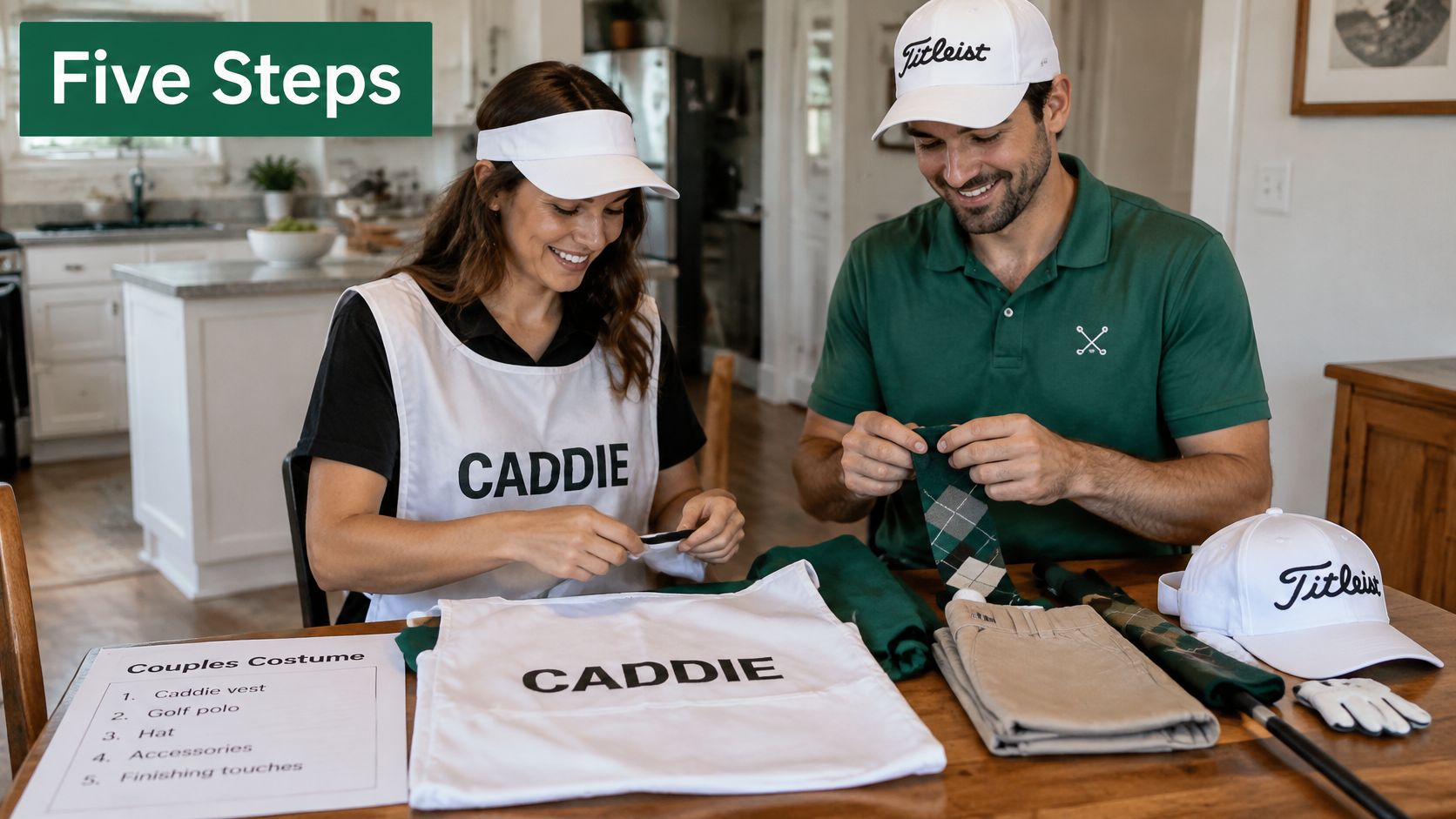
A caddie and player pairing makes a useful worked example because it reads instantly, tolerates a big age or height gap, and doesn't require identical outfits. It's also the concept behind Caddie Uniform's origin for Halloween dressing, since the founder's wife suggested marketing the uniforms for Halloween, with parents dressing as golfers and kids dressing as caddies. Couples can steal the same structure for any duo, and examples of matching golf outfits for two people show how little symmetry the pairing needs.
The Five Step Build
- Choose the anchor role. One person's look carries the concept, so decide who that is first. In a golf pair, the caddie carries the bag and wears the bib, while the player holds the club. The common slip is both partners dressing as players, which leaves no support role and makes the pairing look like two people headed to the same tee time.
- Pick one shared color and repeat it. White or green does the linking in a golf pair, and the same trick works for superheroes, pirates, or food costumes. Repeat the color in a hat, trim, or accessory on both bodies. Mismatched shades are the usual problem here. Two different whites photograph like two outfits pulled from different sales racks, so pieces should be checked side by side in daylight.
- Build around the hardest piece to find. A cap in the right color, a bib, a jacket, or a uniform sets the silhouette, so it gets sourced before anything else. Easy pieces can be swapped at the last minute, but the anchor piece can't. Buying gloves and socks first feels productive and then backfires when the key garment is out of stock in the needed size.
- Add one tie-in accessory to each person. A name tag, glove, bag tag, or matching patch gives viewers the relationship cue at a glance. Keep it big enough to show in a phone photo from across a room. Tiny earrings, subtle pins, and clever text in a small font won't carry, however good they look up close.
- Test the pair together, not separately. Stand in front of a mirror, then take a phone photo at the distance guests will see. If the connection needs explaining in that photo, the shared color or accessory needs to get bigger. This five minute check saves more costumes than another shopping trip.
If the pairing only makes sense when both people stand in a specific pose, it won't survive a real party. It should still read while one person is holding a drink and the other is turned sideways.
That relationship first logic is showing up in search behavior too. Reporting on Google's Frightgeist guide in the Portland Tribune identified dedicated duo costumes and couples rankings, including Disco Scooby and Shaggy and Cyclops and Jean Grey from X-Men. Frightgeist measures search interest rather than verified sales, so it works best as evidence of inspiration. The takeaway still holds. Duo costumes succeed because viewers read the relationship between two looks, not because either outfit is elaborate alone.
Accessories That Link Two Costumes Together
Small shared details carry most of the couple read, which means accessory choice matters more than extra fabric. A plain base with the right link beats two busy outfits that happen to stand next to each other. The ranking below runs from strongest signal to optional extra, and couples on a budget should buy from the top down.
- Shared color in a hat or bib: This is the strongest and cheapest signal, because color registers before text, logos, or props in a crowded room.
- Removable patches and name tags: These let one base outfit change between events, which suits couples attending a family party and an adults only night in the same week. Details on adding a personalized name patch to a costume base are useful here because placement and letter size decide whether the name reads in photos.
- A matching cap for each partner: Identical headwear keeps both looks in one palette even when the rest of the clothing differs for comfort or size.
- A bag tag or luggage tag with a joke: A golf style tag adds personality at low cost and gives strangers a reason to look twice without adding bulk.
- A temporary tattoo or face detail: For spookier pairings, couples can find spooky ghost tattoo designs that link two looks without committing either person to heavy makeup all night.
- A wristband or glove for one partner: This works as a finishing detail that echoes the other person's colors without duplicating the whole outfit.
- One prop held by one person: A club, clipboard, lantern, or wand marks a role clearly, and one prop per pair is enough.
Props need a firm rule because they multiply fast. The person whose role requires the prop holds it, and the other person stays hands free for doors, drinks, and children. Two people carrying awkward objects all night look less like a duo and more like movers.
Three accessories per person is usually the ceiling. Past that point, photos turn busy, small pieces get lost, and the shared signal gets buried. If a new item doesn't make the pairing clearer from ten feet away, it doesn't earn a spot.
Keeping Costume Pieces Wearable After Halloween
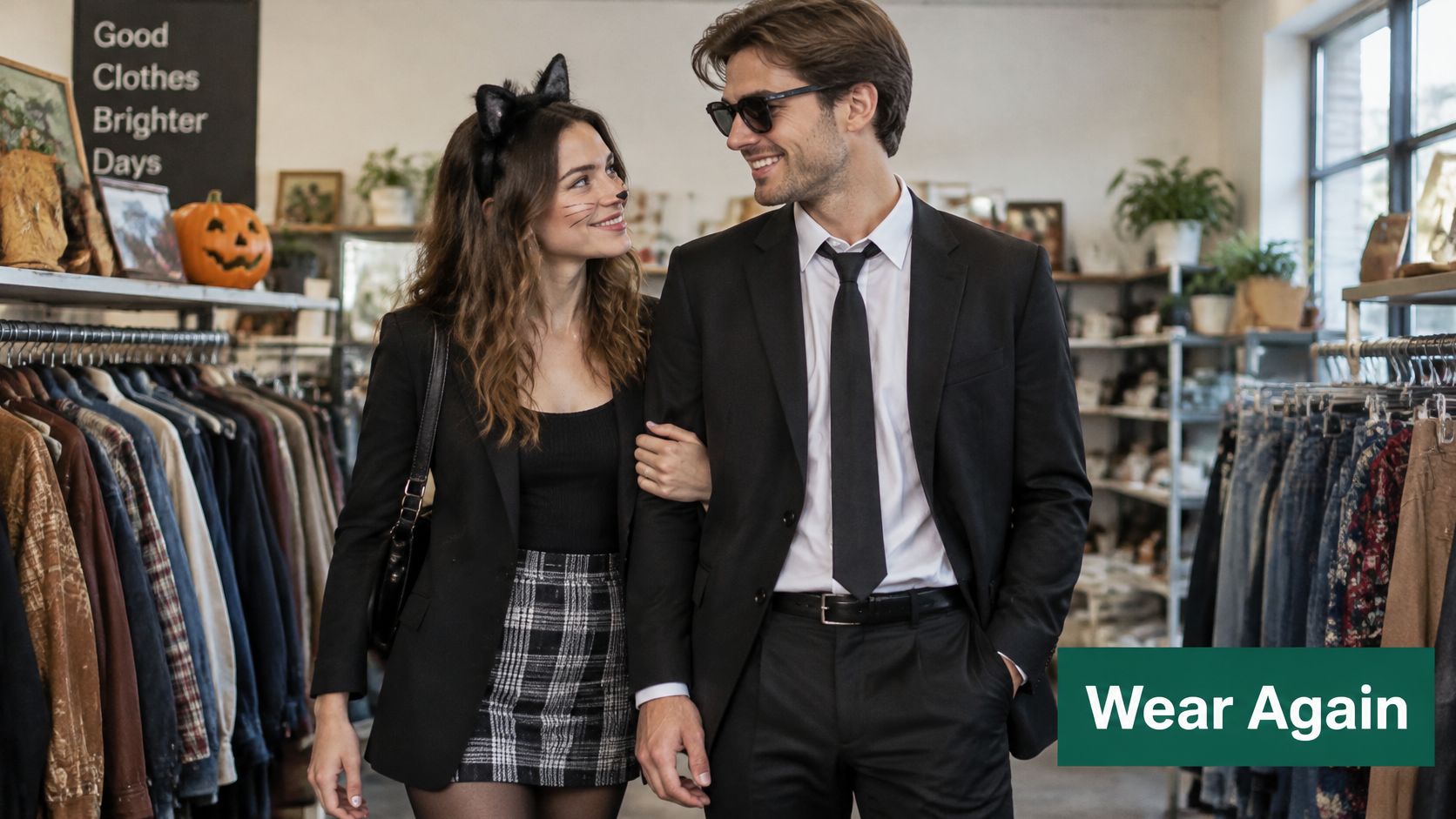
A fragile novelty build that survives one indoor party loses to a plain base that works for a school event, a neighborhood walk, and a themed birthday later. Cost per wear rewards the quiet pieces: a caddie bib bought for Halloween can anchor a charity golf outing in spring, and a matching cap slides straight into everyday rotation. The same logic covers where the second base piece comes from. The 2025 Goodwill Halloween survey found 62% of adults who preferred DIY costumes said they shop at thrift stores, up from 53% in 2024, so when one partner already owns the anchor item, a thrifted coverall or plain cap fills the other half cheaply.
Judge each piece by whether you will wear it again in November.
| Piece | Reuse after Halloween | Storage note |
|---|---|---|
| Coverall or bib | Golf days, team outings, casual wear | Spot-clean, dry flat, store away from sunlight |
| Caps and hats | Everyday wear, tournament or sports days | Stuff the crown with tissue to hold its shape |
| Removable patches and name plates | Move onto new outfits or events | Store on a sheet with the sticky side protected |
| Props such as clubs or wands | Gifts, donations or photo-day use | Label and bag them together with the matching piece |
A Short Post Halloween Routine
Remove patches and name plates first, before anything goes into a laundry pile. Spot-clean the base garment rather than washing it aggressively, dry it flat, and store patches on a sheet with the sticky side protected so the velcro stays usable for the next outfit. Caps keep their shape better stuffed with tissue than crushed under heavier clothes, and props travel to storage bagged with the piece they belong to.
Cost per wear is the test that keeps this honest. A piece worn twice is cheaper than a flashier piece worn once, even if the first price tag was higher. Couples who buy with a second event in mind (a golf outing, a school dress up day, or next year's party with different patches) rarely feel the usual November guilt.
Choose Your Pair and Confirm Sizes Before You Order
A short checklist prevents the two most common late October failures, the wrong size and the unfinished second half. Each step takes minutes, but skipping one tends to cost days.
- Pick the pair by time and budget. Use the difficulty table, then run the comfort checks so both people can move, sit, and stay warm in the look.
- Measure every participant. Include any child or pet joining the pairing, since a couple's look often expands into a family one. Caddie Uniform offers sizing for children, adults and dogs, so check each wearer against the right size chart rather than guessing from an adult fit.
- Compare a full uniform against owned base pieces. A bundle may beat piecing together separates once hats and patches are counted. The BUNDLE: Adult Caddie Hat and Caddie Uniform is currently priced at $169.99, so couples can weigh that against thrifted bases plus one purchased anchor piece.
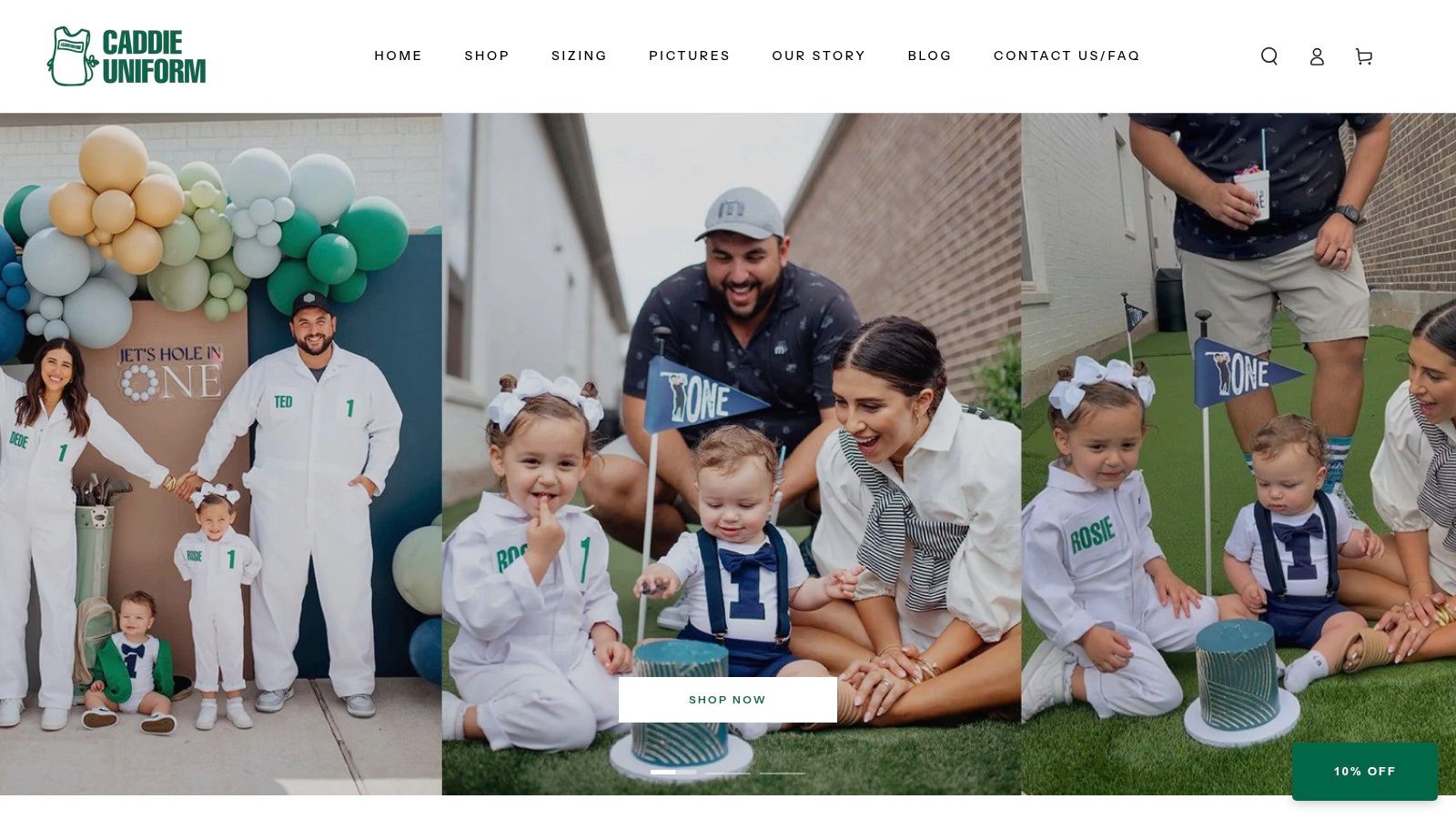
- Copy a proven layout. The site's Halloween photo galleries show how a bib, cap, and name detail sit on real bodies, which settles placement decisions faster than sketching from scratch. Anyone planning to sew a sash or a fabric armband from themed fabric can also compare Halloween quilting precuts to keep colors consistent across both outfits.
- Order early enough for a size swap. Personalized pieces and popular sizes need breathing room before October, not a hopeful checkout in the final week.
The final check before checkout should be exact. Confirm the pair, confirm each size, and confirm the spelling on every name detail, since customizable uniforms and bibs carry a name, number and logo that cannot be corrected after shipping. That's what gets a recognizable, comfortable set to the door in time for the party instead of a last minute substitute.
For a golf themed pairing that works across ages and body types, Caddie Uniform offers customizable caddie uniforms, bibs, hats, and removable name patches that let one partner play the golfer and the other carry the look as caddie. Pick the pair, confirm sizes for everyone joining in, and order early enough to test the fit before Halloween night.


