


Everyone arrives wearing green, yet the family portrait still looks scattered. A parent's polo is almost black, a child's shirt is neon, the baby's romper bunches under the chin, and the tallest adult's trousers stop short. The colors technically match, but the clothes don't look connected.
Caddie-themed family photo outfits work best when the theme, palette, and fit agree. White coveralls or bibs establish a recognizable shape, while green caps and restrained personalization connect relatives across ages. Exact matching isn't necessary, and it shouldn't take priority over comfortable movement or someone's preferred coverage.
Professional styling guidance from Snappr recommends three to four coordinated colors, often built around an anchor garment rather than identical clothing. For a caddie shoot, white and green can anchor the group, with khaki or another quiet neutral supporting base layers and shoes.
The strongest starting point is the person with the least wardrobe flexibility. Everyone else can coordinate around that person's comfortable, workable outfit.
That might mean an infant who needs easy changes, a grandparent who prefers seated portraits, or an adult who needs a longer torso and inseam. The following looks solve different coordination problems, from full-family uniforms to bib overlays, birthday portraits, and pet-inclusive photographs. Each works best when accessories support faces, sizing follows measurements, and the setting doesn't compete with the family.
1. Matching Caddie Family Set
Best for a family that wants an unmistakable shared theme. White coveralls and green caps create a consistent outline without requiring everyone to wear identical shirts underneath. For a reunion, grandparents can wear bibs while younger relatives choose coveralls, provided the white-and-green balance stays consistent.
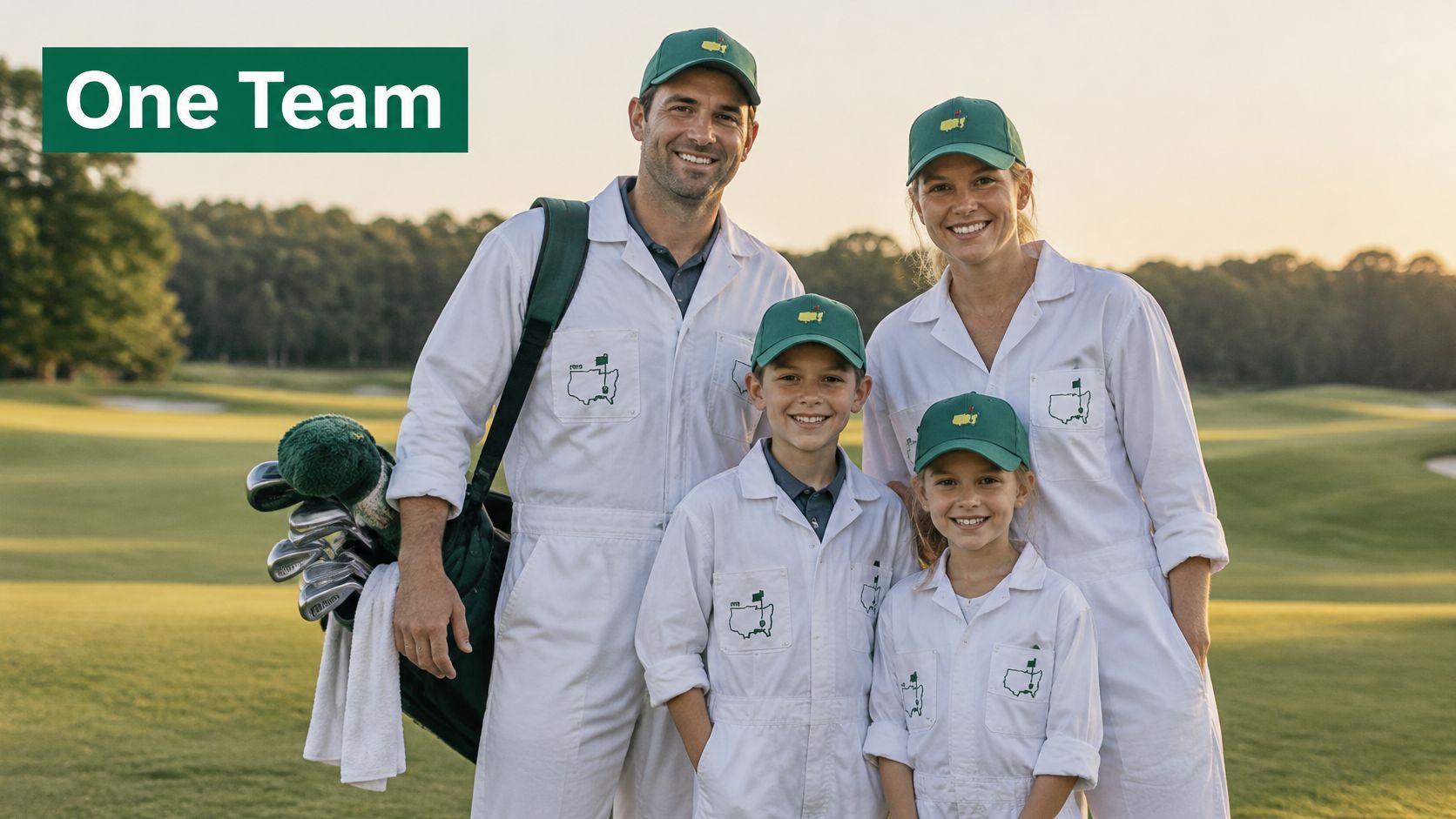
The difficult part is matching fit, not merely matching labels. An adult's coverall needs enough torso length for sitting and lifting a child; extra width won't necessarily solve a short body rise. Children need hems that clear their shoes without bulky rolls.
Fit the movement before the portrait
- Check current measurements. Compare chest, waist, torso, and inseam with the garment's size guide rather than choosing by age or usual trouser size.
- Test ordinary movements. Each person should sit, reach, and bend while wearing the intended base layer.
- Keep accents consistent. Similar green caps and quiet footwear create cohesion without adding more decoration.
The trade-off is visual simplicity versus flexibility. Full coveralls deliver the clearest team effect, but bibs are easier for relatives who need adjustable layers or frequent clothing access. These matching caddie outfit ideas for adults and kids offer a useful starting point for choosing the group's overall approach.
2. Parent and Child Caddie Pairing
A child's expression can disappear in a portrait when the adult stands over them. Have the parent kneel or sit beside the child so the camera can capture both faces, along with the caps and uniform details.
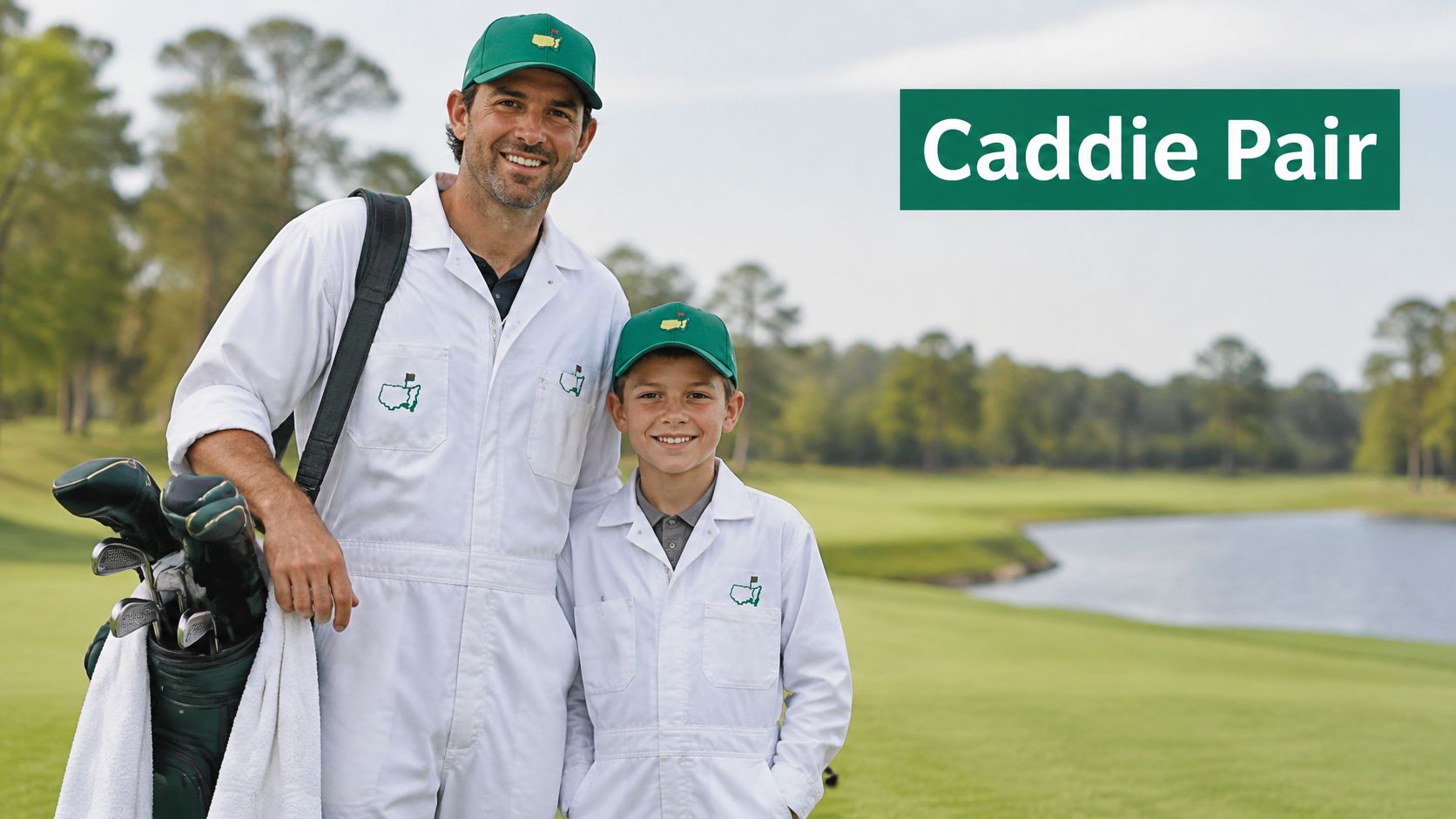
For a father and daughter, white coveralls make a clear pair; different shoes let each keep their own style. For a mother and toddler, try a caddie bib over a polo for the child and a matching bib over a comfortable top for the parent. That combination keeps the theme visible while allowing easier movement and access for a quick change.
Match the details, then check the fit
Choose children's clothing by current measurements, not by sizing up for a longer wear period. Sleeves that cover the hands and a neckline that slips toward the mouth can get in the way during the shoot. For adults, check torso length as well as width: a coverall can pull across the shoulders when kneeling, even if it feels roomy while standing.
Practise the planned poses in the outfits. Kneeling and lifting a child can tug at the shoulders, expose an undershirt, or shift a nameplate. Soft layers underneath and closures that are easy to manage help keep the pairing comfortable. If either person dislikes a full uniform, a bib over regular clothes is a practical alternative.
3. Personalized Name and Number Caddie Look
Personalization solves the problem of identical outfits hiding individual identities. A shared white uniform can still feel personal when each relative chooses a removable nameplate, meaningful number, or family-approved motif.
For a reunion portrait, adults might use surnames while children choose nicknames. A shared family emblem can connect the group without requiring everyone to display personal information publicly.
The styling risk is clutter. Long names, oversized numbers, and unrelated logos can compete with faces, especially when the photograph includes the whole family.
Make personalization readable and intentional
- Use a consistent lettering treatment. Matching placement and contrast matter more than filling every available patch area.
- Approve the details together. Check spelling, preferred names, and whether each person wants identifying information visible.
- Plan for reuse. Store removable pieces flat and labeled so the next event doesn't require rebuilding the entire outfit.
A personalized name patch guide can help families think through the patch rather than treating it as an afterthought. The photographer should also capture a closer grouping if the lettering matters to the keepsake.
Respect for personal style belongs in the same decision. Helena and Laurent's family-session guide supports coordination without making everyone identical. Cultural dress, religious headwear, modesty preferences, and adaptive garments can remain part of the portrait, with repeated color or patch placement providing the connection.
4. Caddie Bib Overlay Look
Bibs are the practical answer when a shared silhouette won't suit everyone. They carry the caddie theme over clothes that already fit, making them useful for mixed generations, changing temperatures, and relatives who prefer their usual trousers or skirts.
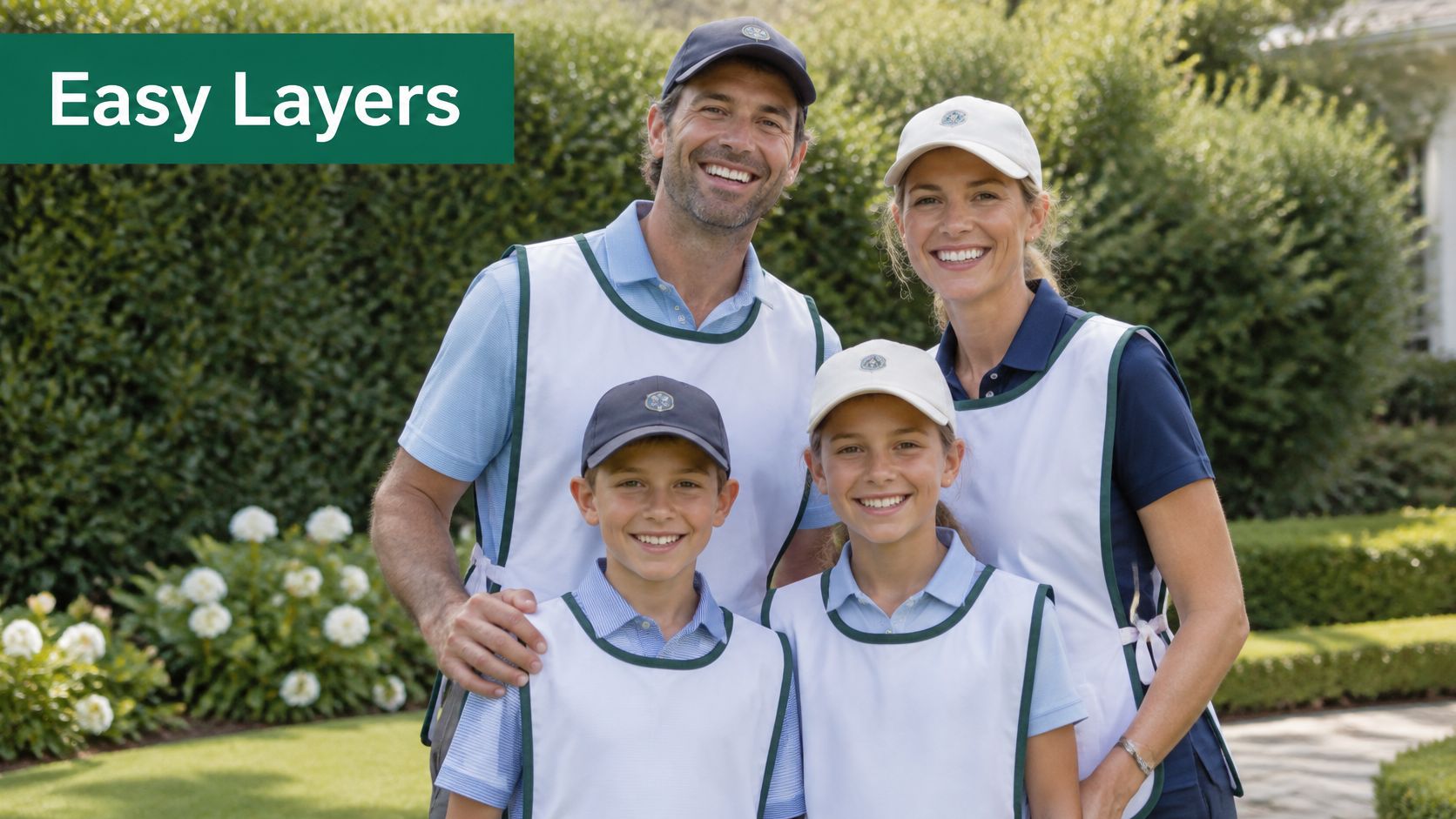
For a garden portrait, green polos and white bibs can connect the adults, while children wear soft green T-shirts underneath. Khaki bottoms keep the lower half quiet without making every garment identical.
The compromise is that more base clothing remains visible. A coordinated bib won't disguise a loud sleeve print or brightly colored trousers.
Check the bib over the actual layers
Try the bib over the shirt or sweater intended for the session. The neckline should sit comfortably, the sides shouldn't squeeze, and the front should lie reasonably flat while seated.
For a wheelchair user or anyone photographed sitting, check the visible front view rather than judging only in a mirror while standing. Keep straps, closures, and excess fabric away from controls, wheels, and medical equipment.
White bibs need visual separation from their surroundings. Chronogram's portrait guidance explains how background color and light affect that separation. A quick grayscale phone preview can reveal whether shirts, bibs, and the setting merge into similar tones before the photographer begins.
5. Themed Hat Coordination
A family can look like one team without putting every person in a full uniform. Matching hats help connect adults and children across different clothing preferences, while a shared color keeps the overall look deliberate.
For a beach-side gathering, 30A Beach Hats can set the theme alongside neutral clothing. For a golf-inspired portrait, Dad and Mom Hats can pair with children's caps. The trade-off is fit: one hat style rarely works equally well for a toddler, an older child, and an adult.
Keep eyes visible
- Check crown depth. An adult cap tightened around a child's head may still sit too low or cover the eyebrows. Choose a size that stays in place without compressing the crown.
- Test the brim angle. Keep the brim clear of the eyes, especially when the child looks toward the camera. A steep angle can cast a shadow across the face.
- Allow an alternative. If someone dislikes hats, repeat the hat color in a shirt or another small accessory rather than insisting they wear one.
The headwear guide for style-conscious golfers offers more detail on cap styles. For a family portrait, prioritize a comfortable fit and an unobstructed view of each face. A coordinated hat only helps if everyone can wear it comfortably.
6. Golf Course Tournament Day Family Portrait
The course already supplies the story. Clothing should support the golf setting rather than compete with it. White caddie outfits, restrained green accents, and a golf bag can be enough for a club-day or charity-event family portrait.
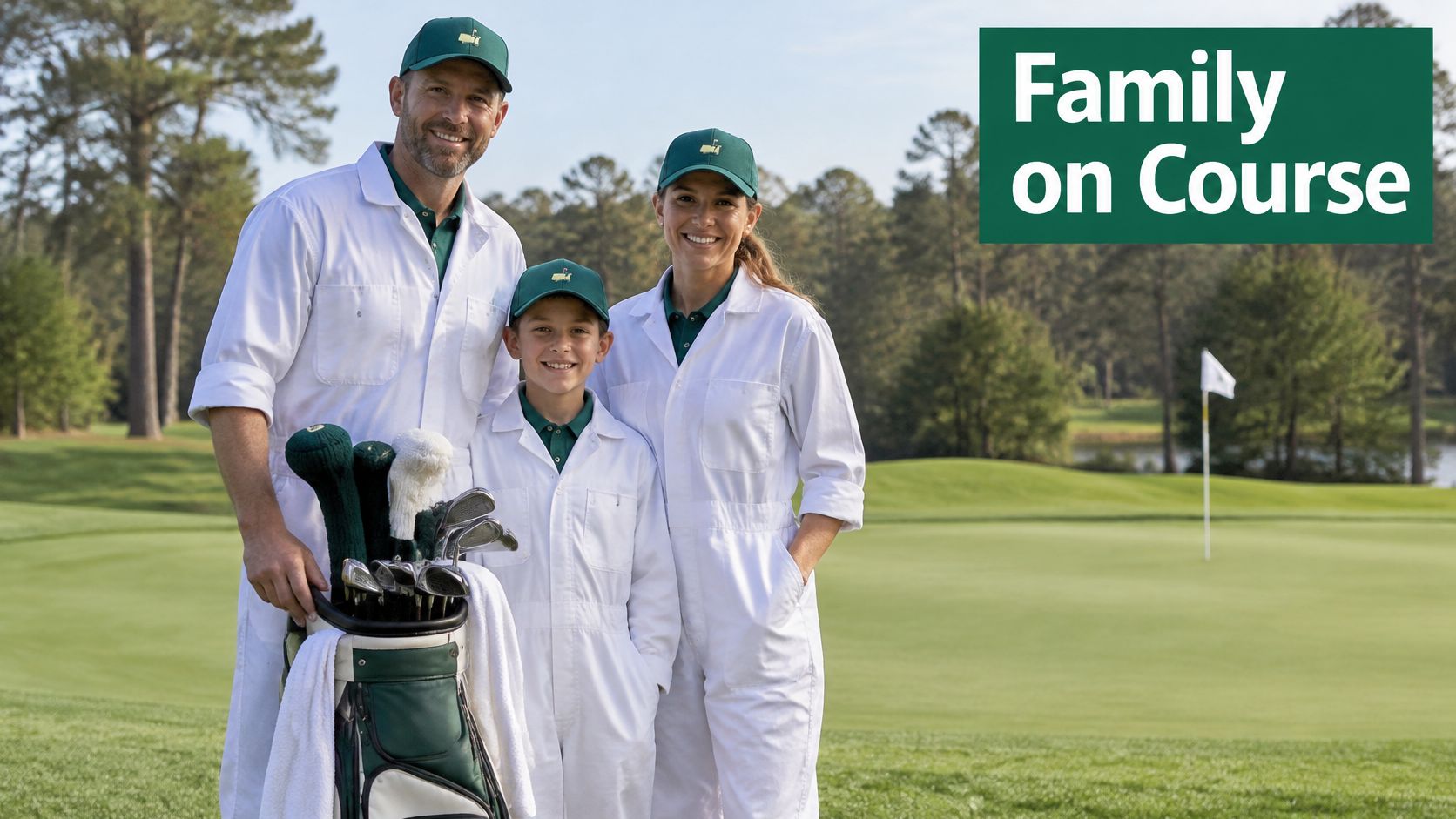
Say a family wants a photograph beside a tournament green. The organizer first needs to confirm permitted photography areas, access, prop restrictions, and a time that won't interrupt play. A good outfit plan can't compensate for an unsuitable location.
Dress for the route to the photograph
Choose stable footwear for paths and grass, not shoes that only look appropriate beside a golf bag. Long hems should clear the ground, and children shouldn't need to hold up their clothes while walking.
Bring a lint roller, a clean cloth, spare base layers, and a stain treatment suitable for the garment. White fabric makes grass marks conspicuous, so take the clean, posed portrait before children sit on the turf.
On-course priority: The family follows staff instructions and stays clear of play, even when another background looks more attractive.
Early morning or late afternoon may offer gentler light, but access and the event schedule come first. If the available time falls in strong sunlight, the photographer can choose suitable open shade rather than placing everyone beneath dark cap shadows.
7. Halloween Caddie Family Costume Shoot
Halloween creates a familiar coordination conflict: children want costumes, adults want something wearable, and the group still needs to look connected. Caddie outfits bridge those preferences because the golf theme stays recognizable without elaborate masks or handheld costume parts.
A neighborhood portrait could put children in caddie coveralls and parents in golfer-style polos with matching caps. Another family might choose white uniforms throughout, adding removable seasonal patches instead of changing the whole palette.
Separate the portrait plan from the evening plan
Take the main family photograph before trick-or-treating, face paint, and sweets introduce distractions. Children can then add warmer jackets or other practical layers without anyone worrying about preserving the original styling.
- Test outer layers. A coat should fit over the costume without restricting shoulders or hiding a child's hands.
- Keep props manageable. A lightweight golf-themed prop is easier than asking a child to carry a full bag.
- Protect visibility. Hems, hats, and accessories mustn't interfere with walking or seeing.
The trade-off is warmth versus a clean uniform outline. A fitted thermal layer may preserve the silhouette, but a visible coat is the better choice when the weather requires it.
Order personalized pieces well before the event and test the complete outfit at home. A costume that looks good standing still may pull at the knees during walking, crouching, or climbing steps.
8. Birthday Party Caddie Theme Photo
For a golf-themed birthday, the birthday child should remain the visual focus. Matching every guest equally can make the main subject disappear among repeated hats, patches, and white fabric.
A baby in a personalized caddie coverall can sit with parents wearing simple bibs. The shared palette connects them, while the baby's outfit supplies the distinctive detail.
Fit the child's current stage
Infant sizing and toddler sizing aren't interchangeable. A baby needs room for a diaper and easy changing access, while a walking child needs clear feet and unrestricted knees.
The outfit should be checked both while the child sits and while an adult holds them. A stiff collar or crowded chest patch may rise toward the face in those positions, even if it looks fine laid flat.
- Photograph before food. Take the main family portrait before cake, snacks, or outdoor play.
- Pack a compatible backup. A plain romper or soft shirt in the palette can preserve the family look after a spill.
- Simplify the background. Move spare bags, gifts, and packaging away from the portrait area.
The practical compromise is between a memorable personalized outfit and an easy party day. Removable patches and bibs make sense when feeding, changing, and naps matter more than keeping a complete uniform on throughout the celebration. The outfit can appear for the portrait without becoming an all-day requirement.
9. Family Pet Caddie Look
A pet doesn't need a complete costume to belong in the portrait. A comfortable caddie bib or coordinated accent can connect a dog to the family while keeping handling straightforward.
For a park session, adults and children might wear white-and-green outfits while their dog wears a simple matching bib. Place the dog beside a familiar handler, with enough space that nobody needs to tug on clothing to keep the group together.
The dog golf costume guide is a relevant starting point for planning the pet's part. Measurements should follow the dedicated dog sizing instructions, including the relevant body dimensions rather than breed assumptions.
Let comfort determine the outfit
Introduce the garment before photo day and watch how the dog moves. Remove it if the animal freezes, repeatedly scratches at it, or tries to chew the fabric.
Keep closures and patches out of reach where possible, and don't attach a leash to decorative clothing. A familiar harness remains the handling equipment.
A calm dog wearing a small coordinated accent contributes more to the portrait than an uncomfortable dog in a complete outfit.
The trade-off is exact matching versus a relaxed expression and safe movement. Choose a quiet location that permits dogs, keep the portrait portion brief, and arrange somewhere comfortable for the pet to rest while the family continues without them.
10. Wedding and Engagement Golf Party Caddie Portrait
Set the caddie portrait's dress code and place in the wedding schedule before choosing outfits. It can suit an engagement session, welcome event, golf outing, or getting-ready photo. Keep the look in line with the couple's preferred formality and make participation optional for relatives.
For a golf-course engagement portrait, the couple might wear coordinated coveralls while relatives add green accents to neutral clothing. For a wedding-related golf gathering, personalized bibs and caps can tie the group together without requiring guests to change completely.
Protect the occasion's priorities
Confirm when the portrait will happen and allow time for everyone to change. Get Spliced's wedding morning outfit guide offers ideas for coordinating clothing during wedding preparations. Use the earlier fit guidance for adults who need extra garment length.
- Keep personalization consistent. Choose the couple's preferred names or motif, and avoid competing details.
- Check hair and headwear. Caps may disrupt finished hairstyles or conflict with religious head coverings. Agree on alternatives before the photo.
- Build in get-ready time. Treat the themed portrait as a separate outfit change, and schedule it around hair, makeup, and the wedding party's other preparations.
A good wedding portrait feels celebratory while respecting comfort, coverage preferences, and the couple's chosen level of formality.
How the 10 Family Caddie Looks Compare on Use Case and Trade-Off
Each look solves a different coordination problem, from dressing a baby and an adult in one theme to including a dog without requiring the whole family to wear coveralls. The table focuses on what each option helps coordinate and what to plan around.
| Look | Coordination problem it solves | Practical consideration |
|---|---|---|
| Matching Caddie Family Set | Gives different ages and sizes one shared outfit | A single style may limit individual preferences |
| Parent and Child Caddie Pairing | Connects two generations without dressing everyone alike | The garments need to suit each wearer's proportions |
| Personalized Name and Number Caddie Look | Makes each person identifiable while keeping the group's look consistent | Names and numbers need to be readable in the planned poses |
| Caddie Bib Overlay Look | Coordinates people who want to keep their own clothes underneath | Base layers should work together in color and formality |
| Themed Hat Coordination | Links different outfits through a shared golf or location theme | Choose a consistent hat style to avoid a scattered look |
| Golf Course Tournament Day Family Portrait | Brings family outfits in line with the event setting | Course access, weather, and any planned props affect the setup |
| Halloween Caddie Family Costume Shoot | Gives mixed ages a recognizable group costume | Seasonal timing can limit ordering flexibility and later use |
| Birthday Party Caddie Theme Photo | Ties the family's outfits to the celebration | Keep children's comfort and time in costume in mind |
| Family Pet Caddie Look | Includes a dog in the family's visual theme | The garment needs to fit comfortably and suit the dog's tolerance |
| Wedding and Engagement Golf Party Caddie Portrait | Adds a golf theme to a wedding-related portrait | Confirm that the casual styling fits the event's dress expectations |
Building a Family Shoot Plan That Holds Together
A baby in a 0–3 Months uniform and an adult who needs a long inseam set the practical limits for a family shoot. Choose the look around those fit requirements, then coordinate the other outfits through shared colors and a similar level of formality. White and green can link coveralls, bibs, and regular clothing without putting everyone in the same garment.
Test the outfits before photo day
After choosing the pieces, arrange a test-fit with the clothes and accessories each person will wear. Check movement in the poses planned for the shoot: sit, bend, reach, and walk. A garment that looks right standing still may pull across the shoulders or ride up when someone sits.
Kids' custom uniforms range from 0–3 Months to 11–12 Years Old. Adult uniforms include selected LONG variations for taller wearers. These details help narrow the options, but comfort depends on how the clothing fits over the actual base layers and shoes.
- Fix fit issues at the garment level. If a piece needs constant cuff rolling or uncomfortable tightening, choose another approach.
- Check the group in context. Lay the outfits side by side and take a phone photo against a background similar to the shoot location. This can reveal clashing greens or too much white before the session.
- Plan for the photographer. Share the outfits, accessibility needs, requested family groupings, and any personalization in advance.
- Set boundaries for photo sharing. Decide whether names, school identifiers, or other recognizable details should appear in public posts.
Caddie Uniform offers personalized coveralls and bibs for adults and children. Families comparing the full uniforms with bibs can use the try-on to judge which option is more comfortable for each wearer. Bibs worn over familiar clothing may be easier to adjust; full uniforms create a more consistent caddie look.
Allow time for the try-on before the session, rather than first checking the fit on photo day. Families can compare family photography pricing and confirm what the booking includes, such as time for outfit adjustments and different family combinations.
Families can browse Caddie Uniform for caddie-inspired outfits and accessories for coordinated portraits and events.


