


You're probably staring at a roster where half the team is youth sizes, a few adults swear they “always wear medium,” and one organizer still needs names, numbers, and a sponsor patch sorted before the weekend. That's exactly where a custom sports uniform order gets messy, not because the concept is hard, but because the job is coordinating bodies, fabrics, decoration, timing, and reorders without letting any one piece ruin the whole run.
A clean order starts with the right questions, not the logo mockup. The teams that get burned usually skip measurement, treat size labels like facts, and discover too late that a uniform can look sharp on paper and still fail on the person wearing it.
What a Custom Sports Uniform Order Really Involves
A custom sports uniform order looks simple until the boxes land and the problems show up all at once. A family coordinator might order caddie-style bibs for a tournament weekend, then find that three pieces pull tight across the chest, two hats sit crooked on narrower heads, and the logo placement collides with a sponsor patch that was already sewn on. That's not a decoration issue alone, it's a planning failure.
The order is really a chain of decisions. Garment type, fabric behavior, body measurement, personalization method, decoration zones, minimum quantities, proofing, production timing, and delivery all affect the final result. If any one of those is guessed instead of verified, the whole order gets harder to fix later.
Practical rule: the earlier a buyer decides on fit and decoration, the fewer expensive surprises show up after proofs are approved.
Sizing is where most first-time buyers get fooled. Different brands use different charts, and the same size label can land differently depending on cut, fabric stretch, and whether the garment is meant to skim the body or hang loose. That's why a page like branded team apparel Vancouver can be useful as a reference point for how teamwear gets organized around a real ordering process, not just a color choice.
What buyers usually underestimate
- Decoration space: A chest logo, sponsor patch, and number all compete for the same real estate.
- Setup friction: Small runs can still carry setup work, even when the design is simple.
- Single-owner confusion: When shirts, bottoms, hats, and accessories are split across vendors or departments, nobody owns the final fit.
- Timeline pressure: Proofing, production, and shipping take time, and every revision slows the clock.
The rest of the process is about reducing those friction points before money moves. That means the buyer needs a measurement plan, a fabric plan, a decoration plan, and a reorder plan. Without those, the order is just a gamble with a team logo on it.
Choosing Fabrics and Customization Methods
Fabric choice comes first because it sets the limits for decoration. Pick the wrong material and a good design looks cheap. Pick the wrong decoration and the garment feels stiff, heavy, or unreliable after a few washes. Custom teamwear needs to work as one system, not as a stack of separate preferences.
A caddie loop for a hot tournament needs different cloth than a polished team polo for league use. Mixed-age and mixed-body orders make that obvious fast, because youth wear, adult fits, and sideline layers do not behave the same on the rack or after laundering.
Match the fabric to the job
Polyester mesh works when airflow matters most. Use it for hot-weather caddie loops, event days, and high-movement situations where breathability matters more than polish.
Interlock knit feels smoother and more stable. It fits league tops and game-day jerseys well, and it keeps its shape better than very loose knits, so graphics stay cleaner.
Pique cotton-poly blends suit league play, staff polos, and anything that needs a more structured, presentable look. The texture reads more polished, and the blend usually handles repeated wear without feeling too casual.
Performance stretch woven belongs on coaching or sideline pieces where movement matters. It gives a cleaner profile than bulkier fabrics and works when staff need to bend, reach, and move around the field.
Brushed polyester makes sense in cooler settings or on garments where a softer hand matters. It is less about speed and more about comfort and a smoother finish.
Thin white knits are a poor choice under bright lights. They show undershirt lines, can photograph badly, and often look more transparent than buyers expect.
Decoration follows the fabric, not the other way around. Embroidery is the most durable option for structured items like hats, jackets, and workwear. Screen printing on cotton is commonly used for long-wear team pieces, and DTF on polyester sportswear is also a practical choice for repeated use with proper care. With proper care, screen print and DTF on appropriate fabrics typically last 50 to 100 washes, and a 24-hour rest before the first wash helps protect the finish. Pre-washing blanks also helps keep later shrinkage from surprising the order.
| Fabric | Best Decoration | Recommended Use |
|---|---|---|
| Polyester mesh | Sublimation or heat transfer on smooth panels | Hot-weather event wear, caddie bibs, lightweight jerseys |
| Interlock knit | Screen print, sublimation, or transfer | League tops, team jerseys, recurring uniform runs |
| Pique cotton-poly blend | Embroidery or screen print | Polos, sideline wear, polished team apparel |
| Performance stretch woven | Embroidery or transfer on flat zones | Coaches, staff, movement-heavy pieces |
| Brushed polyester | Sublimation or low-profile transfer | Cooler-weather layers, softer team pieces |
Choose the fabric by use case first, then match the mark to it. For a summer tournament, breathable polyester and a decoration method that sits cleanly on the cloth keep the kit comfortable and legible. For a gift order, a stable garment and a cleaner mark make the piece feel deliberate. For a full league season, durability and reorder consistency beat novelty every time. For a reorder, stay inside the original fabric and method so the color and hand feel match the earlier batch.
Measuring Every Wearer the Right Way
The fastest way to ruin a group order is to ask for a “size” and stop there. Height and weight miss too much on adult bodies, and they miss even more when youth, adults, and tall fits are mixed in the same roster. Measure the person, then match the garment.
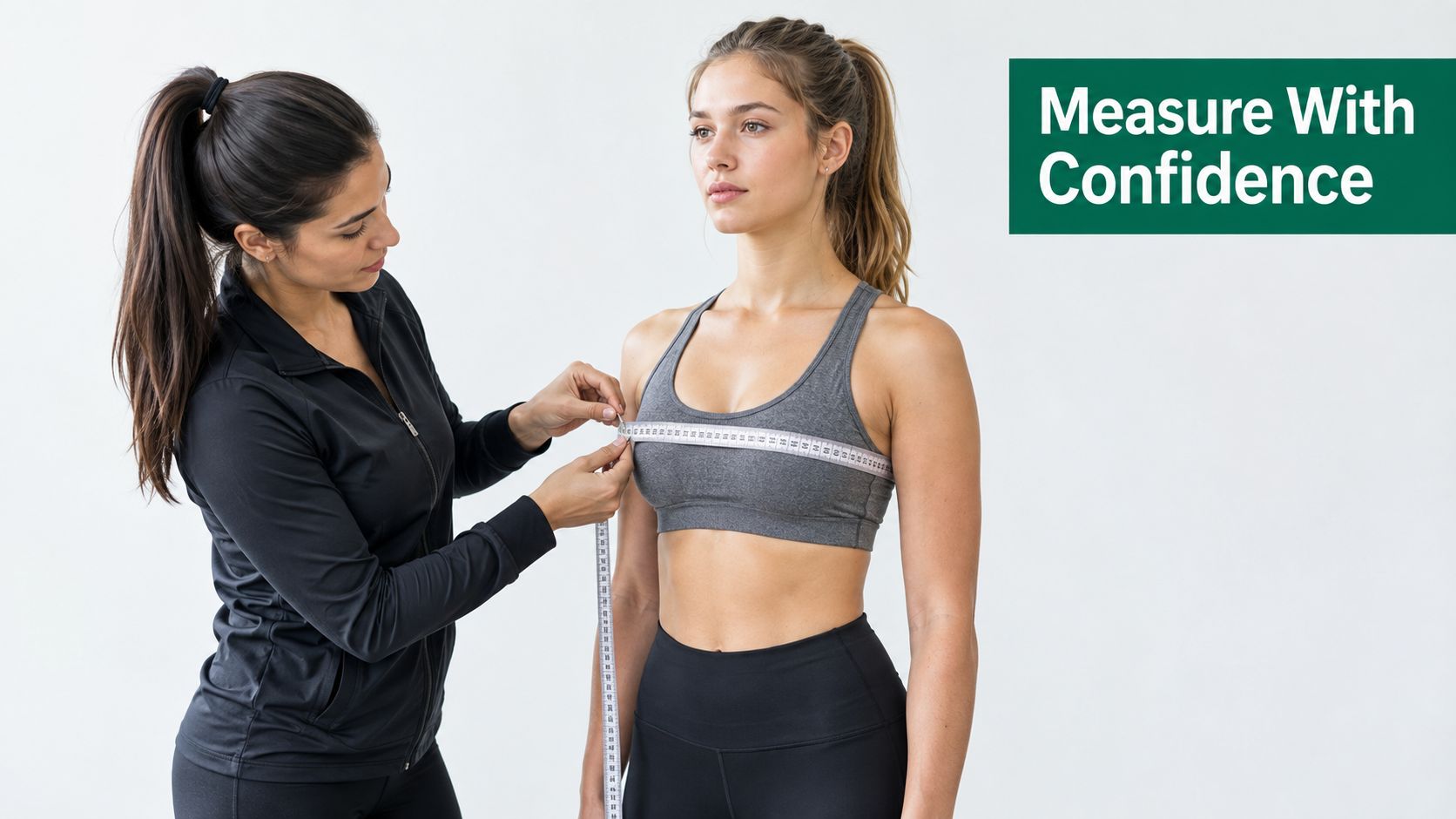
Measure the body points that actually matter
Start with chest at the fullest point, then waist at the natural bend and hip across the widest seat. For tops, also record torso length from shoulder to hem and sleeve from shoulder bone to wrist. For bottoms, record the inseam from crotch to ankle.
That sounds tedious until a team gets the wrong cut and spends the event tugging at hems or sleeves. If you need a simple reference for how to order the right shirt sizes, the rule stays the same, size the wearer against the garment, not against memory.
Do not build the sizing file from guesswork. Use the manufacturer's size chart, measure a garment the wearer already likes, and confirm the fit with a sample order or size-set pilot before the full run. For teamwear, standard measures like chest width, body length, shoulder width, waist, inseam, and sleeve length keep the order grounded, and a sensible tolerance keeps small variation from turning into a fit problem. A single, clean process for team uniform sizing and QC avoids the most common mistakes.
That tolerance matters because fit preference changes the result. A slim polo and a relaxed caddie bib can share the same chest number and still fit very differently. A coordinator who ignores that distinction ends up with an order that is technically correct and practically wrong.
Use one shared measurement form, ask for photos of each wearer standing straight, and require one final confirmation before production starts. For adult caddie sizing, follow adult sizing for caddie uniforms so the group stays on one sizing system instead of three different opinions.
A fit kit is not overkill. It is the cheapest way to catch a bad assumption before it turns into a return pile.
Comparing Personalization Options
Personalization should serve the garment, not dominate it. A raised embroidered crest on a structured polo makes sense. The same treatment on a light jersey can look bulky and overbuilt. A removable nameplate can save a roster that changes every season, while a permanent mark makes sense for repeat wear and stable teams.
Choose the method by wash cycle and turnover
Embroidery earns its cost on polos, caps, and structured pieces that get washed regularly and need a polished, professional mark. It has a slower production rhythm and usually requires setup work tied to stitch count, so it's a better fit for stable rosters than for last-minute novelty runs.
Sublimation fits polyester jerseys and lightweight performance pieces when the design calls for full coverage, gradients, or bold color without added weight. It becomes part of the fabric look, so it avoids the raised feel that embroidery can create on thin garments.
Heat transfer print is useful when the design is small, flexible, or tied to a limited run. It can work well for names and numbers, especially when the surface is smooth and the use case doesn't demand a heavy-duty finish.
Sewn-on patches give a heritage feel and tend to survive repeated laundering when they're stitched properly. They suit logos and emblems that need a more classic look.
Removable hook-and-loop nameplates and similar interchangeable pieces solve the turnover problem. They are practical when kids age out, roles shift, or the same uniform needs to be reassigned without ordering a whole new garment.
The broader reason personalization matters is obvious. Buyers want identity, not just coverage. The same instinct shows up across modern retail, where modern shopping personalization is now expected rather than optional, and teamwear follows that same logic. Caddie Uniform fits into that category with custom caddie uniforms, bibs, hats, and removable patches for adults and children, which makes it relevant for orders that need reusable identity markers instead of permanent names.
| Method | Best For | Durability | Upfront Cost | Lead Time |
|---|---|---|---|---|
| Embroidery | Polos, caps, structured pieces | High on the right fabrics | Higher | Slower |
| Sublimation | Polyester jerseys, full-color designs | High when used correctly | Moderate | Efficient on repeat runs |
| Heat transfer print | Small runs, names, numbers, flexible use | Moderate with proper care | Lower to moderate | Usually faster |
| Sewn-on patches | Heritage logos, classic looks | High | Moderate | Moderate |
| Removable nameplates | Youth rosters, rotating teams | Depends on attachment quality | Moderate | Moderate |
The smartest buyers match the method to wash frequency and roster churn. If the same group will reorder every season, lock in a method that can be repeated. If the group changes every year, removable personalization is the cleaner call.
Running the Order From Quote to Delivery
A clean order lives or dies on checkpoints. A vague quote request wastes time. A sloppy proof creates corrections. A silent production phase breeds panic. Buyers need a process that forces accountability at each handoff.
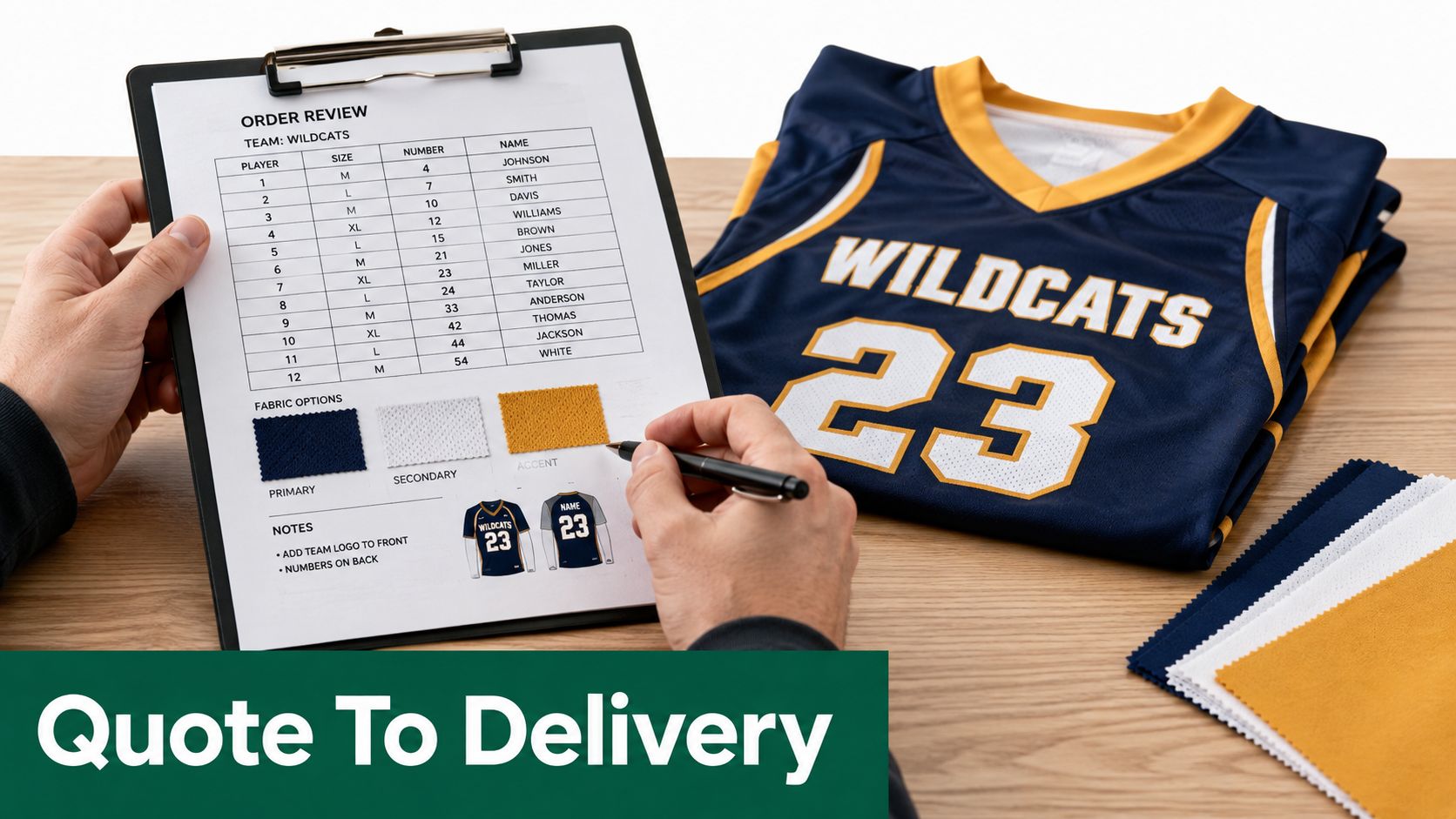
The five checkpoints that keep an order honest
Checkpoint 1, the quote request. Send a roster, size list, vector artwork, and placement notes. If you skip specifics, expect back-and-forth that slows the order before it starts.
Checkpoint 2, the digital proof or sample swatch. Treat the first proof as a working draft. Check kerning, thread color, logo scale, and placement right away. Slow replies create more delay than design edits.
Checkpoint 3, the production sample. On larger orders, a real sample is worth the fee. It shows fabric hand, stitch behavior, and how the decoration sits on the actual garment.
Checkpoint 4, bulk production. Watch for swapped fabric weights, missed ETAs, or long silences. If five business days pass without a real update, ask for a status check instead of waiting.
Checkpoint 5, shipping and inspection. Open cartons right away. Count every unit and photograph defects the same day. Fast documentation keeps claims alive.
Practical rule: no order should leave the proof stage without a named person approving size, artwork, and decoration placement in writing.
For a full ordering checklist, see custom golf uniforms guide. The same discipline applies when a team order includes hats, bibs, and accessories that all need to arrive looking like one set.
The linked guide on custom golf apparel is useful here because it reflects the same discipline, matching the apparel to the use case instead of treating the uniform as a generic garment.
Reorder logistics should be built during the first order, not after it. Keep the final artwork, approved size roster, and decoration notes in a standing file so a later swap takes hours instead of weeks. The order is smoother when the buyer expects to reorder and plans for it from day one.
Solving the Mixed-Age Mixed-Body Ordering Problem
A mixed-age order almost never fits everyone on the first pass if the buyer treats the roster like one body type. A youth cut, adult unisex, and tall or plus-size pattern each live in different size blocks, so one chart for everyone creates returns before the package is even opened. The fix is to split by body profile, then unify the look with one logo system and one color palette.
Stop ordering by team name alone
A family reunion team, a youth league squad, and a corporate outing group all sound like one order on paper. In practice, they're three fit problems stitched together by a shared event. The right move is to sort wearers into youth, standard adult, tall, and extended sizes before the quote is finalized.
That doesn't make the order more complicated, it makes it honest. A short sizing survey sent two weeks before ordering should ask for height, chest, and preferred fit, which tells the coordinator more than an old shirt label ever will. The moment fit preference is collected, the buyer can separate slim, regular, and relaxed wearers before production starts.
Removable personalization helps this problem too. Nameplates, patch systems, and other swap-friendly elements let a garment stay in rotation even when the wearer changes. Zip-off sleeves and stretch-waist bottoms play the same role for growing kids or mixed groups that need more adjustability.
Use a shared look, not a shared size
- Youth wearers: Keep cuts shorter and avoid assuming they can size down into adults' pieces.
- Tall adults: Route them into the long or extended pattern instead of forcing size-ups.
- Curvier bodies: Check chest and hip separately, then choose the cut that respects both.
- Gender-neutral teams: Choose a block that fits the broadest group cleanly, then adjust with size runs and fit samples.
The important shift is mental. A mixed-age order is not one blanket purchase. It is three small orders joined by one logo, one color system, and one delivery plan. The team looks unified because the sizing is handled separately, not because the coordinator hoped everyone would fit the same chart.
Your Pre-Order Checklist and Timeline
The next 24 hours should be used to lock the order, not keep browsing. Confirm the wearer count, gather measurements, choose the fabric and decoration pairing, and decide whether the group needs permanent personalization or removable pieces. If those four decisions are still open, the order is not ready.
A practical 14-day ordering window
Day 1: Lock the roster and the measurement sheet.
Days 2 to 4: Finalize artwork and approve the logo layout.
Days 5 to 7: Review a sample garment or sample swatch.
Days 8 to 10: Authorize production.
Days 11 to 13: Complete quality checks and packing.
Day 14: Ship and inspect on arrival.
The two biggest schedule killers are late measurement returns and missing artwork approvals. Both look minor at the start and both can push a delivery past the event date. A coordinator who waits for “just one more response” is usually the one who ends up paying for rushed fixes later.
Printable pre-order checklist
- Roster: Every wearer listed with role and size block.
- Measurements: Chest, waist, hip, length, and inseam recorded.
- Fabric choice: Matched to heat, motion, and wash frequency.
- Personalization method: Chosen for durability and roster turnover.
- Sample approval: Written confirmation saved before production.
- Payment terms: Clear and settled before work starts.
- Shipping method: Confirmed against the event date.
- Reorder plan: Final artwork and size file archived.
The strongest orders are boring in the best way. Every choice is documented, every name is attached to a size, and nobody has to guess after the proof is approved.
A sensible buffer also matters. Keep 15 percent buffer stock in the sizes that move fastest, and keep a standing file for the final measurements and artwork so a swap or reissue doesn't require rebuilding the order from scratch. That one habit saves time on every future run.
If the goal is a caddie-style or team uniform order that fits mixed ages, mixed bodies, and repeat events, Caddie Uniform is built around that reality with custom bibs, hats, patches, and size ranges for kids and adults. Visit Caddie Uniform to start a custom order with the fit, personalization, and reorder structure already sorted.


