

A committee has a course date on hold, a fundraising target, and a deadline to confirm the plan. One member proposes mulligans; another asks whether a raffle will be enough. The missing decision is the format. It determines who pays, who attends, who staffs the day, and what guests remember when renewal time comes.
Strong charity golf tournament ideas work as operating plans. Each needs a clear buyer, an assigned owner, a realistic cost line, and a way to identify people on the day. Caddie bibs, uniforms, hats, and removable patches can give volunteers, junior helpers, and teams a visible identity. Use them to connect the event's activities, not as decoration or a substitute for a fundraising plan.
The scale is substantial. The National Golf Foundation's charitable impact report estimates that golf generated nearly $4.6 billion for charitable causes in the United States in 2022, across more than 141,000 charitable events at golf courses nationwide. The report puts the average event's fundraising at approximately $29,500. Sponsorships, field size, auctions, and donor engagement all affect the result, so choose formats with costs and staffing needs the committee can manage.
1. Caddie-for-a-Day Auction
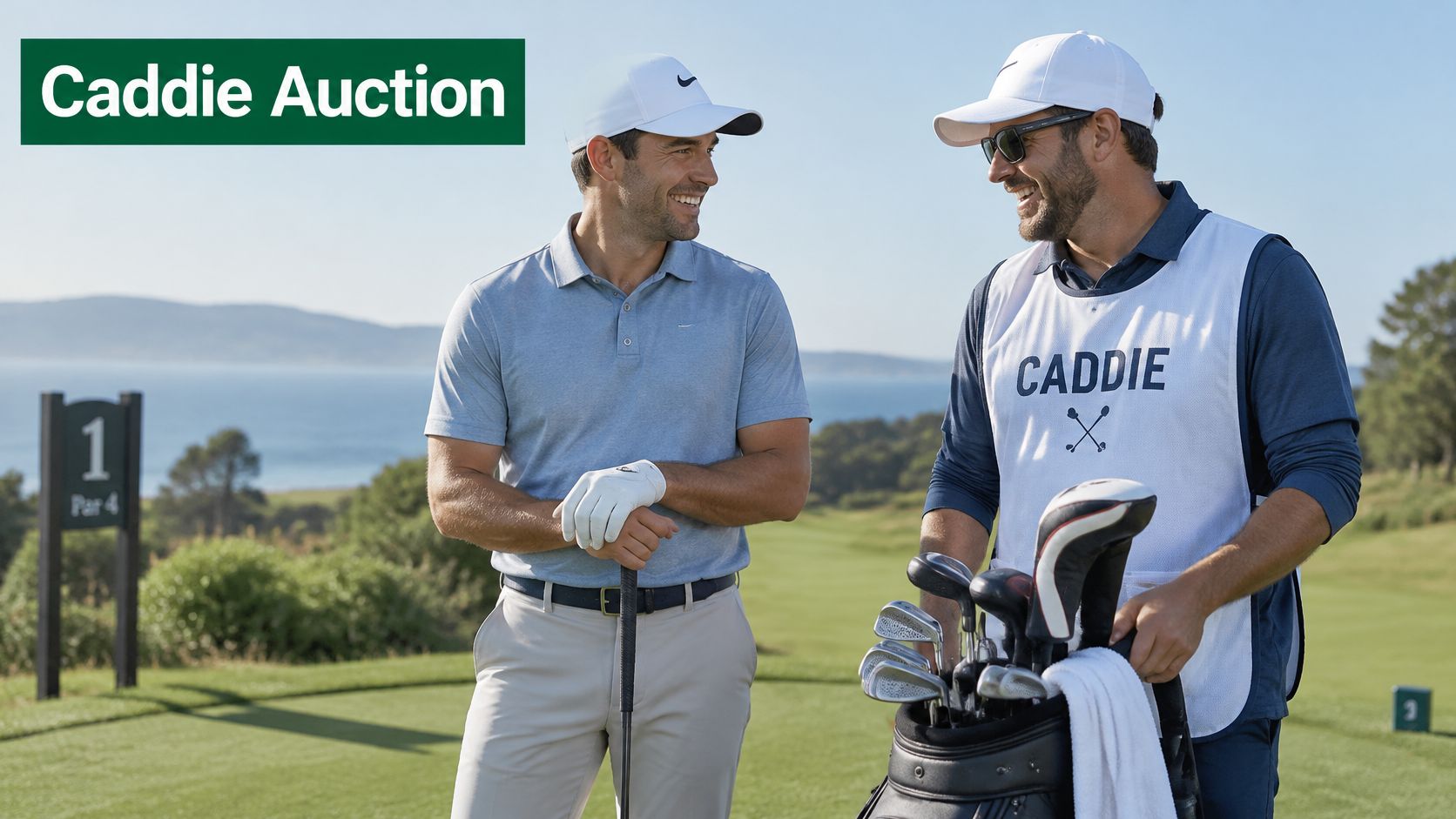
A signed print sits on a silent auction table and waits. A caddie-for-a-day experience does something different. It puts a donor, board member, local sports figure, or club professional inside the round, walking with a foursome, reading putts, posing for photos, and giving the winning team a story they'll retell at dinner.
The lot works best when the committee sells a defined experience, not a vague appearance. State whether the guest caddie carries a bag, rides in a cart, offers swing tips, or hosts the group. Confirm availability, course rules, and insurance before the item is listed. A celebrity who cancels, or a course that won't allow an extra person in the group, turns a premium lot into a refund problem.
Make the Winner Look the Part
Order the uniform or bib after the winning bidder confirms size, and include a long option for tall participants. A named bib photographs well at the first tee and again on the 18th green, which gives the charity usable content and gives the bidder a keepsake. That's a practical reason to brief a photographer rather than hoping someone captures the moment on a phone.
Committees reviewing how to choose memorable nonprofit auction items should note the trade-off here. Experience lots can outperform objects, but they require scheduling, consent for photos, and a backup plan if weather shortens play. Keep the lot scarce. One or two caddie experiences usually create more bidding tension than a long list of similar packages, and scarcity also protects the guest from being overbooked across multiple groups during a shotgun start.
2. Sponsored Hole Program
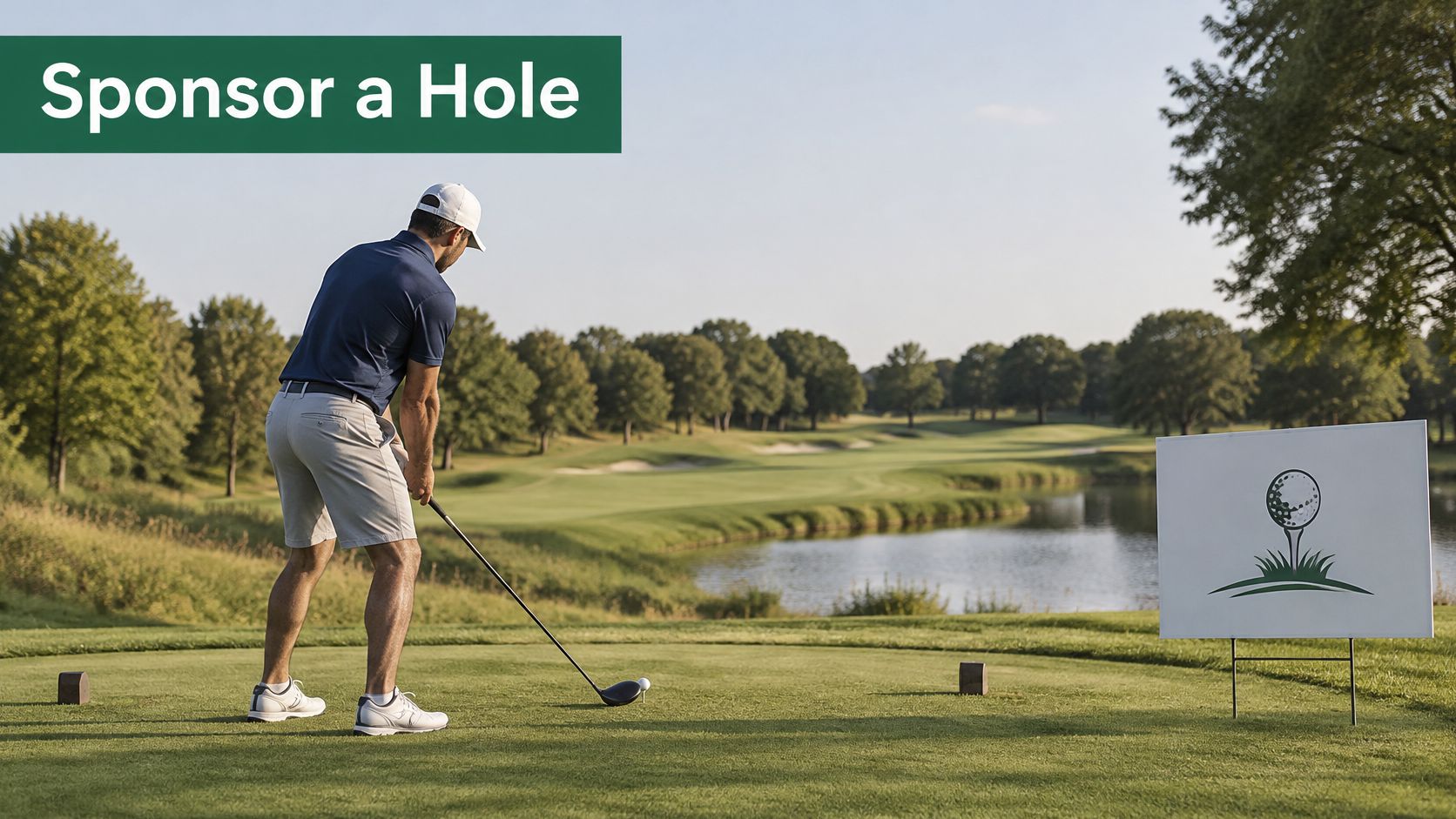
Hole sponsorship is the least glamorous item on this list and often the most dependable. A local business understands it in seconds. The sponsor pays a set fee, receives a sign at a tee box, gets listed in event materials, and hears a public thank you. No auction paddle, no complicated rules, no need for the donor to play well.
The operational risk is sloppy fulfilment. A misspelled company name, a sign left in storage, or a logo stretched beyond recognition tells the sponsor the charity wasn't careful with paid recognition. Assign one volunteer to walk the course before the first tee time with a printed placement list. That volunteer checks spelling, position, and visibility, then photographs each sign for the sponsor report.
Sell It Early and Thank Sponsors Properly
Use a one-page sponsorship sheet with pricing, benefits, artwork deadlines, and payment instructions. Offer an early commitment incentive if the budget can absorb it, because signed sponsors reduce pressure on player registration. Post a thank-you within 48 hours of payment, not weeks later when the sponsor has forgotten the transaction.
Recognition shouldn't end at the tee. Committees considering options for choosing sponsor appreciation plaques should weigh cost against repeat value. A modest plaque or framed team photo can sit in a sponsor's office all year, while a generic certificate often disappears. The cheapest option isn't always the best renewal tool.
3. Closest-to-the-Pin and Long Drive Contests
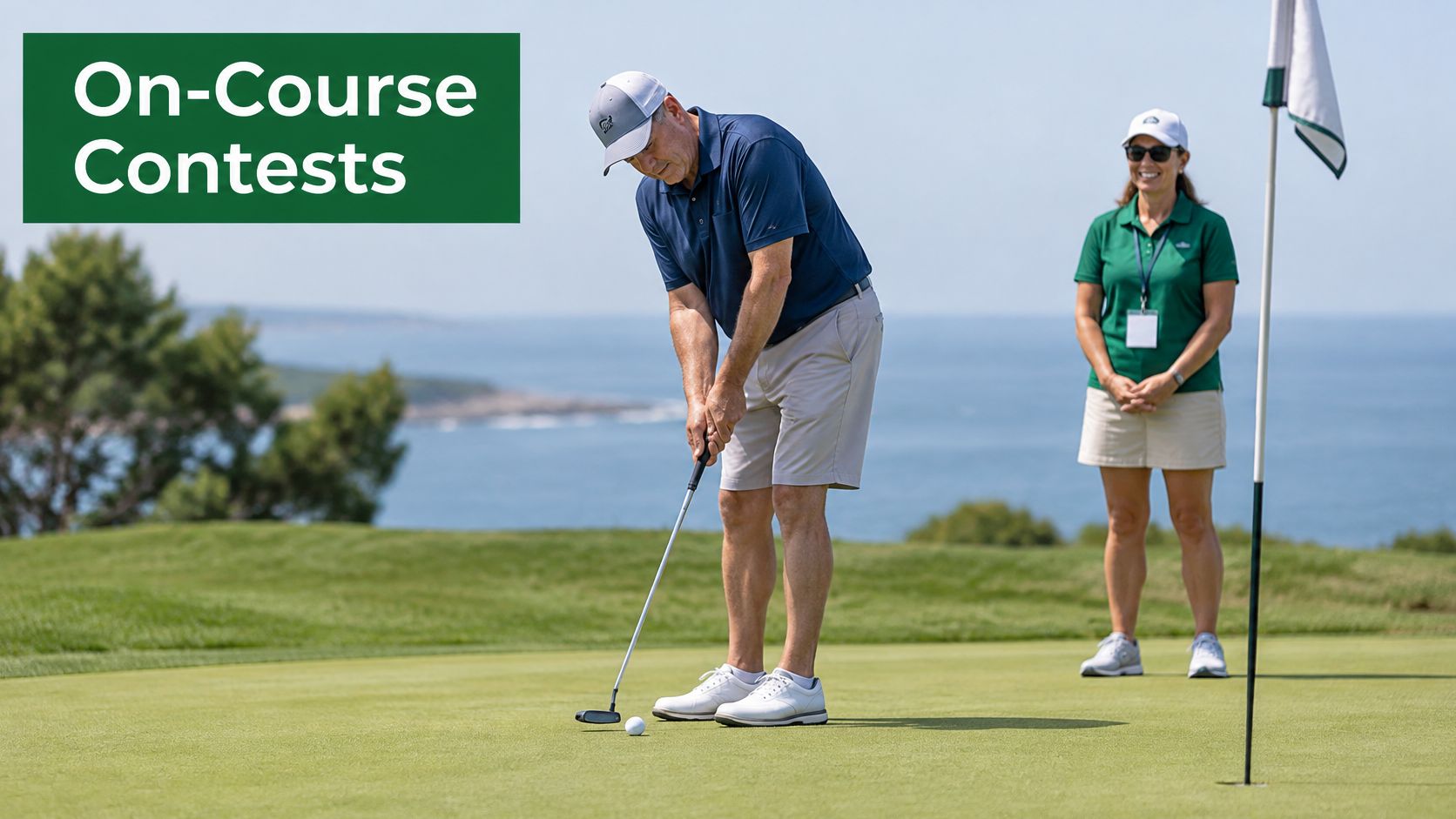
A scramble can feel flat by the turn if every hole asks the same thing of players. Closest-to-the-pin on a par 3 and long drive on a wide par 5 break up the round and give weaker teams a separate chance to compete. A small entry fee per attempt keeps the decision easy, and a sponsored prize keeps the charity from buying rewards out of entry income.
These contests fail when nobody owns the measurement. Put one volunteer on each contest hole with a tape, a marker, written rules, and authority to settle disputes on the spot. Record the leading name clearly and update a clubhouse leaderboard after play. If the marker moves and no one saw it happen, the argument costs more goodwill than the contest earned.
Insure Big Prizes and Protect Pace of Play
A car or holiday for a hole in one draws attention, but the prize shouldn't be announced before insurance is quoted and bound. Start that process at least two months out and check the required tee distance, witness rules, and eligibility wording. Insurers write those conditions for a reason, and a winning shot from the wrong tee box can void the payout.
- Keep attempts quick: Limit paid retries so groups don't stack up behind a contest hole.
- Separate divisions where needed: Different tees or categories stop one long hitter from ending interest early.
- Announce winners at dinner: Public recognition gives the prize sponsor value beyond a sign.
4. Themed Dress-Up Contest (Best-Dressed Caddie)
A dress-up contest only works if teams know the theme early enough to act on it. Announce the Best-Dressed Caddie contest at registration, repeat it in confirmation emails, and show one example photograph so players understand the standard. Matching white coveralls or bibs with green accents give groups a shared look without asking every player to invent a costume from scratch.
Judging needs a rubric before the first team arrives. Score creativity, coordination, and fidelity to the theme, and decide whether judges or guest votes decide the winner. Guest voting drives phone engagement, but it also rewards the largest social circle. A small judging panel is easier to defend when a competitive team asks why it lost.
Committees can point registered teams toward golf costume ideas for tournament themes while they plan sizes and colours. The practical step is collecting names, numbers, and sizes as a team order rather than as four separate purchases that arrive in mismatched shades.
Avoid One-Day Waste
Reuse rule: Removable nameplates, numbers, and sponsor patches let the same bib or uniform work next year, while a fully printed one-event outfit often becomes storage clutter.
That matters beyond tidiness. The 2024 WM Phoenix Open Sustainability Report reported a 99.6% landfill-diversion rate and a goal to reduce greenhouse-gas emissions 50% from its 2022 baseline by 2030. A small charity can't copy that infrastructure, but it can order accurate sizes, avoid speculative extras, and publish a team photo gallery that gives the apparel a second life in next year's promotion.
5. Pro-Am Format with a Celebrity or Touring Pro
A pro-am sells access. Amateur players pay a premium to play alongside a touring professional, a respected club pro, or a celebrity whose name helps fill the field and attract sponsors. Events such as the AT&T Pebble Beach Pro-Am show the model's visibility, but a local charity doesn't need a national broadcast name to use the format well. It needs a guest donors are eager to meet.
Start booking 9 to 12 months ahead and put the obligations in writing. The agreement should cover arrival time, number of holes, meet-and-greet duties, photo permissions, media interviews, travel costs, and what happens if the guest withdraws. Verbal goodwill isn't a schedule. If the charity sells premium foursomes around a name, that name becomes part of the product.
Price the Experience Honestly
Do the maths before setting the entry fee. Appearance costs, hospitality, extra photography, and lost regular foursome slots all reduce the headline revenue. A smaller field with premium pricing can net more than a packed course where groups barely see the guest.
- Limit pro-am groups: Scarcity protects both price and pace of play.
- Brief the guest caddies: Matching bibs or hats make official groups easy to spot in photos.
- Schedule one group photo stop: A planned stop at a scenic tee beats random requests on every hole.
- Prepare a substitute plan: A clinic, putting session, or dinner appearance can salvage value if weather cuts play short.
The keepsake should match the price. A signed hat or limited-edition caddie uniform makes sense for premium entrants, while a standard gift bag can make the upgrade feel thin.
6. Junior Golf Clinic and Kids' Caddie Race
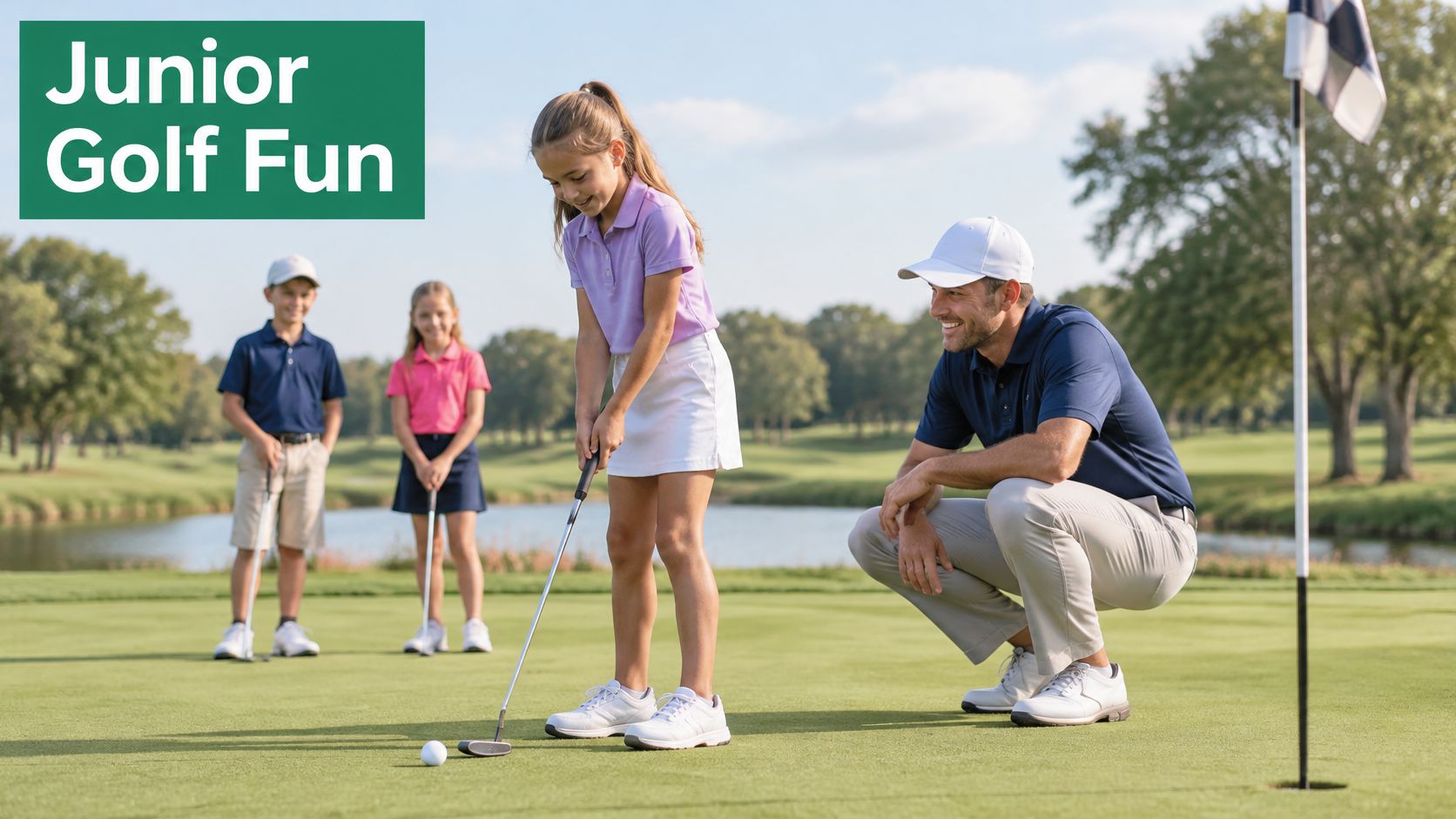
Parents who won't enter an 18-hole scramble may still buy a family ticket if their child has something real to do. A junior clinic, putting contest, or short caddie race brings families onto the property, supports a youth beneficiary in a visible way, and gives non-playing adults a reason to stay for lunch, raffles, and the awards presentation.
Partner with a local youth golf program for instructors rather than asking untrained volunteers to teach swings. Collect waivers and emergency contacts at check-in, set a clear adult-to-child supervision arrangement, and keep the clinic away from cart traffic. Family bundle pricing works when it covers instruction and food without discounting the adult field into a loss.
Design for Beginners, Not Just Young Golfers
The R&A Global Participation Report material counted 112.2 million adults and juniors playing golf in all forms outside the United States and Mexico, including 47.1 million juniors, and recommends welcoming environments and accessible price structures for beginners. Shorter tees, simple rules, and patient coaching turn that recommendation into practice.
Stock youth sizes from toddler through age 12 if children will act as honorary caddies, and use golf apparel guidance for kids when building the size list. A child in an oversized adult bib looks like an afterthought. A fitted junior uniform signals that families were planned for, not squeezed in.
7. Corporate Team Sponsorship and Branded Foursomes
Corporate foursomes are where repeat revenue usually lives. A company buys a team, hosts clients or staff, receives a hole sign and meals, and gets recognised at the awards ceremony. If the day runs smoothly, the same company becomes the easiest renewal call next year. If check-in is chaotic and the team name is wrong on the cart sign, the charity has spent a year rebuilding trust.
Long-running events show why retention deserves that attention. The Halliburton Charity Golf Tournament report states the tournament began in 1993 and had raised more than $28 million for charitable programs by 2026. A local outing won't operate at that scale, but the lesson is transferable. Recognisable identity, sponsor inventory, and beneficiary updates give companies a reason to return.
Make Branding Easy to Approve
Collect team names, logo files, and uniform sizes at least four weeks before play. Send one proof, get one named approver, and lock the file. Endless logo revisions in the final week create rush costs and printing errors.
Teams planning removable sponsor identification can review custom logo patch options for branded apparel before committing to permanent printing. Removable patches suit sponsors that change year to year, while embroidered or printed logos suit a title partner with a longer agreement.
Corporate sponsors remember two things after the round, whether their guests were looked after and whether the charity reported back on the money.
Send a post-event impact report with funds raised, beneficiary use, attendance, and team photos. Add a returning-team discount only if the margin survives it. Loyalty pricing that erases profit isn't loyalty. It's a slow leak.
8. Virtual Golf Challenge with Peer-to-Peer Fundraising
Not every supporter can travel to the host course, and some donors who love the cause don't want a five-hour competitive round. A virtual golf challenge lets participants play locally or on a simulator, post a verified score, and raise pledges through a personal fundraising page. Each player becomes a fundraiser rather than just an entry fee.
That wider door fits how people already play. The National Golf Foundation golf industry research page reported that in 2025, 29.1 million Americans played golf on a course, while 19 million participated exclusively in off-course golf activities. A simulator division or off-course challenge gives that second group a credible way in.
Set Rules People Can Actually Follow
Score verification needs to be firm without becoming hostile. Accept a dated scorecard photo, a simulator summary, or a witnessed round, and state the deadline clearly. Publish weekly leaderboard updates so remote players don't register, post once, and drift away.
- Reward fundraising, not only scoring: A custom hat or patch for top fundraisers keeps weaker golfers competing.
- Give players copy to share: Short captions and a beneficiary fact make peer-to-peer pages easier to promote.
- End with a live finale: Invite top fundraisers and sponsors to an in-person putting final or awards reception.
- Protect the main event: Price virtual entry below on-course entry so it expands the field instead of cannibalising it.
The weakness is atmosphere. Remote players miss the dinner, the auction room energy, and sponsor contact. Plan digital sponsor mentions and a live-streamed total announcement so virtual entrants still feel counted.
How the eight charity golf tournament formats compare on purpose, revenue, and caddie uniform fit
Use this comparison to test each format against two constraints: the work it adds on event day and the identity it gives the tournament. Uniforms can help staff, teams, and participants look connected, but they add cost and require advance coordination. Bibs worn over regular clothes are a practical option for one-day activities; complete caddie uniforms suit full caddie programs and tournaments.
| Format | Main operational trade-off | Revenue reliability | Caddie uniform fit |
|---|---|---|---|
| Caddie-for-a-Day Auction | Requires a host to explain and manage the experience, plus clear scheduling with the winning bidder. | Depends on bids, so set a reserve or minimum before the event. | A complete uniform makes the experience identifiable in photos; confirm sizes and personalization before the day. |
| Sponsored Hole Program | Needs sponsor outreach, signage, and a volunteer to check each hole. | Sponsorships can be agreed before tournament day; bundled foursomes add coordination. | Bibs can identify volunteers without requiring a full outfit change. |
| Closest-to-the-Pin and Long Drive Contests | Each contest needs a staffed hole, clear rules, and a way to record results. | Entry fees and sponsored prizes can add income, but participation varies. | Bibs help players identify contest staff; assign enough volunteers to avoid leaving holes unattended. |
| Themed Dress-Up Contest (Best-Dressed Caddie) | Needs simple judging criteria and a time for judging that does not delay play. | Apparel sales are less predictable than a set registration fee. | Uniforms and hats establish the theme; personalization can distinguish teams or contestants. |
| Pro-Am Format with a Celebrity or Touring Pro | Requires advance coordination with the featured player and a schedule that accommodates them. | Premium fees and sponsorships depend on securing the draw early. | Matching uniforms support team identification and group photos; collect sizes before ordering. |
| Junior Golf Clinic and Kids' Caddie Race | Requires adult supervision, a defined activity area, and enough time between instruction and the race. | Family registrations and clinic fees depend on attendance. | Kids' uniforms or bibs make participants easy to identify; check sizes and have adults manage distribution. |
| Corporate Team Sponsorship and Branded Foursomes | Requires collecting company names and branding details before producing signs or apparel. | Confirmed team registrations and sponsorship packages provide clearer advance revenue. | Custom uniforms or bibs can carry names, numbers, and logos; allow time for approvals and production. |
| Virtual Golf Challenge with Peer-to-Peer Fundraising | Requires score-submission rules and someone to update the leaderboard. | Pledges and peer-to-peer donations depend on participants sharing their pages. | Hats or patches offer a lighter branding option; confirm how rewards will be distributed to remote participants. |
Pick the Format Your Donors Will Remember
A committee with limited volunteers can usually deliver two or three formats well. Choose them to suit the donor base: a business-heavy field may respond to sponsored holes and corporate foursomes, while a family-focused beneficiary may make a junior clinic a better fit. A virtual challenge can extend participation to supporters who are not near the course.
Start with the revenue schedule. Sponsorships and corporate foursomes can be sold and invoiced before tournament day. Contest entries, mulligans, and auction add-ons bring in extra income, but their totals are less predictable. Cover course fees, food, signage, insurance, and prizes with confirmed revenue; treat day-of spending as additional income, not a break-even assumption.
Set an owner and staffing plan for each format. Contest holes need volunteers, auction experiences need hosts, sponsor signs need checking, and junior activities need supervision and completed paperwork. A format without a named owner six weeks out is not ready to run.
Build One Recognisable Identity
Repeat events benefit from visual continuity. The National Golf Foundation's golf participation report reported that more than 8 million women and girls played golf on-course in 2025, a 46% increase from 2019. Offer apparel in a suitable range of sizes, shorter-format activities, and roles for supporters who are not entering the main field.
Caddie Uniform is one option for organisers looking for personalised uniforms, bibs, hats, or removable patches to identify teams and volunteers. Choose items according to how they will be used and reused: names, numbers, and sponsor marks should be easy to update between events. Set the apparel deadline four weeks out, check spellings against the registration list, and reserve a few blank pieces for late changes.
Put the operating plan on one page. For each format, record its revenue target, costs, owner, staffing, sponsor deliverables, and deadline. Include the beneficiary story for registration, the course, and dinner, so donors can understand where the money goes. Check the plan against the volunteer roster and remove any activity the team cannot staff well.
Charity golf tournament ideas work best when guests have a clear role, a fair price, and a good day, and can see what their money supports. Assign each task to a person and begin selling sponsorships before ordering decorations.
For tournament apparel that helps guests identify teams, junior caddies, volunteers, and auction winners at a glance, Caddie Uniform offers custom caddie uniforms, bibs, hats, and removable patches with name, number, and logo personalisation. Browse the options early, confirm sizes with registered teams, and plan a reusable look for next year.


