


The family photo is nearly planned: a golf-themed backdrop, coordinating clothes, and a baby who may need feeding or changing before the camera comes out. A tiny caddie outfit sounds right, but the practical questions arrive quickly. Will the bib bunch while the baby is held, will the hat stay clear of the eyes, and can the outfit come off without a struggle?
The most useful baby boy costume ideas begin with those questions, not with a basket of accessories. A recognizable golf look can stay simple enough for a family portrait, a birthday gathering, and another outing later.
Why Baby Boy Costume Ideas Start with Comfort
A family gathering can shift from photos to feeding, holding, and diaper changes in minutes. A costume should keep working through those ordinary moments, rather than needing constant adjustment.
For an infant, a short caddie bib over familiar baby clothes offers a practical starting point. The bib gives the outfit a clear theme, much like an apron signals a cook, while leaving the baby's usual clothes underneath. Choose a style that comes off easily, then add one removable detail, such as a patch, if the look needs more definition.
Choose for Everyday Care
During holding, the costume should stay reasonably positioned. During changes, parents should be able to reach the diaper without removing several layers. Between photographs, the baby should still look comfortably dressed.
These checks help separate a reusable costume from a one-night outfit. A bib that can be removed for care, then worn again for portraits, birthdays, or a later outing, has more uses than a design built around fixed decorations.
Keep the Base Simple
A plain bodysuit or other familiar layer can anchor the look. The bib supplies the caddie cue; removable patches let parents adjust the theme without committing the garment to one event. For broader ideas on adapting golf-inspired clothes for children, see this guide to golf apparel for kids.
Start with the bib and base layer, then check how the baby moves and rests in them. A coordinated hat can be considered separately, with fit and visibility checked before use. A simple base makes it easier to reuse the costume as the baby grows within the 0–3 month size range.
What a Caddie Look Means for Infants
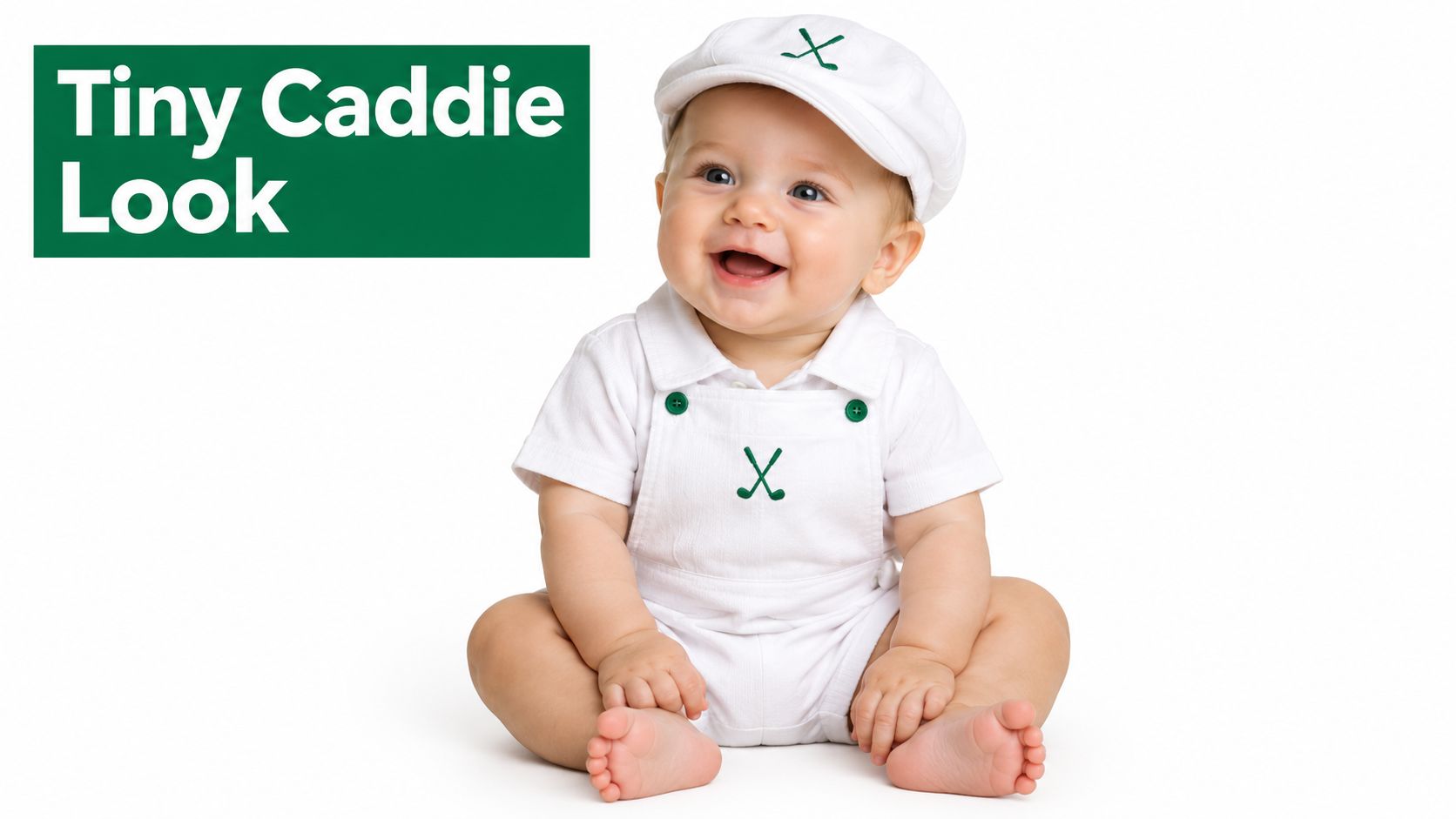
At a family golf photo, a white bib over familiar baby clothes can suggest a caddie uniform without turning the outfit into a one-night character costume. The bib is the main visual cue, much like an apron signals a chef. Green trim or a small patch can fill in the theme.
Build a Recognizable Shape
Start with a white bib over clothes the baby already wears. Add one green accent, then consider an adult-controlled removable patch if the outfit needs more detail. Treat the hat as optional. Each piece should come off easily, leaving a simple base outfit for another occasion.
For a 0–3 month look, familiar baby clothes beneath a short bib keep the costume recognizable without making it feel like a scaled-down adult uniform. Removable details also make it easier to adapt the same bib for a family photo, party, or another outing.
The bib should still read as a caddie outfit when the patch and hat are set aside.
Color Is a Choice, Not a Requirement
Historical clothing guidance did not establish blue as a timeless requirement for baby boys, so choose colors to suit the caddie theme and family preference.
White and green give the outfit a clear golf cue. Navy, pale blue, or a neutral base can sit underneath, while a brighter removable accent can suit a birthday or seasonal photo. Keeping the bib and base simple also makes the outfit easier to reuse.
For a coordinated photo series, parents may find this guide to keep Instagram photo edits consistent useful. Choose clothing that works on its own, then treat editing as a finishing touch.
Safety Rules That Shape Every Outfit
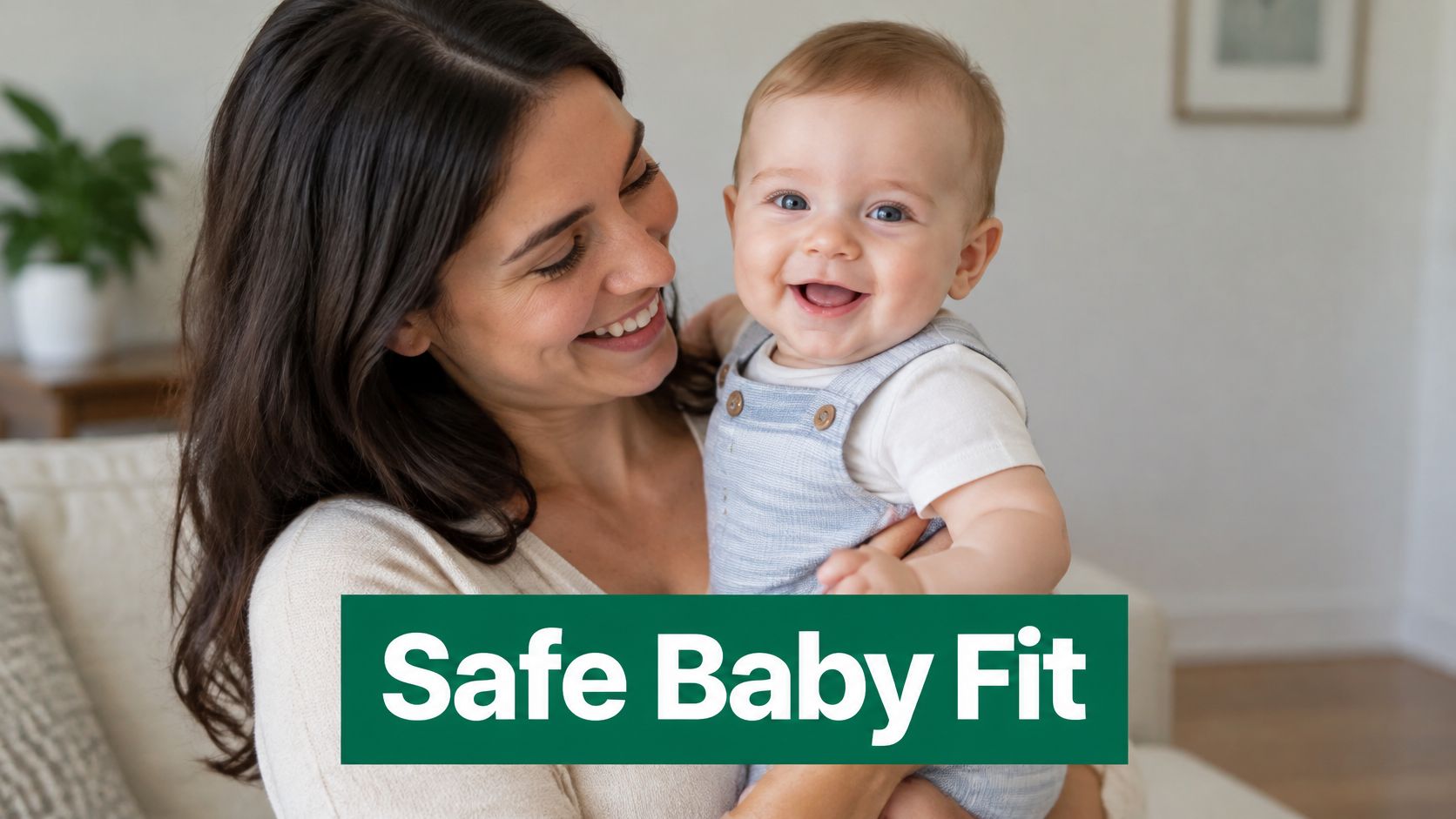
Before photographs, remove drawstrings, loose buttons, lifting appliqués, and cords. Keep removable patches out of the baby's reach. Position any hat so it does not block the baby's view or breathing, and remove costume layers before sleep or whenever they interfere with a car seat or ordinary care.
A short caddie bib over a comfortable base layer is easier to check than a trailing robe or cape. Use the costume for supervised, awake moments, then take it off when the baby needs to rest.
Check the Garment and Its Attachments
Run your hands over seams and closures, then check whether decorative pieces lift or come loose. A patch should be removable for washing or theme changes, but stored where the baby cannot reach it. If it cannot stay securely attached during wear, leave it off.
Check these areas before dressing the baby:
- Neck and hood: No drawstrings, long cords, or dangling straps.
- Decorative details: No loose buttons or appliqués that can be pulled away.
- Hat: The brim should leave the face clear and allow easy breathing.
- Closures and seams: Fastenings should hold, with no loose threads or rough edges.
Treat Clothing Claims as a Starting Point
Clothing labels and sales descriptions do not replace a hands-on inspection. Little Venture Co. explains clothing claims, but parents still need to check the actual garment, its attachments, and how it sits on the baby.
United States clothing rules set flammability requirements for children's garments. Some sleepwear exemptions depend on garment dimensions and age labeling; an exemption does not mean costume clothing is suitable for infant sleep.
Keep the outfit for awake, supervised wear. Remove it before naps and whenever layers or accessories interfere with safe car-seat use, feeding, or routine care.
Sizing Baby Caddie Bibs for More Than One Day
For a family photo, a caddie bib may fit neatly over a onesie. At the next wear, a different layer underneath can change how the same bib sits. Choose for the clothes the baby will wear, not just the age printed on the label.
A little room can allow for different underlayers. Too much fabric can shift, bunch, or drag. Parents should avoid garments that restrict movement or are loose enough to shift, bunch, or drag, and should test the fit over the clothing the baby will wear underneath.
Photo-Day Fit Versus Repeat-Wear Fit
| Fit approach | What parents should look for | Reason to reject it |
|---|---|---|
| Photo-day fit | Comfortable neck opening, smooth torso, accessible closures | Pulling, compressed layers, or difficult fastening |
| Repeat-wear fit | Modest room through the body without unstable edges | Gaping neckline, hanging fabric, or a dragging hem |
| Gift purchase | Measurements checked with the caregiver near the occasion | An age-label guess without checking the child |
A reusable bib can work with different base layers, much like an apron worn over changing clothes. For a reusable bib, check the neck opening, shoulder or side position, and overlap without assuming the age label guarantees a fit. If the outfit underneath changes, check the bib again.
For a short coverall, the base layer and costume move together. Check torso length, inseam or leg clearance, snap access, and diaper access while the baby is held and moving. A short sleeve may matter less than a tight torso or neck, while a longer body is a poor fit if it gathers around the legs.
Check the Garment in Ordinary Positions
Try the outfit with the baby's intended underlayer, then check it while holding the baby and allowing natural movement. Closures should open without a struggle, and diaper changes should not require pulling the garment through a narrow opening.
Age categories vary across infant clothing, so compare the garment's measurements with the baby's current fit. Extra room is useful only while the outfit stays comfortable and does not interfere with movement.
A bib may suit more than one outfit because its base layer can change independently. A coverall needs a closer check of overall length, since its upper and lower sections are joined.
A caddie bib can be a repeat-wear costume, not just a one-day photo prop. For a birthday followed by Halloween, check the fit again before each wear. A hand-me-down or later fan outfit is possible only if it still fits comfortably when the occasion arrives.
Hat Pairings and Simple Theme Adaptations
A family can reuse a white caddie base without recreating exactly the same photograph. Changing the surrounding colors or an adult-controlled detail can distinguish a tournament picture from a birthday portrait.
The accessory limit can remain simple: an optional soft hat and a flat decorative detail, with either omitted when unsuitable. The baby doesn't need to carry golf equipment to make the theme understandable.
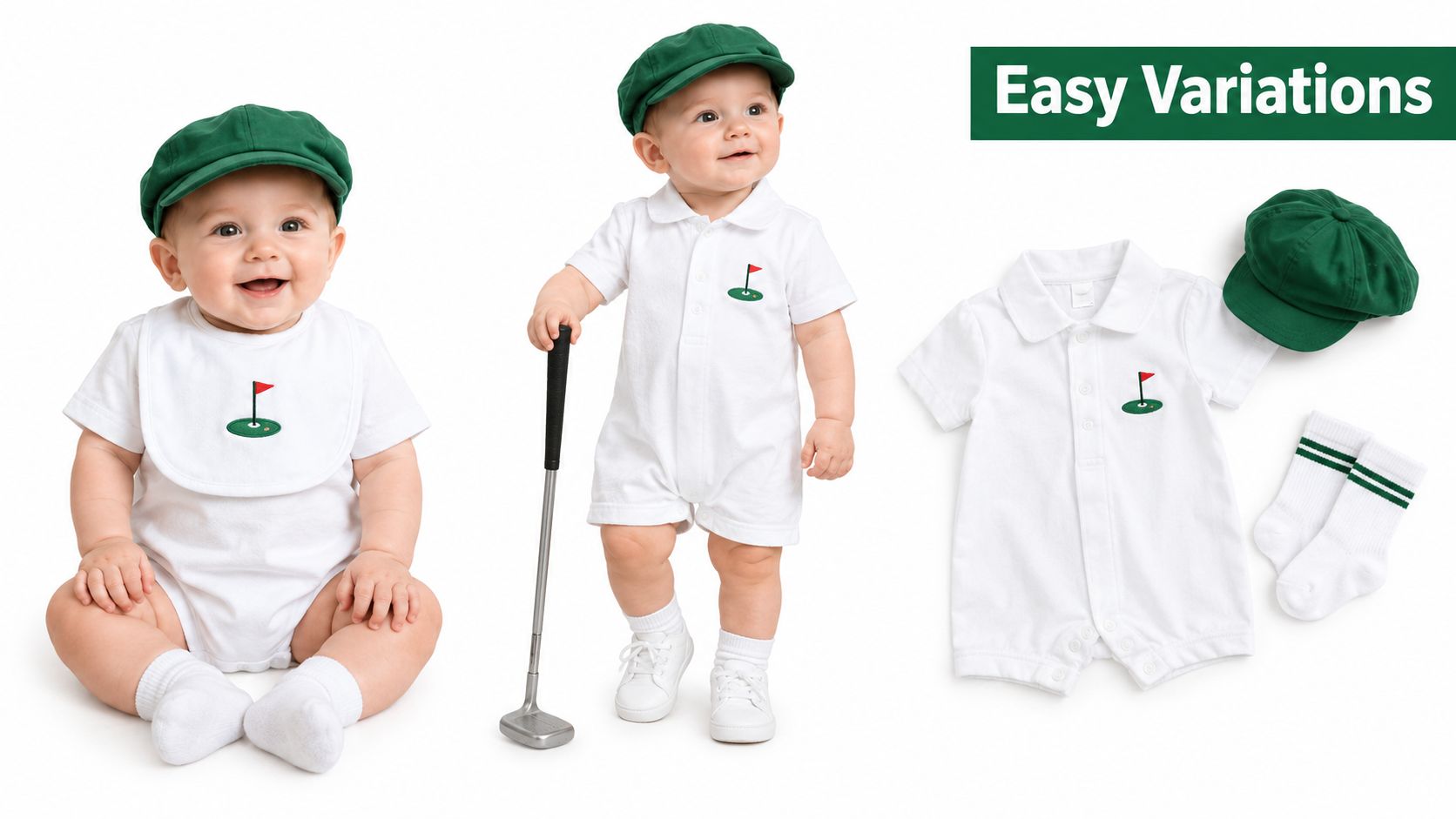
The photograph above can serve as a clothing reference, but the club isn't a recommended infant accessory. Clubs, balls, and hard putter props belong with an adult or outside the frame, not in the baby's hands.
A Tournament-Inspired Family Photo
For a classic interpretation, a white bib and green cap provide enough direction. An adult's coordinating outfit can carry the more detailed golf references.
If the hat slips, the portrait can proceed without it. A parent holding a coordinating cap elsewhere in the composition can preserve the color connection without repeatedly repositioning it on the baby.
A Birthday with a Family Connection
A place-themed or family-themed hat can connect the infant's outfit to the celebration. An adult can wear the more elaborate version while the baby keeps the plain white base.
The styling doesn't depend on matching every item exactly. A shared accent color can look deliberate without adding another piece to the infant's clothing.
- For a location theme: A coordinating adult hat can establish the reference.
- For a family portrait: Parent and baby can share colors rather than identical accessories.
- For a name detail: A removable nameplate can appear only while an adult controls its placement.
A Seasonal Change Without Rebuilding the Costume
An orange undershirt or a seasonal patch can shift the same white base toward Halloween. A securely sewn flat appliqué is another possible adaptation, provided the finished garment passes the earlier attachment inspection.
An orange uniform is an alternative when the family prefers the seasonal color throughout. There's no need to combine every seasonal detail at once.
The newborn photo-shoot ideas gallery can help parents consider backgrounds, family coordination, and framing before choosing accessories. Inspiration should guide the composition, not override the individual baby's needs.
Before the camera comes out, the caregiver should inspect the seams and decorative details again. A simpler finished picture is preferable to an outfit that requires constant hands-on correction.
How to Choose a Ready-Made Caddie Outfit
A ready-made purchase should solve a specific problem. Parents planning a brief portrait may need only a themed layer, while a family arranging coordinated outfits may prefer a complete uniform.
The decision is easier when the base garment comes before personalization. A name or logo can refine a suitable outfit, but it can't compensate for awkward access or an unsuitable silhouette.
Three Ways to Build a Baby Caddie Costume
| Option | Best for | Watch-out |
|---|---|---|
| Customizable kids' caddie bib over familiar clothes | A quick photo or changing the base layer between occasions | Check that the bib stays positioned and doesn't gather |
| Short personalized coverall | A cohesive outfit for a planned event or sibling set | Confirm body length, opening placement, and diaper access |
| Plain white one-piece with an adult-controlled removable patch | A minimal DIY interpretation using existing clothing | Check attachment compatibility and keep the patch inaccessible |
For a fast photo, the bib is a practical starting recommendation because the baby can wear familiar clothes underneath. For a longer gathering, parents should choose between bib and coverall according to the actual garment's comfort and access, not assume the more complete uniform is automatically better.
The guide to choosing a golf caddie outfit provides broader context for comparing the garment types. Adult and group options matter here only when the family wants coordinated photographs.
Choose Personalization with a Purpose
The publisher's range includes customizable children's bibs and coveralls, names, numbers, logos, and removable Velcro nameplates and themed patches. Its white-and-green aesthetic can be paired with the Caddie Green Hat or place- and family-themed headwear, subject to suitable fit for the intended wearer.
Those choices serve different purposes:
- Name personalization: Connects the outfit to the child.
- A number or logo: Establishes a family, event, or golf-related reference.
- A removable detail: Allows an adult to change the theme without replacing the base garment.
Parents shouldn't assume every displayed hat, patch, or accessory suits an infant. Product selection still requires checking the individual item rather than relying on a coordinated product photograph.
For reading sales copy critically, Photo Speak's guide to product descriptions offers a separate reference. The purchase decision should rest on concrete information about construction, sizing, closures, and customization, not adjectives such as adorable or premium.
Plan the Next Wear Before You Buy
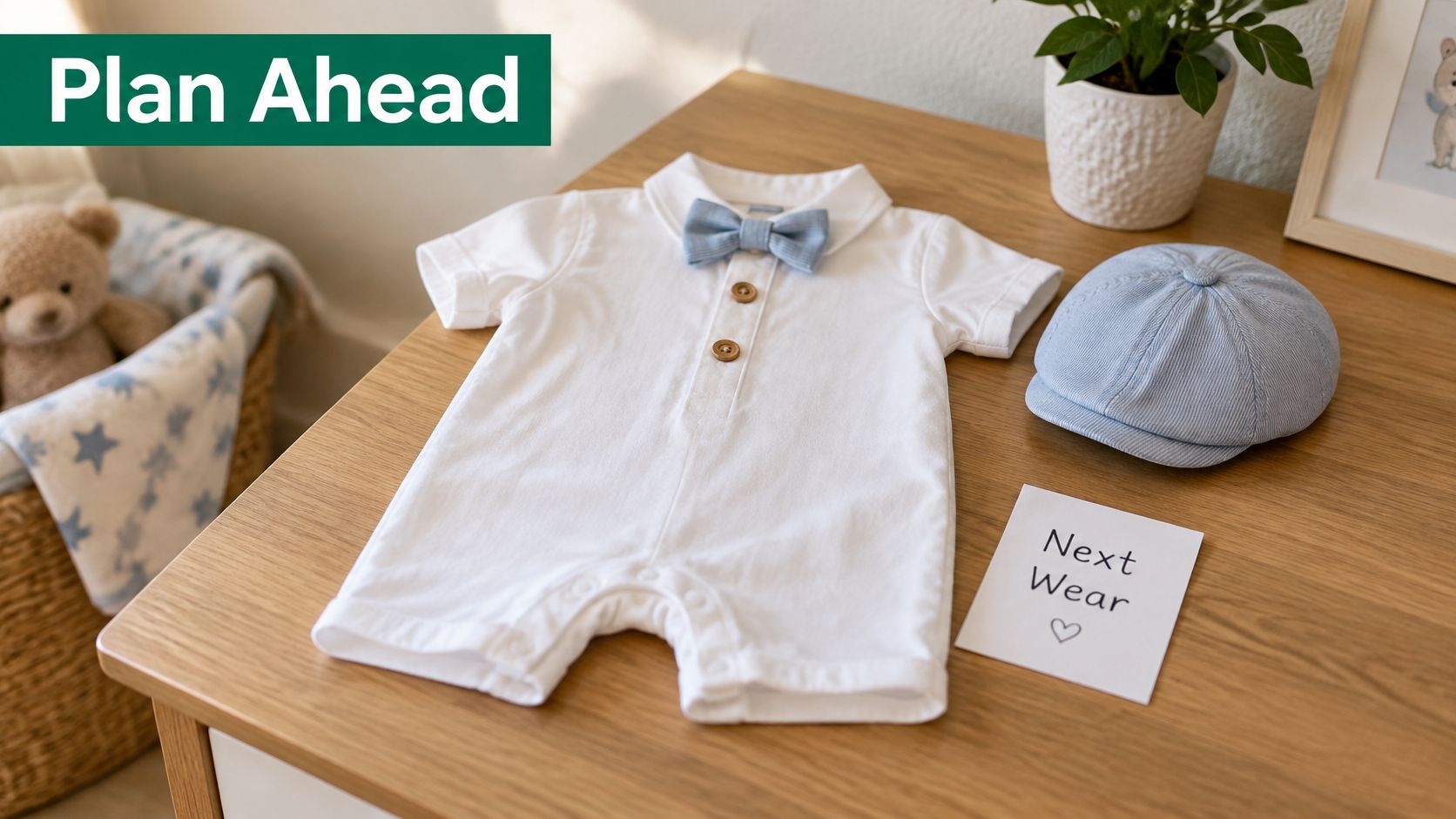
A reusable costume starts with an occasion that exists on the family calendar. A portrait next week and a possible celebration much later call for different expectations.
Parents can record the first event, the intended base layer, and the measurements needed for the retailer's chart before choosing personalization. A later outing should be treated as a bonus, not a reason to accept a poor fit now.
A Purchase Checklist That Keeps Decisions in Order
- Name the first occasion: Identify whether the outfit is for a short portrait, birthday gathering, Halloween visit, or golf-themed family event.
- Check current measurements: Compare neck, torso, and garment length with the infant size chart.
- Select the base: Choose the bib or short coverall before considering a hat.
- Limit customization: Select a name, number, or themed patch with a clear purpose.
- Plan storage: Designate an adult-controlled place for detached patches, away from the baby.
This sequence keeps the memorable detail from becoming the starting point. A personalized patch is easier to choose once the family knows which garment will carry it.
Put the Day's Routine Ahead of the Photograph
The caregiver can lay out the base clothes, costume, and optional hat in wearing order. The hat belongs at the photo moment rather than becoming something the baby must tolerate throughout the gathering.
Before stroller use, the adult should check for gathered fabric. Before car-seat travel, the costume should be assessed against the seat's instructions, with unsuitable layers removed rather than accommodated by changing the harness fit.
The earlier removal rules still apply when the baby becomes sleepy or the setting includes ignition sources. Parents should also keep ordinary replacement clothes available so the photograph never becomes a reason to continue with an uncomfortable outfit.
The useful keepsake is the photograph, not a requirement that the baby remain dressed for the theme.
After the event, the family can inspect the garment, follow its care instructions, and store detached personalization separately. Before another wear, fit should be checked afresh rather than assumed from the previous photograph.
Caddie Uniform offers customizable children's caddie bibs, coveralls, removable personalization, and coordinating hats for golf-themed baby boy costume ideas. Parents can visit Caddie Uniform, open the kids' sizing and customization options, confirm the infant fit, and choose a reusable white bib or suitable short uniform with an adult-controlled patch and a simple green hat if it fits appropriately.


