


A week before Halloween, many parents face the same standoff at the kitchen table. One child wants the character every classmate will wear, a younger sibling needs an outfit that won't drag on stairs, and the school party photo still has to make sense. The most useful kids Halloween costume ideas solve all three problems at once. They read clearly from across a room, let a child walk and sit without a struggle, and don't become useless the morning after.
Why Kids Halloween Costume Ideas Stall
At a school party, one child arrives in a character costume classmates recognize at once. On the walk home, though, a slipping mask or a cape catching on a car door can turn that excitement into repeated stops. For a younger sibling, a simpler outfit may need to fit a parade, porch steps, and a family photo without hiding the child's face.
The National Retail Federation's 2025 survey of Halloween spending and costume choices found 2.3 million children were expected to dress as Spider-Man, followed by princesses at 1.9 million, witches at 1.7 million, ghosts at 1.6 million, and favorite superheroes at 1.5 million. The survey projected $1.4 billion in children's costume spending, based on 8,045 consumers surveyed September 2 to 9, 2025.
The Gap Between Character and Classic
Character costumes are easy for classmates to recognize. Witches and ghosts are familiar to teachers, grandparents, and neighbors, even when a child does not explain the outfit. Either style can still make it harder to climb stairs, carry a treat bag, or sit cross-legged at a party.
A role-based outfit offers another route. A miniature caddie has a clear job to play, with a uniform, hat, and name or number on the back to make the idea legible in a quick porch photo. Because the look does not depend on a mask or loose cape, it can also work across different ages and sizes: adjust the fit, then remove or change the name, number, hat, or patch as the child grows or siblings take turns wearing it.
Costumes have long drawn on familiar figures and roles. Historical accounts of Halloween costume traditions trace costume wearing to older Celtic autumn festivals associated with October 31, and a Kingston, Ontario newspaper recorded children going door to door in costume in 1911. During the 1930s, companies began mass producing costumes as organized trick-or-treating became more common.
Four questions to ask: Does the outfit read clearly from a distance? Can the child walk, sit, and bend comfortably? Can family members coordinate without wearing identical outfits? Can pieces be reused after Halloween?
These questions help rank kids Halloween costume ideas by what happens beyond the first reveal: safe walking, a workable fit, and useful pieces for another occasion.
What Makes a Caddie Costume Work
At a school party, a child in a white coverall and cap can join the game without adjusting a mask or gathering up a trailing cape. That simple uniform silhouette is the strength of a caddie costume: one clear base, one color accent, and a few personal details. A bib worn over everyday clothes offers a lighter version, while a name, number, or small patch completes the look.
The idea also has a place in Halloween history. Historical accounts of Halloween costume traditions trace costume wearing to older Celtic autumn festivals associated with October 31, and a Kingston, Ontario newspaper recorded children going door to door in costume in 1911. During the 1930s, commercial costume makers began mass producing outfits as organized trick-or-treating became more common. Mass production favored simple, repeatable shapes, which is the same logic behind a coverall that one child wears one year and a younger sibling wears the next.
From Homemade Disguises to Media Characters
Earlier children's costumes often drew on supernatural figures, assembled at home from clothing, makeup, and household materials. By the 1930s, film, literature, and radio characters had begun influencing choices. After World War II, television and movies accelerated the shift toward recognizable pop culture characters. Families still followed a familiar pattern: start with a recognizable role, then add a personal touch.
A caddie costume uses that pattern without relying on a licensed character. The white base and hat establish the role, much as a school uniform signals a student before anyone reads a name tag. A child's name, chosen number, or hat color makes the outfit their own. Those details can be changed or removed, helping the same base fit another child or another occasion.
Why Structure Beats Accessories
On a trick-or-treat route, a costume has to move with its wearer. A structured jumpsuit keeps its shape as a child walks between houses, bends to pick up a treat, or sits at a school party. Loose layers can snag or need repeated fixing, while a sheet-style ghost may blend into a group photo. A witch's hat or skirt can also shift as a child moves.
For family photos, the uniform gives the eye one clear outline. For walking, a close-fitting base is easier to manage than trailing fabric. That makes the outfit's main parts useful, rather than decorative extras:
- Coveralls: A one-piece white base that carries the look.
- Bibs: A lighter layer worn over clothes the child already owns.
- Hats: A color accent that signals the role while leaving the face visible.
- Patches: Removable names, numbers, and themed details for changing the look.
- Putter cover props: A small, soft accessory that is easier to carry than a bulky item.
How to Choose a Kids Caddie Costume
Three routes lead to the same caddie idea, and they don't deliver the same result. A one night novelty kit is fast, but sizing tends to run generic and the details are fixed. A homemade outfit from closet clothes costs little, though a white shirt and pants rarely hold the uniform shape through an evening of walking. A made to order uniform takes more planning, but it's built around fit and changeable details.
The specialist option in that third route is Caddie Uniform, which offers kids custom coveralls personalized from 0–3 months through 11–12 years, plus kids and adult bibs. Hats such as the Caddie Green Hat pair with removable Velcro nameplates, numbers, and themed patches, and an orange kids version comes with removable themed patches for seasonal looks. Adult sizes run from XS to 3XL, with selected long variations for heights over 5 feet 11 inches, so a parent or older sibling can match a child without a separate costume concept.
Three Ways to Build a Kids Caddie Costume
| Option | Best for | Personalization | Reuse limit |
|---|---|---|---|
| One night novelty kit | A single party with no lead time | Fixed name or none | Rarely survives a second wear |
| Homemade closet outfit | Tight budgets and older kids | Handwritten or pinned details | Pieces scatter back into everyday wear |
| Made to order uniform | Infants through age 12, photos, siblings | Removable Velcro name, number, patches | Base garment repeats across events |
Removable Velcro pieces change the math on reuse. A Halloween number can come off for a birthday name, and both can come off for a clean photo look, all on one garment. A fixed printed kit can't make those swaps, so each new occasion means a new purchase.
A costume sized by age alone often disappoints. Two children of the same age can differ enough in height that one drags the hem while the other can't raise both arms.
Measurement prevents that guesswork. Parents should open the children's sizing page, measure the child in the shoes planned for Halloween night, and compare against the size run rather than ordering by birthday. Shoes add height and change where a hem falls, and a layer underneath for cold weather narrows the fit at the shoulders.
Family and Group Halloween Costume Ideas
Group costumes fail when everyone wears the identical outfit in different sizes. Photos turn into a row of duplicates, and the smallest child disappears into the same shape as the tallest adult. A caddie theme avoids that trap because the base stays shared while the details stay personal. Families exploring group Halloween costume ideas for coordinated families can build that shared base first, then assign the differences.
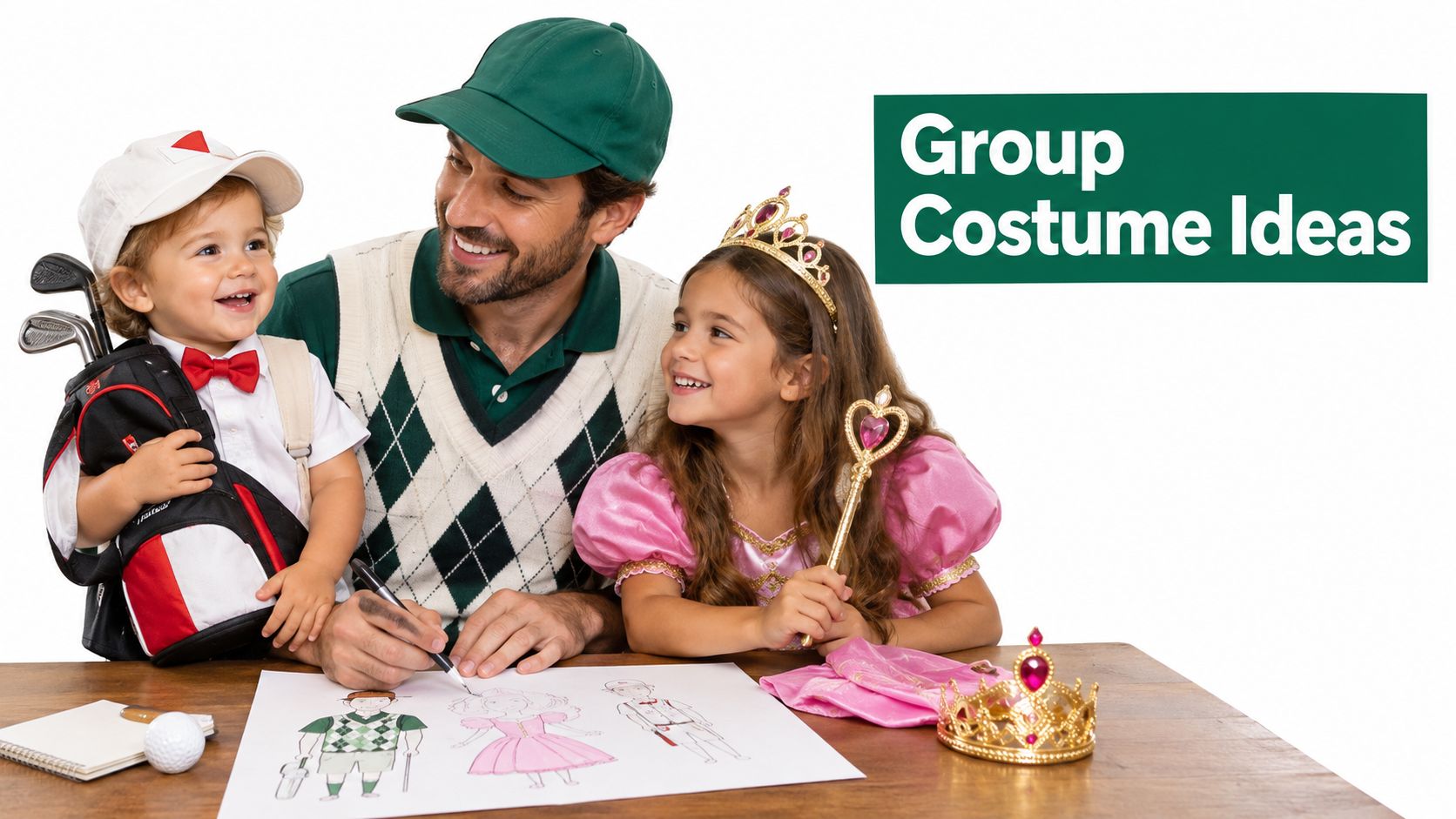
The assignment method is straightforward. Everyone shares one color story, white with green accents, and each person gets one unique Velcro name or number. A toddler caddie in the smallest coverall stands next to a parent in an adult coverall, and the matching silhouettes read as a team. The different numbers keep each person distinct when grandparents zoom into the photo later.
Three Ready Groupings
Siblings work well in the same white base with different numbers and different hats. One child wears a Scottsdale hat, another wears a 30A Beach hat, and a parent adds a Dad or Mom hat from the same place based collections. SEC city hats let college loyalties into the picture without changing the uniform underneath, so the group still looks related from the sidewalk.
A birthday party needs a lighter version. Each child gets a bib and a hat instead of a full matching jumpsuit, worn over party clothes. The bibs carry different names, the hats keep the theme visible in candid shots, and nobody overheats indoors. Cleanup stays easy because the costume layer comes off in seconds before cake.
A school parade calls for the full coverall on the child walking, since teachers need to spot each student quickly in a moving line. A front porch portrait can mix levels instead. Infants wear the smallest coverall for the photo, older kids wear coveralls or bibs, and adults scale the same idea up. One shared base, three venues, and each person still looks like an individual rather than a copy.
Safety Checks Before Trick-or-Treating
A costume that looks right on a hanger can fail on a staircase. The pre walk inspection catches those failures while there's still time to fix them, and it starts with the label. Guidance from the U.S. Consumer Product Safety Commission on Halloween costume safety advises choosing costumes, masks, wigs, and beards labeled flame resistant, or made from flame resistant fibers such as nylon or polyester. That labeling means the material should resist burning and extinguish more quickly after removal from an ignition source, and it does not make the garment fireproof.
The same guidance warns against flimsy fabrics, oversized sleeves, large capes, and billowing skirts, since excess material can contact candles or other ignition sources. A coverall or bib with hems above the ground removes most of that risk by design. There's no trailing panel to sweep across a jack o lantern on a porch.
The Full Outfit Dress Rehearsal
Parents should dress the child in the complete outfit, including shoes and any warm layers, then watch a short test. More detail on fitting the youngest walkers appears in toddler Halloween costume guidance with a golf theme, and the rehearsal itself takes only a few minutes at home.
- Walk and climb: Hems shouldn't drag, and stairs shouldn't require a free hand to lift fabric
- Reach and sit: Shoulders shouldn't pinch when the child raises a treat bag or sits on the floor
- See and breathe: A secure hat replaces a mask, leaving eyes, peripheral vision, and breathing clear
- Glow after dark: Bright colors or reflective tape help drivers spot the child on evening routes
Checks by Age and Venue
Age changes the priorities. Children under three shouldn't wear dangling add ons that can pull loose. Toddlers need low trip hems more than decorative extras, since new walkers catch their own feet easily. Older children walking dim driveways at night need the visibility add on most, and pediatric Halloween safety tips for families reinforce correct fit, above ground hems, and avoiding vision blocking masks.
Groups splitting across a neighborhood also benefit from a check in plan, and parents coordinating older children can compare family check-in apps to keep track of who's heading home. The costume passes when every item on the list checks out in motion. Anything that drags, pinches, or blocks vision gets fixed or removed before the first doorbell.
Last-Minute and Reusable Costume Variations
A school party starts soon, or trick-or-treating is only hours away. A white coverall or bib, a green hat, and a removable number create a clear caddie look without sewing or assembling a pile of accessories. The simple silhouette is quick to put together, while leaving room for safe, comfortable movement on the evening route.
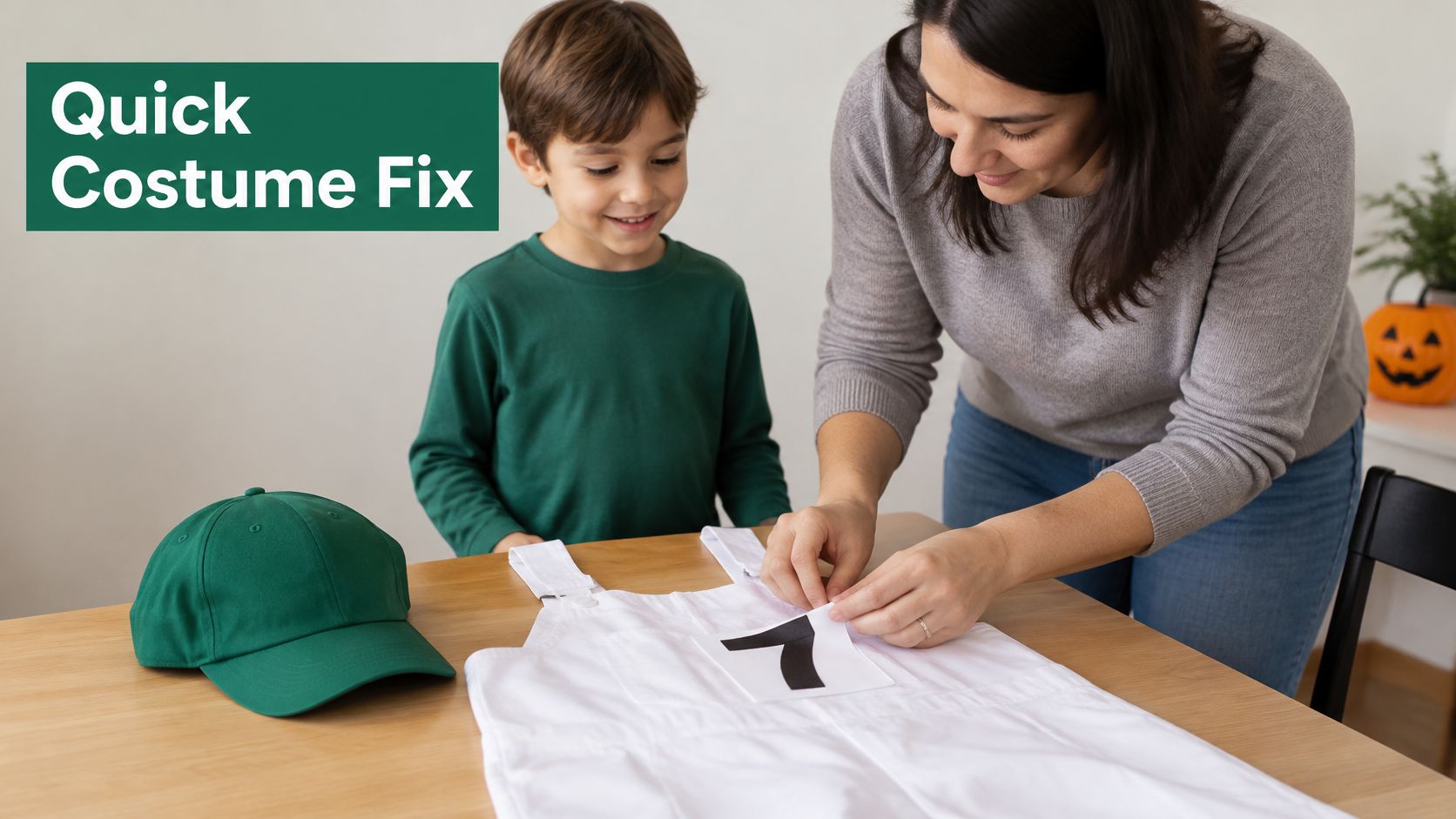
Small changes can shift the theme without replacing the outfit. Orange seasonal uniform with removable patches suits an autumn look; remove the patches later for a plainer outfit. For a warm classroom party, layer a bib over clothes the child already owns. A soft putter cover also makes a manageable prop that is less likely to bump doorframes than a hard, bulky accessory.
The Cost Per Wear Question
A costume's value depends partly on how often a child can wear it. In the National Retail Federation's 2025 roundup of top Halloween costumes, 71% of Halloween celebrants planned to buy a costume for themselves, a child, or a pet, and total costume spending was expected to reach $4.3 billion. Those figures make a reusable base worth considering: one outfit worn for several occasions serves longer than a costume made for one night.
Real reusability test: Can the name come off? Will it fit a sibling? Can the base be washed and worn again? A general eco claim on packaging does not answer those questions.
Simple care helps. Wash the coverall promptly to avoid setting candy stains, and store it flat with patches removed so the Velcro does not snag other clothes. The size range from 0–3 months to 11–12 years can support hand-me-downs, with a new nameplate marking the next child's turn.
A child's favorite theme can change quickly. A children's animated film can enter the costume list for that year, as reflected in the NRF's 2025 children's top ten costume roundup. A neutral white base stays useful when that favorite fades: swap in a new patch or nameplate, or change a Velcro number from the Halloween set to a birthday age. The same coverall can tell a different story without starting over.
Use the Costume Again After Halloween
The same pieces keep working once October ends, because a uniform doesn't belong to one holiday. A birthday party with a golf theme uses the coverall and a birthday nameplate. A golf club family day uses the bib and hat over play clothes. An engagement or wedding weekend with a golf theme puts a small caddie next to the couple for photos nobody else at the venue will match.
Photographers and creators get a practical benefit from the consistency. White coveralls and green hats stay uniform across siblings of different ages, so a styled shoot looks deliberate instead of assembled. Parents planning those sessions alongside everyday outfits can review golf apparel ideas for kids beyond costume season to see how the pieces pair with regular clothes.
What Changes at Each Occasion
Only three elements rotate. The Velcro name or number swaps to match the event, whether that's a birthday age, a family surname, or nothing at all. The hat shifts the story toward a place, a team, or a parent title. The base layer choice adjusts for temperature, with a bib replacing the full coverall when an indoor party runs warm.
- Birthday party: Bib and hat per guest, nameplates as keepsakes
- Club family day: Coverall for photos, bib for active play afterward
- Wedding weekend: Full coverall, clean patches, smallest sizes for ring bearers
- Photo shoot: Matching whites, one accent hat per child for variety
The next step is concrete. Measure the child against the kids size run from 0–3 months through 11–12 years, choose a coverall or a bib, and add a removable name and number. Pair the outfit with a Caddie Green Hat or another themed cap, and the Halloween look is ready with patches that come off for the next event. Adult XS to 3XL options, including selected long sizes, let a parent join the photo inside the same concept.
Families ready to build a costume that walks well, photographs clearly, and works again at the next birthday can start with a personalized coverall or bib, removable names and numbers, and a matching hat. Visit Caddie Uniform to measure against the infant to adult size run and assemble a kids caddie costume sized for Halloween night and every event after it.


